معرفی
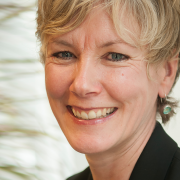
Professor Emily Dawson is a leading scholar in science education and communication with a focus on social justice at University College London's Department of Science & Technology Studies. She holds the position of Professor of Education, Science and Society and has been with UCL since 2014, progressing from Lecturer to full Professor in 2022.
Her research critically examines how structural inequalities related to race, gender, class, sexuality, and disability shape who participates in science learning and communication. Dawson leads the four-year "Understanding Science in Popular Culture through Social Justice" project funded through a Philip Leverhulme Prize, working with mass media, science centers, museums, and community organizers.
Dawson previously served as Co-Investigator on the seven-year Youth Equity & STEM (YESTEM) project funded by the Wellcome Trust, ESRC, and US National Science Foundation. This research-practice collaboration developed equitable practices in informal science learning across multiple international sites.
Her research portfolio demonstrates consistent focus on equity in science engagement, particularly examining how science communication can address rather than reproduce social injustices. Her publications reveal growing influence in critical science communication, with increasing attention to decolonizing practices and intersectional approaches to science education.
- Philip Leverhulme Prize
- Wellcome Trust funding for YESTEM project
- ESRC funding for YESTEM project
- US National Science Foundation funding for YESTEM project
- Science Learning + award (one of only five awarded)
Dawson has supervised multiple PhD students to completion including Ben Weil (2022), Edward Bankes (2020), Spela Godec (2016), and Agnes Ryder (2015). Her teaching includes Public engagement and social justice, Social research methods and data analysis in Science & Technology Studies, and Science & popular culture. She previously taught at King's College London and has extensive experience in science museums and community science communication prior to her academic career.