معرفی
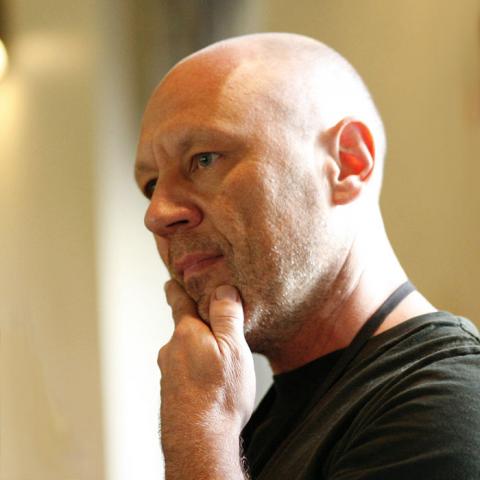
Eben Muse is a Reader in Bookselling and Director of Teaching and Learning at the School of Arts, Culture and Language at Bangor University. His academic career spans multiple roles including former positions as Teaching and Learning Development Leader, Project Worker, and Research Officer at The North Wales School of Education. He maintains active engagement in the academic community through his ORCID profile (0000-0002-9593-509X) and professional networks.
Muse's research centers on bookselling as a meaningful location, examining physical bookstores and their digital counterparts through the lens of spatial theory. His work draws on John Agnew's concept of place as 'locale, location and sense of place,' analyzing bookstores as counter-spaces that 'hijack dominant spaces and repurpose them to leisure or liberating ones.' His research methodology includes interviews with booksellers in the UK and USA, corpus analysis of media texts, and critical review of bookstore representations in film and literature.
His recent publications demonstrate an evolving research trajectory from film studies (particularly Vietnam War representations in American cinema) to contemporary studies of book culture. The 2022 monograph Fantasies of the Bookstore represents a significant contribution to publishing studies, while his upcoming 2024 article examines representations of woman booksellers in the bookstore novel. His research has been presented at international conferences including SHARP, By the Book, and The Future Space of Bookselling.
- Bangor University Teaching Fellow (2016)
- Senior Fellow (2019)
Muse has supervised numerous postgraduate researchers, with particular interest in indie bookselling & publishing, artisanal publishing, book culture, and bookselling as a function of community. His work contributes to UN Sustainable Development Goals, particularly those related to culture and community. He has led 8 research projects including 'Reading Digital Fiction' (2014-2018) and 'KESS II PhD with Gwynedd Archaeological Trust' (2017-2022), demonstrating sustained research activity across multiple funding cycles.