معرفی
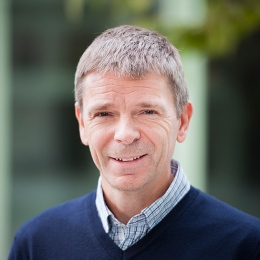
Douglas Nilsson is a Researcher at Stockholm University's Department of Environmental Science and Analytical Chemistry (ACES), specializing in atmospheric science with a focus on aerosols and their climate impacts. His work spans marine, urban, and Arctic environments with particular expertise in sea spray aerosol emissions. At ACES, he teaches in the Master's Programme Environmental Science: Atmosphere-Biogeochemistry-Climate (ES-ABC), serving on the master program board and teaching courses including Atmosphere, Biogeosphere and Climate, and Aerosols, Clouds, and Climate.
Nilsson's research centers on primary aerosol sources, particularly sea spray aerosols and urban traffic emissions. His work investigates how these aerosols influence climate through direct and indirect effects, with a special emphasis on how changing environmental conditions affect aerosol production. He pioneered eddy covariance flux measurements of sea spray aerosols and has developed significant parameterizations for climate models. His research bridges laboratory experiments, field measurements, and climate modeling to understand aerosol-climate interactions across multiple scales.
Analysis of Nilsson's publications reveals a consistent focus on sea spray aerosol production mechanisms, particularly how seawater temperature and salinity affect emissions. His work spans laboratory experiments using plunging jet systems, field measurements in marine environments including the Baltic Sea and Arctic Ocean, and implementation of parameterizations in global climate models. A recurring theme is understanding how climate change might alter aerosol emissions and how these changes might feed back into the climate system.
- Nordic Aerosologist Award 2010
- Best Papers of 2019 from Royal Soc. of Chem. Env. Science journals
Nilsson has supervised numerous PhD and master's students, with former students now working at institutions including SMHI, NILU, and universities worldwide. His research has been supported by approximately 65 million SEK (~5.9 million Euro), including grants from VR, FORMAS, EU, and other funding bodies. His current projects include the newly granted FORMAS project SELFIE (Ship-exhaust Emission under the new Low-level-sulfur Fuel legislation In the European SECA-zone, Baltic Sea) starting September 2025.
Nilsson leads the Atmospheric Science research group at ACES, which focuses on the life cycle and impact of atmospheric particles. The group maintains field sites including the Östergarnsholm research station in the Baltic Sea, where they conduct long-term aerosol flux measurements. They also operate laboratory facilities for sea spray simulation and collaborate extensively with international research networks including the Bolin Centre for Climate Research.