معرفی
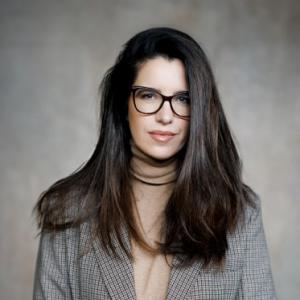
Dinka Caha is an Assistant Professor at the Faculty of Law Osijek, Josip Juraj Strossmayer University of Osijek, affiliated with the Department of Labor Law and Social Sciences and Social Work. She holds a PhD in Prevention Sciences and is actively engaged in teaching, research, and institutional leadership.
Education:
- PhD in Prevention Sciences in Disability Studies, Faculty of Education and Rehabilitation Sciences, University of Zagreb (2021)
- Master’s in Social Work, Faculty of Law, University of Zagreb (2009)
Her research focuses on mental health, social work, community development, and prevention of behavioral disorders. She investigates how community engagement and social programs affect psychological well-being, particularly among vulnerable populations such as social assistance recipients and youth. Her work integrates quantitative methods and policy analysis to assess interventions aimed at reducing deprivation and enhancing social inclusion.
Her recent publications span topics including latent deprivation, cyber-violence, and welfare-to-employment transitions, reflecting a strong interdisciplinary approach linking psychology, social work, and public policy. These works demonstrate consistent focus on mental health outcomes, validation of psychological instruments, and evaluation of community-based programs.
Professional Affiliations:
- European Society for Prevention Research (member)
- European Social Work Research Association (member)
- DKolektiv, Council for the Development of the Social Atelier (member)
- Association COMMUNITY – expertise and multidisciplinarity (member)
Dinka Caha leads and collaborates on significant research projects such as Strengthening capacities for positive development of individuals and communities and EU_SHINE (European support for children at risk of poverty). She serves as project leader and collaborator in international partnerships, including with Indiana University School of Social Work. She also mentors graduate students, coordinates external academic collaborations, and is a member of the Institutional Review Board, contributing to ethical research standards.
She is involved in multiple labs and teams through her project leadership and institutional roles, particularly in community-engaged research and interdisciplinary social science initiatives.