معرفی
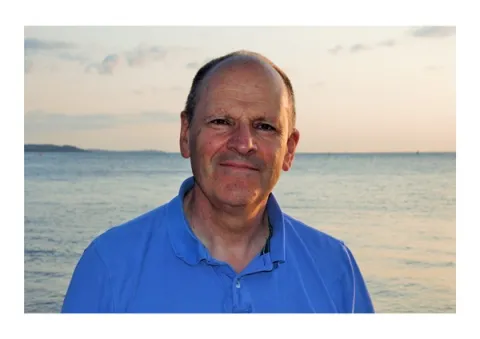
David Stevens is a Professor of Applied Mathematics at the University of East Anglia, within the School of Engineering, Mathematics and Physics. He is a member of the Centre for Ocean and Atmospheric Sciences, Fluids & Structures, and ClimateUEA research groups. His academic profile shows active engagement in both teaching and research, with administrative leadership roles including Head of the School of Mathematics (2010-2014, 2017) and Associate Dean for Learning, Teaching and Quality for the Faculty of Science (2015-2016, 2018-2022).
Stevens is an applied mathematician specializing in large-scale ocean modeling with a focus on understanding the ocean's role in the climate system. His research primarily centers on cold regions including the Norwegian-Greenland Sea and Southern Ocean. He has been deeply involved in major projects such as the Fine Resolution Antarctic Model (FRAM) and Ocean Circulation and Climate Advanced Modelling (OCCAM). His expertise spans dynamic oceanography, computer simulation, ocean and climate modeling, and observational physical oceanography. Field experience includes multiple research cruises dating back to 1995, with significant work in the South Atlantic, Greenland Sea, Scotia Sea, and around Antarctica.
Analysis of his recent publications (2023-2025) reveals a strong focus on Antarctic and Southern Ocean processes, climate modeling, ocean-atmosphere interactions, and the impacts of climate change on polar regions. His work frequently addresses decadal variability in climate systems, ocean dynamics affecting ice shelves, and the chemical interactions between oceans and atmosphere. There's also notable work on exoplanet climate modeling, demonstrating the breadth of his theoretical approaches to fluid dynamics and climate systems.
Stevens currently leads or participates in multiple significant research projects funded primarily by the Natural Environment Research Council, including 'Impacts of Pacific Ocean warming trends (ImPOse)', 'Iodine sea-air emissions and atmospheric impacts in a changing world (I-SEA)', and 'Iodide in the Ocean: Distribution and Impact on Iodine Flux and Ozone Loss'. These projects span from 2015 to 2026, indicating sustained research activity and funding.
- Impacts of Pacific Ocean warming trends (ImPOse) - NERC (2022-2026)
- Iodine sea-air emissions and atmospheric impacts in a changing world (I-SEA) - NERC (2022-2026)
- Iodide in the Ocean: Distribution and Impact on Iodine Flux and Ozone Loss - NERC (2016-2020)
- Predictability of European marine climate over seasons to decades - CEFAS (2015-2020)
- Ocean Dynamics as Drivers of Seasonal to Decadal European Atmospheric Variability (ODYSEA) - NERC (2015-2018)
As an educator, Stevens teaches across all undergraduate levels and at the Masters level, with courses including Calculus, Differential Equations, Hydrodynamics, Numerical Solution of Partial Differential Equations, Dynamical Oceanography, and Dynamical Meteorology. He also delivers research-level lectures at international summer schools worldwide, from Greece to Chile, demonstrating his international academic engagement and recognition.