معرفی
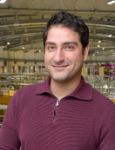
David Owen serves as a Senior Electron Microscope Scientist at the Electron Bio-Imaging Centre (eBIC) within Diamond Light Source, the UK's national synchrotron science facility. He joined eBIC in August 2020, leveraging advanced structural biology techniques to investigate critical biological mechanisms in pathogenic systems.
His educational foundation includes a Ph.D. from the University of St Andrews, Scotland (2015).
- Ph.D. in Structural Biology, University of St Andrews (2015)
Owen's research centers on structural characterization of carbohydrate-processing proteins in pathogenic and commensal bacteria, with specialized focus on sialic acid metabolism and membrane-bound carbohydrate transporters. He integrates electron microscopy with macromolecular crystallography to address fundamental questions in microbial pathogenesis and infectious disease mechanisms. His work bridges structural biochemistry, microbiology, and therapeutic development through high-resolution imaging of complex biological systems.
Recent publications (2023-2025) reveal consistent methodological innovation in cryo-electron microscopy and diffraction techniques applied to diverse biological targets—from malaria pigment crystals to SARS-CoV-2 protease inhibitors. This body of work demonstrates cross-disciplinary integration of structural biology, parasitology, and antiviral drug design, with particular emphasis on solving technically challenging macromolecular structures using emerging imaging modalities.
No specific scientific awards are documented in the provided materials.
While formal student advisement isn't indicated, Owen contributed significantly to Diamond's collaborative COVID-19 response by solving structures of SARS-CoV-2 proteases bound to therapeutic candidates, reflecting participation in major grant-funded pandemic research initiatives. His work operates within Diamond's framework of large-scale, facility-driven scientific programs.
As a core scientist at eBIC, Owen operates within Diamond Light Source's state-of-the-art cryo-electron microscopy facility, collaborating with multidisciplinary teams to advance structural biology capabilities. The center provides critical infrastructure for high-resolution biological imaging, supporting research across infectious disease, microbiology, and therapeutic development domains through cutting-edge instrumentation and methodological expertise.