
معرفی
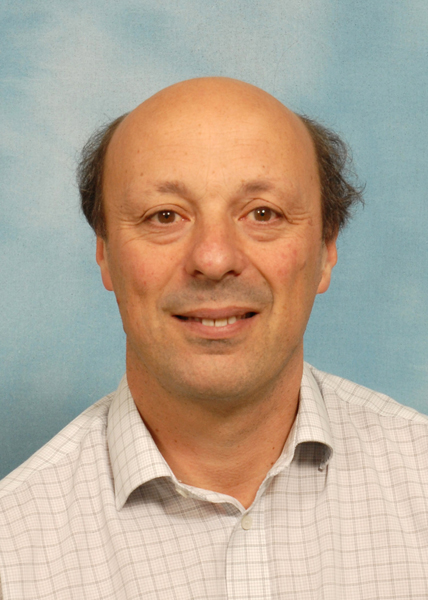
David A. Eisner serves as the British Heart Foundation Professor of Cardiac Physiology at The University of Manchester, a position he has held since 2000. Previously, he was Professor of Cardiac Physiology in the Department of Medicine at Manchester (1999-) and Professor of Veterinary Biology at the University of Liverpool (1990-1999).
Dr. Eisner received his B.A. from King's College Cambridge (1976) and D.Phil. from Balliol College Oxford (1979) under Prof D. Noble. His early career included postdoctoral work at Cambridge with Prof I.M. Glynn, followed by academic positions at University College London and the University of Maryland.
Professor Eisner's research program centers on cardiac muscle physiology with particular emphasis on calcium signaling mechanisms. His laboratory pioneered direct measurements of intracellular sodium concentration and calcium oscillations in cardiac tissue, demonstrating how sodium-calcium exchange controls cardiac contraction. He developed quantitative methods to measure sarcoplasmic reticulum (SR) calcium content and discovered the 'autoregulation' process where SR calcium content modifies systolic calcium transients. His recent work investigates why Ryanodine Receptor mutations lead to arrhythmias like CPVT, showing that arrhythmogenic calcium waves only occur when SR calcium is elevated.
- Fellow of the Academy of Medical Sciences (1999)
- Founder Fellow of the International Society for Heart Research (2000)
- Fellow of the American Heart Association (2001)
- Member of Academia Europaea (2007)
- Reimer Lecturer, International Society for Heart Research (2008)
- Pfizer Prize for research in biology (1985)
- Wellcome Prize from the Physiological Society (1988)
Professor Eisner heads a research group of approximately 15 people and has served in significant editorial roles including Editor-in-Chief of the Journal of Molecular and Cellular Cardiology (2007-). His research has been primarily funded by the British Heart Foundation, with additional support from Research Councils and the Wellcome Trust. He has held leadership positions in professional organizations including President Elect of the Federation of European Physiological Societies (2009-) and Chair of the European Working Group of Cellular Cardiac Electrophysiology (2008-).
His laboratory continues to investigate fundamental mechanisms of cardiac excitation-contraction coupling, with particular focus on developing treatments that can suppress arrhythmogenic calcium release while preserving normal systolic function - a critical challenge in heart failure treatment.
حوزههای پژوهشی

