معرفی
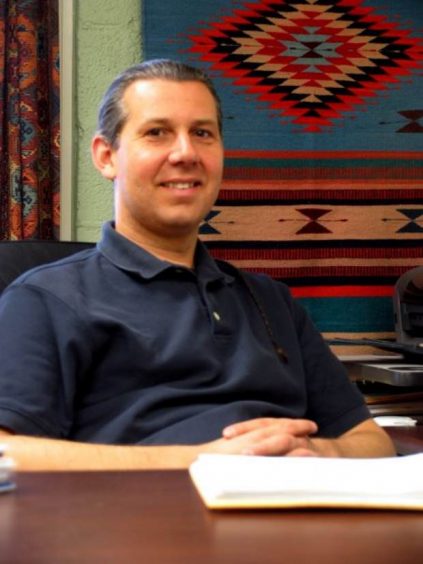
Dr. Darren J. Ranco serves as Professor of Anthropology at the University of Maine with joint appointments in the Senator George J. Mitchell Center for Sustainability Solutions and Native American Programs, where he chairs Native American Programs and coordinates Native American Research. A member of the Penobscot Nation, his academic work centers on indigenous resistance to environmental destruction through indigenous diplomacies and critiques of liberalism.
His educational background includes:
- Ph.D. in Anthropology from Harvard University (2000)
- MSEL in Studies in Environmental Law from Vermont Law School (1998)
- B.A. in Anthropology and Classical Studies from Dartmouth College (1993)
Ranco's research critically examines how colonial state knowledge systems perpetuate environmental risks for indigenous communities while exploring pathways for equitable university-community research partnerships. His teaching focuses on indigenous intellectual property rights, environmental justice, research ethics, and tribal governance, reflecting his commitment to decolonizing academic practices. He actively develops frameworks for integrating indigenous knowledge with Western science in sustainability contexts.
His publication record (2006-2021) reveals an evolving scholarly trajectory from theoretical critiques of the 'Ecological Indian' stereotype toward applied collaborations with indigenous communities on climate change impacts, traditional food systems, and river ecosystem management. The work consistently centers Penobscot River homelands and tribal sovereignty issues, demonstrating increasing transdisciplinary engagement with environmental health, forest management, and youth education initiatives.
No scientific awards were documented in the provided materials.
Ranco leads significant collaborative projects including EPA-funded research on Wabanaki Traditional Cultural Lifeways Exposure Scenarios and the Wabanaki Youth in Science (WaYS) program. His grant work emphasizes community-based environmental monitoring and culturally responsive risk assessment methodologies, often involving tribal co-researchers in designing solutions for climate adaptation and forest pest management.
He directs institutional initiatives through the Mitchell Center for Sustainability Solutions and Native American Programs, focusing on decolonizing research ethics and creating equitable partnerships between universities and indigenous nations. Current efforts prioritize integrating traditional ecological knowledge into sustainability science frameworks and addressing environmental justice through tribal governance models.