معرفی
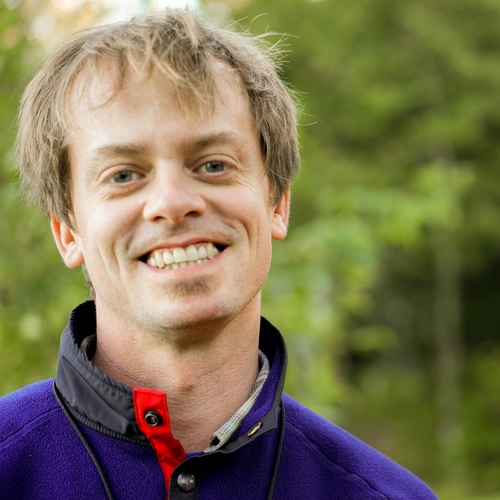
Daniel Gavin is a Professor and Department Head in the Geography, Climate Studies department at the University of Oregon's College of Arts and Sciences. With expertise spanning biogeography, paleoecology, and forest ecology, his research focuses on understanding Earth's biotic responses to climate change across various spatial and temporal scales.
Dr. Gavin's research interests include reconstructing forest composition and natural disturbances through recent history (hundreds of years) and more distant history (thousands of years) using interdisciplinary research designs. His work examines sediment records extending back to the last Ice Age (18,000 years ago) to understand how populations and communities reorganize through periods of fast and slow climate change. He also investigates shorter sediment records of the past 2000 years to provide context for human-induced impacts of the last 200 years, and tree-ring records of the past 400 years to address tree population dynamics at annual resolution.
His recent publications reveal a research trajectory focused on Holocene environmental change, particularly examining the interplay between climate, fire, vegetation, and geological processes. His work spans diverse geographical locations including the Pacific Northwest, Indonesia's tropical peatlands, and the Great Basin. Key methodologies in his research include lake sediment analysis, pollen and macrofossil analysis, tree-ring studies, and multi-proxy paleoenvironmental reconstructions.
Dr. Gavin has received the GSA Quaternary Geology and Geomorphology Division Distinguished Career Award, recognizing his significant contributions to the field. His scholarly output demonstrates consistent productivity with numerous high-impact publications in leading earth science and ecology journals.
As an educator, Dr. Gavin teaches courses including Biogeography (Geog 323), Long Term Environmental Change (Geog 430/530), Advanced Biogeography (Geog 423), and Quantitative Methods in Paleoecology (Geog 607). His teaching emphasizes the relevance of biogeography during a time of increasing human impact and climate change, developing students' appreciation for historical and ecological factors influencing life patterns on Earth.