معرفی
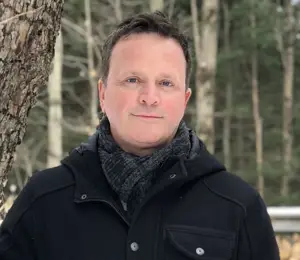
Daniel Chartier serves as a full Professor at the University of Quebec at Montreal and directs the International Laboratory for Research on Images of the North, Winter and the Arctic. He holds the prestigious UArctic Chair on Images, Perceptions and Mediations of the Arctic and participates in the UArctic Thematic Network on Arctic Cultures and History (ARCH).
Professor Chartier's research centers on the representation of Arctic regions, northern cultures, and winter landscapes. His work explores cultural pluralism across circumpolar communities including Inuit, First Nations, and Nordic societies. He examines how northern imagery is constructed, mediated, and interpreted across different cultural contexts, with particular attention to ethical considerations in representation.
His publication record reveals consistent focus on Arctic imagery, Indigenous knowledge systems, and cultural representation. Recent works show increasing emphasis on digital preservation of northern cultures, ethical frameworks for Arctic representation, and comparative studies of winter landscapes across Nordic and Indigenous perspectives. The interdisciplinary nature of his research bridges cultural studies, anthropology, environmental humanities, and visual studies.
Professor Chartier has directed significant collaborative projects including the International Polar Year initiative promoting Nunavik Inuit heritage (2008-2011), the ongoing literary history project of Nunavik (2015-2027), and cross-cultural cooperation on northern literature between Quebec and Norway (2012-2028). He has fostered academic partnerships across Greenland, Iceland, Finland, Norway, Canada, the Faroe Islands, Denmark, and Sweden.
As director of the International Laboratory for Research on Images of the North, Winter and the Arctic, he leads a multidisciplinary team investigating visual, literary, and cultural representations of northern regions. His current research program focuses on creating connections between diverse circumpolar cultures while critically examining the conditions under which Arctic imagery is produced and circulated globally.