معرفی
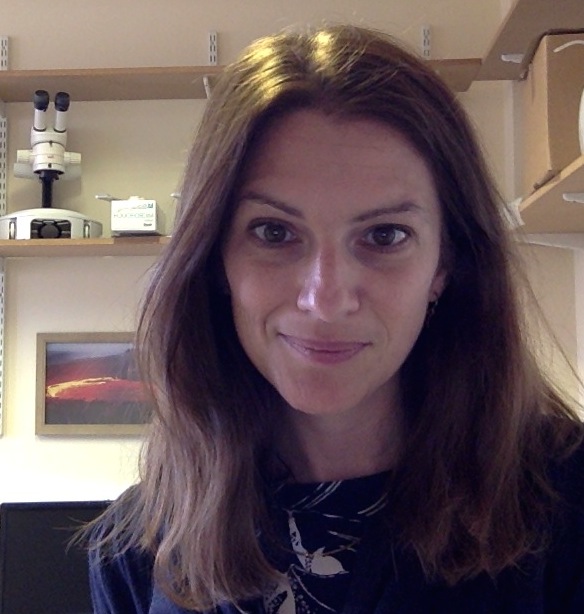
Céline Marie Vidal is a Lecturer of Geography at Fitzwilliam College, University of Cambridge, and a member of the Climate and Environmental Dynamics research group. She holds a PhD in Earth and Environmental Sciences from the Institut de Physique du Globe de Paris and has held postdoctoral positions at the University of Cambridge, including a Marie Skłodowska Curie Research Associate role. Her research integrates volcanology, geochemistry, and archaeological records to study the impacts of large eruptions on climate and civilizations. Notably, she leads the "Voice of Earth" project, combining scientific data with art and indigenous knowledge to document Earth's geological voice. She supervises postgraduate students and teaches courses on volcanology and environmental change.
Education:
- PhD in Earth and Environmental Sciences (2015), Université Sorbonne Paris Cité
- MSc in Geology and Natural Hazards (2013), Universitat de Barcelona
- BSc in Chemistry (2010), Ecole Nationale Supérieure de Chimie de Lille
Research Interests: Her work focuses on reconstructing past volcanic eruptions using tephra geochemistry and climate archives. Current projects include tephrostratigraphy in the Ethiopian and Turkana Rifts, linking paleoanthropological sites with volcanic records, and interdisciplinary projects merging science with art and cultural practices. She has contributed to identifying the 1257 Samalas eruption as the largest stratospheric gas release in the Common Era.
Awards:
- SFIs 2024 Award for Best French-authored Publication
- University of Cambridge Honorary BA (2023)
- Horizon 2020 MSCA 2017 Seal of Excellence
Advising & Grants: Supervises three PhD students and has led projects funded by Marie Skłodowska Curie and Leverhulme Trust awards. Collaborates on initiatives like the "Trans-Evol" project studying hominin evolution in the Turkana Basin.
Labs/Teams: Active in the Climate and Environmental Dynamics group and the Volcanic Impacts on Climate and Society (VICS) working group. Leads the "Voice of Earth" initiative, blending science with indigenous knowledge systems and artistic expression.