معرفی
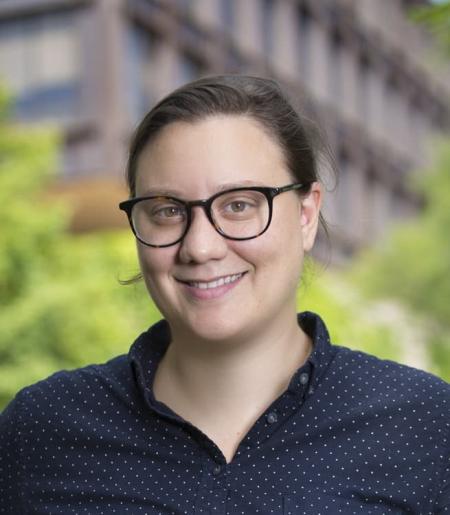
Dr. Courtney Bonam is an Assistant Professor in the Department of Psychology at the University of California Santa Cruz, where she began her appointment in 2018. Prior to this, she served as an Assistant Professor jointly in Black Studies and Psychology at the University of Illinois, Chicago, starting in 2012. She completed a Chancellor's Postdoctoral Research Fellowship at the University of California Berkeley’s Goldman School of Public Policy, bridging psychology and public policy in her academic trajectory.
Dr. Bonam earned her PhD from Stanford University, where her early research explored how multiracial individuals perceive race as a social construct and how such views contribute to resilience in challenging social contexts. Her educational background laid the foundation for her ongoing work at the intersection of identity, inequality, and environment.
Her research lies at the nexus of social psychology and societal equity, focusing on how stereotypes—particularly those linking Black Americans to degraded physical spaces—perpetuate racial disparities. Using experimental, survey, and mixed-method approaches, she investigates how such space-focused stereotyping influences decisions about environmental hazards, housing, and community resources. This work has implications for understanding systemic inequalities in pollution exposure, health outcomes, wealth accumulation, and educational access.
Although her publications are not listed in the current text, the thematic focus of her research indicates a consistent engagement with environmental racism, identity formation, and structural inequality. Her work integrates psychological theory with policy-relevant outcomes.
- Ford Foundation Predoctoral Fellowship
- Stanford University's Diversifying Academia Recruiting Excellence Fellowship
- Society for the Psychological Study of Social Issues Grants-In-Aid research award
- American Psychological Association Dissertation research award
- Stanford University Lyman Award for University Service
Dr. Bonam has been actively involved in mentoring and diversity initiatives, particularly highlighted by her Lyman Award for University Service at Stanford, which recognized her contributions to enhancing graduate and faculty diversity. While no specific grants are detailed in the text, her fellowship awards suggest a history of competitive external funding. She has advised students at the graduate level, though specific names are not provided.
Her research is conducted independently and potentially in collaboration with interdisciplinary teams, especially given her postdoctoral training in public policy. While no formal lab or research group is explicitly mentioned, her methodological range (experiments, surveys, qualitative analysis) suggests she leads a research program involving student researchers and collaborators focused on social justice and psychological processes.