معرفی
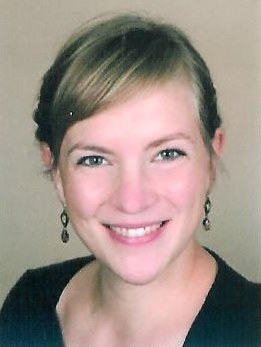
Christine Gebhard is a Research Fellow at the University of Siegen, working at the Chair of Applied Linguistics in the Department of German Studies. She is involved in multiple subprojects within the Collaborative Research Centers (SFB) 1472 "Transformations of the Popular" and SFB 1187 "Media of Cooperation", focusing on discursive constructions in political representation and human-computer interaction.
Her educational background includes:
- Bachelor of Arts in Language and Communication from the University of Siegen
- Master of Arts in Applied Linguistics and a certificate in German as a Foreign Language from the University of Münster
Dr. Gebhard's research spans discourse analysis, political linguistics, and conversation analysis, with a focus on evaluative interactions in institutional settings. She investigates how linguistic representations of age become politicized in citizen participation, and examines the interactional dynamics between humans and intelligent personal assistants. Her work also explores the role of emotionality in professional communication involving humanoid robotics.
Her recent publications (2020-2025) reflect a consistent focus on the interplay between language, technology, and social interaction. She has contributed to understanding how smart speaker technology mediates human agency, how political representation is constructed through discourse in municipal contexts, and how evaluation unfolds in theater intervals. Her work bridges linguistics with political science and human-computer interaction, demonstrating the relevance of conversation analysis to contemporary societal issues.
No scientific awards are mentioned in the provided text.
There is no information provided about students advised or research grants obtained by Dr. Gebhard.
Dr. Gebhard is part of the Collaborative Research Centers SFB 1472 and SFB 1187 at the University of Siegen, contributing to subprojects on mayoral communication in political representation crises and the interactional aspects of intelligent personal assistants. She also participates in the Working Group 7 on Gender and Intersectionality and the group on Technography and Corpus Hermeneutics.