معرفی
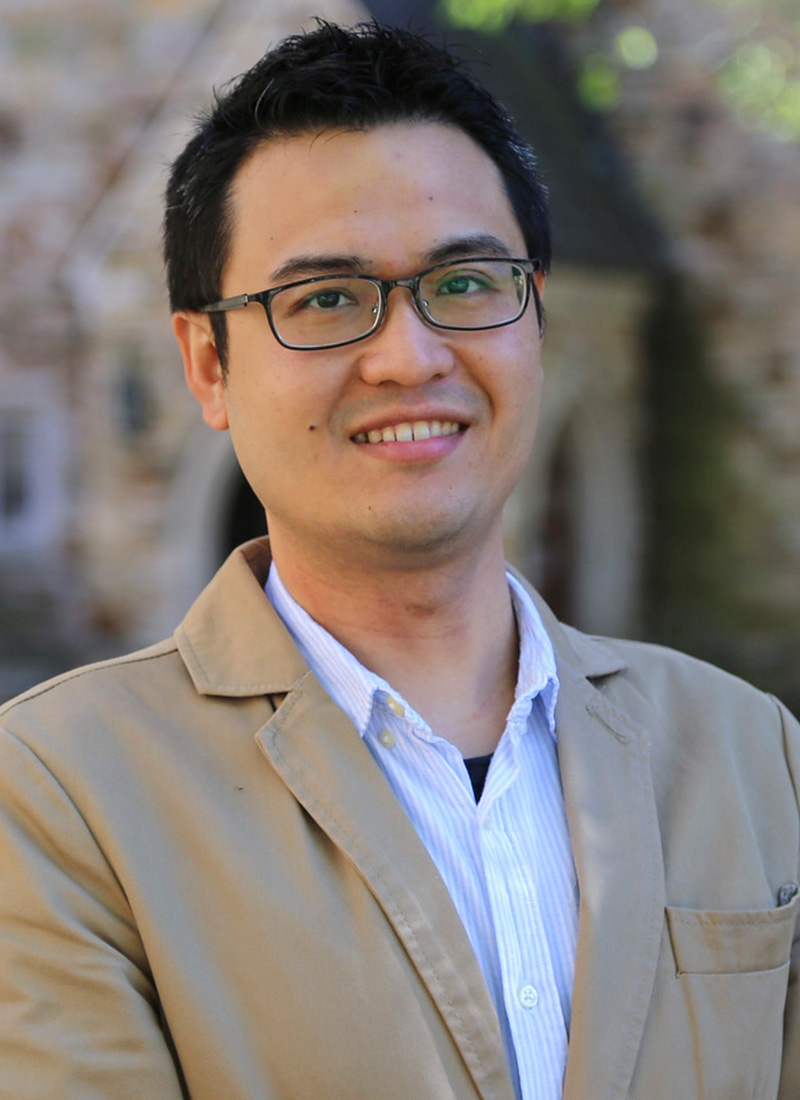
Chien-Kai Chen serves as Associate Professor of International Studies at Rhodes College, where he teaches courses on China's domestic politics, foreign relations, and foundational subjects in international relations and comparative politics. His pedagogical approach integrates Confucian-inspired critical thinking with theoretical frameworks applied to real-world East Asian political cases, emphasizing both knowledge acquisition and analytical skill development through writing assignments and student research projects.
His educational trajectory includes:
- Ph.D. in Political Science from Boston University (2013)
- M.A. in Political Science from the University of Alabama, Tuscaloosa (2007)
- B.A. in Political Science from National Taiwan University, Taiwan (2003)
Dr. Chen's research bridges international relations and comparative politics through a multi-level analysis of East Asian politics. His primary focus examines the interplay between China-Taiwan-US relations, China's foreign policy expansion, and domestic political dynamics including democratization processes and civil society development. He employs theoretical frameworks like path dependence and systemic constructivism to analyze cross-strait economic ties, regional power competition, and the political implications of China's global engagements.
Analysis of his 15 most recent publications (2009-2024) reveals a consistent research trajectory examining China's evolving global role through regional case studies. His work demonstrates increasing geographic scope—from Taiwan-focused analyses to comprehensive examinations of China's relations with Europe, Latin America, Africa, the Middle East, and South Asia—while maintaining core theoretical interests in the interaction between domestic politics and international relations. Key methodological approaches include comparative case studies, historical institutionalism, and constructivist analysis of policy evolution.
Dr. Chen actively contributes to academic discourse through refereed journal publications, book chapters, and policy-oriented research including East-West Center occasional papers. His teaching philosophy emphasizes developing students' ability to apply theoretical concepts to contemporary political events, with planned course expansions focusing on broader Asian regional studies.