معرفی
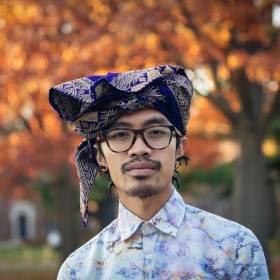
C. Joti Rockwell is Associate Professor of Music and Chair of the Music Department at Pomona College, where he has been a faculty member since 2007. He is based in the College of Arts and Sciences and teaches courses such as Listening to American Popular Music, Music Theory I–III, and Critical Inquiry Seminar.
- Ph.D., University of Chicago
- Bachelor of Science, Haverford College
His research lies at the intersection of music theory, American popular music, and mathematical modeling. He investigates how musical structures—particularly in rhythm and voice-leading—shape genre and expression, with a focus on bluegrass, old-time, and 20th-century American popular music. He also explores connections between music and mathematics, and has a strong interest in Balinese gamelan and contemporary concert music.
His recent publications span journals like Popular Music, Ethnomusicology, and Journal of Music Theory. Collectively, these works reflect a deep engagement with genre formation, metric disruption, voice-leading models, and the cultural framing of folk and popular traditions. His scholarship combines rigorous theoretical analysis with historical and ethnographic insight.
He has received several honors, including:
- David Kraehenbuehl Prize from the Journal of Music Theory (2014)
- Wig Distinguished Professor Award for Excellence in Teaching (2012)
- Wig Curriculum Development Grant (2008)
- Fellowship at the Mannes Institute for Advanced Studies in Music Theory (2008)
- Mellon 23 Grant for 'Building Musical Intuitions' (2008)
- Whiting Dissertation-Year Fellowship (2005–2006)
As an active performer, Rockwell plays mandolin, guitar, banjo, and fiddle in bluegrass and roots music contexts. He has performed at venues such as the Garth Newel Music Center and Grinnell College, often in interdisciplinary collaborations, including a concert merging Appalachian string music with Zimbabwean mbira. He has also performed electronic music, including works by Steve Reich and Paul Elwood, demonstrating a wide-ranging artistic practice. His teaching and grant activities suggest ongoing engagement with experiential and interdisciplinary music education.