معرفی
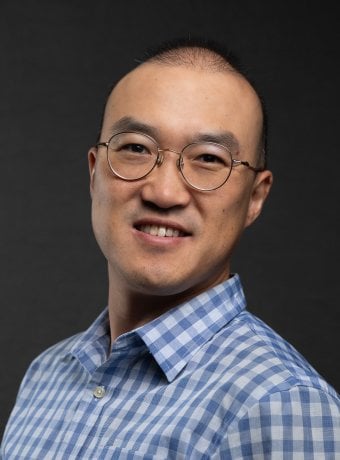
Brian P. Helmke is an Associate Professor in the Department of Biomedical Engineering at the University of Virginia's School of Engineering and Applied Science. His research focuses on understanding how mechanical forces regulate cellular structure and function, particularly in endothelial cells relevant to cardiovascular health. He is actively involved in teaching and has received multiple university-wide teaching and research honors.
- B.S.E. in Bioengineering, University of Pennsylvania, 1992
- B.S.Econ. from The Wharton School, University of Pennsylvania, 1992
- Ph.D. in Bioengineering, University of California, San Diego, 1996
Dr. Helmke's research lies at the intersection of biomedical engineering, molecular biology, and materials science. He investigates cellular mechanotransduction, focusing on how intracellular mechanics influence cell function. His lab employs advanced imaging techniques, nanotechnology, and engineered microenvironments to study cytoskeletal dynamics, endothelial responses to shear stress, and the role of mechanical cues in tissue engineering. His work has implications for regenerative medicine and understanding vascular diseases.
His recent publications reflect a consistent focus on actin dynamics, shear stress, and advanced imaging in endothelial cells. The work spans from fundamental cell mechanics to the development of novel microfluidic and stretching devices for live-cell analysis. Keywords across publications include mechanobiology, cytoskeletal remodeling, live-cell imaging, and microengineering, indicating a strong interdisciplinary trajectory.
Notable scientific awards include:
- UVA Alumni Association Distinguished Professor Award (2024)
- College of Fellows, American Institute for Medical and Biological Engineering (AIMBE) (2024)
- Fellow, Biomedical Engineering Society (2023)
- Harold S. Morton Jr. Undergraduate Teaching Prize (2020)
- Hartfield Excellence in Teaching Award
Dr. Helmke advises graduate students and leads an active research laboratory focused on cellular and molecular bioengineering. His lab develops and applies cutting-edge tools to study cell mechanics, including high-resolution microscopy, GFP-tagged proteins, and nanoscale surface patterning. He has secured significant research funding, though specific grants are not listed. His teaching portfolio includes BME 3240 (Biotransport), BME 4641 (Bioelectricity), and BME 4550 (Mechanobiology), demonstrating a commitment to undergraduate and graduate education.
His laboratory, located in MR4 1115, utilizes a multidisciplinary approach combining fluorescence imaging, quantitative image analysis, and engineered mechanical stimuli to unravel the mechanisms of mechanotransduction in living cells.