معرفی
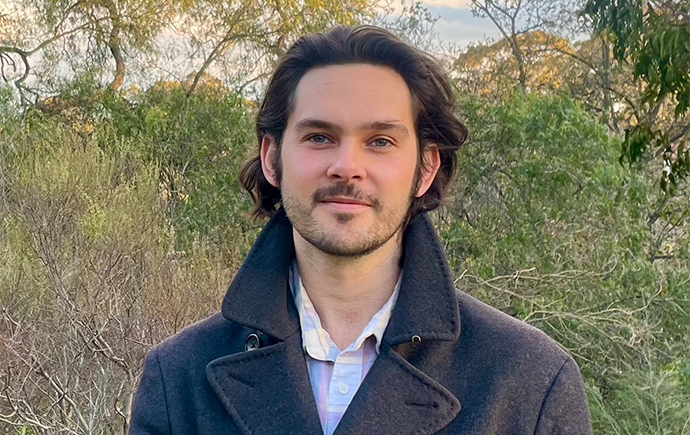
Brendan Josey is a Lecturer in the Department of Architecture at Monash University. His work focuses on transdisciplinary action research addressing global urban challenges, particularly in informal settlements and environmental revitalization. He is a Chief Investigator in the Indonesia-Australia Citarum Action Research Program (CARP), exploring circular economy solutions for climate resilience. His research bridges architecture, public health, and community engagement through projects like the RISE Demonstration Site in Makassar, which integrates participatory design and sustainable infrastructure.
Education details are not explicitly stated in the provided texts, but his professional trajectory suggests advanced qualifications in architecture or urban studies. His expertise aligns with UN Sustainable Development Goals related to clean water, sustainable cities, and climate action.
Josey has contributed to peer-reviewed articles on topics ranging from river revitalization strategies to spatial agency in global south cities. His work emphasizes co-creation with communities, evidenced by projects like the Citarum Living Lab and the RISE initiative, which address sanitation, waste management, and urban resilience. He co-authored a chapter on operationalizing embedded PhD programs in action research (2021), highlighting methodological innovations for real-world impact.
His team's RISE Demonstration Site project was shortlisted for the 2023 ArchitectureAU Award for Social Impact, recognizing its innovative approach to upgrading informal settlements. Grants and collaborations span transnational partnerships, including Indonesian and Australian institutions. Josey is actively involved in media engagement, with coverage in outlets like TRIBUN MAKASSAR and ANTARANEWS, amplifying the visibility of community-driven urban solutions.
Laboratory and team affiliations include the Monash-led CARP initiative and the RISE research collective. Current work emphasizes scaling circular economy models and participatory frameworks to enhance environmental and social resilience in rapidly urbanizing regions.