معرفی
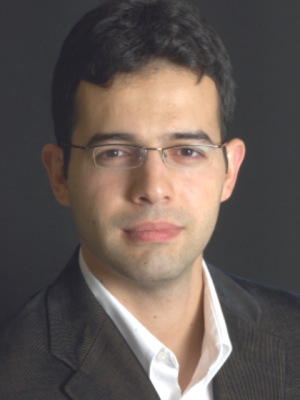
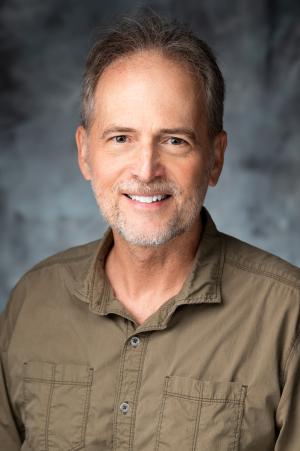
Benjamin Ho is a Professor of Economics at Vassar College and author of *Why Trust Matters: An Economist's Guide to the Ties that Bind Us*. He holds seven degrees from MIT and Stanford in economics, education, political science, math, computer science, and electrical engineering. His research focuses on behavioral economics, applying experimental methods to study trust, apologies, inequality, and climate change. He has taught at Cornell and Columbia, advised the White House Council of Economic Advisers, and collaborated with Uber on a large-scale field experiment involving 1.5 million participants.
Education:
- PhD in Economics, Stanford Graduate School of Business (2006)
- MA in Education, Stanford (2004)
- MA in Political Science, Stanford (2004)
- M.Eng in Electrical Engineering and Computer Science, MIT (2000)
- BS in Economics, MIT (1999)
- BS in Mathematics, MIT (1999)
- BS in Computer Science, MIT (2000)
Research Interests: His work bridges behavioral economics with real-world applications, including corporate apologies, nonprofit ideology, energy consumption habits, and ethno-gender labor markets. He combines experimental design with large datasets (e.g., smart thermostat usage, Uber ride data) to understand decision-making under uncertainty and social norms. Recent projects explore how trust shapes policy outcomes in digital health and environmental conservation.
Publications & Impact: Over 20 peer-reviewed articles in journals like *Nature Human Behavior*, *Management Science*, and *Economic Journal*. His findings on apology efficacy and corporate crisis management have been featured in NPR, Freakonomics, and *The New York Times*. Co-authored books and chapters address trust dynamics in global contexts, from Tibetan herders to modern Silicon Valley.
Grants & Labs: Collaborates with interdisciplinary teams at Columbia’s Center on Global Energy Policy and Vassar’s environmental initiatives. Active in policy consulting, including advising on carbon pricing and solar subsidies. Teaches courses on climate ethics and behavioral economics.