معرفی
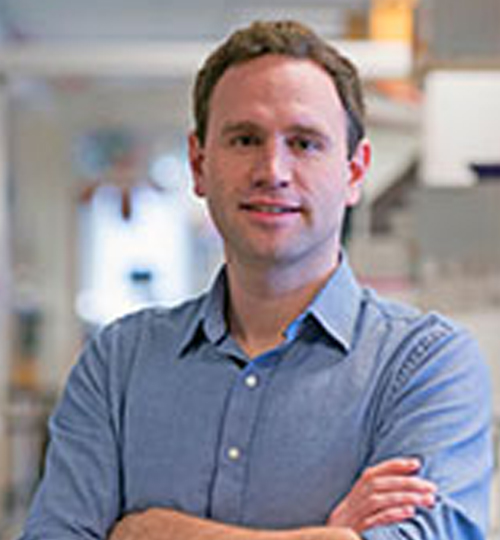
Benjamin Good is an Assistant Professor of Applied Physics and (by courtesy) of Biology at Stanford University. He holds the Alden H. and Winifred Hubbard Brown Faculty Fellowship and is based in the Department of Applied Physics within the School of Humanities and Sciences. His research bridges theoretical biophysics, evolutionary dynamics, and microbial ecology.
Dr. Good received his Ph.D. in Physics from Harvard University in 2016 and his B.A. in Physics/Mathematics from Swarthmore College in 2010. His academic journey has focused on understanding evolutionary processes through the lens of statistical physics.
His research interests span Theoretical Biophysics, Evolutionary Dynamics, Population Genetics, and Microbial Evolution. Good's work specifically examines short-term evolutionary dynamics in rapidly evolving microbial populations like the gut microbiome. He uses tools from statistical physics, population genetics, and computational biology to understand how microscopic growth processes and genome dynamics at the single cell level give rise to collective behaviors observable at the population level. His research spans from basic theoretical investigations of non-equilibrium processes to the development of computational tools for measuring these processes in natural and experimental microbial communities.
Dr. Good teaches two key courses at Stanford: APPHYS237/BIO251: Quantitative evolutionary dynamics and genomics, and APPHYS205/BIO126/226: Introduction to Biophysics. His teaching emphasizes the application of physics principles to biological systems and quantitative approaches to evolutionary processes.
- Alden H. and Winifred Hubbard Brown Faculty Fellow
Dr. Good actively mentors a diverse research group including postdoctoral fellows across multiple labs, graduate students in Applied Physics, Biology, Physics, and Biophysics programs, and undergraduate researchers. His lab collaborates extensively with experimentalists and leverages public sequencing repositories to develop theoretical frameworks for understanding microbial community dynamics from the ocean to the soil to the human gut.