معرفی
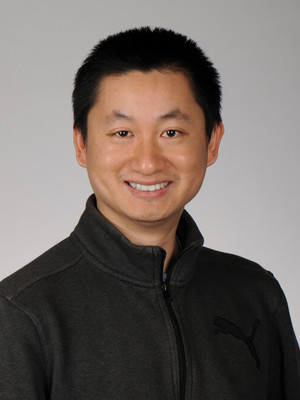
Dr. Ben C. Gadomski is an Associate Research Professor in the Department of Mechanical Engineering at Colorado State University, part of the Walter Scott, Jr. College of Engineering. He holds a B.S. in Mechanical Engineering from Trine University and a Ph.D. in Biomedical Engineering from Colorado State University. His research focuses on translational medicine, medical devices, orthopaedic biomechanics, and low-gravity effects on skeletal systems. Dr. Gadomski has extensive experience in spinal implant development, finite element modeling, and fracture healing studies.
Education:
- Ph.D. in Biomedical Engineering, Colorado State University (2015)
- B.S. in Mechanical Engineering, Trine University (2009)
Research Interests:
- Orthopaedic biomechanics including finite element modeling and experimental testing of implants
- Low-gravity conditions on skeletal remodeling and fracture healing
- Risk of traumatic spinal cord injury during intubation
- Bone regeneration and osteoinductive materials
Recent Articles Focus:
His most recent work includes studies on osteochondral allograft preservation, osteoinductive 3D-printed scaffolds, and novel bone transport devices. Articles emphasize biomechanical validation of medical devices and computational modeling for clinical applications.
Awards:
- 2021 Walter Scott, Jr. College of Engineering Outstanding Researcher Award
- Multiple Provost Faculty Excellence Award nominations
- Kosaka Best of Meeting Top Finalist in Clinical Research (2017)
- ASME Summer Bioengineering Conference 1st Place (2013)
Grants & Funding:
He has secured over $44 million in research funding, including ARPA-H projects for artificial joints and NIH grants for osteoarthritis treatments. Current projects involve non-invasive energy therapies for rotator cuff injuries and bone transport under microgravity conditions.
Labs & Teams:
Director of the Orthopaedic Bioengineering Research Laboratory. Collaborates with industry partners like Medtronic, Acuitive Technologies, and Abbott on device development and preclinical studies.