معرفی
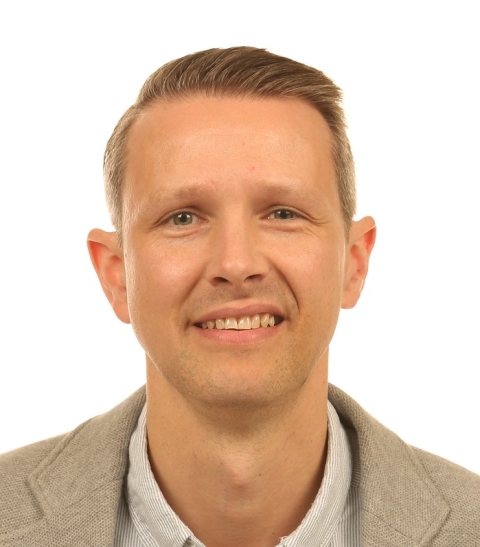
Armin Kargol serves as a Professor of Physics at Loyola University New Orleans, holding the Rev. James C. Carter, S.J., Distinguished Professorship in Experimental Physics. He teaches physics courses for pre-health students and advanced physics for majors, including Cellular Biophysics and core mechanics/electromagnetism sequences.
His academic credentials include:
- Ph.D. in Physics from Virginia Tech (1994)
- M.S. in Mathematics from Virginia Tech (1992)
- M.S. in Theoretical Physics from the University of Wroclaw, Poland (1987)
Professor Kargol's research centers on nonequilibrium properties of ion channels using patch-clamp electrophysiology, numerical simulations, and theoretical analysis. His work bridges mathematical modeling of biological transport processes and thermodynamics of cellular systems, with significant contributions to understanding voltage-gated ion channel gating kinetics. Current investigations include wavelet-based voltage protocols and interactions between multiferroic nanoparticles and biological membranes.
His 15 most recent publications (2000-2019) reveal a cohesive research trajectory focused on ion channel biophysics, with increasing integration of nanotechnology and advanced mathematical techniques. Key thematic clusters include nonequilibrium thermodynamics applications (38% of publications), nanoparticle-cell interactions (27%), and novel electrophysiology methodologies (20%).
Professor Kargol actively mentors undergraduate researchers in his Biophysics Lab, which has trained over 15 students since 2008. Current and former student researchers—such as Brad Kerkhof, Kimiasadat Mirlohi, and Antonio Ayala—contribute to experimental patch-clamping and computational modeling projects, with results published in journals like Physical Review E and Journal of Biological Physics.
The Biophysics Lab, equipped with dual patch-clamp stations, pursues five interconnected research thrusts: remote control of voltage-sensing macromolecules using multiferroic nanoparticles; conductance hysteresis in ion channels; experimental detection of nonequilibrium kinetic focusing; wavelet-based protocol optimization; and quantum biology modeling of photosynthetic complexes in collaboration with international researchers.