معرفی
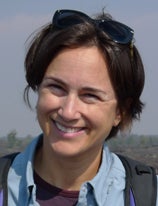
Anne Egger is a Professor at Central Washington University with a joint appointment in Geological Sciences and Science and Mathematics Education. She serves as Executive Director of the Journal of Geoscience Education and is a prominent leader in the National Association of Geoscience Teachers (NAGT), having previously served in the presidential line from 2015-2018.
Education and Professional Background
- Former faculty member at Stanford University for seven years where she recruited students into Earth Sciences majors and managed undergraduate research
- Active participant in Earth Educators Rendezvous through 2024
Research Interests
Dr. Egger's primary research focuses on the methods of geoscience education, exploring how students learn Earth science concepts and how to effectively teach these concepts to future educators. Her work emphasizes the unique nature of geoscience as a historical science that relies on multiple lines of evidence rather than controlled experimentation. She investigates how to help students understand the nature of geoscience and develop critical workforce skills needed in the field.
Professional Contributions
Dr. Egger has led significant initiatives that have shaped geoscience education nationally. Her work analyzing trends in undergraduate geoscience instruction aims to connect classroom experiences with workforce preparation. She has developed numerous educational resources that highlight how scientific knowledge is constructed and the human element behind discoveries.
- Editor-in-Chief (2018) and Executive Director (2019) of the Journal of Geoscience Education
- NAGT Presidential line service (2015-2018) and committee leadership
- Co-project director for Visionlearning, developing peer-reviewed science education materials
- Leader of 18 professional development workshops for geoscience educators
- Contributor to the InTeGrate project with 5 course modules, 13 activities, and 4 complete courses
Teaching Approach
Dr. Egger's teaching philosophy emphasizes explicit narration of the geoscience process, helping students understand not just what we know about Earth, but how we know it. Her "Teaching the Geology of the Pacific Northwest" course combines regional geology content with pedagogical approaches for future science teachers, including a practicum in local high schools where students develop and teach geology field trips. She focuses on making connections between students' existing knowledge from other disciplines and geoscience concepts.