

معرفی
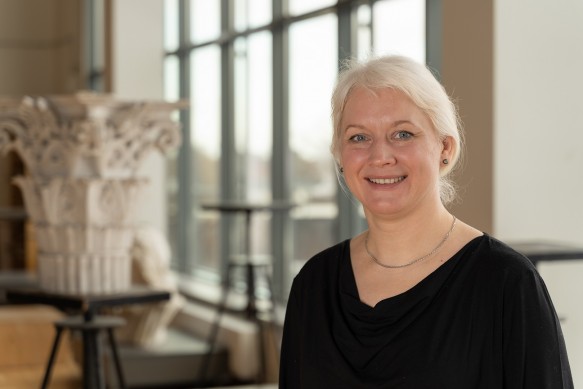
Anna Ancāne is a leading researcher at the Latvian Academy of Arts since 2008 and concurrently serves as Head of the Architecture and Art Department at Latvia's National Cultural Heritage Administration since 2020. Holding a Doctor of Fine Arts degree, she specializes in the architectural evolution of Latvia with institutional affiliation through the Academy's email domain (lma.lv).
Her academic foundation includes:
- Janis Rozentāls Riga Art Secondary School (1981–1988)
- Bachelor's in Art History, Latvian Academy of Arts (1994) - Thesis: "History of the Subate Church"
- Master's in Art History, Latvian Academy of Arts (2006) - Thesis: "Dutch Classicism in the Second Half of the 17th Century in Latvian Architecture"
- Doctorate (Dr. art.), Latvian Academy of Arts (2010) - Dissertation: "Riga Architecture and Urban Planning in the Second Half of the 17th Century"
Dr. Ancāne's research centers on 17th-century Latvian architecture, particularly Riga's urban transformation during the Dutch-influenced Baroque period. Her work bridges architectural history, cultural heritage conservation, and urban morphology, emphasizing Baltic-European stylistic exchanges. She examines how foreign architectural paradigms were localized within Latvia's socio-political context, with special attention to ecclesiastical structures like the Subate Church.
Her seminal 2016 monograph synthesizes decades of archival research into Riga's 17th-century development, establishing foundational methodologies for Baltic architectural historiography. The 448-page study with English and German summaries demonstrates how urban planning responded to geopolitical shifts, integrating military, religious, and mercantile influences into Riga's built environment.
No scientific awards or major grants are documented in available sources. While her leadership role at the National Cultural Heritage Administration implies oversight of preservation projects, specific advising relationships or research teams remain unreported. Her dual institutional position uniquely positions her at the intersection of academic research and national heritage management.



.jpg)