معرفی
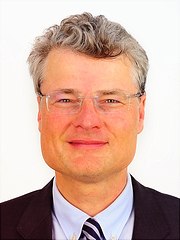
Dr. Andreas Timmermann is a Private Lecturer (Privatdozent) in the Department of Global History at the University of Hamburg's Faculty of Humanities. His academic focus centers on Latin American History and the History of the Iberian Peninsula, with particular expertise in constitutional history, legal history, and political thought development across the Hispanic world.
- University of Hamburg, Department of Global History (current)
- University of Erfurt (previous teaching position)
Professor Timmermann's research interests span Latin American history, Iberian Peninsula history, constitutional development, legal history, and political thought. His work demonstrates a particular focus on the constitutional traditions of Spain and Latin America, examining how ideas traveled across the Atlantic and evolved in different contexts. He has made significant contributions to understanding the Cádiz Constitution of 1812 and its influence throughout the Hispanic world, as well as the development of political concepts like freedom and sovereignty in Latin American contexts.
His recent publications reveal a consistent focus on constitutional history, with particular attention to the early 19th century revolutionary period in Spain and Latin America. Timmermann's work bridges legal history and political thought, often examining how constitutional concepts developed and were adapted in different national contexts. His scholarship shows strong engagement with both Spanish and Latin American primary sources, reflecting his multilingual capabilities and transnational approach to historical analysis.
Professor Timmermann completed his habilitation at the University of Erfurt in 2009, focusing on Latin American and Southwestern European History. Prior to this, he held various teaching positions at the Universities of Hamburg and Erfurt since 2003. His academic journey includes significant research periods in Madrid preparing his habilitation work on the Cádiz Constitution of 1812. Before fully committing to academia, he pursued legal education and worked in government positions, bringing a unique interdisciplinary perspective to his historical research.