معرفی
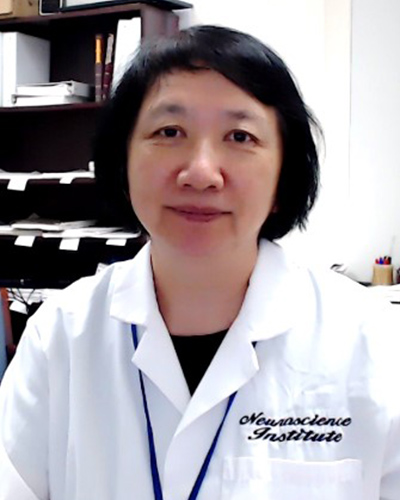
Dr. An Zhou is a Professor in the Department of Neurobiology at Morehouse School of Medicine, where he leads research on molecular mechanisms of neuroprotection in stroke and brain ischemia. His work integrates epigenetics, proteomics, and bioinformatics to identify endogenous protective pathways for therapeutic development.
Dr. Zhou's academic training includes:
- Bachelor of Science, Beijing Normal University
- Master of Science, Beijing Normal University
- Doctor of Philosophy, Copenhagen University
- Postdoctoral Fellowship, Johns Hopkins University
His research focuses on Neuroprotection, Epigenetics, Proteomics, and Bioinformatics, specifically investigating Polycomb group proteins in ischemic tolerance, nascent proteomics for stroke biomarker discovery, and transcriptional regulation of ion channels in brain ischemia. He employs advanced molecular and computational techniques to bridge basic neuroscience with clinical stroke applications.
Analysis of his publication record (2010-2020) reveals consistent emphasis on epigenetic regulation and proteomic dynamics in stroke models, with progressive exploration of TrxG proteins and prohormone convertases. This trajectory demonstrates evolution from fundamental molecular mechanisms toward translational biomarker discovery and therapeutic targeting.
Dr. Zhou's scientific recognition includes:
- 2010-2011: GRF Shaffer Fund Grant (PI) for retinal neuroprotection mechanisms
- 2011-2014: NIH/NINDS R21 (PI) on proteomic reconfiguration in neuroprotection
- 2012-2017: NIH/NINDS R01 (PI) on Polycomb proteins in ischemic tolerance
- 2013-2018: NIH/NINDS U54 Subproject (Co-Investigator) for ASIC1A signaling
- 2013-2020: NIH/NINDS U54 (Co-Director) for MSM SNRP program
- 2017-2020: AHA Grant (PI) on TrxG proteins in neuronal excitability
He has secured continuous NIH and AHA funding as Principal Investigator while contributing institutionally as Co-Director of the Molecular and Cell Biology Core for the MSM SNRP program, supporting neuroscience training and collaborative infrastructure. His laboratory operates in the Multidisciplinary Research Center (Room 239), utilizing molecular, proteomic, and bioinformatic approaches within MSM's Neuroscience Institute framework to advance stroke pathophysiology research and therapeutic development.
حوزههای پژوهشی