معرفی
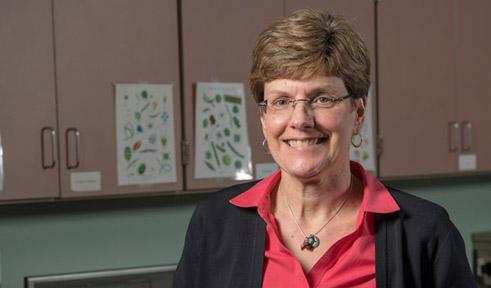
Amy L. Carlile is an Associate Professor and Assistant Dean for Faculty and Curriculum in the Biology and Environmental Science Department at the University of New Haven's College of Arts and Sciences. She also serves as the Chair of the Biology and Environmental Science Department. Dr. Carlile maintains an active research program focused on aquatic ecosystems, particularly the Long Island Sound, and is involved with the University's Robert M. Lee and Linda M. Wilkins Marine Science Center at the Canal Dock Boathouse.
Dr. Carlile's research focuses on the systematics, evolution, and biogeography of seaweeds and other aquatic flora. Her work emphasizes how molecular data can resolve longstanding taxonomic questions about algae, which often have simple morphology that makes identification challenging. She views biogeography as a critical intersection between taxonomy and ecology, with applications to biodiversity, conservation, and environmental management. Her research demonstrates how molecular phylogenetics can clarify evolutionary relationships among algal species that exhibit parallel evolution and morphological simplicity.
Dr. Carlile has published multiple research articles in prominent phycology journals, with a consistent focus on algal taxonomy and systematics, particularly regarding red algae (Rhodophyta). Her publications span from 2008 to the present, showing a sustained research trajectory examining the evolutionary relationships and classification of various algal species.
- News 8 WTNH: University of New Haven hosts sustainability fair focusing on Long Island Sound
- Yale Daily News: New Haveners clean up the coast in partnership with artist sTo Len
- NBC Connecticut: Discover the Sound With University of New Haven Program
- The Patch West Haven: Citizen Opportunities for Accessing Science Training on the Sound
Dr. Carlile leads the COASTS (Citizen Opportunities for Accessing Science Training on the Sound) project, which trains community members on the ecology, water quality, animals, plants, and algae of Long Island Sound. This initiative demonstrates her commitment to public education and environmental stewardship, bridging academic research with practical community engagement.
Her work extends beyond traditional academic boundaries through media appearances and community partnerships, showing dedication to making scientific knowledge accessible and applicable to real-world environmental challenges facing coastal ecosystems.