University of California, Los AngelesUnited States
Yunxiang Yan is a Professor in the Department of Anthropology at the University of California, Los Angeles (UCLA). His work focuses on China and Cultural Anthropology , with specific expertise in Economic Anthropology , Family and Kinship , and Individualization . Education: Ph.D. in Social Anthropology from Harvard University (1993). Yan’s research explores the intersection of social change , moral theory , and family dynamics in modern China. His ethnographic studies in rural villages provide foundational insights into exchange theory and cultural globalization . Recent publications analyze food safety , medical ethics , and moral crises in China, reflecting his interdisciplinary approach combining anthropology, sociology, and philosophy. Articles span themes like intergenerational intimacy , political oppression , and networked social structures . Scientific Awards: Guggenheim Fellowship Levenson Prize-winning Research Yan’s work bridges local Chinese studies with global anthropological discourse. He has held positions at the Chinese University of Hong Kong, Johns Hopkins University, and UCLA since 1996. His career reflects a commitment to documenting the lives of ordinary people, rooted in his early experiences as an expelled villager during Maoist China. Contact: yan@anthro.ucla.edu
Haiyan Lee serves as the Walter A. Haas Professor of the Humanities and Professor of East Asian Languages and Cultures and of Comparative Literature at Stanford University. She has held these positions since joining Stanford in 2009, and currently serves as Chair of the East Asian Languages and Cultures department (2020-present). Her academic journey includes previous teaching appointments at the University of Colorado at Boulder and the University of Hong Kong, along with post-doctoral fellowships at Cornell University and Harvard University. Lee's research spans multiple interdisciplinary fields with particular focus on modern Chinese literature and cultural production. Her work bridges literary studies with law, philosophy, cognitive science, affect theory, gender studies, and environmental humanities. She has developed influential theoretical frameworks including the concept of "high justice" and "low justice" in Chinese legal imagination. Her current research explores animism, cognition, and the Chinese environmental imagination, extending her longstanding interest in human-animal relations. Lee's publications reveal a consistent trajectory examining Chinese cultural production through innovative theoretical lenses. Her recent work shows increasing engagement with legal theory, environmental humanities, and cognitive approaches to literature. She has produced significant scholarship on Chinese concepts of justice, love, and the stranger, moving across historical periods from early 20th century to contemporary China. Biennial Book Prize, Honorable Mention, International Society for Chinese Law and History (ISCLH) (2024) Humanities Seed Grant, Stanford School of Humanities and Sciences (2023-2025) Bass Fellowship in Undergraduate Education, Stanford University (2022-2027) Joseph Levenson Book Prize, The Association for Asian Studies (2009) Professor Lee actively mentors doctoral students across multiple disciplines, serving as dissertation advisor, co-advisor, and committee member for students working at the intersection of Chinese studies, law, literature, and cultural theory. Her teaching includes courses across East Asian humanities, comparative literature, and interdisciplinary environmental studies. She has received significant research support including the Frederick Burkhardt Residential Fellowship from the American Council of Learned Societies and a residency at the Center for Advanced Study in the Behavioral Sciences.
Adam Hollowell is an Adjunct Assistant Professor in the Program in Education at Duke University, where he also serves as Senior Research Associate at the Samuel DuBois Cook Center on Social Equity and Director of the Inequality Studies Minor. His teaching spans ethics, inequality studies, and history across Duke’s Kenan Institute for Ethics, Sanford School of Public Policy, and Department of History. Hollowell holds a Ph.D. from the University of Edinburgh (2009). His research focuses on inequality, higher education, public policy, and ethics, with notable work on pandemic impacts, telemedicine in education, and reproductive health access during crises. In Inequality Studies , Hollowell emphasizes understanding policies to drive social change, as highlighted in recent media coverage. His publications explore topics like student behavior shifts during the pandemic, telemedicine adoption in universities, and James Baldwin’s ethical challenges. He is a finalist for the Judith Deckers Prize (2024). Professionally, Hollowell leads projects such as Bass Connections on college contraception access and Story+ initiatives. His work bridges academia and public engagement, addressing systemic inequities through interdisciplinary approaches.
Vincent J. Cheng is a Distinguished Professor of English at the University of Utah, holding appointments since July 2019. He previously served at the University of Southern California (1979–2019) in roles including Professor of English and Director of Asian American Studies. His academic leadership includes directing the Tanner Humanities Center (2003–2007). Cheng specializes in modernist literature, particularly James Joyce, with research focusing on cultural memory, national identity, and postcolonial studies. He has authored influential works like Amnesia and the Nation and edited volumes on Joyce’s legacy. Recognized for teaching excellence, he received the Calvin S. and JeNeal Hatch Prize in Teaching (2024) and the Distinguished Teaching Award (2014). Cheng’s research integrates philosophy, history, and literature, exploring themes like migration, empathy, and ethical remembrance. His recent work analyzes Joyce’s treatment of memory and history, connecting Irish and American Southern narratives. He also contributes to Joyce Studies Annual and serves on editorial boards for Western Humanities Review . Teaching-wise, he leads advanced seminars on literary studies and British writers, guiding Ph.D. thesis research. Award highlights include the Fulbright Scholar Award (2015) and the Carole & Gordon Segal Visiting Chair in Irish Studies (2014). He remains active in community outreach, such as presenting Joyce’s Dubliners to high school students. His interdisciplinary approach bridges literary analysis with cultural and ethical inquiry.
Rutgers, The State University of New JerseyUnited States
Emily C. Bartels is a Professor of English at Rutgers University specializing in early modern literature and culture, with particular expertise in Shakespearean and non-Shakespearean drama. She has served as director, and is now dean, of the Middlebury Bread Loaf School of English since 2010, a summer Master's program designed for K-12 English teachers. Professor Bartels received her BA from Yale University and both her MA and PhD from Harvard University. Her academic background positioned her to become a leading scholar in Renaissance literature studies. Her research examines questions of race, cross-cultural relations, gender, genre, and performance in early modern English drama. Professor Bartels is renowned for her groundbreaking work on Shakespeare's Othello and Christopher Marlowe's plays, analyzing how these texts represent cultural and racial difference. She has significantly contributed to postcolonial approaches to early modern literature, revealing how English drama engaged with global encounters and representations of the 'other' during the Renaissance period. Her scholarship demonstrates how early modern writers both reflected and shaped contemporary attitudes toward difference, particularly regarding race, religion, and national identity. Professor Bartels' publications reveal a consistent scholarly trajectory examining racial and cultural representation in early modern England. Her work spans from detailed analyses of specific plays like Hamlet and Julius Caesar to broader studies of how England conceptualized Africa and non-Christian cultures during the Renaissance. A recurring theme throughout her career is the analysis of how early English drama both reflected and shaped contemporary attitudes toward difference, particularly regarding race, religion, and national identity. Roma Gill Prize for Best Work on Christopher Marlowe (1993-94) for Spectacles of Strangeness: Imperialism, Alienation, and Marlowe Board of Trustees Fellowship for Scholarly Excellence (1993) School of Arts and Sciences Award for Distinguished Contributors to Undergraduate Education (2008 & 1993) Warren I. Susman Award for Excellence in Teaching (2008) Solmsen Fellowship at the Institute of Research in the Humanities, University of Wisconsin (1995) Black Atlantic Project fellowship from the Rutgers Center for Historical Analysis Professor Bartels has demonstrated exceptional commitment to both research and teaching excellence. She has developed innovative courses exploring the intersections of literature, history, and cultural studies, including undergraduate seminars on Othello and Hamlet, and graduate courses on Shakespeare Page and Stage. Her administrative role as dean of the Middlebury Bread Loaf School of English demonstrates her commitment to education beyond traditional university settings. Her fellowships from prestigious institutions indicate successful grant acquisition throughout her distinguished career. Professor Bartels has been actively involved with the Shakespeare Association of America and has collaborated with international scholars like Emma Smith of the University of Oxford. Her work has positioned her at the forefront of conversations about early modern literature, race studies, and postcolonial approaches to Renaissance drama, influencing how scholars understand the intersections of literature, race, and cultural identity in the early modern period.
David Glovsky serves as Assistant Professor of History and African and African American Studies within Harvard University's Faculty of Arts and Sciences, focusing on 19th-20th century West Africa with regional expertise in Senegal, Gambia, Guinea-Bissau, and Guinea. His research examines borderlands through lenses of mobility, citizenship, and alternative geographies, challenging state-imposed borders with community-driven spatial narratives. His educational foundation includes a B.A. in History and Human Geography from Dartmouth College and a Ph.D. in African History from Michigan State University. Prior academic appointments include the Department of Africana Studies at University at Albany and the Department of History at Boston University, following Peace Corps service in southern Senegal that redirected his career from sports media into academia. Glovsky's research program centers on social justice-oriented historical narratives of marginalized West African communities, particularly Fulbe populations. His work synthesizes oral histories and archival research across six nations to analyze how borderland residents construct fluid geographies that transcend colonial/postcolonial boundaries. Key themes include migration as resistance , gendered border experiences , and Islam's role in transnational community formation , with methodological innovation in spatial history and decolonial approaches. Analysis of his nine recent publications (2019-2023) reveals consistent engagement with West African borderland resilience , demonstrating how communities maintain cross-border networks despite state fragmentation. His work bridges historical scholarship and contemporary migration debates , employing interdisciplinary frameworks from anthropology, geography, and postcolonial theory to document alternative spatial organizations that challenge Western cartographic traditions. ACLS Fellowship supporting book project Borderlanders: Popular Geographies, Mobility, and Belonging in West Africa Glovsky actively mentors graduate students interested in African history, emphasizing pathways for underrepresented scholars into U.S. academia. His research has received competitive external funding including the ACLS Fellowship, while his collaborative work on the NEH ‘Ajamī Project advanced accessibility of Pulaar manuscripts through digitization and multilingual translation. He maintains strong community ties with West African scholars and institutions, particularly in Senegambia. Though not leading a formal laboratory, Glovsky collaborates with international research teams across West Africa on borderland studies and manuscript preservation, working closely with scholars in Kolda (Senegal), Dakar, and Guinea-Bissau to document community histories through participatory methodologies.
Christopher P. Atwood is a Professor of Mongolian and Chinese Frontier and Ethnic History and Department Chair of East Asian Languages and Civilizations at the University of Pennsylvania. He holds a PhD from Indiana University's Central Eurasian Studies Department. His research focuses on the interplay of culture, political power, and historiography in Mongol and Inner Asian contexts. Atwood's work spans topics such as Mongol nationalism, Yuan dynasty historiography, and the socio-economic history of nomadic societies. Education: AB from Harvard University (1986), PhD from Indiana University (1994). He previously taught at Indiana University for two decades, serving in administrative roles. His affiliations include visiting scholar positions at institutions like the Institute for Advanced Study (Princeton) and Peking University. Research interests include environmental history (e.g., marmot-human relations), political dynamics (e.g., Mongol empires and comparative imperial formations), and literary studies (e.g., Mongolian poetry and textual canonization). He has authored works like the Encyclopedia of Mongolia and the Mongol Empire and collaborates on projects such as the Sources of Mongolian Tradition . Teaching includes courses on Inner Asian civilizations, the Mongol Empire, and the Secret History of the Mongols . He emphasizes interdisciplinary approaches, blending philology, environmental history, and cultural analysis to reconstruct nomadic and steppe societies.
Susan Fino is a Professor at the College of Liberal Arts and Sciences, Wayne State University. Her research focuses on public law, American constitutional law, administrative law, and the role of state supreme courts. She holds a B.A. from Johns Hopkins University, an M.A. and Ph.D. from Rutgers University. She has received the President's Award for Excellence in Teaching. Her courses include American Government (PS1010) and Constitutional Law (PS5110/PS5120), taught across multiple terms from 2023 to 2025. Dr. Fino's research explores judicial federalism, state constitutional frameworks, and legal interpretations of rights. Her work analyzes topics like church-state relations, taxation provisions in state constitutions, and assisted suicide debates. She has written extensively on state supreme court dynamics, including landmark cases and institutional performance metrics. Her scholarship bridges legal theory with practical governance challenges at both state and federal levels. Her publications span over three decades, addressing evolving legal landscapes such as the Rehnquist Court’s federalism approach and technological impacts on criminal sentencing. She consistently engages with issues at the intersection of law, politics, and societal values.
Kenneth Pomeranz is the University Professor of Modern Chinese History at the University of Chicago in the Department of East Asian Languages and Civilizations (EALC). Previously taught at the University of California, Irvine , his research spans late Imperial and twentieth-century China , comparative world history , and global economic systems . Research Focus: Reciprocal influences between state, society, and economy; origins of the world economy through mutual regional influences; comparative studies of labor, family organization, and economic history. Current Projects: A history of Chinese political economy from the seventeenth century to the present; a book titled Why Is China So Big? exploring China's political unity despite its vast size. Scientific Awards and Fellowships: John K. Fairbank Prize (twice) World History Association Book Prize (shared) Guggenheim Fellowship American Academy of Arts and Sciences Fellow Publications: Key works include The Great Divergence , The Making of a Hinterland , and The World that Trade Created . His articles address topics such as labor-intensive industrialization, global environmental history, and Qing state-building.
University of California, Los AngelesUnited States
Anna Morcom is Professor and Mohindar Brar Sambhi Chair of Indian Music in the Department of Ethnomusicology at UCLA's Herb Alpert School of Music. She previously held a professorship at Royal Holloway, University of London, and earned her Ph.D. from SOAS (School of Oriental and African Studies) in 2002, where she also completed her undergraduate studies in Ethnomusicology and Hindi (1993-1996). Her research spans music and dance in India and Tibet, employing ethnographic and oral historical methods to examine the intersections of musical culture with politics, nationalism, identity, gender, inequality, economic development, and media. Morcom's scholarship is notable for its interdisciplinary approach that bridges traditional and popular musics with contemporary theoretical frameworks. Her work demonstrates significant trends toward examining music within economic frameworks, particularly through her founding of SEM's Special Interest Group on Economic Ethnomusicology. Recent publications increasingly focus on cultural economies, performance labor, and the relationship between artistic practice and economic systems in South Asia. Society of Ethnomusicology's Allan Merriam prize (2014) Marcia Herndon prize of SEM's Gender and Sexualities section (2014) Morcom's research has been supported by multiple grants from the Leverhulme Trust and the British Academy. She has been interviewed by prominent media outlets including BBC Radio 4's Thinking Allowed, The Hindu, Tehelka, and Scroll regarding her influential work on Indian dance cultures. As founder of SEM's Special Interest Group on Economic Ethnomusicology, she has shaped scholarly discourse on the economic dimensions of musical practice. Her current projects include the monograph on Hindustani music and co-editing two significant volumes: Creative Economies of Culture in South Asia: Craftspeople Performers (Routledge) and the Oxford Handbook of Economic Ethnomusicology (OUP).
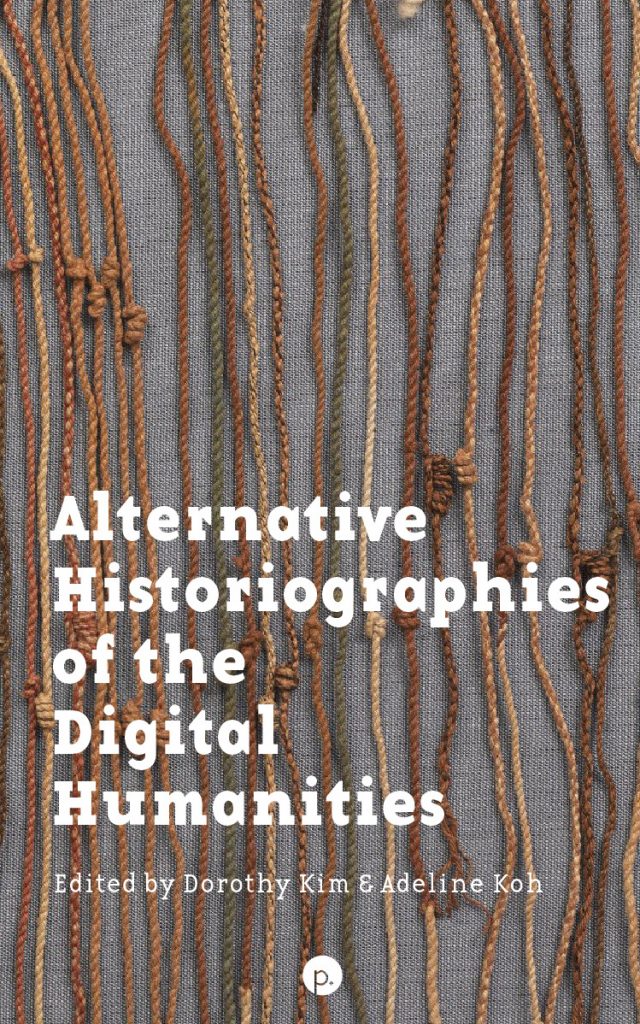
Dorothy Kim serves as Assistant Professor of English at Brandeis University with cross-appointments in the Department of Women's, Gender and Sexuality Studies and the Women's Studies Research Center. Her innovative scholarship bridges medieval literary studies, digital humanities, and critical race theory, examining how medieval history is weaponized by contemporary white supremacist movements and advocating for antiracist frameworks in academia. She earned her Ph.D. and M.A. from the University of California, Los Angeles and her B.A. from the University of California, Berkeley. Her educational trajectory reflects deep engagement with interdisciplinary approaches to literature and cultural studies. Kim's research centers on exposing the racialized foundations of medieval studies, particularly through projects analyzing digital white supremacy and medievalism's role in alt-right ideology. She pioneers methodologies connecting medieval women's literary cultures with contemporary trans feminism while interrogating Jewish/Christian difference in manuscript studies. Her work consistently challenges the field's historical whiteness and develops decolonial digital humanities practices. Her publication trends reveal a decisive shift toward critical race interventions in premodern studies, with increasing focus on database methodologies, sonic histories, and the material politics of medieval manuscript transmission. Recent works demonstrate how digital tools can either reinforce or dismantle racial hierarchies in academic knowledge production. Her distinguished honors include: 2023 Medieval Academy of America Article Prize in Critical Race Studies American Studies Association Digital Humanities Book Prize (2021) Society for Medieval Feminist Scholarship's Best Feminist Article Award (2021) AAUW Postdoctoral Fellowship (2018-2019) Folger Shakespeare Library Long-Term Fellowship (2025-2026) SSHRC, Ford Foundation, Fulbright, and Mellon fellowships Kim directs major collaborative projects including the NEH-funded An Archive of Early Middle English (161-manuscript database) and co-leads the Global Middle Ages Project. As co-director of RaceB4Race and the Reckonings Institute, she creates platforms for community archiving and social justice praxis. Her mentorship focuses on training students in critical digital methodologies through Brandeis' DH Lab while developing antifascist frameworks for humanities education. She currently leads the Brandeis University DH Lab housing her NEH project, co-edits Literature Compass's pre-1800 section, and develops two major book projects: Race, the Crusades, and the Katherine Group (based on her AAUW fellowship) and Music, Multimodal Manuscripts, and Remediating the Medieval Lyric for ArcPress.
Laurie Shannon is the Franklyn Bliss Snyder Professor of English at Northwestern University, with a J.D. from Harvard Law School and a Ph.D. from the University of Chicago. She studies English literature and culture in the long sixteenth century, focusing on the history of ideas in language, stakeholdership, embodiment, and cross-species relations. She serves as convener of The Anne Lister Society and is collaborating with Oxford University Press on a scholarly edition of Anne Lister’s Journal. Education: J.D., Harvard Law School; Ph.D., University of Chicago Shannon’s research explores the political imagination in early modern literature, particularly through friendship (Sovereign Amity: Figures of Friendship in Shakespearean Contexts) and animal studies (The Accommodated Animal: Cosmopolity in Shakespearean Locales). Her current monograph, 'Frailty’s Name: Shakespeare and the Natural History of Human Being,' examines human negative exceptionalism in Renaissance thought and its implications for climate crisis ethics. Her publications span Shakespeare studies, queer theory, environmental humanities, and textual editing. Notable awards include the Elizabeth Dietz Memorial Award, Robert B. Cox Teaching Award, and Dean’s Award for Graduate Mentoring. She has held NEH, ACLS, and Guggenheim fellowships. Scientific Awards: Elizabeth Dietz Memorial Award, Robert B. Cox Distinguished Undergraduate Teaching Award, Dean's Award for Graduate Mentoring, NEH Fellowship, ACLS Fellowship, Guggenheim Fellowship Shannon contributes to the Anne Lister Diary Transcription Project and has served as English Department Chair at Northwestern. Her recent articles focus on Shakespeare’s engagement with natural history, queer cosmology, and animal sovereignty, reflecting her interdisciplinary approach.
D. Max Moerman is a Professor and Chair of the Department of Asian and Middle Eastern Cultures at Barnard College, Columbia University. He holds an A.B. from Columbia College (1986) and a Ph.D. from Stanford University (1999). His research focuses on East Asian Buddhism, particularly the visual and material culture of Japanese religions. His current book project, Geographies of the Imagination: Buddhism and the Japanese World Map , explores intersections between religious thought and cartographic representation. He serves as Co-Chair of Columbia’s Buddhist Studies Seminar and Associate Director of the Columbia Center for Buddhism and Asian Religions. Key research interests include sacred texts like the Lotus Sutra , medieval religious practices, and pilgrimage traditions. His work integrates textual analysis with material culture studies, addressing themes of defilement, sacred geography, and iconography. Teaching responsibilities include courses such as Colloquium on Major Texts: East Asia and The Lotus Sutra . He actively contributes to interdisciplinary dialogues on Japanese religious history through his academic leadership roles and publications in journals like the Japanese Journal of Religious Studies .
Mohsen Goudarzi is an Associate Professor of Islamic Studies at Harvard Divinity School (HDS), part of Harvard University. He joined the faculty in 2021 after teaching at the University of Minnesota. His academic background includes a PhD from Harvard University and an MA from Stanford University. His research focuses on the Qur’an and early Islamic history, employing literary, linguistic, comparative, and historical approaches. Key interests include the Qur’an’s role in Late Antique religious developments, Islamic exegetical traditions (tafsīr), and theological frameworks (kalām). His current projects explore the Qur’anic worldview’s interpretation and the significance of Meccan cultic rituals to early Islamic identity. He has received teaching excellence awards, including a certificate from the University of Minnesota’s Center for Educational Innovation and three teaching distinctions from Harvard’s Office of Undergraduate Education. Research outputs include groundbreaking articles on Qur’anic exegesis, cultic practices, and interreligious dynamics. Notable works analyze the Qur’an’s engagement with Abrahamic traditions, ritual practices in Mecca, and the textual history of early Islamic manuscripts. His collaborative work on the Ṣan‘ā’1 codex redefined understandings of early Qur’anic canonization. Teaching spans HDS and Harvard’s Faculty of Arts and Sciences (FAS), covering Islamic studies, Qur’anic studies, and religious history. He advises students in HDS programs and contributes to interdisciplinary initiatives at the intersection of theology, history, and textual criticism.
Kaya Şahin is an Adjunct Professor at Indiana University Bloomington's Hamilton Lugar School of Global and International Studies. He holds a Ph.D. in History from the University of Chicago (2007). His research focuses on the Ottoman Empire, early modern Eurasian empires, and the interplay of historiography, governance, and identity in early modern global contexts. Key areas include the Ottoman-Safavid rivalry, intercultural exchanges, and the construction of imperial discourses. Educational Background: Ph.D. in History, University of Chicago, 2007. Research Interests: - Institutional and ideological foundations of Ottoman imperialism - Comparative studies of early modern Eurasian empires - Ottoman historiography and its modern interpretations - Cultural and religious dimensions of the Ottoman-Safavid rivalry - Early modern Eurasia as a unified historical zone. Awards and Honors: NEH Fellowship (2015-16) SSRC Postdoctoral Fellowship (2012-2013) Sherman Emerging Scholar (2011-2012) Newberry Library Mellon Fellowship (2010-2011) Mellon Fellowship at Northwestern University (2007-2008) His work examines global interconnectedness in early modernity, emphasizing the Ottoman Empire’s role within a broader Eurasian framework. Recent publications explore Anthony Sherley’s Persian travels, Celalzade Mustafa’s bureaucratic writings, and apocalyptic interpretations of Ottoman conquests.