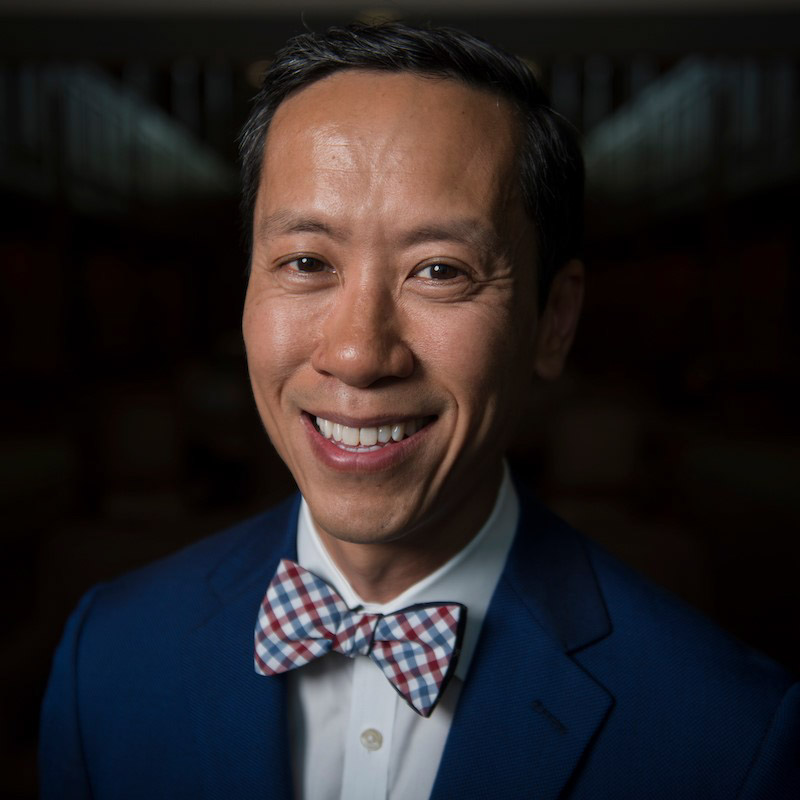
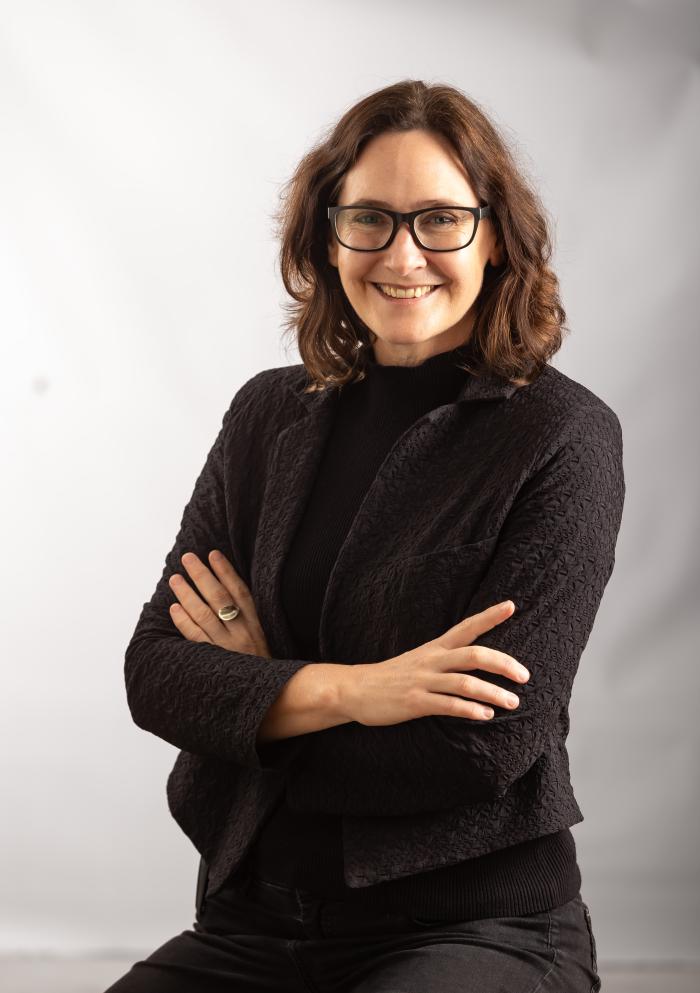
Sharese King is the Neubauer Family Assistant Professor of Linguistics at the University of Chicago, where she has taught since 2018. She earned her Ph.D. and Master's in Linguistics from Stanford University, focusing on language variation across African American communities. Her research bridges sociolinguistics, critical race theory, and phonetics to examine how African American speech is constructed, racialized, and socially evaluated. Education: Ph.D., Linguistics, Stanford University (2018) M.A., Linguistics, Stanford University Research Interests: Sociolinguistics Language Variation & Change African American Language Critical Race Theory Phonetic and experimental analysis Dialect and judicial systems Notable Contributions: Interdisciplinary studies on raciolinguistics and courtroom bias Analysis of /s/ articulation in intersectional contexts Reconceptualization of AAVE as AAL to emphasize linguistic diversity Fieldwork in Bakersfield, Rochester, and Chicago Publications in American Speech , Journal of Sociolinguistics , Language , and Nature Scientific Awards: Provost's Postdoctoral Fellowship Neubauer Family Assistant Professorship Labs & Projects: Co-founder of the Chicagoland Language Project
Joseph Thai is an Adjunct Professor specializing in constitutional law and Supreme Court jurisprudence. He holds an A.B. in English from Harvard College (1995) and a J.D. from Harvard Law School (1998). His legal career includes clerkships with Justices John Paul Stevens and Byron White of the U.S. Supreme Court and Judge David Ebel of the Tenth Circuit. He played a pivotal role in challenging Oklahoma's same-sex marriage ban, contributing to landmark civil rights advancements. Recognized as an outstanding educator by students, he is also an active scholar and litigator. Elected to the American Law Institute (2021) Consistently honored as outstanding professor
Prof. Dr. Alexander Stroh-Steckelberg is Professor of Political Science with a focus on African Politics & Development Policy at the University of Bayreuth since 2022. He serves as Deputy Head of the Bayreuth International Graduate School of African Studies (BIGSAS) until 2025 and has held prior roles as Junior Professor and Senior Fellow at BIGSAS (2015–2021). His academic career includes research associate positions at the GIGA German Institute of Global and Area Studies (2006–2015) and teaching roles at the Universities of Abomey-Calavi, Heidelberg, and Lüneburg. Stroh-Steckelberg’s research spans comparative democracy studies , judicial politics , electoral systems , political party dynamics , and development policy in Africa, with regional expertise in Francophone West Africa and Rwanda . His work emphasizes institutional diffusion, informal networks in courts, and the interplay between formal and informal governance structures. Recent publications reveal a focus on judicial appointment policies , electoral manipulation , and local governance challenges across Africa. He contributes to methodological advancements in comparative area studies and network analysis , particularly in non-Western democracies. Stroh-Steckelberg is actively involved in academic communities including the American Political Science Association , German Political Science Association , and Association for African Studies in Germany .
Patrick Overeem is an Associate Professor at the Faculty of Social Sciences and Humanities (Vrije Universiteit Amsterdam), specializing in Political Science and Public Administration. He holds a PhD from Leiden University (2010) and advanced degrees in Public Administration and Political Science from the same institution. His research focuses on democratic theory, value pluralism, statesmanship, and EU governance. He is affiliated with the Multi-layered Governance (MLG) research group and serves on editorial boards, including the American Review of Public Administration . Overeem's work emphasizes ethical leadership, compromise in politics, and the interplay between democracy and pluralism. Key contributions include his 2012 book on the politics-administration dichotomy and his neo-Aristotelian analyses of political virtue. He has led projects like the EU-funded RECONNECT initiative (2018–2022), exploring democratic reconciliation in Europe. He advises Dutch parliamentary integrity committees and contributes to public debates on ethics and governance through media engagements. His research bridges classical political theory with contemporary challenges, addressing topics like postliberalism, moral dilemmas in governance, and constitutional frameworks. Overeem teaches courses on political theory, democratic systems, and the history of political thought, fostering critical engagement with ethical and institutional dimensions of power.
Susan Fino is a Professor at the College of Liberal Arts and Sciences, Wayne State University. Her research focuses on public law, American constitutional law, administrative law, and the role of state supreme courts. She holds a B.A. from Johns Hopkins University, an M.A. and Ph.D. from Rutgers University. She has received the President's Award for Excellence in Teaching. Her courses include American Government (PS1010) and Constitutional Law (PS5110/PS5120), taught across multiple terms from 2023 to 2025. Dr. Fino's research explores judicial federalism, state constitutional frameworks, and legal interpretations of rights. Her work analyzes topics like church-state relations, taxation provisions in state constitutions, and assisted suicide debates. She has written extensively on state supreme court dynamics, including landmark cases and institutional performance metrics. Her scholarship bridges legal theory with practical governance challenges at both state and federal levels. Her publications span over three decades, addressing evolving legal landscapes such as the Rehnquist Court’s federalism approach and technological impacts on criminal sentencing. She consistently engages with issues at the intersection of law, politics, and societal values.
California Institute of Technology (Caltech)United States
Jonathan N. Katz is the Kay Sugahara Professor of Social Sciences and Statistics at the California Institute of Technology (Caltech). He holds a S.B. from MIT (1990), M.A. from UC San Diego (1992), and Ph.D. from UC San Diego (1995). His career includes roles as Assistant Professor (1995-98), Associate Professor (1998-2003), and Professor (2003-11) at Caltech, with subsequent appointments as Sugahara Professor (2012–present), Executive Officer for Social Sciences (2007), and Division Chair (2007–14). His research focuses on statistical methods in social sciences, electoral systems, and public policy. Key affiliations include the Caltech/MIT Voting Technology Project and the Linde Institute of Economic and Management Sciences. Katz is Deputy Editor for Social Sciences at Science Advances and a Fellow of the American Academy of Arts and Sciences (2011) and the Society for Political Methodology (2008). Research interests span political methodology, formal theory, and American politics. Recent work addresses partisan fairness in electoral systems, statistical rigor in political modeling, and institutional dynamics in legislative and judicial contexts. Notable contributions include critiques of electoral college bias and audits of political behavior research methodologies. Awards: Career Achievement Award in Political Methodology (2024), Inaugural Fellow, Society for Political Methodology (2008). Grants/Labs: Caltech/MIT Voting Technology Project, Linde Institute Directorship (2013–14).
Professor Elaine Fahey is a leading scholar in EU law and global governance at the City Law School, City St George's, University of London, where she serves as Professor of EU Law and Deputy Head of Department (academic programmes). She is co-convener of the Institute for the Study of European Law (ISEL) and the UACES James Madison Trust EUFUtures initiative (2022–2025). Her academic career includes visiting professorships at Washington College of Law (American University), Keio University, and NYU, as well as fellowships at the European University Institute and the University of Graz. LLB, Trinity College Dublin LLM, Sidney Sussex College, University of Cambridge PhD, Trinity College Dublin Barrister-at-Law, Honorable Society of King’s Inns, Ireland Attorney-at-Law, State of New York Senior Fellowship, Higher Education Authority UK Her research focuses on the intersection of EU law with global governance, digital regulation, transatlantic relations, and the Area of Freedom, Security and Justice. She explores how the EU navigates legal frameworks beyond the nation-state, particularly in digital trade, cybersecurity, and data protection. Her work critically examines the EU’s role as a global regulatory actor and its interactions with international institutions. Her extensive publication record includes the monograph The EU as a Global Digital Actor (Hart, 2022) and numerous articles on digital sovereignty, data transfers, and transatlantic cooperation. Recent research analyzes the EU–US Trade and Technology Council (TTC), the evolution of the Privacy Shield, and strategic litigation in digital rights. Her work reveals a strong trend toward understanding how soft law, institutional design, and judicial decisions shape EU external relations and digital governance. Erasmus+ Jean Monnet Chair in Law & Transatlantic Relations (2019–2022) Emile Noël Fellow, NYU Law School Max Weber Fellow, European University Institute Senior Land Steiermark Fellow, University of Graz Senior Fellowship, Higher Education Authority UK Professor Fahey has supervised multiple PhD students, including Isabella Mancini, Giulio Kowalski, and Christos Karetsos, on topics such as algorithmic collusion, digital markets, and investment law. She has led significant research projects, including the ESRC-funded TRILATTRADE grant and the Marie Curie ITN on EU and Transatlantic Investment and Trade (EUTIP). She previously held leadership roles as Associate Dean (International) and interim Associate Dean (Research) at the City Law School. She is an elected member of the EU Studies Association (EUSA) Executive (2021–2025). She has also contributed to public policy through briefings for the Welsh Parliament and reports on CJEU litigation in Ireland. She is associated with research initiatives such as the Institute for the Study of European Law (ISEL) and has collaborated on interdisciplinary projects on Facebook regulation, transatlantic relations, and EU technological sovereignty. Her work bridges legal scholarship, policy, and international academic collaboration.
Lisa Ford is an Endowed Professor of Modern British Imperial History at the University of New South Wales. Her research focuses on legal history, settler colonialism, and the British Empire's legal frameworks. She holds a PhD from Columbia University and has authored/co-authored influential works such as *Settler Sovereignty* and *The King’s Peace*. Ford’s expertise spans the British Empire’s legal order, colonial governance, and Indigenous jurisdictions. **Education**: Columbia University (MA, MPhil, PhD) and University of Queensland (BA, LLB, MA). **Research Interests**: Legal history of the British Empire (1760–1840), settler colonialism, and the legal dimensions of early American and Australian settlements. Her work bridges legal theory with colonial practices, emphasizing the intersection of law, power, and Indigenous resistance. **Awards**: Dalton Award, Australian Academy of the Humanities Fellowship, Thomas J. Wilson Prize, and Bancroft Dissertation Prize. Her publications explore imperial legal reforms, colonial commissions, and the legacy of settler sovereignty. **Grants & Advising**: Recipient of Australian Research Council grants, including the Future Fellowship (2019–2024). She co-edits *The Cambridge Legal History of Australia* and collaborates on projects analyzing colonial legal systems and Indigenous governance. **Labs/Teams**: Involved in interdisciplinary initiatives on empire and law, including digital scholarship on colonial commissions and collaborative research with institutions like the University of Western Sydney.
Katherine Lemons is an Associate Professor in the Department of Anthropology at McGill University's Faculty of Arts. Her research focuses on Islamic family law adjudication in India, examining its implications for understanding Muslim gender and kin relations, secularism, minority politics, and legal pluralism in postcolonial contexts. She has established herself as a leading scholar in the anthropology of law with her groundbreaking work on Muslim divorce practices and their relationship to Indian secularism. Dr. Lemons earned her Ph.D. from the University of California, Berkeley in 2010. Her academic journey has centered on the intersections of religion, law, and gender in South Asian contexts, with particular attention to how religious legal systems operate within secular states. Her research interests span multiple interconnected fields including the anthropology of law, Islamic legal studies, secularism theory, feminist anthropology, and South Asian studies. Lemons approaches these topics through careful ethnographic work in India, particularly examining how Muslim communities navigate family law disputes through non-state Islamic institutions. Her work challenges conventional understandings of the relationship between religious and secular law, arguing that Muslim divorce practices in India represent a critical site for understanding the complexities of secular governance in postcolonial contexts. She investigates how legal pluralism functions in practice, how religious legal authority is established adjacent to secular states, and how gender relations are shaped through these intersecting legal regimes. Dr. Lemons' scholarly output reveals a consistent focus on the tensions between religious legal traditions and modern secular governance, with particular attention to how marginalized communities navigate these complex legal landscapes. Her work demonstrates how legal practices often blur the boundaries between religious and secular domains, challenging simplistic understandings of secularism. She has made significant contributions to understanding how Islamic law functions in non-Muslim majority contexts, both in India and more recently in her research on sharia courts in Ontario. Michelle Z. Rosaldo Prize from the Association for Feminist Anthropology, American Anthropological Association (Honorable Mention) Critical Anthropology Book Prize from the Association for Political and Legal Anthropology (Honourable Mention) South Asian Muslim Studies Association Book Award (Honourable Mention) As an academic mentor, Dr. Lemons advises graduate students working at the intersections of anthropology, law, and religious studies. Her research has been supported by various academic grants that have enabled extensive fieldwork in India and Canada. She is currently developing two major research projects: "Traveling for Justice," which examines transnational dimensions of Islamic legal knowledge, and "Adjacent to the State," an ethnographic study of sharia courts in Ontario. Dr. Lemons is affiliated with several research centers at McGill University that focus on South Asian studies, legal anthropology, and religious studies. Her work connects with broader scholarly communities through collaborations with researchers studying legal pluralism, secularism, and Islamic jurisprudence across multiple national contexts.
Marcela Echeverri Muñoz is an Associate Professor in the Department of History at Yale University, affiliated with the Faculty of Arts and Sciences. Her scholarship bridges history, anthropology, and political theory, with a focus on Latin America, the Atlantic World, and the Spanish Empire. She is recognized for her interdisciplinary approach to understanding political subjectivities, state formation, and social transformation during the Age of Revolutions. PhD in Latin American and Caribbean History, New York University, 2008 MA in History of the Hispanic World, Fundación MAPFRE-Tavera and CSIC, Madrid, 2006 MA in Social and Political Theory, The New School for Social Research, 2001 BA in Anthropology, Universidad de los Andes, Bogotá, 1997 Her research centers on the interplay of race, gender, law, and political theory in colonial and 19th-century Latin America. She investigates how enslaved and Indigenous peoples navigated imperial and republican transitions, particularly through royalist affiliations. Her work challenges peripheral narratives of Spanish America in Atlantic slavery studies, positioning the region as a central site of abolitionist and constitutional experimentation. The trends in her recent publications reveal a sustained focus on slavery, abolition, and political transformation in the Spanish American mainland. She analyzes how anti-slavery movements were intertwined with republicanism, citizenship, and state formation, especially in Gran Colombia. Her scholarship spans legal history, Atlantic processes, and transimperial dynamics, often highlighting marginalized voices in revolutionary contexts. She frequently contributes to major reference works and edited volumes on Atlantic revolutions and Latin American independence. Her scientific awards and fellowships reflect her standing in the field: James Alexander Robertson Prize Michael Jiménez Prize Bolton-Johnson Prize Honorable Mention Yale Heyman Prize for Outstanding Scholarly Publication Alexander von Humboldt Research Fellowship MacMillan Research Fellow, Yale Mellon Residential Fellow, CUNY NEH Summer Institute Participant, Johns Hopkins Fellowships from John Carter Brown Library, CSIC, Fundación Mapfre, and Instituto Colombiano de Antropología e Historia Echeverri has secured significant research grants from Harvard’s Atlantic History Seminar, CUNY Research Foundation, and Yale. She has co-edited special issues on Gran Colombian history and Spanish American abolition, and led key academic initiatives including the Race and Slavery in the Atlantic World Working Group and the Early Modern Empires Workshop at Yale. Though student advising is not explicitly detailed, her role as a senior scholar implies mentorship of graduate students. She is affiliated with several research networks and has been a visiting scholar at institutions such as Freie Universität Berlin. Her ongoing book project on Gran Colombian slavery underscores her commitment to redefining the hemispheric significance of Latin American abolition. She remains an active contributor to both scholarly and pedagogical conversations in Atlantic and Latin American history.
Mauro Barelli is Professor of International Law at The City Law School, City, University of London. He holds a PhD from Cardiff University and an LLM from the University of Bristol, and has been a faculty member at City since 2009, progressing from Lecturer to Professor in 2024. He teaches Advanced Issues of International Law, International Human Rights Law, and a course on Minority and Indigenous Peoples' Rights. He has held visiting positions at the University of Cambridge (Lauterpacht Centre), Nanjing University, the University of Iceland, and the University of Trento. His research focuses on: Rights of ethno-cultural and indigenous peoples Law on the use of force Chinese perspectives on international law Soft law and normative development Minority rights and litigation His publications include four books and numerous articles in leading journals such as Journal of Conflict and Security Law , Human Rights Quarterly , and Asian Journal of International Law . His recent work analyzes China’s engagement with international law, the UK’s relationship with the ICJ, and the synchronization of biodiversity protection with indigenous rights. Key scientific recognitions include: Higher Education Academy Fellow (since 2012) He is an experienced PhD supervisor, having chaired and served on numerous doctoral committees, including as PhD Programme Director. His advisee Engin Firat is currently a research student at City. He has also served in administrative roles such as Assistant Dean (Research). His expertise has been sought by national governments, parliaments, and international NGOs. He is an active participant in international academic events, particularly through the European China Law Studies Association.
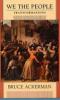
Bruce Ackerman is Sterling Professor of Law and Political Science at Yale University, holding one of the most prestigious academic positions at Yale. He has made significant contributions to constitutional law, political philosophy, and public policy over his distinguished career. His educational background includes an LL.B. from Yale (1967) and a B.A. from Harvard (1964). Ackerman has received numerous honors including the Henry Phillips Prize for lifetime achievement in Jurisprudence (2002), an Honorary Doctorate from the University of Milan (2023), and recognition as a Commander of the French Order of Merit. Ackerman's research focuses on American Constitutionalism, Comparative Constitutionalism, and Theories of Justice. His groundbreaking work includes the three-volume series We the People , which explores great turning points in American constitutional history. His scholarship has had global impact, influencing constitutional reforms in France, Brazil, Britain, and other countries. His recent work examines the constitutional challenges posed by the internet revolution and digital age. His publications reveal consistent engagement with constitutional crises across different nations and time periods, with particular attention to emergency powers, presidential authority, and democratic resilience. Ackerman's work connects historical constitutional development with contemporary challenges to democratic institutions. Commander of the French Order of Merit Henry Phillips Prize for lifetime achievement in Jurisprudence (2002) Honorary Doctorate from University of Milan (2023) Member of the American Law Institute Member of the American Academy of Arts and Sciences Named Leading Global Thinker by Foreign Policy magazine Ackerman has advised numerous governments and constitutional bodies worldwide. His work Before the Next Attack served as basis for French constitutional reform on emergency powers, while The Stakeholder Society influenced wealth distribution reforms in Brazil and Britain. He continues to actively engage with current constitutional challenges through scholarly publications, media commentary, and direct consultation with constitutional institutions globally.
Steven Klein is a Senior Lecturer in Political Theory at King’s College London’s Department of Political Economy. He holds a PhD from the University of Chicago and previously taught at the University of Florida. His research focuses on democratic theory, political economy, welfare state institutions, and European integration. He has received an ERC Starting Grant for his project on systemic risk and democracy, and fellowships from the European University Institute and the American Academy in Berlin. Education: BA (Honours) in Political Science from the University of British Columbia (2008), MA (2012) and PhD (2016) in Political Science from the University of Chicago. His work examines democratic potential in welfare struggles, Karl Polanyi’s theories, and contemporary finance/debt politics. He leads research groups on political theory, PPE, and global inequality. Key awards include the Berlin Prize Fellowship and ERC funding. His book The Work of Politics: Making a Democratic Welfare State (2020) explores democratic welfare institutions. Current projects include a global history of trade unions and a study of systemic risk’s impact on democracy. Advising: No listed students. Active in research groups like the Political Theory Research Group and the Global South Research Group. He also contributes to public discourse through articles in Foreign Policy and The Berlin Journal .
Josh Chafetz is the Agnes Williams Sesquicentennial Professor of Law and Politics at Georgetown University Law Center, where he teaches and researches constitutional law, legislation, and the intersection of law and politics. He previously served on the faculty at Cornell Law School for twelve years. His research focuses on structural constitutional law, American and British constitutional history, legislative procedure, and democratic norms. He is the author of influential works including Congress’s Constitution: Legislative Authority and the Separation of Powers (Yale University Press, 2017) and Democracy’s Privileged Few (Yale University Press, 2007), and co-edits the leading casebook Cases and Materials on Legislation and Regulation . His recent scholarship addresses judicial power, corruption, and congressional authority, with publications in top law journals such as the Harvard Law Review , Yale Law Journal , and University of Chicago Law Review , as well as public commentary in the New York Times , Washington Post , and Politico . He testified before Congress in 2024 on the implications of the post-Chevron administrative law landscape. Rhodes Scholar Chafetz has served on the American Political Science Association Presidential Task Force on Congressional Reform (2019–2020) and regularly contributes to public discourse on constitutional crises, presidential power, and democratic resilience. He advises on legislative policy and engages with governmental institutions on constitutional reform. He is affiliated with Georgetown Law’s centers and institutes, contributing to interdisciplinary research on law and governance, though specific lab or team affiliations are not detailed in the text.
Tarik Abou-Chadi is a Professor in European Union and Comparative European Politics at the University of Oxford's Department of Politics and International Relations, and a Professorial Fellow at Nuffield College. He holds a PhD from Humboldt University Berlin (2015). His research focuses on elections, political parties, and the transformation of democratic representation in post-industrial societies. Key affiliations include the Government and Politics Network, Comparative Politics and Government, and leadership of the Swiss National Science Foundation-funded project on 'Social Status and the Transformation of Electoral Behavior in Western Europe'. He previously served as Assistant Professor at the University of Zurich before joining Oxford. His work appears in top journals like the American Political Science Review and World Politics. Awards include the Henrik Enderlein Prize (2022) and inclusion in Capital magazine's 'Top 40 under 40' (2022). He advises four doctoral students and actively contributes to media commentary on European political trends through outlets like The Economist. Research interests emphasize far-right dynamics, voter behavior, and party strategy in Western Europe. His recent analyses address gendered political preferences among youth, climate policy acceptance, and the electoral consequences of mainstream parties adopting radical-right policies.