University of California, Los AngelesUnited States
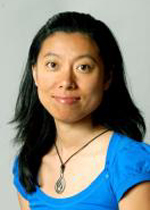
Yunxiang Yan is a Professor in the Department of Anthropology at the University of California, Los Angeles (UCLA). His work focuses on China and Cultural Anthropology , with specific expertise in Economic Anthropology , Family and Kinship , and Individualization . Education: Ph.D. in Social Anthropology from Harvard University (1993). Yan’s research explores the intersection of social change , moral theory , and family dynamics in modern China. His ethnographic studies in rural villages provide foundational insights into exchange theory and cultural globalization . Recent publications analyze food safety , medical ethics , and moral crises in China, reflecting his interdisciplinary approach combining anthropology, sociology, and philosophy. Articles span themes like intergenerational intimacy , political oppression , and networked social structures . Scientific Awards: Guggenheim Fellowship Levenson Prize-winning Research Yan’s work bridges local Chinese studies with global anthropological discourse. He has held positions at the Chinese University of Hong Kong, Johns Hopkins University, and UCLA since 1996. His career reflects a commitment to documenting the lives of ordinary people, rooted in his early experiences as an expelled villager during Maoist China. Contact: yan@anthro.ucla.edu
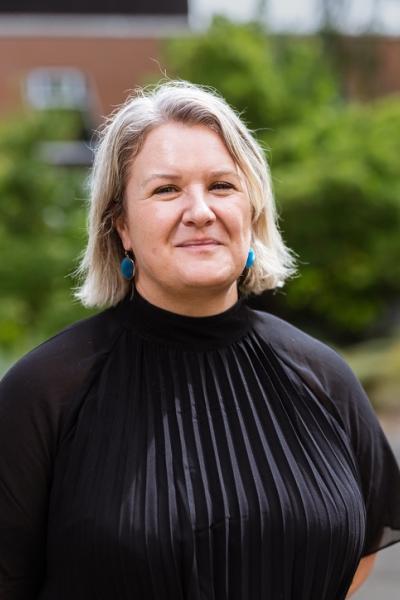
Haiyan Lee serves as the Walter A. Haas Professor of the Humanities and Professor of East Asian Languages and Cultures and of Comparative Literature at Stanford University. She has held these positions since joining Stanford in 2009, and currently serves as Chair of the East Asian Languages and Cultures department (2020-present). Her academic journey includes previous teaching appointments at the University of Colorado at Boulder and the University of Hong Kong, along with post-doctoral fellowships at Cornell University and Harvard University. Lee's research spans multiple interdisciplinary fields with particular focus on modern Chinese literature and cultural production. Her work bridges literary studies with law, philosophy, cognitive science, affect theory, gender studies, and environmental humanities. She has developed influential theoretical frameworks including the concept of "high justice" and "low justice" in Chinese legal imagination. Her current research explores animism, cognition, and the Chinese environmental imagination, extending her longstanding interest in human-animal relations. Lee's publications reveal a consistent trajectory examining Chinese cultural production through innovative theoretical lenses. Her recent work shows increasing engagement with legal theory, environmental humanities, and cognitive approaches to literature. She has produced significant scholarship on Chinese concepts of justice, love, and the stranger, moving across historical periods from early 20th century to contemporary China. Biennial Book Prize, Honorable Mention, International Society for Chinese Law and History (ISCLH) (2024) Humanities Seed Grant, Stanford School of Humanities and Sciences (2023-2025) Bass Fellowship in Undergraduate Education, Stanford University (2022-2027) Joseph Levenson Book Prize, The Association for Asian Studies (2009) Professor Lee actively mentors doctoral students across multiple disciplines, serving as dissertation advisor, co-advisor, and committee member for students working at the intersection of Chinese studies, law, literature, and cultural theory. Her teaching includes courses across East Asian humanities, comparative literature, and interdisciplinary environmental studies. She has received significant research support including the Frederick Burkhardt Residential Fellowship from the American Council of Learned Societies and a residency at the Center for Advanced Study in the Behavioral Sciences.
Nicholas Evans is a Distinguished Professor in the Department of Linguistics at the School of Culture, History & Language, Australian National University. He is an ARC Laureate Fellow and serves as Director of the ARC Centre of Excellence for the Dynamics of Language (CoEDL), reflecting his leadership in integrating typology, descriptive linguistics, and cognitive science. His work spans linguistic diversity, endangered languages, and the interplay between language and culture. His research focuses on Australian and Papuan languages, with extensive fieldwork in remote communities. Key interests include linguistic typology, historical and contact linguistics, semantics, and the cognitive underpinnings of grammar. He has published foundational grammars and dictionaries of Kayardild, Bininj Gun-wok, and Dalabon, contributing significantly to the documentation of endangered languages. His recent publications reveal a strong trend in cross-linguistic studies of social cognition (SCOPIC), syntactic typology, and phylogenetic modeling of the Yam languages. These works integrate linguistic, cognitive, and genetic data, highlighting interdisciplinary approaches to understanding language evolution and human diversity. ARC Laureate Fellow Fellow of the Australian Academy of the Humanities (FAHA) Fellow of the Academy of the Social Sciences in Australia (FASSA) Fellow of the British Academy (FBA) Evans supervises research students and leads major projects such as 'The Wellsprings of Linguistic Diversity' and CoEDL, which involve extensive collaboration across institutions and disciplines. His grants include modeling Pacific creoles and phonemic analysis of Tok Pisin. He is also involved in digital archiving initiatives like PARADISEC and the Language Data Commons of Australia, ensuring long-term preservation of linguistic data. He leads and contributes to research teams focused on Southern New Guinea languages, paradigm syncretisms (PARABANK), and cultural heritage preservation. His work emphasizes reciprocal engagement with speech communities and training the next generation of language documenters.
Christopher Rea is a Professor of Modern Chinese Literature in the Department of Asian Studies at the University of British Columbia's Faculty of Arts. He serves as a faculty member and former Associate Head of the Department of Asian Studies, former Director of the Centre for Chinese Research, an associate of the Hong Kong Studies Initiative, and a Faculty Fellow of St. John's College. His academic journey includes a Ph.D. from Columbia University (2008) and a B.A. from Dartmouth College (1999). Rea's research focuses on the modern Chinese-speaking world, with particular expertise in Chinese literature, cinema, print culture, translation, and the cultural history of humor and deception. His scholarly approach bridges literary analysis, cultural history, and film studies, creating a distinctive interdisciplinary perspective on modern Chinese cultural production. He is particularly known for his work on Republican-era China (1912-1949), exploring how cultural forms evolved during this transformative period. His major publications reveal a trajectory from studies of humor and laughter in modern China ( The Age of Irreverence , 2015) to literary hoaxes and deception ( The Book of Swindles , 2017), Chinese cinema ( Chinese Film Classics , 2021), and research methodology ( Where Research Begins , 2022). His current projects include China on the Make: Stories of Chinese Deception and The Unfinished Comedy , a sequel to The Age of Irreverence . National Endowment for the Arts Translation Fellowship (2024) UBC Dean of Arts Mentorship Award (2024) UBC Killam Research Prize (2022) Joseph Levenson Book Prize (2017) Rea actively supervises graduate students and has developed significant digital resources, including the Chinese Film Classics project (chinesefilmclassics.org) featuring 40+ subtitled Chinese films and 22 video lectures, and a YouTube channel with over 250 videos on Chinese cinema and culture. His teaching extends to free online courses on The Modern Chinese Novel and early Chinese cinema, demonstrating his commitment to making scholarly resources accessible beyond traditional academic boundaries.
Professor David A Palmer is a distinguished academic jointly appointed by the Hong Kong Institute for the Humanities and Social Sciences and the Department of Sociology at the University of Hong Kong, where he has been teaching since 2008. His interdisciplinary work bridges anthropology, sociology, religious studies, and Sinology, establishing him as a leading scholar in Chinese religious studies and transnational religious movements. Palmer's educational background includes a PhD in Anthropology of Religion from Ecole Pratique des Hautes Etudes (Sorbonne, Paris), an MPhil in Clinical Psychology/Medical Anthropology from University of Paris-VIII, and a BA in Anthropology and East Asian Studies from McGill University. His scholarly contributions span multiple disciplines with particular emphasis on Chinese religious traditions and their global manifestations. His research interests focus on the anthropology and sociology of spirituality and religion, especially Daoism and Chinese religion; religion in modern and contemporary China; inter-Asian and transnational religious circulations; Baháʼí Faith; civil society, volunteering, philanthropy, community engagement; and cultural and religious interactions on the Belt and Road. His work examines how religious traditions navigate modernity, state power, and globalization, with particular attention to the Belt and Road Initiative's cultural dimensions. Palmer's publications reveal a consistent focus on understanding Chinese religious traditions within broader theoretical frameworks of social theory, civil society, and transnational religious networks. His articles demonstrate how Chinese religious practices and institutions both adapt to and shape contemporary social and political contexts, with particular attention to the intersections of spirituality, modernity, and state-society relations. Joseph Levenson Award of the Association for Asian Studies PROSE award of the American Publishers' Association Francis L.K. Hsu Award of the Society for East Asian Anthropology Edward Bruner Prize for the best book in Anthropology of Tourism HK Research Grants Council RGC Research Fellowship (2021-2025) HK Research Grants Council Humanities and Social Sciences Prestigious Fellowship (2019) Palmer currently leads multiple significant research projects including 'Global China, Local Cultures: Chinese Modernity and Soft Power on the Belt and Road' (RGC Research Fellowship, 2021-2025), 'Infrastructures of Faith: Religious Mobilities on the Belt and Road' (CRF, 2019-2023), 'Rituals and Manuscripts of the Lanten Yao (Laos)' (GRF, 2021-2024), and 'Religious Cosmopolitanism in China, 1895-1927' (GRF, 2021-2024). He leads the 'Asian Religious Connections' research cluster at HKIHSS, co-convenes the 'Culture, Community and Social Equity' research cluster in the HKU Faculty of Social Sciences, and serves as co-convenor of the HKU Anthropology Research Network. As President of the East Asian Society for the Scientific Study of Religion, he plays a key role in advancing scholarly understanding of religion in the region.
Professor Jo Barraket is a leading academic and researcher in social equity, social innovation, and public policy. As Director of the Melbourne Social Equity Institute and member of the Dilun Duwa Centre for Indigenous Business Leadership, she focuses on improving social equity through organizational innovation, cross-sector collaboration, and policy design. Her research addresses social procurement, health equity, digital inclusion, and employment pathways for marginalized groups. Her work includes landmark projects such as the Australian Digital Inclusion Index and evaluations of Commonwealth Social Enterprise Development Funds. She has secured over $11M in research grants, including multiple ARC grants, and produced over 75 scholarly publications. Her current projects compare social procurement policies in Australia and Scotland, and study youth unemployment in construction via employment-focused procurement. Key research themes include: social enterprise scaling strategies, cross-sector partnerships for policy implementation, and the role of philanthropy in equitable housing. She advises governments and OECD on inclusive employment policies and chairs major research initiatives like the Social Enterprise Impact Lab. Prof Barraket’s transdisciplinary approach combines rigorous academic research with practical outputs like policy guides and digital tools to maximize societal impact. She previously founded the Centre for Social Impact Swinburne, now a global leader in social economy research.
Gierad Laput is a Senior Engineering Manager at Apple, leading the Perception and Interaction Engineering organization under Machine Intelligence Neural Design (MIND) at Apple AI/ML (AIML). He is also an Adjunct Professor at Carnegie Mellon University's School of Computer Science and Human-Computer Interaction Institute. His research sits at the intersection of sensing systems, interactive technologies, and machine learning, with applications in ambient intelligence, wearables, and AI-driven interactive experiences. Ph.D. in Computer Science from Carnegie Mellon University Founding member of CMU's Future Interfaces Group Former Google Ph.D. Fellow, Disney Imagineer, and recipient of 10 Best Paper Awards/Nominations His research agenda at Apple leverages cutting-edge hardware to develop multimodal ML systems for vision, audio, and motion sensors, enabling features like head gesture detection for AirPods, Apple Intelligence integrations, and health monitoring tools. Recent collaborative projects include Vision Pro hand interaction systems and WatchOS updates for cycling/fall detection. Key research areas include human-computer interaction , machine learning for sensor fusion , and smart environment sensing . Over 35 publications cover transformative technologies like ViBand (bio-acoustic sensing), EM-Sense (touch recognition), SkinTrack (arm as touchpad), and ElectroDermis (stretchable electronics). Scientific honors include: Fast Company Innovation by Design Award (2017) Google PhD Fellowship (2018) Swartz Entrepreneurial Fellowship (2018) Best Paper Awards at ACM UIST (2016) and ACM CHI (2015) As an educator, he has taught courses at CMU and the University of Michigan on on-device machine learning , signal processing , and human-centered design . His lab has mentored numerous researchers now pursuing PhDs at MIT, UW, CMU, and Northwestern.
Michael Kremer is a University Professor in Economics at the University of Chicago, holding positions in the Kenneth C. Griffin Department of Economics, the College, and the Harris School of Public Policy. He is the 2019 Nobel Laureate in Economic Sciences for pioneering experimental methods to address global poverty. Kremer earned his Ph.D. from Harvard University in 1992 and has been affiliated with the University of Chicago since 2020. His research focuses on development economics, field experiments, and policies impacting education, health, water, and agriculture in developing countries. He directs the Development Innovation Lab and leads the Development Economics Center at Chicago, emphasizing evidence-based solutions to poverty. Kremer’s work combines rigorous academic inquiry with practical policy applications, bridging theoretical economics and real-world interventions. Awarded the MacArthur Fellowship in 1997 and a Fellow of the American Academy of Arts and Sciences since 2003, Kremer’s contributions have shaped modern development economics. He has collaborated extensively with institutions worldwide, advocating for randomized controlled trials (RCTs) to evaluate social programs. His interdisciplinary approach integrates insights from economics, public policy, and experimental methods, fostering global partnerships to combat poverty effectively.
Dr. Luisa Calè is a Professor of Romantic and Nineteenth-Century Literature & Visual Culture and Research Lead at Birkbeck, University of London. She holds degrees from the University of Rome 'La Sapienza' (1993), University of Genoa (1997), and the University of Oxford (M.St. 1998, D.Phil 2002). Her research explores the interplay between literature and visual/material culture, focusing on book history, intermediality, and practices of reading/collecting. Her Leverhulme Trust-funded project 'The Book Unbound' examines how works by Blake, Walpole, and Dickens subverted traditional book formats. Education: PhD in Literary Studies, University of Genoa (1997) D.Phil., University of Oxford (2002) M.St. in English, University of Oxford (1998) Letters Degree, University of Rome (1993) Her research interests include Romantic aesthetics, material texts, and critical disciplinarity. Notable publications include Fuseli’s Milton Gallery (2006) and co-edited volumes like Dante on View (2007). She edits Blake/An Illustrated Quarterly and serves on editorial boards for Word & Image and Romantic Circles Gallery . Recent awards include a Leverhulme Trust Research Fellowship (2019) and a Mercator Fellowship (2018-19). She supervises graduate students in Romantic literature, material culture, and book history.
Dawn Song is a Professor in the Department of Electrical Engineering and Computer Science at the University of California, Berkeley, affiliated with multiple research centers including the Berkeley Artificial Intelligence Research Lab (BAIR) and the Berkeley Center for Responsible, Decentralized Intelligence (RDI). She holds leadership roles in AI safety, cybersecurity, and blockchain research. Her work bridges machine learning, security, and distributed systems, with notable contributions to formal verification, privacy-preserving technologies, and AI governance. Education: Ph.D. (2002) and M.S. (1999) in Computer Science from UC Berkeley and Carnegie Mellon University, respectively. She previously served as an Assistant Professor at Carnegie Mellon University before joining UC Berkeley in 2007. Research Interests: Dawn's work focuses on AI safety, cybersecurity, and the ethical implications of frontier AI. She explores topics such as large language model vulnerabilities, zero-knowledge proofs, blockchain security, and policy frameworks for AI governance. Her research combines theoretical rigor with practical applications, addressing challenges in secure systems, adversarial machine learning, and privacy-preserving computation. Publications: Her recent work includes groundbreaking studies on LLM memorization, smart contract decompilation, and AI agent cybersecurity evaluation. She also leads initiatives like the Singapore Consensus and California Report on AI safety priorities, emphasizing global collaboration in risk mitigation. Notable Awards: MacArthur Fellowship (2010), ACM Fellow (2019), IEEE Fellow (2019) Advising & Grants: She advises projects on AI policy and cybersecurity, securing grants from NSF, DARPA, and industry collaborations. Her lab develops tools like CyberGym for evaluating AI agents and zkPyTorch for secure machine learning. Labs & Teams: Her research groups at UC Berkeley focus on cutting-edge projects in AI safety, blockchain, and cybersecurity, collaborating with industry leaders and policymakers to advance both technical and ethical standards.
Adam Hollowell is an Adjunct Assistant Professor in the Program in Education at Duke University, where he also serves as Senior Research Associate at the Samuel DuBois Cook Center on Social Equity and Director of the Inequality Studies Minor. His teaching spans ethics, inequality studies, and history across Duke’s Kenan Institute for Ethics, Sanford School of Public Policy, and Department of History. Hollowell holds a Ph.D. from the University of Edinburgh (2009). His research focuses on inequality, higher education, public policy, and ethics, with notable work on pandemic impacts, telemedicine in education, and reproductive health access during crises. In Inequality Studies , Hollowell emphasizes understanding policies to drive social change, as highlighted in recent media coverage. His publications explore topics like student behavior shifts during the pandemic, telemedicine adoption in universities, and James Baldwin’s ethical challenges. He is a finalist for the Judith Deckers Prize (2024). Professionally, Hollowell leads projects such as Bass Connections on college contraception access and Story+ initiatives. His work bridges academia and public engagement, addressing systemic inequities through interdisciplinary approaches.
Janine O'Flynn is the Director of the Crawford School of Public Policy at the Australian National University (ANU) since 2023. Previously, she held the position of Professor of Public Management at the University of Melbourne and served as a visiting professor at institutions like City University Hong Kong and Fudan University. Her research focuses on public management reform, governance relationships, and ethical policy-making. Notable contributions include work on public value creation, performance management systems, and positive public administration. She has authored over 75 publications, including Pathways to Positive Public Administration (2024) and co-edited the Research Handbook on Public Management and COVID-19 (2024). O'Flynn has received prestigious awards such as the National Academy of Public Administration Fellowship (2022) and the Best Book Award at the Academy of Management (2013). She actively advises governments globally and chairs research committees for organizations like the Centre for Public Impact. Education: PhD (Melbourne), Bachelor of Commerce (Hons., Melbourne). Key Roles: Editorial Board Member: Public Administration , Public Management Review , and others Board of Directors, Public Management Research Association Advisory Board, Victorian Public Sector Commission Research Focus: Public sector reform, governance ethics, policy complexity, and agile government frameworks.
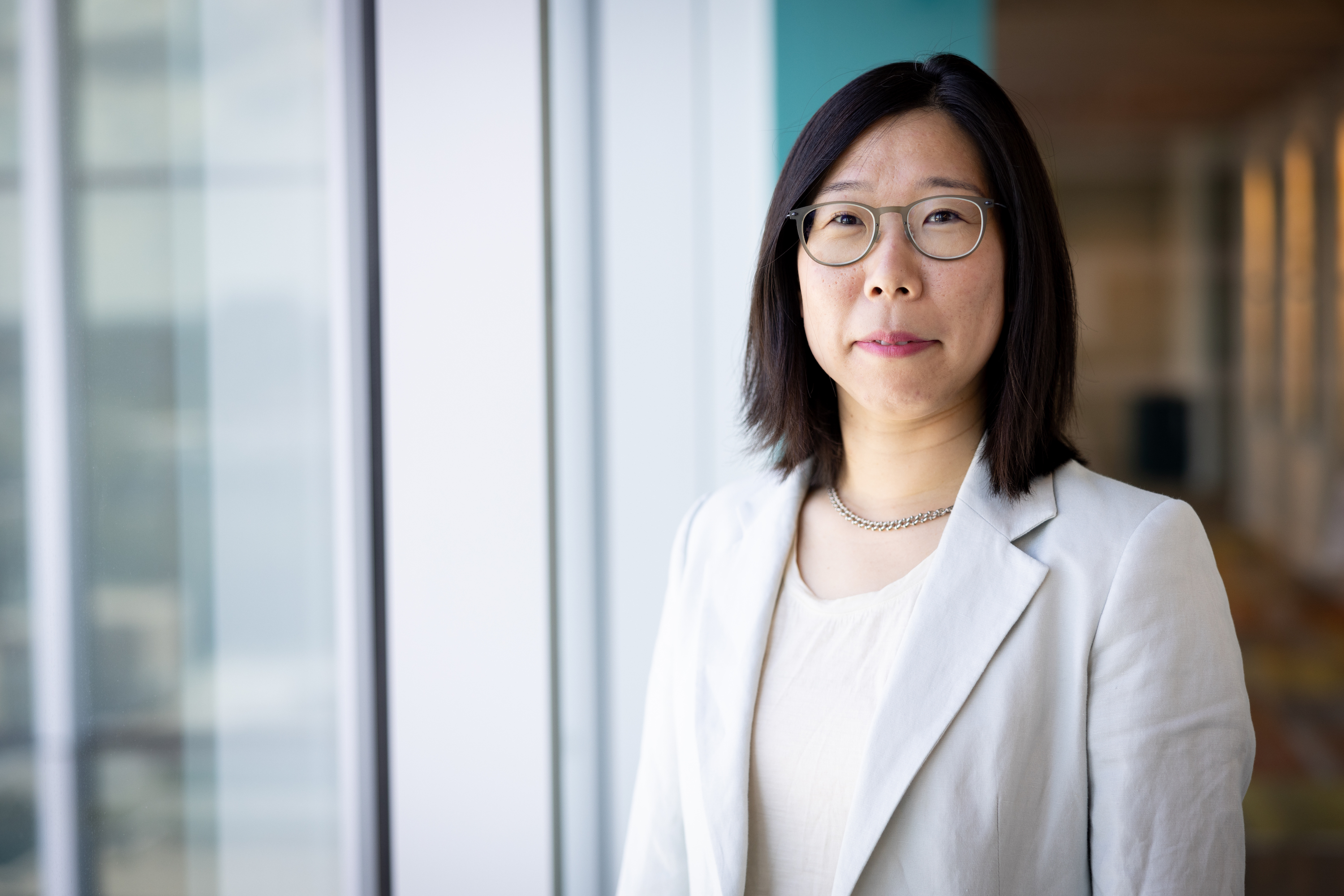
Wei Xu is an Associate Professor at Georgia Institute of Technology's College of Computing and School of Interactive Computing, with affiliations to the Machine Learning Center. Their research bridges machine learning, natural language processing, and social media with focus areas in large language models, cultural bias mitigation, multilingual capabilities, and human-AI collaboration in text evaluation. NSF CAREER and Google Academic Research Award recipient Director of NLP X Lab PhD from New York University, BSMS from Tsinghua University Research interests span: Multilingual Multicultural LLMs addressing representational gaps and cultural adaptation in language models (NAACL 2025, ACL 2024); Robustness and Reasoning through dynamic AGI evaluations (ACL 2024, EMNLP 2024); Interdisciplinary NLP applications in security, healthcare, and law (EMNLP 2024, ACL 2024). Recent publications focus on multilingual alignment (NAACL 2025), privacy risk estimation (arXiv 2025), cultural bias analysis (ACL 2024), and medical text simplification (EMNLP 2024). Key themes include bias mitigation, multimodal processing, and practical LLM evaluation. Scientific Awards : NSF CAREER, Google/Sony/Criteo research awards, ACL'24 Best Social Impact Award, COLING'18 Best Paper Advising 15 PhD/MS/BSMS students including Yao Dou (human-centered LLM evaluation), Tarek Naous (multilingual LLMs), and alumni like Chao Jiang (Apple AI/ML) and Yang Chen (NVIDIA research scientist). Teaches graduate courses on NLP and LLMs.
Jean Oh is a Researcher at the Robotics Institute of Carnegie Mellon University (CMU) , leading the interdisciplinary Bot Intelligence Group (BIG) . Her work focuses on developing persistent robots that co-exist and collaborate with humans in shared environments, emphasizing continuous improvement through training, exploration, and human interaction. Education: Ph.D. in Language and Information Technologies, CMU M.S. in Computer Science, Columbia University B.S. in Biotechnology, Yonsei University Oh's research integrates vision, language, and planning systems in robotics, with applications in human-robot teaming , self-driving cars , disaster response , eldercare , and creative robotics . She has pioneered projects like socially-compliant robot navigation in human crowds and AI-driven robotic painting systems. Recent publication trends highlight her work in vision-language planning , social navigation , computational creativity , and human-robot collaboration . Notable contributions include the StyleCLIPDraw algorithm for text-to-art generation and Social-PatteRNN for human-like trajectory prediction. Scientific Awards: Best Paper Award in Cognitive Robotics (ICRA'18, ICRA'15) Best Systems Paper Finalist (HRI'25) Best Oral Paper Finalist (Humanoids'24) Best Paper in Entertainment (IROS'24) Argoverse Challenge Winner (CVPR'24) Best Student Paper (AIAA'24) Best Demo Finalist (RoboSoft'24) Oh mentors a diverse team of PhD, MS, and undergraduate students from CMU departments including Robotics, Computer Science, and Mechanical Engineering. Her research is funded by US Army Research Lab , DiDi Chuxing , and DARPA , with collaborations across industry and academia .
Swiss Federal Institute of Technology in LausanneSwitzerland
Antoine Bosselut is a Tenure Track Assistant Professor at École Polytechnique Fédérale de Lausanne (EPFL) in the School of Computer and Communication Sciences, where he leads the EPFL NLP group. His research focuses on developing AI reasoning agents that can model, represent, and reason about human and world knowledge, with applications in health, education, and global fairness. His research interests span multiple critical areas in modern AI: LLM Representations of Knowledge: Understanding what language models know and how they represent that knowledge internally Reasoning Algorithms: Developing methods to improve LLMs' reasoning capabilities through symbolic systems, neuroscience, and cognitive science Large-scale AI Development: Creating open-source foundation models with multilingual capabilities AI Democratization: Ensuring equitable access to AI technologies across different cultural and regulatory contexts His recent publications reveal a strong focus on the intersection of language models and cognitive science, with multiple studies examining how LLMs align with human cognition. He's also deeply engaged in practical applications of NLP technology, particularly in education and multilingual settings, as evidenced by his work on evaluating AI's impact on higher education and developing culturally-aware language models. His scientific achievements have been recognized with several prestigious awards: Outstanding Paper Award at NAACL 2025 ELLIS Scholar designation in 2024 Outstanding Paper Award at ACL 2023 Inclusion in Forbes 30 Under 30 list for Science & Healthcare in 2021 Bosselut actively mentors numerous PhD students across diverse NLP research areas and has secured significant recognition for his work in both academic and media circles. His lab has been featured in major publications including Communications of the ACM, The Atlantic, and Quanta Magazine, highlighting the societal impact of his research on commonsense reasoning and AI capabilities.