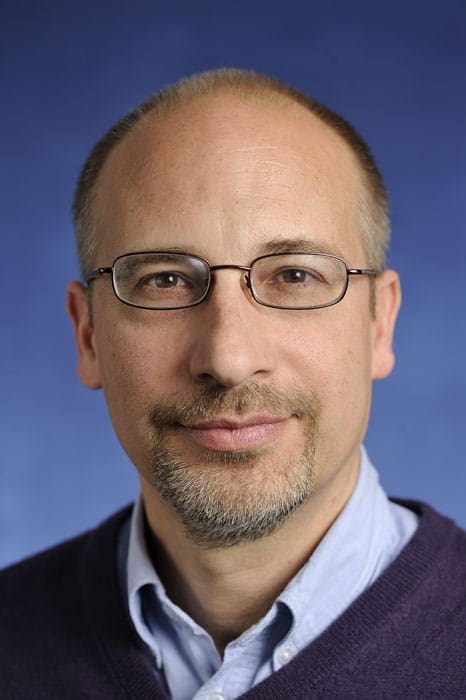
Joel Andreas is a Professor of Sociology at Johns Hopkins University since 2003, serving as Program Director of the East Asian Studies Program. His research focuses on political contention, social inequality, and social change in contemporary China. He holds a PhD in Sociology from UCLA and teaches social theory, political sociology, and courses on Chinese society. He has held visiting positions at universities including the University of Sydney, Hong Kong University, and Ningxia University. His work examines labor movements, rural land policies, and class dynamics in China. Recent research includes analyses of staff-worker congresses, rural land dispossession, and the persistence of militarism in U.S. policy. He critiques market reforms and explores the legacy of the Cultural Revolution. Andreas has contributed to debates on China’s transition to capitalism and the decline of socialist systems. His publications span topics from urbanization to state coercion in rural development. He maintains an active role in academic exchanges and policy-relevant research on China’s socio-political landscape.
Jacob Eyferth is an Associate Professor at the University of Chicago, jointly appointed in the Department of East Asian Languages and Civilizations, the Department of History, and the College. His research focuses on the social and cultural history of twentieth-century China, particularly rural communities, gender dynamics, and the intersection of technology and everyday life. Key research themes include the impact of industrialization, collectivization, and revolution on non-elite populations, with an emphasis on rural women's labor and cultural resistance. His current project explores cotton production, clothing, and gender during China's socialist era. Eating Rice from Bamboo Roots (2009) How China Works (2006) Rural Development in Transitional China (2004) He received the 2011 Joseph Levenson Prize for his first book. Eyferth has taught courses on topics such as class inequality, everyday life under socialism, and revolutionary China, and has held postdoctoral fellowships at Oxford, Harvard, and Rutgers.
Massachusetts Institute of TechnologyUnited States
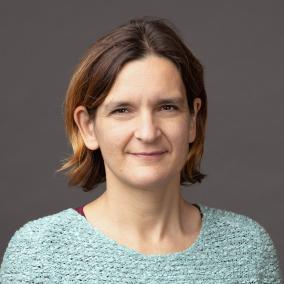
Esther Duflo is the Abdul Latif Jameel Professor of Poverty Alleviation and Development Economics at the Massachusetts Institute of Technology (MIT), where she is affiliated with the Department of Economics within the School of Humanities, Arts, and Social Sciences. She co-founded and co-directs the Abdul Latif Jameel Poverty Action Lab (J-PAL) and holds the position of Chaire, Pauvreté et politiques publiques at the Collège de France. Duflo also serves as President of the Paris School of Economics, demonstrating her significant international influence in economic policy and research. Her educational background includes first degrees in history and economics from Ecole Normale Superieure, Paris, followed by a Ph.D. in Economics from MIT in 1999. This strong foundation has enabled her to become one of the most influential economists of her generation. Duflo's research focuses on understanding the economic lives of people living in poverty, with the explicit aim of informing effective social policy design and evaluation. Her work spans critical areas including health, education, financial inclusion, environmental sustainability, and governance. What distinguishes her approach is the rigorous application of randomized controlled trials to evaluate development interventions, bringing scientific precision to poverty alleviation efforts. Her research methodology has revolutionized how economists approach development questions, moving beyond theoretical models to evidence-based policy recommendations. Her scholarly output demonstrates remarkable breadth and impact, with publications spanning from technical academic papers to influential books for general audiences. Duflo's work consistently bridges the gap between academic research and practical policy applications, with recent publications addressing contemporary challenges including climate change adaptation, pandemic response, and economic policy for hard times. Her research trends reveal a deepening commitment to translating complex economic concepts for broader audiences while maintaining scholarly rigor. Sveriges Riksbank Prize in Economic Sciences in Memory of Alfred Nobel (2019, with Abhijit Banerjee and Michael Kremer) Princess of Asturias Award for Social Sciences (2015) A.SK Social Science Award (2015) Infosys Prize (2014) John Bates Clark Medal (2010) MacArthur 'Genius Grant' Fellowship (2009) Member of the National Academy of Sciences (2017) Duflo has supervised numerous graduate students and collaborated extensively with researchers worldwide through J-PAL, which has grown into a global network conducting field experiments across multiple continents. Her grant portfolio includes substantial funding from major foundations and government agencies supporting large-scale development research. Beyond traditional academic advising, Duflo has mentored a generation of development economists through J-PAL's training programs and field research opportunities. Her primary institutional home is the Abdul Latif Jameel Poverty Action Lab (J-PAL), which she co-founded at MIT. J-PAL has grown into a major research center with offices worldwide, connecting academic researchers with policymakers to ensure that program evaluations inform real-world decisions. Duflo also leads research teams at the Collège de France and the Paris School of Economics, creating a transatlantic network focused on evidence-based poverty reduction strategies.
James A. Robinson is a University Professor at the University of Chicago with joint appointments in the Harris School of Public Policy and Department of Political Science. An economist and political scientist, he conducts influential research on political and economic development, examining how political power, institutions, and prosperity interact through both quantitative economic modeling and qualitative fieldwork methodologies. Robinson's research focuses on institutional analysis and political economy, with deep regional expertise in sub-Saharan Africa and Latin America. He has conducted extensive fieldwork across Bolivia, Colombia, Haiti, Democratic Republic of Congo, Nigeria, Sierra Leone, South Africa, and Zimbabwe, investigating how historical institutions shape contemporary economic outcomes. His interdisciplinary approach integrates economic theory with anthropological and historical case studies to explain patterns of economic divergence and political stability. Recent publications (2023-2025) reveal persistent themes in institutional persistence, state-society dynamics, and the cultural foundations of development. His work increasingly examines the interaction of economic and political inequality, the role of non-institutional factors in leadership strategies, and the historical roots of peripheral development trajectories across diverse global contexts. Scientific recognition includes: 2024 Sveriges Riksbank Prize in Economic Sciences in Memory of Alfred Nobel Fellow, Institute of African Studies at the University of Nigeria, Nsukka Robinson co-authored three seminal books with Daron Acemoglu: Economic Origins of Dictatorship and Democracy (theoretical foundations of regime stability), Why Nations Fail (translated into 41 languages, arguing inclusive institutions drive prosperity), and The Narrow Corridor (analyzing state-society struggles for liberty). He maintained a 28-year summer school at Colombia's University of the Andes (1994-2022) and continues active research collaborations across Africa and Latin America.
Esther Duflo is the Abdul Latif Jameel Professor of Poverty Alleviation and Development Economics in the Department of Economics at the Massachusetts Institute of Technology (MIT). She is also co-founder and co-director of the Abdul Latif Jameel Poverty Action Lab (J-PAL), holds the Chaire, Pauvreté et politiques publiques at the Collège de France, and serves as President of the Paris School of Economics. Her research focuses on understanding the economic lives of people living in poverty to help design and evaluate social policies. Her work spans multiple domains including: Development Economics Poverty Alleviation strategies Health interventions Educational programs Financial inclusion initiatives Environmental policy Governance improvements Duflo revolutionized developmental economics by pioneering the use of randomized controlled trials to test poverty reduction measures. Her empirical approach has challenged conventional opinions about development and has helped improve the efficient use of resources in poverty alleviation programs worldwide. She co-authored the influential books "Poor Economics" and "Good Economics for Hard Times" with Abhijit Banerjee, demonstrating through field experiments how specific interventions (like providing lentils to mothers for child immunization) can dramatically improve social outcomes. Her notable scientific achievements include: Sveriges Riksbank Prize in Economic Sciences in Memory of Alfred Nobel (2019) Princess of Asturias Award for Social Sciences (2015) Infosys Prize (2014) John Bates Clark Medal (2010) MacArthur "Genius Grant" Fellowship (2009) A.SK Social Science Award (2015) Duflo has established J-PAL as a global network of over a hundred affiliated professors who use scientific evidence to inform policy decisions in the fight against poverty. J-PAL has offices across Africa, Europe, Latin America and the Caribbean, North America, and South and Southeast Asia. Her work has demonstrated the crucial importance of information in policymaking, with numerous field experiments showing how carefully designed interventions can have significant impacts on social outcomes across multiple domains including health, education, and economic opportunity.
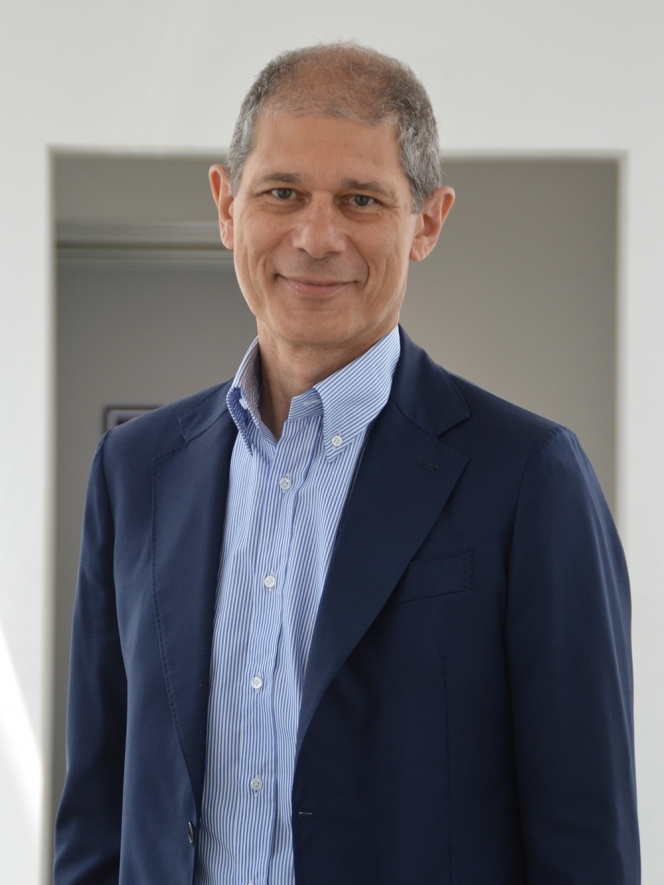
Prof. Sergio Ginebri is an Associate Professor at the Department of Jurisprudence, University of Rome Tre. He holds a PhD in Economics from Sapienza University of Rome and has extensive experience in fiscal policy, pension systems, and public finance research. His work focuses on topics like pension sustainability, social inequality, and the political economy of public debt. Education: PhD in Economics, Sapienza University of Rome (1988–1992) MA in Economics, University of Warwick (1987–1988) Laurea in Statistics and Demography, Sapienza University of Rome (1977–1984) Research Interests: Prof. Ginebri specializes in public policy, fiscal sustainability, and the social impacts of pension reforms. His research explores how demographic trends, wealth distribution, and political dynamics shape economic policies. Recent work includes analyses of longevity risks, pension equity, and fiscal policy integration in the EU. Key Projects: Coordinated studies on pension system sustainability (2002–2018) Developed models for forecasting public pension expenditure Contributed to EU tax policy observatories Awards: Recipient of the national PhD award (1994) and recognition for academic excellence in tax policy research (2001). Teaching: Teaches courses in political economy, public finance, and macroeconomics at undergraduate and graduate levels.
Jonathan Rosa is Associate Professor in the Graduate School of Education, Center for Comparative Studies in Race and Ethnicity, and, by courtesy, Departments of Anthropology, Linguistics, and Comparative Literature at Stanford University. He serves as Director of Stanford's Program in Chicanx-Latinx Studies and has held leadership positions including President of the Association of Latina/o and Latinx Anthropologists of the American Anthropological Association. Dr. Rosa's educational background includes: Ph.D. in Sociocultural and Linguistic Anthropology from the University of Chicago (2010) M.A. in Sociocultural and Linguistic Anthropology from the University of Chicago (2006) B.A. in Linguistics and Educational Studies from Swarthmore College (2003) Dr. Rosa's research examines the co-naturalization of language and race as a key feature of modern governance, tracking colonially structured interrelations among racial marginalization, linguistic stigmatization, and institutional inequity. His scholarship centers on raciolinguistic ideologies, Latinx studies, and educational justice, with a community-based approach that develops tools for challenging systemic vulnerability. He investigates how race and language are jointly defined across historical, geopolitical, and institutional contexts, with particular focus on Latinx communities and educational settings. His recent publications demonstrate a consistent thematic focus on decolonizing linguistic and educational frameworks, challenging standard language ideologies, and examining the intersections of race, language, and power. The work spans multiple disciplines including sociolinguistics, anthropology, education, and critical race studies, increasingly emphasizing undoing raciolinguistics and addressing coloniality in language education and assessment practices. Dr. Rosa has received numerous prestigious awards for his scholarship: Distinguished Summer Scholar, Banks Center for Educational Justice, University of Washington College of Education (2024) Outstanding Book of the Year Award for "Looking like a Language, Sounding like a Race," American Association of Teaching and Curriculum (2022) First Book Award for "Looking like a Language, Sounding like a Race," American Association for Applied Linguistics (2021) Prose Award for Excellence in Language & Linguistics for "Looking like a Language, Sounding like a Race," Association of American Publishers (2020) Charles A. Ferguson Award for Outstanding Scholarship, Center for Applied Linguistics (2018) Dr. Rosa actively mentors doctoral students across multiple programs, serving as primary advisor for students researching race, ethnicity, language, and education. His research has been supported by major grants from the National Science Foundation, Andrew W. Mellon Foundation, Woodrow Wilson National Fellowship Foundation, and Ford Foundation. He collaborates extensively with community organizations, particularly in Chicago, to develop educational approaches grounded in decolonial praxis, focusing on how scholarship can serve as a platform for social transformation. Dr. Rosa co-directed Stanford's Center for Global Ethnography (2021-2023) and directed Stanford's Program in Chicana/o-Latina/o Studies (2020-2023). He serves on multiple editorial boards including Current Anthropology and Equity & Excellence in Education, and has held leadership positions in professional organizations including President of the Association of Latina/o and Latinx Anthropologists (2020-2022).
Adam Hollowell is an Adjunct Assistant Professor in the Program in Education at Duke University, where he also serves as Senior Research Associate at the Samuel DuBois Cook Center on Social Equity and Director of the Inequality Studies Minor. His teaching spans ethics, inequality studies, and history across Duke’s Kenan Institute for Ethics, Sanford School of Public Policy, and Department of History. Hollowell holds a Ph.D. from the University of Edinburgh (2009). His research focuses on inequality, higher education, public policy, and ethics, with notable work on pandemic impacts, telemedicine in education, and reproductive health access during crises. In Inequality Studies , Hollowell emphasizes understanding policies to drive social change, as highlighted in recent media coverage. His publications explore topics like student behavior shifts during the pandemic, telemedicine adoption in universities, and James Baldwin’s ethical challenges. He is a finalist for the Judith Deckers Prize (2024). Professionally, Hollowell leads projects such as Bass Connections on college contraception access and Story+ initiatives. His work bridges academia and public engagement, addressing systemic inequities through interdisciplinary approaches.
Professor Michael Ben-Gad is a Professor of Economics at City, University of London, where he has served since 2009. He previously held roles as Head of the Department of Economics (2010–2013) and Deputy Head (2008–2010). His research focuses on dynamic macroeconomics, taxation, public debt, immigration economics, and national security, with notable contributions to endogenous growth models and compositional data econometrics. He holds a PhD from the University of Chicago (1996) and has taught at institutions including the University of Houston and University of Haifa. Ben-Gad served on the U.S. National Academy of Sciences panel on immigration's economic and fiscal impacts (2014–2016) and received a 2017 Fellowship from the Royal Society of Arts (FRSA). His work spans academic journals (Economic Modelling, Journal of Economic Dynamics and Control) and media outlets (BBC, CNBC, Al Jazeera), addressing topics like Brexit economics, fiscal policy, and geopolitical challenges. He co-convenes the City Branch of Academics for Academic Freedom and is a founding member of London Universities' Council for Academic Freedom. His research grants include funding from HM Treasury/ESRC on fiscal policy and immigration (2011), the Israel Science Foundation (2007–2008), and the Samuel Ne'eman Foundation (2004). Professional roles include editorial board membership for Economic Affairs and membership of the ESRC Grant Assessment Panel (2021). He is proficient in Hebrew and contributes to policy debates on taxation, macroprudential frameworks, and defense economics.
Massachusetts Institute of TechnologyUnited States
Abhijit Banerjee is a Professor in the Department of Economics at the Massachusetts Institute of Technology (MIT). His research focuses on development economics, public health policy, and social protection programs, particularly addressing poverty and inequality in low- and middle-income countries. He has conducted large-scale experiments evaluating interventions such as conditional cash transfers, universal basic income, and healthcare policies. Key areas of interest include the design and implementation of anti-poverty programs, behavioral economics, and the long-term health impacts of infectious diseases like COVID-19. His work often integrates experimental methods to assess policy effectiveness, with contributions to global health studies and economic development strategies. Notably, his research on the RECOVERY trial evaluates treatments for hospitalized COVID-19 patients, while other studies explore financial spillover effects of electronic government transfers in Indonesia and savings behavior interventions in Chile. Banerjee has collaborated on projects analyzing post-COVID-19 health outcomes, labor market dynamics in India, and the role of trusted messengers in public health communication during crises. Despite the breadth of his contributions, specific details about his educational background, grants, or lab affiliations are not explicitly provided in the source text.
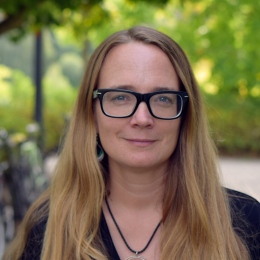
Andrea Voyer is a Professor of Sociology at Stockholm University , focusing on social norms, boundaries, and their role in shaping social inequality , particularly in the context of immigrant integration , class disparities, and ethnic inequality. She employs both qualitative and computational methods , including large-scale text analysis and cultural theory, to explore these themes. Her research has received funding from Riksbankens Jubileumsfond , the Swedish Research Council , the National Science Foundation (USA) , and the Russell Sage Foundation . Voyer serves as a program coordinator for master's programs in sociology and applied social research, and leads the department's research groups in qualitative methods , computational sociology , and cultural sociology . She is also an editorial board member for Sociological Theory and American Journal of Cultural Sociology , and contributes to public discourse on immigration, segregation, and social norms. Her recent publications highlight the use of computational techniques to analyze immigrant incorporation through shifts in mainstream discourse, the cultural processes of inequality during the COVID-19 pandemic , and the evolving role of class distinction-making in etiquette literature. These works bridge cultural theory with empirical analysis, offering actionable insights for addressing social inequality.
Jerrica Ty Rowlett serves as an Assistant Professor of Communication and Language Studies within the College of Arts and Sciences at Bryant University, where she examines digital communication's societal implications through research and teaching in digital culture and social media dynamics. Education Ph.D., Florida State University M.A., Clemson University B.A., Georgetown College Her research program investigates identity formation, civic engagement, and digital inequity through critical analysis of social media platforms. She explores how digital environments shape interpersonal relationships, political discourse, and community building while addressing power dynamics in online spaces, with particular attention to abusive contexts, gender representation, and emotional experiences. Analysis of her publication record (2015-2024) reveals a consistent trajectory examining social media's evolving societal impact. Early work focused on educational applications and youth culture, progressing to sophisticated analyses of political meme culture, relationship dissolution in abusive contexts, and emotional contagion online. Her scholarship demonstrates increasing attention to social justice dimensions within digital communication. Scientific Awards No awards documented in current sources Advising and Grants Student advising details and research grant information are not specified in available materials, though her extensive publication record indicates active scholarly mentorship and research productivity. Labs and Teams No dedicated research laboratories or formal collaborative teams are mentioned in the provided information.
Bo Bottomley is a Researcher affiliated with the School of Law at the University of East Anglia. She holds a Doctor of Philosophy (PhD) and is a member of the Migration Research Network. Her work focuses on migration and refugee studies, particularly examining how state policies impact human rights and refugee integration. She has contributed peer-reviewed analyses in high-impact journals such as the Journal of Refugee Studies . Bottomley’s research bridges legal frameworks, social policy, and global migration dynamics. Education: Doctor of Philosophy (PhD) from an unspecified institution (listed in her profile). Research Interests: Migration Studies, Refugee Law, Human Rights, and the intersection of state policies with international law. She critically evaluates how state actions influence refugee rights and societal inclusion, emphasizing structural inequalities and legal accountability. Publications: Her 2022 book review in Journal of Refugee Studies highlights her engagement with contemporary debates on refugee rights and state responsibilities. This work reflects her broader focus on systemic barriers faced by displaced populations. Labs/Teams: Active member of the Migration Research Network, contributing to collaborative projects on migration law and policy.
Silvia Lindtner is an Associate Professor at the University of Michigan's School of Information and Director of the Center for Ethics, Society, and Computing (ESC). She holds courtesy appointments in the Penny W. Stamps School of Art and Design and the Digital Studies Institute. Her work focuses on the social and cultural study of technology in China and globally, with a focus on data-driven governance, AI ethics, and the intersection of technology and labor. Lindtner has conducted nearly two decades of fieldwork in China, examining innovation ecosystems, digital economies, and the affective dimensions of state control. She is the author of the award-winning *Prototype Nation: China and the Contested Promise of Innovation* (2020) and co-author of *Technoprecarious* (2020). Education: PhD in Information and Computer Sciences from University of California, Irvine; BS/MS in Media Technology and Design from University of Hagenberg, Austria. Research Interests: Science and Technology Studies (STS), China Studies, HCI, Critical Computing, AI Ethics, Data Governance, Labor Studies, and Transnational Digital Economies. She explores how technological systems shape governance, labor practices, and everyday life, particularly in contexts of global inequality and state surveillance. Awards: Joseph Levenson Prize (2021), Francis L.K. Hsu Book Prize (2021), ACM Distinguished Member (2022), and fellowships from the National Committee on US-China Relations (2021-2023) and China-US Scholars Program (2021-2022). Grants: Supported by NSF, IMLS, Intel Labs, Google Anita Borg, and Chinese National Natural Science Foundation. Leads interdisciplinary initiatives including Tech.Culture.Matters research group and Michigan Interactive and Social Computing (MISC) research group. Labs/Teams: Directs the Center for Ethics, Society, and Computing (ESC) and collaborates with the Lieberthal-Rogel Center for Chinese Studies. Current projects include studies on affective control in AI governance and transnational data practices in healthcare and labor.
Kin Tak Raymond Tsang is a Lecturer in Cinema Studies at the University of Southern California (USC) within the Dornsife College of Letters, Arts and Sciences. He holds a Ph.D. and M.Phil. in Cinema Studies from New York University, an M.A. in Comparative Literature from Peking University, and a B.A. in Cultural Studies from Lingnan University. Previously, he served as an Adjunct Professor at Columbia University from 2022 to 2023. Education: B.A., Cultural Studies, Lingnan University M.A., Comparative Literature, Peking University M.Phil., Cinema Studies, New York University Ph.D., Cinema Studies, New York University Dr. Tsang’s research interrogates the geopolitical dimensions of cinema, particularly focusing on Hong Kong martial arts films, Third Cinema, and Cold War-era activism. His first book project, The 'law' outside the Law: The Political History of Hong Kong Martial Arts Cinema, 1949 to 1976 , redefines the genre by analyzing its ties to colonial governance, transnational networks, and cultural containment strategies. He also explores the translocal circulation of progressive films and literature, connecting Hong Kong to Cuba, China, and Malaysia during the Cold War. In 2023, Dr. Tsang published a special issue of the Journal of Chinese Cinemas examining Hong Kong’s leftist film movements (1950–1979). His scholarship extends Third Cinema theory to bridge Asia, Africa, and Latin America, emphasizing alternative globalization through cultural exchange. He teaches courses such as EASC 150: East Asian Societies , addressing topics like Cold War geopolitics and Southeast Asian film networks. His work intersects film history, cultural studies, and political activism, offering critical insights into colonial and transnational cinema.