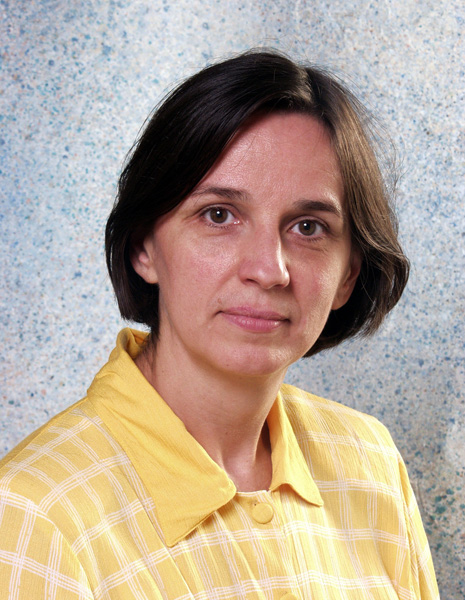
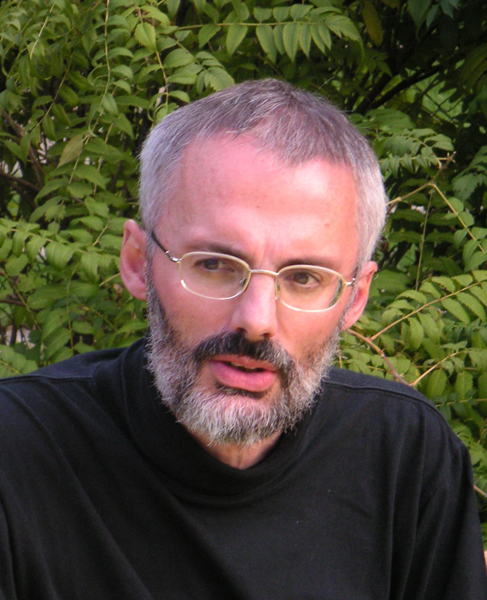
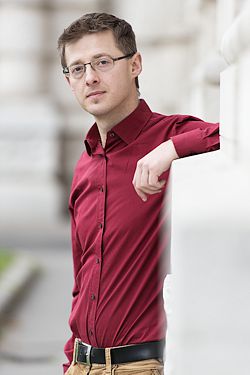
Ágnes Deák is a Professor at the Department of Modern Hungarian History, Faculty of Humanities and Social Sciences, University of Szeged. She has held key academic leadership roles including Head of Department (2019-2022) and Vice-Chairperson of the Historical Committee at the Hungarian Academy of Sciences. Her research focuses on 19th-century Habsburg Monarchy, Hungarian nationalism, and state police systems. Education: BA/MA in History and Literature from József Attila University (1979-1985), PhD (2000), DSc (2014) from Eötvös Loránd University and Hungarian Academy of Sciences. Research interests include the political career of Ferenc Deák, secret police operations, and press policies. She has led major research projects on topics like the Protestant Patent Movement (2021–2024) and political press dynamics (2016–2021). Awards include Soros Foundation scholarships and multiple Hungarian research grants. Editorial roles: Editor-in-Chief of Aetas historical journal since 1991.
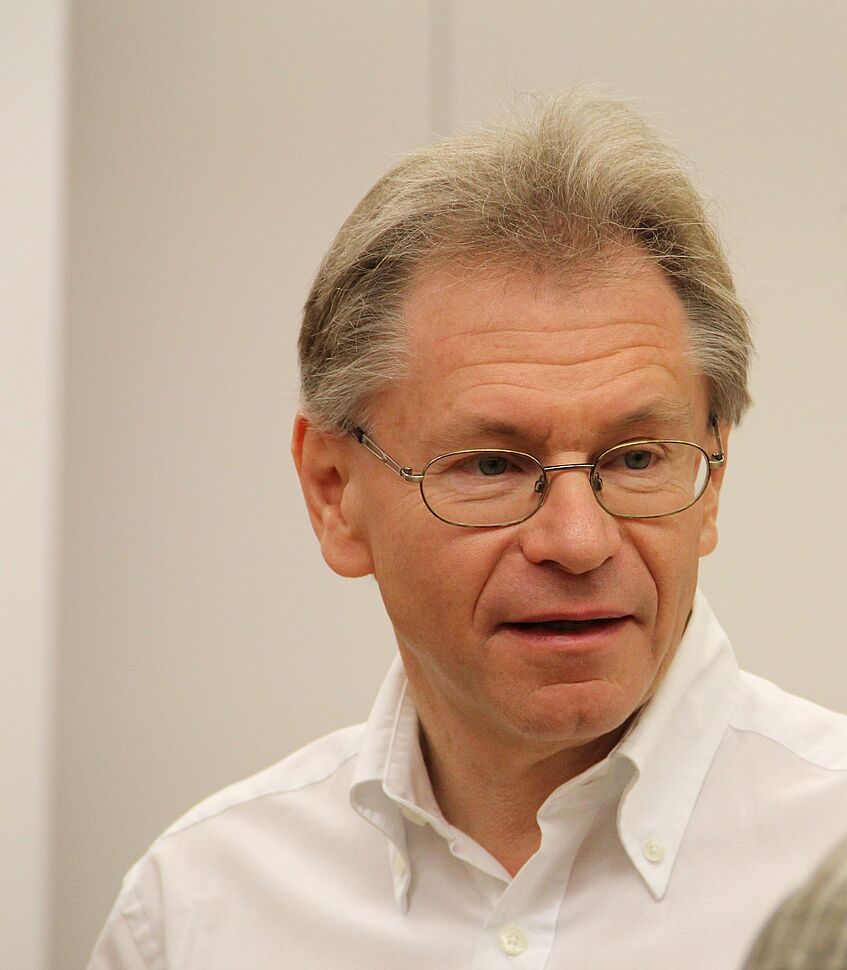
Walter Sauer is a Professor at the Department of Economic and Social History, University of Vienna. His research focuses on African history, colonialism, migration, and Austrian development politics. He holds a Mag. phil. (1975), Dr. phil. (1979), and Habilitation (1991), all from the University of Vienna. Research interests include the Habsburg Monarchy’s colonial ties, African diaspora in Austria, and Austria’s relations with Namibia. His work bridges European colonial history with modern global dynamics. Publications highlight themes like colonial rule in Africa, transnational African diasporas, and bilateral ties between Austria and Namibia. He contributes to 'Afrikanisches Österreich,' a platform for African studies. Teaching includes guiding students through diploma, master’s, and doctoral theses. Office hours are Mondays 14:00-15:00 (by appointment).
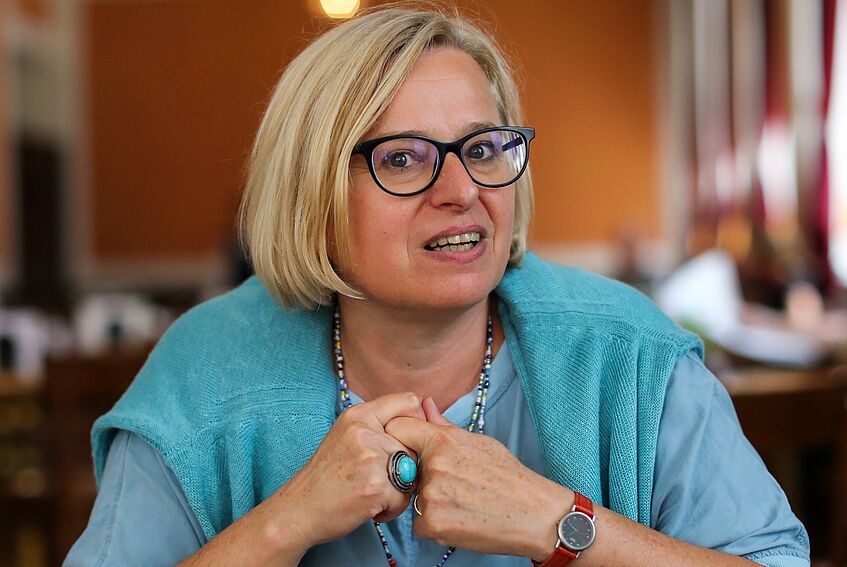
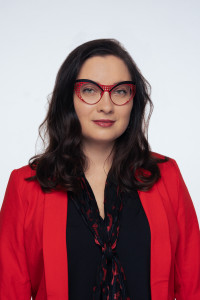
Andrea Griesebner is a University Professor of Modern History at the Institute of History, University of Vienna , with a career spanning over three decades. Her research focuses on feminist perspectives in cultural, legal, and gender history of the early modern period, particularly examining matrimonial jurisdiction, divorce practices, child custody, and property division from the 16th to 19th centuries. She leads the cross-faculty research group Contexts of Marriage and Divorce and has coordinated numerous projects, including the Doing Divorce initiative (2019–2023) and the Marriages at Court web portal.
Stefan-Michael Newerkla is a University Professor of West Slavic Linguistics at the Department of Slavonic Studies, Faculty of Philology and Cultural Studies, University of Vienna. He has served as Head of the Institute of Slavic Studies since 2022, following previous leadership roles as Deputy Head (2018-2022) and Head (2005-2008). His academic leadership extends to significant positions including Member of the Academy Council of the Austrian Academy of Sciences (2022-2026), Member of the International Board of Palacký University Olomouc (2022-2026), and Member of the Scientific Council of the Czech Academy of Sciences (since 2013). Professor Newerkla earned his doctorate in 1998 with a dissertation on "Intended and actual linguistic reality in Bohemia. Diglossia in the school system of the Czech-speaking countries of the Habsburg Monarchy 1740–1918 using the example of the West Bohemian district town of Plzeň (Pilsen)" and completed his habilitation in 2003 on "Language Contacts Czech – German – Slovak. German Loanwords in Czech and Slovak: Historical Development, Evidence, Previous and New Interpretations." His academic journey began with studies in Slavic Studies, English Studies, and American Studies at the University of Vienna from 1992-1998. His research focuses on West Slavic linguistics with particular emphasis on contact linguistics, areal linguistics, linguistic geography, and historical sociolinguistics. He investigates the development of linguistic contacts between German, Hungarian and Slavic languages, examining Central Europe as a linguistic area with special attention to Austriazisms and Internationalisms research. His work also explores the school system and language teaching in the Habsburg Monarchy, analyzing language legislation versus language reality and diglossia or polyglossia in the educational system. Additional research interests include the National Renewal in the Bohemian Lands, Vienna's role in the Czech National Renewal, the Slovak national awareness process, and the grammatology and grammarography of West Slavic languages. Analysis of his recent publications (2023-2025) reveals a continued focus on historical language contact in Central Europe, particularly examining multilingualism in the Habsburg Monarchy and linguistic heritage. His work increasingly incorporates interdisciplinary approaches, connecting linguistic analysis with historical, educational, and cultural studies perspectives. Recent publications show particular attention to Czech language in Austria, language teaching methodologies, and the reconstruction of historical language contact phenomena, with several multilingual publications reflecting his expertise in cross-cultural communication. Professor Newerkla's scientific achievements have been recognized with numerous prestigious awards: Medal of the Minister for Foreign Affairs of the Czech Republic (August 7, 2024) for Services to Diplomacy Premia Bohemica for 2023 for outstanding contribution to promoting Czech literature abroad Josef-Dobrovský-Ehrenmedaille of the Czech Academy of Sciences (April 25, 2017) Full member of the Austrian Academy of Sciences (since 2018) Corresponding Member of the Austrian Academy of Sciences (since 2014) Member of the Academic Assembly of the Czech Academy of Sciences (since 2010) Award from University of Vienna for Innovative Teaching (June 22, 2001) As an academic leader, Professor Newerkla has supervised numerous theses across various levels of study. His research is supported by significant grants, most notably his role since 2016 as consortium member and board member of the Special Research Programme "German in Austria. Variation – Contact – Perception" (SFB F 60-G23), where he heads Task Cluster C and subprojects 05 and 06. He also led the research project "Slavists in Exchange: Austria and Russia 1849-1939" (2021-2025). His administrative roles have included Chairman of the Curricular Commission of the Senate of the University of Vienna (2010-2016) and Member of the Senate of the University of Vienna (2009-2016). Professor Newerkla is actively involved in multiple international research teams and collaborations, including the Permanent Conference of Austrian and Czech Historians on Common Cultural Heritage (SKÖTH), which he has co-chaired since 2009. His research group at the University of Vienna's Institute of Slavic Studies focuses on West Slavic linguistics, with particular expertise in historical language contact phenomena and the linguistic heritage of Slavic languages in Central Europe. He has also served as editor for numerous publications including the Vienna Slavic Yearbook (New Series) since 2013.
Maciej Janowski is a Full Professor at the Institute of History, Polish Academy of Sciences, Warsaw, with a career spanning three decades. He has held recurrent visiting positions at Central European University, Budapest (1999-2004) and a deputy professor role at University of Goettingen (2004). Doctor of Historical Sciences (1993), Habilitation (1999), and Full Professor (2010) at Polish Academy of Sciences Notable affiliations: Central European University, Collegium Budapest, Humboldt Scholarship, and Soros Scholarship His research focuses on comparative historiography of Poland, Czech Republic, and Hungary, alongside the intellectual and social history of East-Central Europe from the 18th to 20th centuries. He explores nationalism, liberalism, modernity, and identity, with a strong interest in historical methodologies and conceptual frameworks. His publications include Polish Liberal Thought before 1918 (2004) and Narodziny Inteligencji 1750-1831 (2008), co-authored with Jerzy Jedlicki. His recent article Civis ambulans (2011) analyzes Austro-Hungarian travel guides, while Ex Ossibus Ultor (2012) examines classical influences on Polish national identity. Scientific recognition includes: 2009 Historical Prize, Polityka Weekly 2009 Jerzy Giedroyc Prize, Lublin University 1999 Klio Prize for early work Janowski has collaborated on major projects like Negotiating Modernity (2008-) and Representations of the Past (2005-2008), co-ordinated by Stefan Berger and Chris Lorenz. He also served as deputy-editor of Kwartalnik Historyczny and editor of East Central Europe – L’Europe du Centre-Est .
Christine Lebeau is a Full Professor of Early Modern History (Germany, Central Europe) at Pantheon-Sorbonne University (Paris 1) since 2005 and chairs the Doctorate School in History of Paris 1. She has held visiting professorships at institutions in Budapest, Erfurt, and Wilmington, and served on scientific boards including the Centre national des Universités (CNU) and the French-German University's academic committee. Academic Roles: Full Professor (2005–present), Lecturer (1992–2005), Reader (1987–1992), CNRS Researcher (2000–2002) Education: Habilitation à diriger des recherches (Strasbourg, 2005), Doctorate in History (Paris-Sorbonne, 1992), Fellow at Ecole Normale Supérieure (1983–1987) Languages: French (native), German (spoken/written), English (spoken/written), Italian (spoken), Czech (basic) Editorial Roles: Francia, Hypothèses (cairn.info), Cornova. Revue Ceske spolecnosti pro vyzkum 18. stoleti Scientific Boards: CNU member (2011–2014), French-German University committee (2009–2013)
Annemarie Steidl is an Associate Professor at the University of Vienna's Department of Economic and Social History, part of the Faculty of Historical and Cultural Studies. She served as Head of Department from October 2020 to September 2022. Her research focuses on historical migration patterns, artisans' history, gender studies, and quantitative methods in historical analysis. She has led major projects like Migration Systems (2006–2009) and Transnational Migration (2004–2007). She holds editorial roles in journals such as HSR – Historical Social Research and Dve domovini . Notable awards include the 2019 Univie International Award. Her work explores migration dynamics in the Habsburg Empire, transatlantic connections, and border studies. Recent projects include co-editing (Vienna) Profiles of Social History (2024) and contributing to Journal of Migration History . She has been a visiting professor at the University of Alberta (2024) and the University of Minnesota (2011). Her research integrates interdisciplinary approaches to understand spatial mobility, urbanization, and gender roles in historical contexts.
Anton Tantner is a historian and Privatdozent (senior lecturer with habilitation) at the Institute of History, University of Vienna. His research deciphers the cultural and political dimensions of everyday ordering technologies—house numbers, street addresses, census lists, urban fortifications and the Danube Canal—linking micro-historical detail to macro-historical change in Europe from the 16th century to the present. An energetic public scholar, he curates thematic city walks, lectures widely in adult education, and publishes across academic and popular media. Education & Academic Status: Mag. phil., University of Vienna Dr. phil., University of Vienna Privatdozent (habilitated lecturer), Institute of History, University of Vienna Research Interests: Tantner explores how seemingly banal tools—numbers on doors, address registers, early statistical tables—became instruments of statecraft, surveillance and social discipline. His regional focus on Vienna and the Marchfeld reveals global patterns: the spread of house-numbering from Habsburg military recruitment to European colonies, or the transformation of the Danube Canal from workers’ “lido” to contested investment frontier. Recent Publications & Trends: Between 2020-2024 he produced a steady stream of articles and books on numbering, urban micro-history and environmental storytelling. Recurring themes include the egalitarian yet controlling impulse of serial numbers, the memorial afterlives of revolutionary dead, and the hidden histories of Viennese wastelands and sand-dunes. Public Engagement & Awards: Organiser of the 2021 conference “250 Years of House Numbering in the Habsburg Monarchy” Frequent contributor to Wiener Zeitung , Tagebuch , Versorgerin , Jacobin and public radio Designer of numbered T-shirts merging scholarly research with wearable urban stories Teaching & Grants: He currently teaches courses on historical methodology, source criticism, and thematic seminars on Maria-Theresian Vienna and the ordering practices of numbers, cabinets and tables. Details of specific grants are not disclosed in the sources. Labs & Networks: Tantner co-operates with the Labor Alltagskultur (Laboratory of Everyday Culture) for public walks and digital excursions, and is an active member of Vienna’s adult-education and museum networks.
Georg Lehner , Senior Lecturer at the Department of History, University of Vienna, specializes in Chinese Studies , Cultural History , and European Sinology . His work explores Sino-foreign interactions (1644-1911), the history of Chinese book collections in Europe, and cross-cultural documentation in encyclopaedias. Habilitated in Modern History (University of Vienna, 2004) PhD in History (University of Vienna, 1995) MA in History and Chinese Studies (University of Vienna, 1993) Research trends from his 15 most recent publications (2010-2023) include: 19th-century European encyclopaedic depictions of China, the evolution of Sino-European linguistic studies, and the role of book markets in cultural transfer. His projects China in European Encyclopaedias (Austrian Science Fund) and Austria-Hungary and the Boxer War (Austrian Science Fund) highlight institutional and imperial contexts in historical scholarship. Lehner's academic contributions involve cataloging the Austrian National Library's Chinese collection and translating Sinological works between German, French, and Chinese. He teaches courses on Cultural History of the Euro-Atlantic Region , Historiography , and Research Techniques at the University of Vienna. Selected affiliations: University of Vienna (Faculty of History, Department of History) Austrian National Library (Sinica Cataloging) Österreichische Gesellschaft zur Erforschung des 18. Jahrhunderts
Thomas Winkelbauer is a Full Professor of Austrian History (History of the Habsburg Monarchy) at the Department of History, University of Vienna. He has served as Director of the Institute of Austrian Historical Research since 2010 and was Head of the History Department (Institutsvorstand) in 2007-2008. His academic career spans roles as Associate Professor at the University of Vienna (1998-2007) and Visiting Professor at the University of Salzburg (Winter Term 1998/99). Born in Vienna in 1957 PhD in History from University of Vienna (1984) Habilitation in Austrian History (1998) His research focuses on the political, administrative, financial, social, and cultural history of the Habsburg Monarchy (1526-1918), with emphasis on the Early Modern Period. He has extensively studied the nobility in Austrian and Bohemian lands, modern historiography of the Habsburg Monarchy, and estate administration practices from 1600-1848. Notable accolades include: Ordinary Member of the Austrian Academy of Sciences (2010) Ordinary Member of the Bavarian Academy of Sciences' History Commission (2008) Corresponding Member of the Austrian Academy of Sciences (2007) Honorary Doctorate from Masaryk University Brno (2006) Member of Collegium Carolinum (2002) Thomas Winkelbauer has authored and co-edited numerous monographs and academic volumes, particularly covering absolutism paradigms, financial history, and educational patronage in East-Central Europe.
Kamila Maria Staudigl-Ciechowicz is Assistant Professor at the Department for Legal and Constitutional History, Faculty of Law, University of Vienna. She also serves as Research Fellow and Lehrbeauftragte (Lecturer) at the Faculty of Law, University of Regensburg. Research Interests: Legal History, European Legal History, Constitutional History, History of Universities, Racial Discrimination, Gender Studies, Civil Law Development, Authoritarian Regime Analysis Recent Research Focus: Her work examines legal transformations during the interwar period, particularly in Austria and Poland. She investigates disciplinary frameworks at universities, legal interspaces in post-WWI territorial reorganizations, and the role of civil law in forced political unions. Her 2024 projects include a Gerda Henkel Stiftung-funded study on 'Frau Professor' – wives of legal scholars navigating patriarchal structures and emancipation. Scientific Awards: Förderungspreis der Stadt Wien für Geistes- und Sozialwissenschaften (2024) Forschungsstipendium Gerda Henkel Stiftung (2024) Wissenschaftsstipendium Stadt Wien Kultur (2024) Academic Contributions: She co-authored Die Wiener Rechts- und Staatswissenschaftliche Fakultät 1918-1938 (2014), a socio-historical analysis of Vienna's law faculty during the interwar period, and Das Dienst-, Habilitations- und Disziplinarrecht der Universität Wien 1848–1938 (2017), a comprehensive study of disciplinary law with over 150 case analyses. Her 2024 edited volume The Silesian Voivodeship: Analysis of a 'legal interspace' explores autonomy projects and jurisdictional conflicts in post-WWI Europe. Current Projects: Focus on academic networks, focusing on the intersection of legal scholarship and political upheaval. She examines how legal frameworks enabled authoritarian transitions in Austria and Poland, particularly through the lens of the Kriegswirtschaftliches Ermächtigungsgesetz (KwEG) of 1917 and its role in democratic erosion.
Gualtiero Boaglio is an Associate Professor at the Institute of Romance Studies, University of Vienna, where he has been teaching since 1985. He was appointed as associate professor in 2009 following his habilitation in Italian Philology. He has held significant administrative roles including Director of the Romance Studies Program (2010-2012), Deputy Head of the Institute (2014-2016), and Vice Director of Studies (2018-2022). Currently serving as Erasmus mobility coordinator for several Italian universities, he teaches courses on Italian linguistics, regional studies, and language contact phenomena. Boaglio's research focuses on historical linguistics, particularly language policy and planning in the Habsburg Empire, historical sociolinguistics, multilingualism, and Italian literature of the 18th-19th centuries. His work examines language conflicts in Italian-speaking regions of the Habsburg Monarchy, historical multilingualism in Central Europe, and the evolution of the Italian language. He has conducted extensive research on language ideology, critical discourse analysis, and the historical development of Italian linguistic identity. His scholarly output reveals a consistent trajectory examining multilingualism in Central Europe across historical periods, with recent work connecting Habsburg-era language policies to contemporary European multilingual contexts. Boaglio's publications demonstrate expertise in historical linguistics, particularly regarding the Italian-speaking territories within the Habsburg Empire, with special attention to Istria, Trieste, and Dalmatia. His research bridges linguistic analysis with cultural and political history, focusing on how language policies reflected and shaped power dynamics in multi-ethnic empires. Scholarship from the Federal Ministry of Science and Research/Vienna (1986-1987) Scholarship from the Academy of Sciences (2000) Boaglio has supervised over 60 Master's and Diploma theses covering diverse topics in Italian linguistics, cultural studies, and historical analysis. His students' research spans regional Italian varieties, language contact phenomena, historical multilingualism, and contemporary sociolinguistic issues. He has coordinated international exchange programs including Erasmus mobility for the University of Padova, Siena, Urbino, and Trieste, facilitating academic collaboration between Austrian and Italian institutions. His administrative roles have included representing the Doctoral Study Conference and participating in curriculum development for Romance Studies programs.
Julia Bavouzet is a researcher affiliated with the Faculty of Historical and Cultural Studies at an unnamed institution, specifically within the Institute of History. She holds a Ph.D. (implied by the 'Dr.' prefix) and is actively engaged in research projects and academic activities. Key Project: Lead participant in 'Unlocking the Schematismus (UtS): Data-driven historical analysis – Institutions (TP 5)', a research funding initiative focusing on historical institutions and computational methodologies. Recent Activity: Co-presented the speech 'Future political orders: Habsburg Monarchy and Beyond' at an academic event on February 24, 2022. Her work intersects with broader disciplines such as Historical Analysis, Political History, and Data-Driven Research, emphasizing institutional structures and cross-national collaborations. While no scientific awards or student advising information is listed in the provided data, her ongoing projects highlight her expertise in computational historical analysis and European political systems.
Börries Kuzmany is an Associate Professor at the Department of East European History, University of Vienna, and Principal Investigator of the ERC-funded project 'Non-Territorial Autonomy as a Form of European Minority Protection' (2018–2023). His research focuses on Central/Eastern European history (18th–20th centuries), nationalism, urban history, border regions, and Jewish history. Leading ERC project on non-territorial autonomy Habilitation in Modern/ Eastern European History (2024) Visiting Professor in Lviv (2024) His recent publications analyze non-territorial autonomy in the Habsburg Monarchy, Soviet Russia, and interwar Europe, with a monograph Dealing with National Diversity (2024) tracing its development across empires and post-imperial states. Trends include historical policy transfer, hybrid identities in multicultural regions, and Soviet Jewish culture. Awards include the Anthony D. Smith Article Prize 2023 . Teaching includes courses on East European history, Ukrainian history, and research methodology.
Peter Eigner is an Associate Professor at the University of Vienna's Department of Economic and Social History within the Faculty of Historical and Cultural Studies. He holds a Mag. phil. (1988), Dr. phil. (1997), and Habilitation (2001) from the University of Vienna. His research focuses on Habsburg Monarchy economic development (1740–1918), 20th-century Austrian economic history, business history (banking and industry), urbanization (especially Vienna), and the Austrian economic middle class (1895–1940). His work bridges economic, social, and urban history with a regional emphasis on Vienna's transformation. Selected publications include Die Wittgensteins (2023), analyzing a prominent Austrian industrial family, and contributions to urban history such as Sozialgeschichte Wiens 1740–2020 (2022). Recent research examines post-WWI treaties' financial impacts and 20th-century urban decline patterns. He actively engages in public lectures and book presentations on topics like Vienna's cultural and economic history.