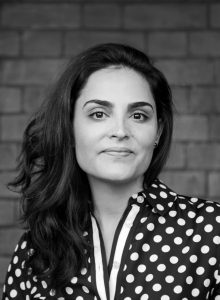
Winnie Wong is a Professor of Rhetoric at the University of California, Berkeley. Her research focuses on art history, particularly exploring themes of fakes, forgeries, and authorship through interdisciplinary approaches. She examines the global artistic networks of Hong Kong, Guangzhou, and Shenzhen, challenging Western narratives of Chinese artistic practices. Wong holds a PhD from MIT's History, Theory + Criticism program and was a Harvard Society of Fellows Junior Fellow. Her major works include Van Gogh on Demand: China and the Readymade (2014, Joseph Levenson Prize winner), Learning from Shenzhen (2017), and a forthcoming book on Canton trade portraitists. She teaches courses like Theory of the Copy and Rhetoric of the Image , mentoring undergraduates through the Undergraduate Research Apprentices program and advising PhD students in art history and visual studies. Wong's research has been supported by grants from Mellon Foundation, ACLS, SSRC, and others. Her work has been translated into multiple languages and appears in journals like Current Anthropology and Law & Literature . She frequently discusses her work on podcasts and collaborates with museums including M+ and the Asian Art Museum.
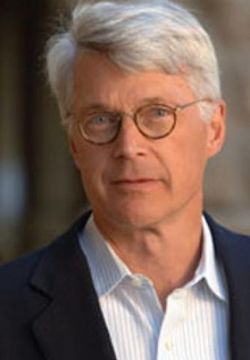
Michael Lucey is the Sidney and Margaret Ancker Chair and Distinguished Professor of French and Comparative Literature at the University of California, Berkeley. His work bridges French literature from the 19th to 21st centuries with social theory, sexuality studies, and linguistic anthropology. He has authored the critically acclaimed What Proust Heard: Novels and the Ethnography of Talk (2022) and Thinking about Sexuality with Novels (forthcoming). As founding director of the Center for the Study of Sexual Culture , he has shaped interdisciplinary research in queer theory and gender studies. Current research focuses on novels as ethnographic tools Specializes in Proust, Balzac, Woolf, and contemporary French fiction Translation work includes Didier Eribon and Édouard Louis His recent articles explore phonetics in narrative, readability frameworks, and sociological implications of literary form. He actively engages with comparative methodologies and critical theory, while his teaching spans British and American literature’s intersections with French modernism. Lucey’s academic leadership includes directing Berkeley’s Center for the Study of Sexual Culture, which supports global discourse through fellowships and conferences. His office hours are held in Dwinelle Hall and via Zoom. Contact: mlucey@berkeley.edu
University of California, Los AngelesUnited States
Yunxiang Yan is a Professor in the Department of Anthropology at the University of California, Los Angeles (UCLA). His work focuses on China and Cultural Anthropology , with specific expertise in Economic Anthropology , Family and Kinship , and Individualization . Education: Ph.D. in Social Anthropology from Harvard University (1993). Yan’s research explores the intersection of social change , moral theory , and family dynamics in modern China. His ethnographic studies in rural villages provide foundational insights into exchange theory and cultural globalization . Recent publications analyze food safety , medical ethics , and moral crises in China, reflecting his interdisciplinary approach combining anthropology, sociology, and philosophy. Articles span themes like intergenerational intimacy , political oppression , and networked social structures . Scientific Awards: Guggenheim Fellowship Levenson Prize-winning Research Yan’s work bridges local Chinese studies with global anthropological discourse. He has held positions at the Chinese University of Hong Kong, Johns Hopkins University, and UCLA since 1996. His career reflects a commitment to documenting the lives of ordinary people, rooted in his early experiences as an expelled villager during Maoist China. Contact: yan@anthro.ucla.edu
Haiyan Lee serves as the Walter A. Haas Professor of the Humanities and Professor of East Asian Languages and Cultures and of Comparative Literature at Stanford University. She has held these positions since joining Stanford in 2009, and currently serves as Chair of the East Asian Languages and Cultures department (2020-present). Her academic journey includes previous teaching appointments at the University of Colorado at Boulder and the University of Hong Kong, along with post-doctoral fellowships at Cornell University and Harvard University. Lee's research spans multiple interdisciplinary fields with particular focus on modern Chinese literature and cultural production. Her work bridges literary studies with law, philosophy, cognitive science, affect theory, gender studies, and environmental humanities. She has developed influential theoretical frameworks including the concept of "high justice" and "low justice" in Chinese legal imagination. Her current research explores animism, cognition, and the Chinese environmental imagination, extending her longstanding interest in human-animal relations. Lee's publications reveal a consistent trajectory examining Chinese cultural production through innovative theoretical lenses. Her recent work shows increasing engagement with legal theory, environmental humanities, and cognitive approaches to literature. She has produced significant scholarship on Chinese concepts of justice, love, and the stranger, moving across historical periods from early 20th century to contemporary China. Biennial Book Prize, Honorable Mention, International Society for Chinese Law and History (ISCLH) (2024) Humanities Seed Grant, Stanford School of Humanities and Sciences (2023-2025) Bass Fellowship in Undergraduate Education, Stanford University (2022-2027) Joseph Levenson Book Prize, The Association for Asian Studies (2009) Professor Lee actively mentors doctoral students across multiple disciplines, serving as dissertation advisor, co-advisor, and committee member for students working at the intersection of Chinese studies, law, literature, and cultural theory. Her teaching includes courses across East Asian humanities, comparative literature, and interdisciplinary environmental studies. She has received significant research support including the Frederick Burkhardt Residential Fellowship from the American Council of Learned Societies and a residency at the Center for Advanced Study in the Behavioral Sciences.
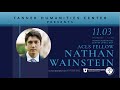
Nathan Wainstein is an Assistant Professor in the English Department at the University of Utah's College of Humanities, where he has been teaching since July 2023. His academic work bridges literary studies with contemporary digital media, particularly focusing on video game aesthetics alongside modernist literature. Wainstein maintains an active scholarly presence through publications, editorial work, and his podcast "Authors Die Twice" co-hosted with Bryan Counter. Wainstein's educational background includes: PhD from Stanford University (2013-2020) BA from Swarthmore College (2007-2011) His research interests span video game aesthetics, modernism, the novel, literary theory, narrative theory, and the intersection of literature and philosophy. Wainstein approaches these fields with a particular focus on paradox, difficulty, and aesthetic experiences that challenge conventional interpretations. His work often examines how seemingly simple literary devices like light descriptions can reveal deeper theoretical tensions within texts. Wainstein's recent publications demonstrate a consistent trajectory exploring the boundaries of literary aesthetics, from his analysis of James Joyce's photomimesis to his examination of narrative glitches in Faulkner's work. His scholarship connects historical literary theory with contemporary concerns, particularly in how he applies these frameworks to video game analysis. The upcoming book "Grant Us Eyes: The Art of Paradox in Bloodborne" exemplifies this interdisciplinary approach, bridging literary criticism with video game studies. Wainstein has held prestigious postdoctoral positions including an ACLS Emerging Voices Fellowship at the University of Utah and a Stanford Humanities and Sciences Dean's Fellowship. As an educator, Wainstein teaches innovative courses that reflect his research interests, including "On Difficulty," "Aesthetics of Violence in Video Games and Literature," "Games with Time," and "Videogame Storytelling." His teaching philosophy appears to emphasize the connections between traditional literary studies and contemporary digital media forms.
Jessica Straley is an Associate Professor in the Department of English at the University of Utah, where she has served since 2005 (Visiting Assistant Professor 2005-2007, Assistant Professor 2007-2016, Associate Professor 2016-present). She holds a PhD in English from Stanford University, an MA in Literature, Culture, and Modernity from Queen Mary and Westfield College, University of London, and a BA in English from Cornell University. Education: PhD, English - Stanford University MA, Literature, Culture, and Modernity - Queen Mary and Westfield College BA, English - Cornell University Her research focuses on intersections between Victorian literature, children's literature, animal studies, disability studies, and ecocriticism. She explores how literary imagination interacts with scientific and moral discourses, particularly in 19th-century contexts. Recent publications analyze feral child narratives, zoo representations, and evolutionary theory in children's texts. Her work bridges historical literary analysis with contemporary critical frameworks like disability rights and environmental ethics. Scientific Awards: Faculty Fellowship Award (University Research Council, 2017) Ramona W. Cannon Award for Teaching Excellence (2016) Tanner Humanities Center Fellowship (2016) University Research Committee Faculty Fellowship (2011) Newberry Library Short-Term Library Research Fellowship (2008) She teaches courses in 19th-Century British Literature, Intellectual Movements, and Honors Thesis/Project supervision. Her external grant (Animal Testing URC, 2017-2018) demonstrates institutional support for her interdisciplinary work.
Robert Kaufman is a Professor of Comparative Literature at the University of California, Berkeley. He holds a B.A. (1979), J.D. (1982), and Ph.D. (1995) from UC Berkeley. Prior to academia, he practiced labor and employment law. His career includes positions at McGill University, Stanford University (where he was an Assistant Professor of English and affiliated with German Studies and Modern Thought & Literature), and visiting roles at the University of Chicago and UC Berkeley. He has held fellowships including Stanford Humanities Center, Hellman Family, and Institute of International Studies. He co-chairs Berkeley's Program in Critical Theory. His research focuses on 20th-21st century American poetry, Latin American poetry, Romantic-era poetics, Frankfurt School Critical Theory, and aesthetic philosophy. Key projects include Negative Romanticism: Adornian Aesthetics in Keats, Shelley, and Modern Poetry , and studies on César Vallejo, Paul Celan, and Robert Duncan. His work bridges Marxist theory, lyric form, and sociopolitical critique. Kaufman's essays analyze Adorno's influence on modern poetry, the ethics of lyric form, and intersections between poetry and democracy. His recent work engages postmodernism's aftermath and contemporary political crises. He frequently collaborates on translation projects and public humanities initiatives, including events on Paul Celan's centenary.
Matthew Potolsky is Professor of English at the University of Utah, specializing in nineteenth-century literature and literary theory. His career spans from 1998 Lecturer at Harvard University to current University Professorship. He earned a BA in Comparative Literature and Philosophy (1990), followed by MA and PhD in Comparative Literature (1992, 1997) from UC Irvine. Chair of English Department (2013-2016) University Professor (2014-2016) Research focuses on Decadence , Mimesis , Finance-Aesthetics intersections , and Government Secrecy . His work traces connections between financialization and decadent aesthetics, revealing how economic cycles influence artistic production. Key themes include: Decadent anti-realist literary movements Finance capital's cultural impact Decadent counterpublic formations Victorian aesthetic education debates Sublime aesthetics in national security Cosmopolitanism in literary communities Recent publications analyze: Decadent style as financialization rhetoric Reintroduction of verisimilitude theory Decadent responses to financial crises Mimetic labor in artistic production Decadent cosmopolitan counterpublics Historical parallels between financialization and literary decadence
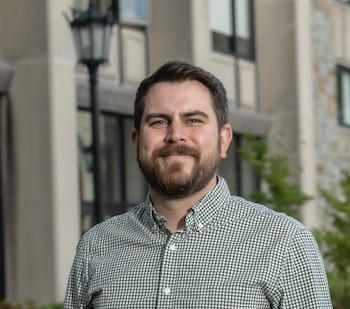
Josh Seim is an Assistant Professor of Sociology at Boston College, affiliated with the Morrissey College of Arts and Sciences. His work focuses on the sociologies of work, medicine, welfare, punishment, pedagogy, and ethnographic methods. He holds a Ph.D. from the University of California, Berkeley, and has published widely in top journals including *American Sociological Review* and *Social Problems*. Education: B.A., Gonzaga University M.S., Portland State University Ph.D., University of California, Berkeley Research Interests: His research explores how institutions like healthcare systems, welfare offices, and penal institutions interact with urban poverty. Recent projects include studies on ambulance crews’ labor processes, welfare bureaucracy, and post-prison labor. His writing also emphasizes pedagogical innovation in sociology teaching and ethnographic methodological rigor. Key themes include the governance of suffering, medical labor, and carceral systems. Publications & Books: Bandage, Sort, and Hustle: Ambulance Crews on the Front Lines of Urban Suffering (UC Press, 2020) The Welfare Assembly Line: Public Servants in the Suffering City (forthcoming UC Press, 2026) Teaching: Sociology 7715: Classical Sociological Theory (graduate) Sociology 7716: Contemporary Sociological Theory (graduate)
Lindsay Turner is an Associate Professor in the Department of English at Case Western Reserve University. A poet, critic, and translator, her work bridges creative writing, translation theory, and interdisciplinary research. Her prior role as Assistant Professor at the University of Denver’s Department of English and Literary Arts underscores her commitment to literary education. AB in English, Harvard College Masters in cinema studies, Université Paris III Sorbonne-Nouvelle MFA in poetry, New York University PhD in English, University of Virginia Turner’s research spans creative writing , transnational poetry , and gender studies , with a focus on the intersections of literature and labor. Her recent work examines gendered domestic and reproductive labor through poetic forms. Key trends in her publications include experimental translation , queer theory , and postcolonial philosophy . National Translation Awards Best Translated Book Awards French American Foundation recognition She has received grants such as the WPR Creative Grant from Harvard’s Woodberry Poetry Room and multiple French Voices Grants . Her translations have been praised by The New Yorker and The New York Times for their intellectual rigor and stylistic innovation.
Gilah Kletenik is a Research Fellow in Jewish Studies at the Stroum Center for Jewish Studies, University of Washington, holding the Hazel D. Cole Fellowship (2024-2026). She specializes in Jewish philosophy from medieval through modern periods with concentrated expertise in Spinoza's thought and its intellectual lineage. Her educational background includes: Ph.D. in Hebrew and Judaic Studies, New York University (2020) M.A. in Hebrew and Judaic Studies M.A. in Bible and Talmud Kletenik's research interrogates how power structures shape Western conceptions of reality, reason, and humanity, excavating alternatives in Jewish naturalism and immanence. She critically engages Spinoza's philosophy through medieval precursors (Maimonides, Gersonides), early modern contemporaries (Descartes, Anne Conway), and modern heirs (Marx, Deleuze), while situating this work within critical theory, new materialism, object-oriented ontology, affect theory, and queer theory frameworks. Her scholarship consistently bridges historical philosophical analysis with contemporary sociopolitical critique. Her public scholarship demonstrates thematic continuity across publications, examining institutional power dynamics in Jewish Studies through lenses of gender, antisemitism, and decolonization. These works reveal persistent patterns connecting medieval philosophical concepts to modern systemic issues in academia and society. Her distinguished fellowships include: Hazel D. Cole Fellow in Jewish Studies, University of Washington (2024-2026) Postdoctoral Associate, Elie Wiesel Center for Jewish Studies, Boston University Alan M. Stroock Fellow, Center for Jewish Studies, Harvard University Currently completing her monograph "Sovereignty Disrupted: Spinoza and the Disparity of Reality," Kletenik maintains active public engagement through lectures and critical commentary, advancing interdisciplinary dialogue between Jewish philosophy and contemporary theoretical movements while challenging institutional norms in academic Jewish Studies.
Scott D. Sagan is the Caroline S.G. Munro Professor of Political Science at Stanford University and a Senior Fellow at the Freeman Spogli Institute for International Studies. He serves as Co-Director of the Center for International Security and Cooperation (CISAC) and holds the position of Bass University Fellow in Undergraduate Education. Sagan also co-chairs the American Academy of Arts and Sciences' Committee on International Security Studies, demonstrating his significant influence in the field of international security. Sagan received his Ph.D. in Political Science from Harvard University in 1983 and his B.A. in Government from Oberlin College in 1977. Prior to joining Stanford, he taught at Harvard University and served as special assistant to the director of the Organization of the Joint Chiefs of Staff in the Pentagon, providing him with valuable practical experience in defense policy. Professor Sagan's research primarily focuses on nuclear weapons policy, international security, arms control, and nonproliferation. His work examines the organizational, political, and ethical dimensions of nuclear strategy, with particular attention to the risks of nuclear accidents, the effectiveness of nonproliferation policies, and public attitudes toward nuclear weapons use. He has pioneered important theoretical frameworks regarding the organizational causes of nuclear accidents and the normative constraints on nuclear weapons use. Sagan's publications reveal a consistent focus on nuclear deterrence theory, the organizational aspects of nuclear command and control, and the ethical dimensions of nuclear weapons policy. His work bridges theoretical analysis with practical policy implications, often challenging conventional wisdom about nuclear strategy and proliferation. Recent publications show increasing attention to public opinion on nuclear weapons use, the evolving nature of nuclear deterrence in the contemporary security environment, and the relationship between international law and nuclear strategy. Thérèse Delpech Memorial Award (2022) Susan Strange Award, International Studies Association (2017) William and Katherine Estes Award, National Academy of Sciences (2015) International Security Studies Section Distinguished Scholar Award (2013) Stanford's Dean's Award for Distinguished Teaching (1998-99) Stanford's Hoagland Prize for Undergraduate Teaching (1996) International Studies Association's Innovative Teaching Award (2008) Monterey Institute for International Studies' Nonproliferation Education Award (2009) Sagan has been instrumental in shaping the research agenda at CISAC, mentoring numerous students and junior scholars in the field of international security. His work has been supported by various research grants from foundations and government agencies focused on nuclear security issues. At Stanford, he has led numerous research initiatives examining nuclear weapons policy, arms control, and nonproliferation challenges. As Co-Director of CISAC, Sagan oversees one of the world's leading research centers on international security, nuclear policy, and arms control. The center brings together scholars, practitioners, and students to address pressing security challenges through interdisciplinary research, policy-relevant analysis, and educational programs. Under his leadership, CISAC has maintained its position as a premier institution for security studies research and policy engagement.
Michael Mejia is an Associate Professor in the Department of English at the University of Utah, where he teaches creative writing. He is also Editor-in-Chief of Western Humanities Review and co-founding editor of Ninebark Press . Mejia is the author of the novels TOKYO and Forgetfulness , with his work appearing in journals like AGNI , DIAGRAM , and Seneca Review . His creative practice bridges fiction, nonfiction, and visual media, interrogating narrative form and socio-cultural dynamics.
David Trend is a Professor and former Chair of the Department of Art at the Claire Trevor School of the Arts, University of California, Irvine. He previously served as Dean of Creative Arts at De Anza College and Graduate Program Coordinator at San Francisco State University's Inter-Arts Center. Trend specializes in visual culture, cultural studies, and critical pedagogy, teaching courses like Language and Vision in Everyday Life and Media, Art, and Technology . His research bridges media analysis, education policy, and radical democracy. He has authored over 200 articles and 16 books, including Elsewhere in America and Reading Digital Culture . As a Getty Scholar, his work explores cultural belonging, digital media impacts, and educational innovation. He advises on state arts councils and the National Endowment for the Arts. His academic contributions span visual arts education, media literacy, and the sociopolitical role of art. Education: - MFA in Photography, Visual Studies Workshop Program, SUNY Buffalo - PhD in Curriculum Theory, Miami University Research Interests: Trend's work examines cultural crises of meaning, digital media's societal impact, and the intersection of art with education and activism. He critiques gentrification's artistic drivers, explores identity formation in digital spaces, and advocates for culturally democratic pedagogical frameworks. Publications Trends: Recent works focus on gentrification's artistic dimensions ( 2022 ), creativity crises ( 2020 ), and belonging in fragmented cultures ( 2016 ). Earlier work addressed media violence myths ( 2007 ), digital literacy ( 2001 ), and radical democracy ( 1996 ). His writing spans academic critiques to practical pedagogical solutions. Awards: Getty Scholar Grants & Consulting: Extensive NEA collaborations, foundation advising, and state arts council consultations. His work emphasizes bridging educational institutions with Silicon Valley corporations through multimedia partnerships. Labs/Teams: Affiliated with UCI's University Art Galleries, Institute and Museum of California Art, and Electronic Art + Design programs.
Craig Buckley is an Associate Professor in the Department of the History of Art and affiliated with the Yale School of Architecture. His research bridges modern architecture with visual arts and media, focusing on techniques like montage, collage, and screen-based practices. Education: BA (Trent University), MA (University of Western Ontario), PhD (Princeton University) His work examines how media such as print, film, and digital screens shape architectural culture. Key themes include cinema architecture, media theory, and the intersection of design with socio-political movements like 1968 protests. His recent articles analyze topics such as colonial-era cinema architecture, media façades, and pneumatic structures. He teaches courses on architecture’s relationship with media and print culture, often utilizing Yale’s special collections.