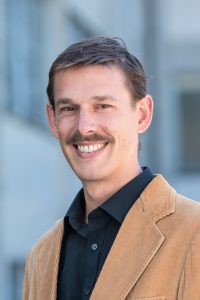
Claire Bowern is Professor of Linguistics at Yale University specializing in historical linguistics, language documentation, and Australian Indigenous languages. Her research employs computational phylogenetics to study language evolution and supports language revitalization through digital archives and fieldwork methodologies. Recent publications address: Phylogenetic signal in lexical evolution across language families Digital infrastructure for endangered language documentation (FLEx software analysis) Decolonizing linguistics pedagogy and research practices Her work consistently integrates linguistic, anthropological, and computational approaches to analyze language diversity and change. She contributes to global databases including Grambank and D-PLACE, examining links between linguistic, cultural, and environmental patterns.
Steven Jackson is a Professor of Information Science and Science and Technology Studies at Cornell University's Bowers College of Computing and Information Science, with additional graduate field appointments in Communication and Public Affairs. Since July 2023, he has served as Vice-Provost for Academic Innovation at Cornell, and previously held leadership positions as Chair of Information Science and Dean of William Keeton House. His work bridges academic research with significant institutional leadership in higher education innovation. Dr. Jackson's research focuses on critical intersections of technology, society, and the environment, with three primary strands: technology ethics, law and policy; maintenance, repair and sustainability; and technology, inequality and global development. His work draws from American pragmatism, political economy, and science and technology studies, integrating methods from sociology, anthropology, philosophy, and media studies. He is particularly interested in how computing practices meet social and material worlds, with implications for infrastructure, collaboration, sustainability, and cultural practice. His recent publications reveal a strong emphasis on repair as both theoretical concept and practical methodology, exploring 'ordinary hope' as a framework for technological engagement and examining unmaking as a necessary counterpart to design. The research spans diverse geographical contexts from the global North to South, addressing caste dynamics in computing, digital authoritarianism, and infrastructure challenges in developing contexts. Dr. Jackson has received significant recognition including an NSF CAREER award and more than twenty paper awards at leading computing and information science venues. His research has been supported by major organizations including the U.S. National Science Foundation, Social Science Research Council, Ford Foundation, Sloan Foundation, World Bank, Intel Research, Atkinson Center for Sustainability, and the Canadian Social Science and Humanities Research Council. As an advisor, Dr. Jackson has mentored numerous graduate students who have gone on to prominent positions at institutions worldwide. He currently advises Jen Liu, Amy Cheatle, Daniel Mwesigwa, Johan Michalove, and Ritik Batra, while his former students include Palashi Vaghela (Assistant Professor at Simon Fraser University), Samir Passi (Responsible AI Researcher at Microsoft), Maggie Jack (Assistant Professor at NYU), and Ranjit Singh (Senior Researcher at Data and Society). Dr. Jackson convenes the Computing On Earth Lab, an experimental collaboration bringing together social scientists, humanists, artists, and engineers to rethink the material and planetary foundations of computing. The lab reflects his commitment to interdisciplinary approaches that address computing's environmental impacts and sustainability challenges.
Emily Hannum is a Professor of Sociology and Education at the University of Pennsylvania's College of Arts & Sciences, where she also serves as Associate Dean for Social Sciences. She is affiliated with the Population Studies Center, Center for the Study of Contemporary China, Graduate School of Education, and Penn Development Research Initiative. Education: PhD in Sociology from University of Michigan (1998) Research Focus: Poverty and child welfare, gender and ethnic stratification, sociology of education Projects: Gansu Survey of Children and Families, climate-environment-childhood inequalities in LMICs Workshops: Co-organizer of Penn Education and Inequality Workshop Her research explores childhood poverty in China, demographic impacts on education systems, and climate risks affecting children's welfare. She investigates environmental hazards, educational disparities, and family separation effects across China, India, and low/middle-income countries. Recent publications analyze educational expansion in East Asia, climate crisis impacts on child health, and gender disparities in Latin America. She directs longitudinal studies on rural poverty and collaborates on cross-national projects related to environmental and educational equity. Scientific awards include the Stanley I. Sheerr Term Professorship in Social Sciences.
Royal Holloway, University of LondonUnited Kingdom
Katherine Brickell is Professor of Human Geography at Royal Holloway, University of London (RHUL), where she serves as Research Lead for the Department of Geography. She is editor of the journal Gender, Place and Culture and former Chair of the RGS-IBG Gender and Feminist Geographies Research Group. Her work spans social, political, development, urban and legal geography with a feminist orientation. Brickell's research centers on three interconnected themes: home and home unmaking, labor precarity, and feminist legal geographies. Her longstanding interest in the domestic sphere and home unmaking aims to reaffirm the home as a political entity. Her monograph Home SOS: Gender, Violence and Survival in Crisis Ordinary Cambodia brings together 15 years of research on domestic violence and forced eviction. Since 2017, she has conducted collaborative work in London and Dublin on modular housing for homeless families. She has also led significant research on labor conditions in Cambodia, including the ESRC-DFID funded 'Blood Bricks' project (2016-2019) studying climate change impacts on rural families migrating to brick kilns. Her recent publications reveal a strong focus on debt, microfinance, and climate vulnerability in Cambodia, with multiple 2022-2024 articles examining how over-indebtedness intersects with social reproduction and climate adaptation. Her work consistently applies feminist lenses to understand spatial dimensions of power, particularly in Southeast Asia. Brickell has published in top journals including Transactions of the Institute of British Geographers , Progress in Human Geography , Antipode , and Annals of the American Association of Geographers . Gill Memorial Award (2014) Philip Leverhulme Prize (2016) Times Higher Education Research Project of the Year (2020) Brickell has supervised numerous doctoral students and mentored postdoctoral fellows working on topics including remittances during COVID-19, climate mobilities, moral geographies of garment work, and women's experiences with domestic violence. Her research has been funded by ESRC-DFID, UKRI GCRF, and the Urban Studies Foundation, among others. She collaborates extensively with colleagues in Cambodia and across Europe, with current projects examining climate resilience, credit-taking, and nutrition in Cambodia and South India, as well as the economic impacts of the pandemic on Cambodian garment workers.
Shanique Brown serves as Assistant Professor of Management at the Zicklin School of Business, City University of New York (CUNY), where she investigates cognitive processes impacting organizational team dynamics and decision-making. Her research bridges industrial-organizational psychology with practical applications in extreme environments. Her academic foundation includes: Ph.D. in Industrial-Organizational Psychology from DePaul University M.A. in Industrial-Organizational Psychology from Southern Illinois University, Edwardsville B.Sc. in Psychology from the University of the West Indies Dr. Brown's research centers on decision-making mechanisms and team cognition within organizational contexts, with specialized focus on extreme environments like space missions. She examines how cognitive styles, working memory, and team composition influence performance in isolated, confined, and high-stakes settings. Her work integrates psychological theory with actionable frameworks for optimizing team effectiveness across virtual and physical workspaces. Analysis of her publication history reveals evolving expertise in team science, particularly regarding virtual team leadership, polycultural organizations, and NASA-relevant analog research. Recent work emphasizes selection-optimization-compensation models for team performance and psychosocial factors in extreme environments, demonstrating consistent contribution to organizational psychology literature. Her scientific recognition includes: Editorial Fellowship from Group Dynamics (2022) Wayne State University Faculty Accessibility Fellowship (2022) Teaching Innovation Development Excellence Award (2020) Faculty Teaching Award (2020) University Research Grant (2019) Robert A. Daugherty Memorial Award (2011) Dr. Brown actively collaborates on NASA-funded research through the Human Research Program, developing crew composition models for long-duration space missions. She serves on Baruch College's PhD Admissions and Interdisciplinary Business Major committees while maintaining leadership roles in the Society of Industrial-Organizational Psychology, including Task Force Chair and Conference Committee positions. Her grant work focuses on translating team dynamics research into operational frameworks for extreme environments. She leads interdisciplinary collaborations with NASA researchers and international scholars on projects including virtual escape room studies for team performance assessment and CREWS (Crew Recommender for Effective Work in Space) development, demonstrating commitment to solving real-world team challenges in high-consequence settings.
Dr. Alex Bigazzi is an Associate Professor and Associate Head (Undergraduate Program) in the Department of Civil Engineering at the University of British Columbia (UBC), with a joint appointment in the School of Community and Regional Planning. He leads the REACT Lab, focusing on active transportation, micromobility, and sustainable infrastructure design. His research emphasizes the intersection of physics, physiology, and behavior in active travel, particularly for pedestrians and cyclists, and addresses emissions reduction and equitable urban mobility. Bigazzi holds a B.M. in Jazz Saxophone from the University of Miami and a Ph.D. in Civil Engineering from Portland State University. His career includes academic and practical contributions, such as founding the REACT Lab and leading projects on e-bike incentives, air pollution exposure, and infrastructure design. His work has earned awards like the 2024 Wall Legacy Award for inclusive transport design and the 2023 Climate Action Award. He teaches courses on pedestrian/bicycle facility design and capstone projects, mentoring students through UBC’s Civil Engineering programs.
Professor Amy Maguire is a leading academic in human rights and public international law at the University of Newcastle, Australia. She holds roles as Deputy Head of the School of Law and Justice (2021-2024) and co-founder Director of the Centre for Law and Social Justice. Her research focuses on human rights accountability, Indigenous rights, climate change displacement, and refugee rights. She has secured over $2.7 million in grants, including an ARC Mid-Career Industry Fellowship (2024-2028) for national human rights reform initiatives. Maguire advises the Queensland Parliament on human rights compliance and collaborates with global institutions like the Australian Human Rights Commission. Her work has influenced policy, including Australia’s death penalty abolition strategy and Indigenous rights frameworks. She has been awarded multiple accolades for research and teaching excellence, including the 2020 Leadership Excellence Award and 2016 Early Career Researcher of the Year. Maguire’s education includes a BA, LLB (Hons), and PhD from the University of Newcastle. Her interdisciplinary approach bridges law and social justice, addressing issues like climate migration and legal responses to global crises. She leads projects such as the Hunter Region climate displacement study and the Human Rights Measurement System. Maguire’s public engagement includes over 70 articles for The Conversation, reaching 920,000+ readers, and expert media commentary globally. She advocates for inclusive education through initiatives like early entry programs for Indigenous and refugee students, earning a 2021 Senior Fellowship from Advance HE. Her research outputs span 60+ publications, with key works on MH17 litigation, climate justice, and Indigenous legal frameworks. Grants include a 2021 stimulus grant to establish the Centre for Law and Social Justice, supporting postdoctoral research and international collaborations. Maguire’s leadership extends to global networks, including the UN Human Rights Council evaluation project and the Human Rights for NSW Alliance. She remains committed to translating research into policy, education, and community impact through clinics, youth forums, and law reform advocacy.
Diane E. Austin is a Professor and Director of the School of Anthropology at the University of Arizona. She also serves as a Research Anthropologist at the Bureau of Applied Research in Anthropology (BARA). Her work focuses on environmental anthropology, particularly community dynamics in industrial and environmental contexts, with a strong emphasis on social justice and collaborative research. She has over 25 years of experience leading interdisciplinary projects in the U.S., Mexico, and Gulf Coast regions. Austin's research spans diverse areas including Native American communities, U.S.-Mexico border sustainability, Gulf Coast oil industry impacts, and urban food systems in arid regions. She has pioneered long-term partnerships with tribal organizations, federal agencies, and community groups, earning recognition such as the University Distinguished Outreach Professor (2008) and Distinguished Director (2023). Her recent work highlights longitudinal studies on the Deepwater Horizon oil spill's social effects, binational environmental initiatives in Nogales, and community-based approaches to disaster resilience. She coordinates BARA's internship and post-baccalaureate programs, supporting hundreds of students in applied anthropological research. Awards: Partners in Conservation Award (2010), Border Research Partnership Award Finalist (2012) Leadership Roles: Chair of the Good Neighbor Environmental Board, Member of the Gulf Research Program Advisory Board Key Projects: Southern Paiute cultural preservation, Gulf Coast oil industry studies, Nogales reforestation initiatives Austin’s teaching includes courses on ethnographic methods, data analysis, and mixed-methods research. She actively engages in policy advocacy, contributing expert testimony in legal proceedings related to environmental disasters and labor rights.
Professor Elaine Fahey is a leading scholar in EU law and global governance at the City Law School, City St George's, University of London, where she serves as Professor of EU Law and Deputy Head of Department (academic programmes). She is co-convener of the Institute for the Study of European Law (ISEL) and the UACES James Madison Trust EUFUtures initiative (2022–2025). Her academic career includes visiting professorships at Washington College of Law (American University), Keio University, and NYU, as well as fellowships at the European University Institute and the University of Graz. LLB, Trinity College Dublin LLM, Sidney Sussex College, University of Cambridge PhD, Trinity College Dublin Barrister-at-Law, Honorable Society of King’s Inns, Ireland Attorney-at-Law, State of New York Senior Fellowship, Higher Education Authority UK Her research focuses on the intersection of EU law with global governance, digital regulation, transatlantic relations, and the Area of Freedom, Security and Justice. She explores how the EU navigates legal frameworks beyond the nation-state, particularly in digital trade, cybersecurity, and data protection. Her work critically examines the EU’s role as a global regulatory actor and its interactions with international institutions. Her extensive publication record includes the monograph The EU as a Global Digital Actor (Hart, 2022) and numerous articles on digital sovereignty, data transfers, and transatlantic cooperation. Recent research analyzes the EU–US Trade and Technology Council (TTC), the evolution of the Privacy Shield, and strategic litigation in digital rights. Her work reveals a strong trend toward understanding how soft law, institutional design, and judicial decisions shape EU external relations and digital governance. Erasmus+ Jean Monnet Chair in Law & Transatlantic Relations (2019–2022) Emile Noël Fellow, NYU Law School Max Weber Fellow, European University Institute Senior Land Steiermark Fellow, University of Graz Senior Fellowship, Higher Education Authority UK Professor Fahey has supervised multiple PhD students, including Isabella Mancini, Giulio Kowalski, and Christos Karetsos, on topics such as algorithmic collusion, digital markets, and investment law. She has led significant research projects, including the ESRC-funded TRILATTRADE grant and the Marie Curie ITN on EU and Transatlantic Investment and Trade (EUTIP). She previously held leadership roles as Associate Dean (International) and interim Associate Dean (Research) at the City Law School. She is an elected member of the EU Studies Association (EUSA) Executive (2021–2025). She has also contributed to public policy through briefings for the Welsh Parliament and reports on CJEU litigation in Ireland. She is associated with research initiatives such as the Institute for the Study of European Law (ISEL) and has collaborated on interdisciplinary projects on Facebook regulation, transatlantic relations, and EU technological sovereignty. Her work bridges legal scholarship, policy, and international academic collaboration.
Alice Reagan is Professor of Professional Practice and Director of Undergraduate Studies in the Department of Theatre at Barnard College, Columbia University. She teaches directing, performance, and seminars on Zora Neale Hurston, Black performance, and AIDS activism, while also directing professionally across the U.S. Education: B.A., Bates College M.A., Tisch School of the Arts, New York University M.F.A., Columbia University, School of the Arts Her research and artistic practice centers on theatre directing, adaptation, new play development, and ensemble-based work , with a strong commitment to feminist and socially engaged theatre. She founded New Plays at Barnard , commissioning works by women-identified playwrights. Her recent and upcoming productions include Evelyn Brown (A Diary) , Cherry Orchard , Measure for Measure , and The Thanksgiving Play . Her recent publications and public scholarship focus on the revival of María Irene Fornés' work and the ethics of white educators teaching Black diasporic material, especially her influential 2019 article Teaching While White . The articles reflect a consistent engagement with race, pedagogy, classical reinterpretation, and feminist performance . Selected Awards & Honors: Named to Kilroys List, 2023 Individual Artist Grant, NYSCA, 2023 Cherry Orchard Teaching Excellence Award, 2022 Princess Grace Award Drama League Directing Fellow Berkshire Theatre Award nominations (9) She advises student productions and leads the New Plays at Barnard program, shaping the next generation of theatre artists. She has received grants from the Shubert Foundation and NYSCA. Her professional affiliations include Stage Directors and Choreographers Society, New Georges, and Wingspace Design. She is deeply involved in lab programs such as the Lincoln Center Directors Lab and Mabou Mines/SUITE. She leads the New Plays at Barnard initiative and collaborates with professional ensembles like Portland Experimental Theatre Ensemble and Shakespeare & Company, bridging academic and professional theatre.
Matthew D. Adler is the Richard A. Horvitz Distinguished Professor of Law and Professor of Economics, Philosophy, and Public Policy at Duke University. He is the founding director of the Duke Center for Law, Economics and Public Policy and holds a 3-year research fellowship at the London School of Economics. Education: B.A., Yale University (1984) J.D., Yale University (1991) M.Litt., University of Oxford (1987) - Marshall Scholar Research Interests: Adler specializes in prioritarianism, a theory that refines utilitarianism by prioritizing the worse-off. He integrates welfare economics, normative ethics, and legal theory to develop policy analysis tools like social welfare functions with distributional weights. His work spans climate change , risk regulation , health policy , and inequality measurement . Publications and Contributions: Adler has authored monographs including New Foundations of Cost-Benefit Analysis and Well-Being and Fair Distribution , and co-edited the Oxford Handbook of Well-Being and Public Policy . His recent work explores implementing prioritarianism in policy domains such as the social cost of carbon , health economics , and intergenerational equity . Scientific Awards: Marshall Scholar Ludwig M. Lachmann Professorial Research Fellow Professional Affiliations: Adler was an editor of Legal Theory until 2017 and is now an editor of Economics and Philosophy . He has held visiting professorships at Columbia, Chicago, and Virginia Law Schools.
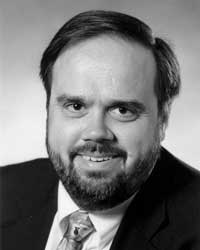
Martin T. Wells is the Charles A. Alexander Professor of Statistical Sciences at Cornell University, with joint appointments in the Department of Statistical Science, Department of Biological Statistics and Computational Biology, Department of Social Statistics, and as Professor of Clinical Epidemiology and Health Services Research at Weill Medical School. He serves as Editor-in-Chief of the ASA-SIAM Book Series and Co-Editor of the Journal of Empirical Legal Studies. Cornell University, Ithaca, NY Weill Cornell Medical College Research Interests span applied and theoretical statistics, Bayesian methods, biostatistics, clinical epidemiology, and computational biology. His work bridges disciplines like finance, legal studies, and health services research. Article Trends highlight advancements in Bayesian modeling, quantum cognition machine learning, tensor analysis, and misclassification correction, with applications in genomics, finance, and public health. Fellow of the American Statistical Association Fellow of the Royal Statistical Society Contributions include developing statistical software (e.g., rTensor), methodological innovations in clinical trials, and empirical legal studies on civil rights and the death penalty.
Dr. K. Max Zhang is a Professor in the Sibley School of Mechanical and Aerospace Engineering at Cornell University. He is the director of the Energy and the Environment Research Laboratory (EERL) and a fellow at the Atkinson Center for a Sustainable Future. His research is deeply interdisciplinary, focusing on sustainable energy systems, air quality, and environmental justice, with significant impacts on policy and community development in New York and beyond. Ph.D., Mechanical Engineering, University of California-Davis, 2004 B.S., Thermal Engineering, Tianjin University, 1998 B.A., English Language, Tianjin University, 1998 Dr. Zhang’s research centers on the integration of energy and environmental systems. He investigates air pollution dynamics using advanced numerical models like CTAG, with applications in near-source pollution, indoor air quality, and environmental justice. His work on renewable energy systems includes designing sustainable solar farms and managing distributed energy resources such as heat pumps to enhance grid flexibility. He also leads a pioneering initiative to create the first statewide public IoT network in the U.S., enabling hyperlocal weather forecasting and microclimate monitoring. His recent publications reflect a strong trend toward agrivoltaics, peer-to-peer energy markets, and IoT-based environmental monitoring. These works demonstrate a consistent focus on data-driven modeling, community-scale energy solutions, and the integration of social considerations into technical systems. The keywords across his articles highlight expertise in sustainability, machine learning, air quality, and energy transition. Cornell Town-Gown Achievement Award (2022) Engaged Scholar Prize, Cornell University (2017) People's Choice Sign of Sustainability Award, Sustainable Tompkins (2016) Scientific and Technological Achievement Award, Environmental Protection Agency (2015) Fellow of the American Society of Mechanical Engineers Dr. Zhang is actively involved in mentoring students and securing research grants from agencies such as the National Science Foundation (NSF) and the New York State Energy Research and Development Authority (NYSERDA). His projects often involve interdisciplinary collaboration across eight Cornell colleges and 16 academic departments. He has led initiatives such as the Cornell Atkinson Academic Venture Fund projects and the development of a county-level energy roadmap for Tompkins County. He also teaches courses in engineering thermodynamics, future energy systems, and air quality, emphasizing experiential and community-based learning. Dr. Zhang leads the Energy and the Environment Research Laboratory (EERL) and collaborates with the Atkinson Center for a Sustainable Future. His lab functions as a hub for innovation in sustainable communities, combining advanced modeling with real-world applications. Through partnerships with community organizations, government agencies, and industry, his team develops science-driven solutions to urban and rural sustainability challenges.
Professor Siân Bayne is a leading academic in digital education at the University of Edinburgh , where she serves as Assistant Principal for Education Futures and directs the Centre for Research in Digital Education . Her work bridges critical theory and practical innovation in higher education. Interdisciplinary research on digital education and futures studies Leadership in the Edinburgh Futures Institute and Moray House School of Education and Sport Global impact through UNESCO collaborations and UKRI GCRF projects Bayne’s research explores higher education futures , utopian theory , and digital enhancement , with a focus on: AI’s role in teaching and learning Ethical implications of educational technologies Anonymous social media in academic spaces Speculative scenarios for educational systems Global South digital education models Augmented reality applications in assessment Her 15 most recent publications span 2017-2025 , covering critical perspectives on: Generative AI and educational innovation Utopian design in universities Data governance in learning analytics Augmented reality pedagogy Digital cultural heritage Scientific recognition includes: IASH Sabbatical Fellowship (2023) Bayne leads Higher Education Futures initiatives and partners with institutions worldwide, including: UNESCO Global Education and Technology Report World Bank collaborations European university leadership programs She also drives major research centers like: Centre for Research in Digital Education UKRI GCRF Urban Disaster Risk Hub
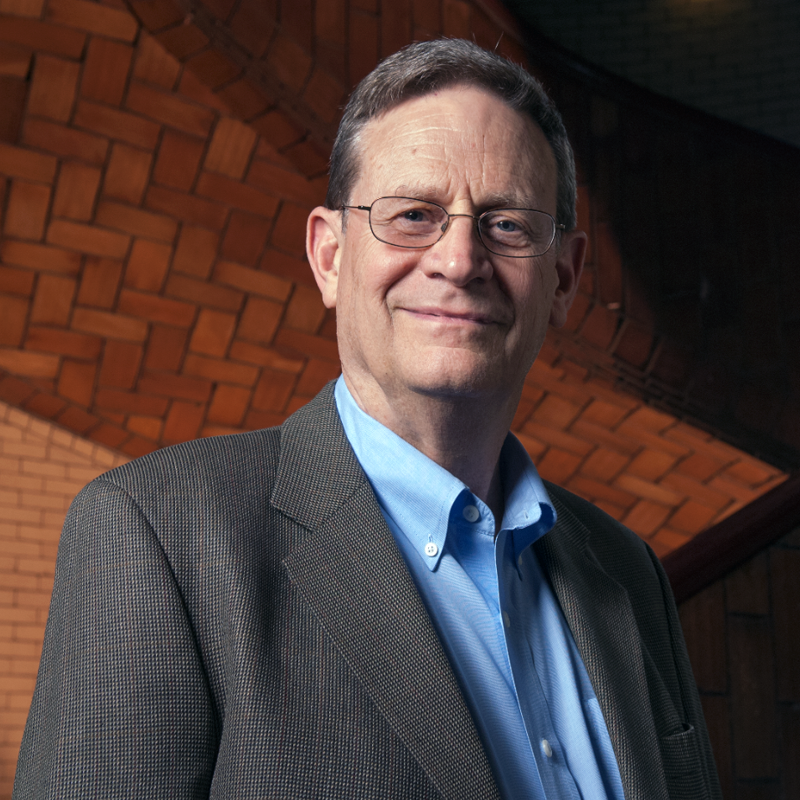
Granger Morgan is the Hamerschlag University Professor of Engineering at Carnegie Mellon University, holding joint appointments in the Department of Electrical and Computer Engineering, the Department of Engineering and Public Policy, and the H. John Heinz III College. His research focuses on science, technology, and public policy, particularly energy systems, climate change, risk analysis, and regulatory frameworks. He co-directs the NSF Center for Climate and Energy Decision Making and the Electricity Industry Center. Education: Ph.D., Applied Physics and Information Science, University of California, San Diego (1969) M.S., Astronomy and Space Science, Cornell University (1965) B.A., Physics, Harvard College (1963) Research Interests: Energy decarbonization and electric power resilience Climate change mitigation and adaptation strategies Risk assessment and policy analysis Hydrogen and nuclear energy systems Global technology adoption dynamics Awards and Affiliations: FAS Public Service Award (2016) Member, National Academy of Sciences Fellow, AAAS, IEEE, and Society for Risk Analysis National Academies Report Review Committee Co-Chair Advisory roles at DOE, PNNL, and international energy councils Advisory and Grants: Leadership in national studies on electric grid resilience and hydrogen infrastructure Recipient of NSF and industry-funded research grants Guidance on global energy policy and regulatory frameworks Labs and Teams: NSF Center for Climate and Energy Decision Making (co-director) Carnegie Mellon Electricity Industry Center Interdisciplinary energy policy research groups