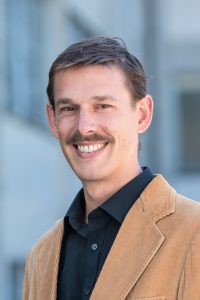
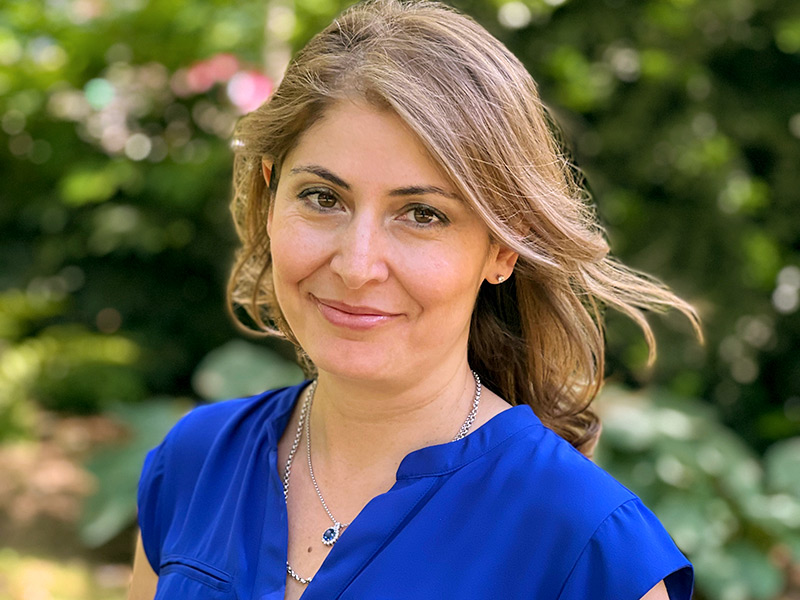
Dr. Alex Bigazzi is an Associate Professor and Associate Head (Undergraduate Program) in the Department of Civil Engineering at the University of British Columbia (UBC), with a joint appointment in the School of Community and Regional Planning. He leads the REACT Lab, focusing on active transportation, micromobility, and sustainable infrastructure design. His research emphasizes the intersection of physics, physiology, and behavior in active travel, particularly for pedestrians and cyclists, and addresses emissions reduction and equitable urban mobility. Bigazzi holds a B.M. in Jazz Saxophone from the University of Miami and a Ph.D. in Civil Engineering from Portland State University. His career includes academic and practical contributions, such as founding the REACT Lab and leading projects on e-bike incentives, air pollution exposure, and infrastructure design. His work has earned awards like the 2024 Wall Legacy Award for inclusive transport design and the 2023 Climate Action Award. He teaches courses on pedestrian/bicycle facility design and capstone projects, mentoring students through UBC’s Civil Engineering programs.
Dr. Alyas Widita is an Assistant Professor in the Urban Design program at Monash University, Indonesia. He is actively involved in research and teaching, focusing on urban planning, transportation, and smart city technologies. He serves as the Program Coordinator for Urban Design and teaches courses such as Urban Design Studio: Smart City and Smart City Technologies. Education: Ph.D. in City and Regional Planning, Georgia Institute of Technology, United States Dr. Widita's research centers on the built environment, transportation systems, and urban analytics, with a strong emphasis on developing Asian cities. His work explores congestion impacts of mass transit, ride-hailing effects on vehicle ownership, rural-urban migration, walking behavior, and spatial patterns of MSMEs. He employs advanced data analytics and causal evaluation methods to inform urban policy. His recent publications span high-impact journals such as Transport Reviews , Journal of Planning Education and Research , and Travel Behaviour and Society . The research trend shows a consistent focus on data-driven urban policy, sustainable mobility, and equity in urban development across Indonesia and Southeast Asia. Scientific Awards and Recognition: No specific awards listed, but research widely cited and featured in media outlets. Dr. Widita has secured and contributed to multiple research projects funded by international and national agencies, including the World Bank, Korea Transport Institute (KOTI), Central Bank of Indonesia, and Georgia Department of Transportation. He is currently leading or co-leading projects on Jakarta’s subsidence, flood risk management using remote sensing, and the Citarum River revitalization. He collaborates extensively with researchers across disciplines and institutions. His work contributes to UN Sustainable Development Goals, particularly those related to sustainable cities and communities. He is accepting PhD students interested in the built environment, transportation, and urban analytics in developing Asia. He is involved in key labs and research teams including the Citarum Action Research Program (CARP), Intelligent and Dynamic Remote Sensing for Flood Risk, and interdisciplinary urban analytics initiatives at Monash Indonesia.
Anna Grigolon is an Assistant Professor at the University of Twente , Netherlands, affiliated with the Transport Engineering and Management Research Group . Her research focuses on sustainable urban mobility , user-centric transport solutions , and travel behavior analysis using tools like discrete choice modeling , spatial analysis , and social psychology theories . Research Interests : Sustainable Urban Mobility Accessibility Modeling Travel Behavior Discrete Choice and Latent Class Modeling Spatial Analysis and GIS Shared Micromobility and Mobility Hubs Equity in Transport Planning Article Trends : Anna’s recent work (2025–2024) emphasizes mobility justice , 15-minute city transitions, and equity in transport access , particularly for marginalized communities like São Paulo favelas. She integrates digital tools (e.g., serious games, kiosks) and space-time metrics to evaluate mobility solutions. Projects : She currently leads the SmartHubs project and contributes to DREAMS and R-map , focusing on smart, equitable mobility systems in Europe and Saudi Arabia.
Gulsah Akar is a Professor and Chair of the School of City & Regional Planning at Georgia Institute of Technology. She specializes in sustainable urban mobility, focusing on built environment-travel connections, equity, and new mobility technologies. Her research has been supported by grants from the Ohio Department of Transportation (ODOT) and the National Science Foundation (NSF). Prior to Georgia Tech, she held a professorship at The Ohio State University (OSU), where she led the PhD Program in City and Regional Planning from 2015–2021 and served as Research Program Lead at OSU’s Sustainability Institute (2019–2021). Her research interests include transportation equity, multimodal travel behavior, and smart city technologies. She co-authored over 35 peer-reviewed articles in top-tier journals, with recent work examining pandemic impacts on urban resilience, autonomous vehicle adoption, and aging populations’ travel patterns. Akar holds editorial roles, including former Editor of the Journal of Planning Literature (2015–2021), and actively contributes to Transportation Research Board committees. Educated at Middle East Technical University (B.Sc. and M.Sc.) and the University of Maryland (Ph.D.), her academic career bridges transportation engineering and urban planning. Key research trends in her publications focus on: 1) built environment interactions with travel behavior, 2) equity in mobility access, and 3) innovation in transportation systems. Her articles consistently analyze data from major U.S. cities like Columbus, Seattle, and New York.
Rutgers, The State University of New JerseyUnited States
Robert B. Noland is a Distinguished Professor and Associate Dean of Faculty at the Edward J. Bloustein School of Planning and Public Policy at Rutgers University. He also serves as Director of the Voorhees Transportation Center. He holds a B.A. from the University of California, and M.Sc. and Ph.D. from the University of Pennsylvania in Energy Management and Environmental Policy. His research focuses on transportation planning’s economic and environmental impacts, including traffic safety modeling, infrastructure planning, and climate change mitigation. He has held roles at Imperial College London, the US EPA, and the University of California, Irvine. Noland is co-Editor-in-Chief of Transportation Research Part D and former Chair of the Transportation Research Board’s Climate Change Task Force. His work emphasizes equitable transportation policies, safety metrics, and sustainable urban design. Education: B.A., University of California M.Sc., University of Pennsylvania Ph.D., University of Pennsylvania (Energy Management & Environmental Policy) Research Interests: Economic and environmental impacts of transportation policies Traffic safety data analysis and modeling Climate change adaptation in infrastructure planning Non-motorized transportation (bikeshare, pedestrian safety) Equity in mobility access and infrastructure Key Contributions: Pioneered studies on road diet conversions and their benefits Evaluated bikeshare systems globally, including NYC and Seoul Investigated disparities in ridehailing and EV charging access Advanced pedestrian safety metrics and crash data practices Advising & Grants: Directed major transportation projects (e.g., Newark Light Rail study) Recipient of grants for climate resilience and urban mobility research Labs/Teams: Leads the Voorhees Transportation Center, a hub for innovative transportation research and policy analysis.
Elsa Arcaute is a Professor of Complexity Science at the Centre for Advanced Spatial Analysis (CASA) at University College London. She is a physicist with expertise spanning mathematical physics, urban systems, and complexity science. Her work bridges theoretical physics with practical applications in urban planning and policy. Her educational background includes a PhD in Theoretical Physics from the University of Cambridge (2006) and a Masters in Mathematics (part III of the Mathematical Tripos). She began her career in theoretical physics with research on Clifford algebras applied to Penrose's twistors before transitioning to complex systems during a visit to Prof. Henrik Jensen at Imperial College London. Arcaute's research focuses on modeling urban systems through the lens of complexity science, with particular emphasis on urban scaling laws, hierarchical structures in cities, and the definition of city boundaries. She applies network theory, percolation theory, and multifractal methodologies to analyze urban infrastructure, socio-economic patterns, and spatial inequality. Her work often involves interdisciplinary collaboration with economists, geographers, and data scientists. Analysis of her recent publications reveals a strong focus on urban complexity, with significant contributions to understanding city hierarchies, commuting networks, knowledge spillovers, and the impact of digital platforms on urban systems. Her research demonstrates how complex systems theory can provide novel insights into urban dynamics, scaling phenomena, and spatial organization. Arcaute has been involved in several major research projects, including an EPSRC grant on Digital Economies, an ERC-funded project MECHANICITY (led by Prof. Michael Batty) focusing on morphology, energy, and climate change in cities, and a MacArthur-funded project on smart cities and policy. She serves as a Review Editor for Frontiers in Energy Systems and Policy and has contributed to numerous publications that have garnered significant attention across academic and policy circles. Her work has been referenced in policy sources, news outlets, and social media, demonstrating the real-world impact of her research.
Professor Tim Jones is a Professor of Sustainable Urban Mobility at the School of the Built Environment, Oxford Brookes University. His research focuses on how urban environments can be configured to support sustainable and healthy mobility, particularly walking, cycling, and electrically assisted mobility. His work aligns with UN Sustainable Development Goals 3 (Good health and wellbeing), 10 (Reduced inequalities), and 11 (Sustainable cities and communities). Dr. Jones' research interests center on sustainable urban mobility, with particular emphasis on walking, cycling, and electric micromobility. He investigates how urban environments can be designed to promote healthy, sustainable travel that minimizes environmental impact while improving health and wellbeing and providing equal access to opportunities. His work employs novel mixed-method approaches to understand the physical, social, and cultural factors that influence everyday travel decisions. His research spans contexts from the UK to Brazil, examining issues like mobility justice, 15-minute cities, and low traffic neighborhoods. His recent publications reveal a strong focus on the health impacts of active travel, particularly examining how walking and cycling affect mental health, wellbeing, and quality of life. His work increasingly addresses electric micromobility, including e-bikes and e-scooters, with several 2024-2025 publications on the HELMET project. He frequently collaborates with international researchers, particularly in Brazil, on comparative urban mobility studies. Royal Town Planning Institute (RTPI) Award for Research Excellence 2017 (Academic Award) for the project cycle BOOM Professor Jones has supervised numerous PhD students including Catherine Ross (current), Oscar Natividad Puig (current), Aline Moreira Fernandes Barata (completed 2023), and Daniela Wollrab (completed 2023), among others. He has secured significant research funding including the NIHR-funded HELMET project (2025-2026), the EU-funded ENACT 15mC project (2023-2026), and the Rees Jeffreys Road Fund's UMALTraN project (2023-2024). His current research portfolio demonstrates strong engagement with contemporary urban mobility challenges, particularly post-pandemic transport issues and the integration of new mobility technologies. Professor Jones is actively involved in multiple research networks including the Planning Policy and Government Group, the Sustainable and Resilient Futures Network, the Healthy Ageing and Care Network, and the Children and Young People Network at Oxford Brookes University. He serves as a Research Ethics Officer and contributes to professional organizations including the European Partnerships Driving Urban Transitions Programme.
Dr Paul Kelly is a Lecturer in Physical Activity for Health at the University of Edinburgh's Moray House School of Education and Sport, based at the Physical Activity for Health Research Centre (PAHRC). He holds a PhD from the University of Oxford, focusing on travel behavior measurement validity. His research evaluates initiatives to increase physical activity, with a focus on walking and cycling interventions, including the impact of 20mph speed limits in Edinburgh and Belfast. He also specializes in improving physical activity assessment methods through valid and reliable measures. Current research includes evaluating urban transport policies, systematic reviews of large cohort studies, and exploring mental health benefits of physical activity. Collaborations involve institutions like the University of Bristol and Cambridge, with a focus on interdisciplinary public health approaches. His publications highlight the cardiovascular and mental health benefits of active travel, while addressing potential risks like air pollution exposure. Teaching spans physical activity epidemiology, measurement methodologies, and health promotion strategies. Key projects include the Edinburgh-Belfast 20mph speed limit evaluation and the IOC Olympian Health Cohort study. His work emphasizes pragmatic evaluation and translating research into policy, such as the Health Economic Assessment Tool (HEAT) for walking/cycling.
Andrea Victoria Hernandez Bueno is an Assistant Professor at Aalborg University's Department of Architecture, Design and Media Technology within The Technical Faculty of IT and Design. She specializes in Urban Design and Mobilities, focusing on transformation and mobility-related urban challenges. Her work emphasizes co-creation approaches, public space analysis, and interdisciplinary collaborations. PhD in Urban Design and Mobilities M.Sc. Urban Design B.Sc. Architecture Research interests include urban mobilities, temporary urban interventions, airport spatial design, and participatory methodologies. She leads projects such as 'Mobilities in Aarhus's Vesterbro Square' (2024–present) and 'Urban design mapping technologies' (2022–present). Key outputs include studies on mobility hubs design parameters and the 15-minute neighborhood concept. She actively engages in peer review and public lectures on topics like walking/cycling spaces in mobility hubs. Current projects involve cross-semester collaborations on sustainability, entrepreneurship education in architecture, and community-university partnerships. Her work integrates drone mapping technologies and qualitative ethnographic research methods.
Gülin Goksu Basaran is a Postdoc researcher in the Department of Technology, Management and Economics at the Technical University of Denmark (DTU), specializing in Transportation Systems Modelling and Transportation Science. Her work contributes to sustainable urban development and public transport planning. Her research interests focus on urban mobility , public transport behavior , mode choice , perceived safety , and terminal design . She explores how urban form and emotional experiences in walking environments influence travel decisions, using advanced modeling techniques such as logit models and the circumplex model of affect. The recent articles highlight a strong trend in integrating psychological and behavioral dimensions into transportation planning, with a focus on transit-oriented development , emotional responses in urban spaces , and inclusive public transport design . Her work bridges engineering, behavioral science, and urban policy. Scientific Awards: No awards listed in the provided text. Advising and Grants: Gülin Goksu Basaran was a PhD student on the project "Passenger Behaviour, Terminal Design and Urban Surroundings for Attractive Public Transport" (2021–2025), supervised by O.A. Nielsen and J.B. Ingvardson. She has not advised any students listed in the text. There is no mention of grants, but her PhD project indicates institutional funding support. Labs and Teams: She is affiliated with the Transportation Systems Modelling group at DTU's Department of Technology, Management and Economics. Her collaborative network includes researchers such as S. Haustein, C.A. Klöckner, M. Friman, and J.D.A. E Silva, indicating participation in interdisciplinary transport research teams.
Elias Willberg is a Postdoctoral Researcher at the Department of Geosciences and Geography, University of Helsinki. He is affiliated with the Helsinki Institute of Urban and Regional Studies (Urbaria), the Helsinki Institute of Sustainability Science (HELSUS), and the Digital Geography Lab. His work focuses on urban sustainability, transportation planning, and environmental exposure during active mobility.
Sergio Alejandro Useche Hernandez is an active Assistant Professor specializing in transportation safety and traffic psychology, with 134 publications reflecting deep expertise in human behavioral factors within mobility systems. His research spans road safety compliance, sustainable transport adoption, and mental health impacts across diverse populations including cyclists, delivery workers, and public transport users. His primary research interests focus on the intersection of psychology and transportation engineering, particularly sensation seeking in vulnerable road users, gender disparities in mobility choices, and technology-induced distractions. He employs advanced methodologies including Structural Equation Modeling (SEM), cross-cultural surveys, and systematic literature reviews to investigate phenomena like e-scooter adoption barriers in developing countries and mental health outcomes among transport workers. Key contributions include the validated SSC scale for cyclist risk assessment and frameworks for evaluating sustainable mobility policies through interdisciplinary lenses. Analysis of his 15 most recent publications (2024-2026) reveals three dominant trends: (1) growing emphasis on digital distractions across transport modes (cycling, motorcycling, driving), (2) sophisticated gender-based analyses of mobility barriers and safety outcomes, and (3) methodological innovation through integrated theoretical frameworks like TPB-UTAUT. His work consistently bridges academic rigor with policy relevance, particularly regarding last-mile delivery risks and post-crash psychological recovery. While no specific scientific awards are documented in the source material, his extensive publication record in high-impact journals (e.g., Accident Analysis and Prevention , Transportation Research Part F ) demonstrates significant scholarly recognition. The absence of listed advisees suggests primary focus on independent or collaborative research rather than graduate supervision, though his faculty position implies potential mentoring activities. His work shows strong alignment with European mobility policy initiatives and cross-national studies spanning Spain, Australia, Latvia, and the Dominican Republic, indicating robust international collaboration networks.
Dr. Alexander Bigazzi is an Associate Professor in UBC's Department of Civil Engineering and Associate Member of the School of Community and Regional Planning. His work focuses on sustainable transportation systems, active travel behavior, and environmental impacts of mobility. He leads the REACT Lab, advancing research on pedestrian/cycling infrastructure, e-bike integration, and equitable urban design. Education: PhD in Civil Engineering (Portland State University, 2014), B.M. in Jazz Saxophone (University of Miami, 2001). Current roles include Associate Head of the Undergraduate Program in Civil Engineering. Teaching includes courses on transportation engineering, bicycle facility design, and urban systems. Research Highlights: Wall Legacy Award-winning project on inclusive transport design Climate Action Award-winning e-bike rebate program in Saanich Pioneering studies on air pollution exposure during active travel Collaborations: Interdisciplinary teams with psychology, kinesiology, and urban planning experts Key Focus Areas: Sustainable mobility transitions, human-centric infrastructure, and equity in transportation access Grants & Awards: Wall Research Award (2024), Community Energy Association Climate Action Award (2023), UBC Tenure & Promotion (2020). Current projects address BC's 2030 sustainability targets through participatory design methods. Labs/Teams: REACT Lab (Research on Active Transportation), collaborating with local governments and NGOs on applied transportation solutions.
Professor John Nelson is a Chair in Public Transport at the Institute of Transport and Logistics Studies (ITLS), University of Sydney. He holds a BA from Liverpool University, a PGCE from Durham, and a PhD from Newcastle University. He is a Fellow of the Institute of Highway Transport (FIHT) and the Royal Geographical Society (FRGS). Roles & Affiliations: Chair in Public Transport at ITLS, University of Sydney Member of The Net Zero Institute Series Editor for Routledge’s Transport and Mobility book series Former roles include Sixth Century Chair in Transport Studies and Director of the Centre for Transport Research at the University of Aberdeen Research Interests: Focus on applying new technologies to enhance transport systems, particularly public and shared transport solutions. His work addresses policy frameworks for sustainable mobility, funded by UK Research Councils, Innovate UK, and industry partners. Key themes include MaaS (Mobility as a Service), climate resilience, and transport equity. Grants & Projects: 2024: 'Shared micro-mobility and social inclusion' (Sydney) 2024: 'Investigation into the economy-wide implications of public transport fare trials' 2023: 'Community Self-Determination in Automated Delivery Systems' (ARC Discovery Project) Awards & Recognition: Honored as Scientific Director of the 2016 ITS European Congress and founder of MaaS Scotland. His work appears in high-impact journals like Transport Policy and Transportation Research Part A . Lab/Teams: Active in interdisciplinary teams at ITLS and collaborates with global networks like the RCUK dot.rural Hub. His research bridges academia, industry, and policy-making to advance sustainable transport systems.
Peter J.H.J. van der Waerden is a University Lecturer in the Department of Urban Planning and Transportation at Eindhoven University of Technology. His work focuses on sustainable urban mobility systems, transportation modeling, and public transport efficiency. He has been involved in projects such as the Urban Mobility Changemaker initiative (2022-2022) and OSCAR, exploring off-street parking solutions for carsharing. His research integrates choice experiments, spatial analysis, and environmental impact assessments to address urban challenges. Van der Waerden has contributed to over 191 research outputs, including articles on light-rail transit environmental effects, cycling infrastructure innovations, and climate change adaptation strategies. He teaches courses like Big Data for Urban Analysis and Geographic Modeling, emphasizing data-driven approaches to urban development. His datasets include drone-based spatial analyses for 3D urban modeling. Recent work explores participatory urban planning methods and citizen engagement in climate resilience initiatives. He actively participates in peer-review activities for journals like the Journal of Public Transportation and Journal of Cycling and Micromobility Research. Collaborations span institutions globally, addressing topics like parking system compliance, intersection design for cyclists, and multi-state supernetwork analysis for transport systems.