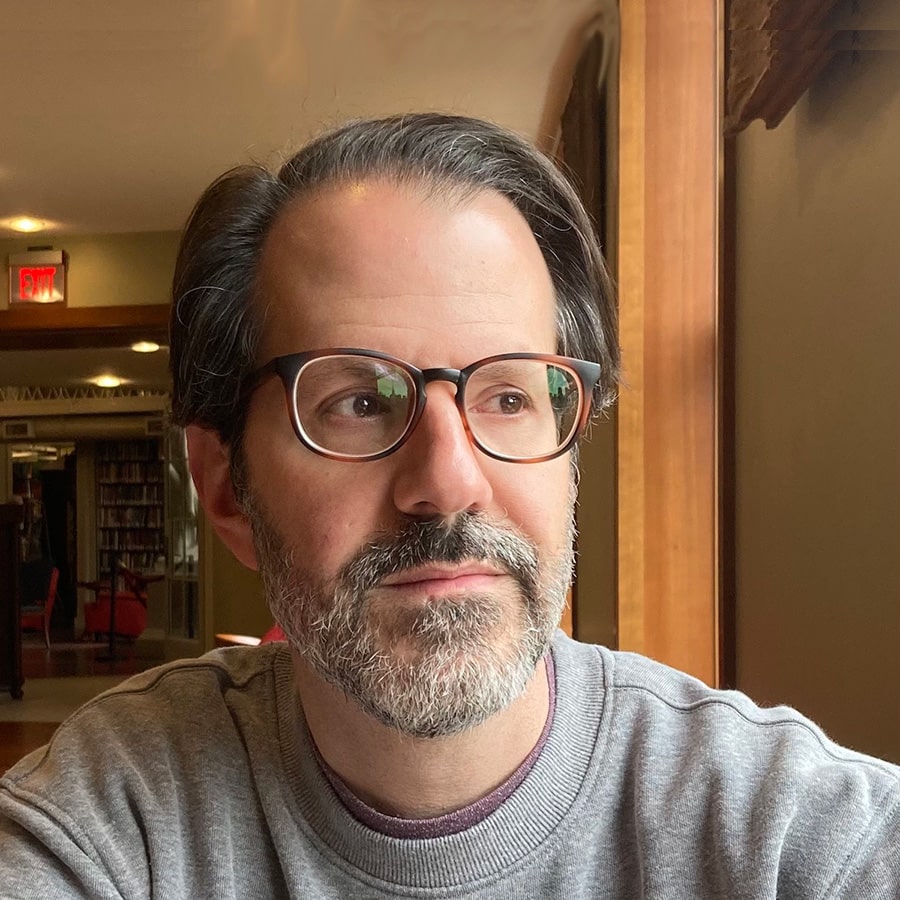
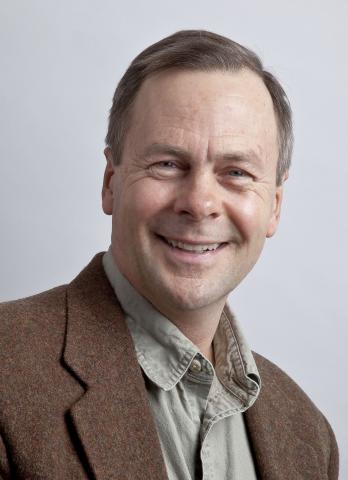
Michael Lucey is the Sidney and Margaret Ancker Chair and Distinguished Professor of French and Comparative Literature at the University of California, Berkeley. His work bridges French literature from the 19th to 21st centuries with social theory, sexuality studies, and linguistic anthropology. He has authored the critically acclaimed What Proust Heard: Novels and the Ethnography of Talk (2022) and Thinking about Sexuality with Novels (forthcoming). As founding director of the Center for the Study of Sexual Culture , he has shaped interdisciplinary research in queer theory and gender studies. Current research focuses on novels as ethnographic tools Specializes in Proust, Balzac, Woolf, and contemporary French fiction Translation work includes Didier Eribon and Édouard Louis His recent articles explore phonetics in narrative, readability frameworks, and sociological implications of literary form. He actively engages with comparative methodologies and critical theory, while his teaching spans British and American literature’s intersections with French modernism. Lucey’s academic leadership includes directing Berkeley’s Center for the Study of Sexual Culture, which supports global discourse through fellowships and conferences. His office hours are held in Dwinelle Hall and via Zoom. Contact: mlucey@berkeley.edu
Robert Kaufman is a Professor of Comparative Literature at the University of California, Berkeley. He holds a B.A. (1979), J.D. (1982), and Ph.D. (1995) from UC Berkeley. Prior to academia, he practiced labor and employment law. His career includes positions at McGill University, Stanford University (where he was an Assistant Professor of English and affiliated with German Studies and Modern Thought & Literature), and visiting roles at the University of Chicago and UC Berkeley. He has held fellowships including Stanford Humanities Center, Hellman Family, and Institute of International Studies. He co-chairs Berkeley's Program in Critical Theory. His research focuses on 20th-21st century American poetry, Latin American poetry, Romantic-era poetics, Frankfurt School Critical Theory, and aesthetic philosophy. Key projects include Negative Romanticism: Adornian Aesthetics in Keats, Shelley, and Modern Poetry , and studies on César Vallejo, Paul Celan, and Robert Duncan. His work bridges Marxist theory, lyric form, and sociopolitical critique. Kaufman's essays analyze Adorno's influence on modern poetry, the ethics of lyric form, and intersections between poetry and democracy. His recent work engages postmodernism's aftermath and contemporary political crises. He frequently collaborates on translation projects and public humanities initiatives, including events on Paul Celan's centenary.
Matthew Potolsky is Professor of English at the University of Utah, specializing in nineteenth-century literature and literary theory. His career spans from 1998 Lecturer at Harvard University to current University Professorship. He earned a BA in Comparative Literature and Philosophy (1990), followed by MA and PhD in Comparative Literature (1992, 1997) from UC Irvine. Chair of English Department (2013-2016) University Professor (2014-2016) Research focuses on Decadence , Mimesis , Finance-Aesthetics intersections , and Government Secrecy . His work traces connections between financialization and decadent aesthetics, revealing how economic cycles influence artistic production. Key themes include: Decadent anti-realist literary movements Finance capital's cultural impact Decadent counterpublic formations Victorian aesthetic education debates Sublime aesthetics in national security Cosmopolitanism in literary communities Recent publications analyze: Decadent style as financialization rhetoric Reintroduction of verisimilitude theory Decadent responses to financial crises Mimetic labor in artistic production Decadent cosmopolitan counterpublics Historical parallels between financialization and literary decadence
Emilio Sauri is a Professor in the Department of English at the University of Massachusetts Boston. His expertise spans American literature, Latin American literature, critical theory, and photography, with a focus on literature’s relationship to the global economy from the 19th to 21st centuries. PhD, University of Illinois at Chicago BA, Northwestern University Sauri's research examines literature and visual art in the context of globalization, capitalism, and cultural theory. He is currently working on a monograph titled *Imperial Decay: Literature, Autonomy and the End of Modernization in the Americas* (under contract with Northwestern University Press). His prior editorial work includes co-editing *Literature and the Global Contemporary* (Palgrave, 2017) and *Literary Materialisms* (Palgrave, 2013), alongside a special issue of *nonsite* on Latin American literature and theory. His recent publications explore intersections of literature with global capitalism, materialism, and postmodernism, often analyzing Latin American and U.S. texts. Notable topics include the labor of the novel, economic value in contemporary Mexican fiction, and critiques of modernization in Bolaño’s works. Fulbright Fellow, University of São Paulo, Brazil, 2018 Sauri has served on the Executive Committee of the Faculty Staff Union (2018–2020) and co-founded the Literary Theory Reading Group. He has taught courses such as *Post-1945 American Literature*, *Literature and the Political Imagination*, and graduate seminars on literary theory and critical methods.
Laurie Shannon is the Franklyn Bliss Snyder Professor of English at Northwestern University, with a J.D. from Harvard Law School and a Ph.D. from the University of Chicago. She studies English literature and culture in the long sixteenth century, focusing on the history of ideas in language, stakeholdership, embodiment, and cross-species relations. She serves as convener of The Anne Lister Society and is collaborating with Oxford University Press on a scholarly edition of Anne Lister’s Journal. Education: J.D., Harvard Law School; Ph.D., University of Chicago Shannon’s research explores the political imagination in early modern literature, particularly through friendship (Sovereign Amity: Figures of Friendship in Shakespearean Contexts) and animal studies (The Accommodated Animal: Cosmopolity in Shakespearean Locales). Her current monograph, 'Frailty’s Name: Shakespeare and the Natural History of Human Being,' examines human negative exceptionalism in Renaissance thought and its implications for climate crisis ethics. Her publications span Shakespeare studies, queer theory, environmental humanities, and textual editing. Notable awards include the Elizabeth Dietz Memorial Award, Robert B. Cox Teaching Award, and Dean’s Award for Graduate Mentoring. She has held NEH, ACLS, and Guggenheim fellowships. Scientific Awards: Elizabeth Dietz Memorial Award, Robert B. Cox Distinguished Undergraduate Teaching Award, Dean's Award for Graduate Mentoring, NEH Fellowship, ACLS Fellowship, Guggenheim Fellowship Shannon contributes to the Anne Lister Diary Transcription Project and has served as English Department Chair at Northwestern. Her recent articles focus on Shakespeare’s engagement with natural history, queer cosmology, and animal sovereignty, reflecting her interdisciplinary approach.
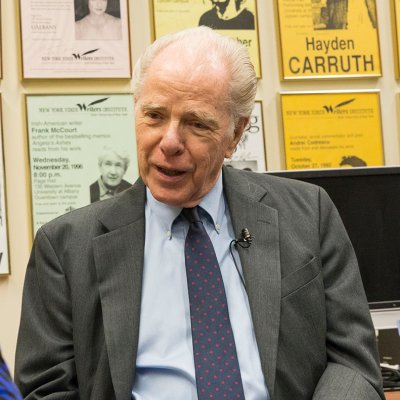
William Kennedy is a Professor in the English Department at the University at Albany, State University of New York. For over 40 years, he has crafted a body of literature centered on Albany, New York, creating what is known as the "Albany Cycle" of novels. His work has established Albany as a significant place in American literature, comparable to Joyce's Dublin and Bellow's Chicago. His educational background includes a BA from Siena College, following attendance at Public School 20 and Christian Brother's Academy. Professor Kennedy's creative work focuses on American fiction, particularly historical and urban narratives rooted in Albany's cultural and political landscape. His writing explores machine politics, family sagas, and the interplay between individual lives and historical events, rendering Albany's "outcasts and machine politicians, lowlifes and swells" with profound humanity. His narratives transform the city into a mythic capital of national memory. His publications consistently draw from Albany's history, with recurring themes of political corruption, redemption, and the resilience of marginalized communities. The "Albany Cycle" demonstrates his mastery in blending local history with universal human struggles across multiple literary forms. William Kennedy's distinguished honors include: John D. and Catherine T. MacArthur Foundation Fellowship Election to the American Academy of Arts and Letters National Endowment for the Arts Fellowship Regents Medal of Excellence from SUNY Governor's Arts Award Commander of the Order of Arts and Letters in France Election to the American Academy of Arts and Sciences As an educator, Kennedy taught creative writing and journalism at the University at Albany from 1974-1982 and Cornell University in 1982-83. His MacArthur Fellowship directly funded the creation of the New York State Writers Institute at Albany, with matching funds from the university and legislative support from Governor Cuomo. He has served on the New York State Council for the Humanities board and the Academy of Motion Picture Arts and Sciences. William Kennedy co-founded the New York State Writers Institute in 1984, which has grown into a major literary hub conducting statewide cultural and educational activities. The Institute remains central to his legacy, fostering literary arts through readings, workshops, and educational programs across New York.
Monika Gabryś-Sławińska is a Professor at the Department of Polish Literary History , part of the Faculty of Languages, Literatures and Cultures at the University of Maria Curie-Skłodowska (UMCS). Her research spans 19th- and 20th-century Polish literature , focusing on Stefan Żeromski , historical journalism , text editing , voice emission , and museology . MA in Polish Philology (1998, UMCS) PhD in Literary Studies (2007, UMCS) Habilitation in Literary Studies (2016, UMCS) Her research interests include political commentary in historical press , media's role in cultural identity , and sociolinguistic trends . She has edited over 29 academic volumes and authored 5 monographs. Scientific awards: Bronze Cross of Merit KEN Medals (Bronze, Silver) 8 Rector's Awards (UMCS) Lublin Mayor's Medal (2019) She has participated in 5 research grants , organized 35 academic conferences , and contributed extensively to Annales UMCS as a scientific editor.
Svetlana Evdokimova is a Professor of Slavic Studies and Comparative Literature at Brown University, where she has been a faculty member since 1991. She previously taught at Yale University and holds a PhD in Slavic Languages and Literatures from Yale University and an MA in French Language and Literature from St. Petersburg University. She is a leading scholar in Russian literature of the 19th and 20th centuries, with a focus on Pushkin, Dostoevsky, Tolstoy, and especially Chekhov. Her research explores the intersections between literature, philosophy, history, and aesthetics. She has published extensively on Russian Romanticism, the Russian intelligentsia, and the cultural significance of St. Petersburg. Her major works include Pushkin's Historical Imagination (1999) and Staging Existence: Chekhov's Tetralogy (2023), with a forthcoming monograph A Genius of Culture: The Chekhov Phenomenon . The recent publications reflect a deep engagement with Chekhov’s aesthetics, corporeality, and cultural philosophy, as well as Dostoevsky’s dialogues with Nietzsche and postmodern thought. Her work frequently examines the ethical dimensions of literature and the interplay between fiction and historical consciousness. Choice Outstanding Academic Title (2004) for Alexander Pushkin's Little Tragedies: The Poetics of Brevity NEH Research Fellowship (1995–1996) IREX Research Fellowship (1995) The Bogliasco Foundation Residency Fellowship (2018) Paul C. Gignilliat Fellowship, Yale University (1988–1989) Council on Russian and East European Studies Summer Fellowship, Yale University (1985) She has advised numerous graduate students and has secured competitive research grants from the National Endowment for the Humanities, IREX, and Brown University. She is actively involved in scholarly communities, including the Modern Language Association, AATSEEL, and author-specific societies such as the North American Chekhov Society and the North American Dostoevsky Society. She teaches courses on Russian Romanticism, major novelists, theater, and cultural history.
Max Cavitch is an Associate Professor of English at the University of Pennsylvania's School of Arts & Sciences, specializing in American literature, psychoanalytic studies, and cinema. He joined Penn in 1999 after earning his B.A. from Yale and Ph.D. from Rutgers. His research spans 19th- and 20th-century literature, African American studies, and interdisciplinary fields like animal studies and gender theory. Cavitch has authored influential works such as *American Elegy* (2007) and co-edited volumes on Whitman and early American studies. He directs Penn's Psychoanalytic Studies program and edits the blog *Psyche on Campus*, honored with the 2022 American Psychoanalytic Association's Excellence in Journalism Award. His teaching includes courses on psychoanalysis, autobiography, and American poetry. Cavitch has held fellowships from the Fulbright Foundation, Newcombe Foundation, and others. His recent projects explore world autobiography, psychoanalysis in academia, and the history of 'ashes' as a conceptual and material symbol. Award-winning scholar and educator, Cavitch's work bridges literary criticism with clinical theory, media studies, and transnational frameworks. He advises doctoral students in American literature and affiliated programs, maintaining active collaborations with institutions like the McNeil Center for Early American Studies and the Psychoanalytic Center of Philadelphia.
Elizabeth Blake is an Associate Professor of Russian and Division Coordinator in the Department of Languages, Literatures and Cultures at Saint Louis University's College of Arts and Sciences. Her research focuses on 19th-century Russian literature, particularly Dostoevsky and Tolstoy, with emphases on empire studies, exile cultures, and religious dialogues between Russian Orthodoxy and Polish/French Catholicism. She has published two major books: *Dostoevsky and the Catholic Underground* (2014) and *Travels from Dostoevsky’s Siberia* (2019). Her work bridges literary analysis with historical context, examining themes like human rights, cultural mobility, and gender roles. Blake teaches courses ranging from language proficiency to advanced topics in Russian literature and cinema, including *Russian and Soviet Cinema* and *Dostoevsky Through the Centuries*. She has received numerous grants including Mellon and Fulbright-Hays awards for research in Russia and Poland. Her academic career includes extensive reviews for journals like *Slavic Review* and *Canadian Slavonic Papers*, alongside professional involvement with organizations such as the North American Dostoevsky Society. Blake’s teaching excellence is recognized through awards like the Spirit of the Billiken Award (2016), reflecting her impact on both scholarship and student mentorship.
Carlos Jáuregui is Professor of Spanish at the University of Notre Dame, with concurrent appointments in Anthropology and faculty fellowships at the Kellogg Institute for International Studies and Institute of Latino Studies. His research focuses on colonial Latin American cultural studies, biopolitics, and visual culture, bridging literary analysis with historical anthropology. Education includes: Ph.D. Hispanic Languages and Literatures, University of Pittsburgh (2001) Graduate Certificate in Latin American Studies, University of Pittsburgh (2000) M.A. Spanish American Literature, West Virginia University (1997) Law Degree, Universidad Externado de Colombia (1993) Research explores colonial power dynamics through frameworks like biopolitics and postcolonial theory, examining how historical narratives conceal violence while invoking spectral 'returns' of suppressed alterity. Recent work analyzes visual sovereignty in revolutionary iconography (e.g., Emiliano Zapata) and theological justifications of Spanish colonialism. Publications consistently engage with paradoxes of memory, resistance, and representation across 500 years of Latin American cultural production. Awards highlight transnational recognition: 2024 Emiliano Zapata Catedra distinction 2023 Dolores Huerta Book Award Premio Casa de las Américas (2005) Multiple Fulbright and NEH fellowships Advising includes doctoral students now faculty at University of Florida, Concordia College, Carleton College, and Furman University. Current book projects examine colonial renegades in Yucatán and monumental forgetting of Hernán Cortés in Mexico (1524-2024).
Marc Redfield holds the Florence Pirce Grant University Professorship in English and Comparative Literature at Brown University, with additional appointments in German Studies. He previously taught at the Université de Genève and Claremont Graduate University. His work bridges literature and philosophy across British, American, French, and German traditions, with a focus on Romanticism and interdisciplinary studies. Education: Studied at Yale and Cornell universities. Research interests include literary theory, aesthetics, and the intersections of literature with philosophy. Major awards include the MLA First Book Prize for Phantom Formations . Editorial contributions include special issues of Diacritics , Romantic Praxis , and The Wordsworth Circle . His edited volumes include Legacies of Paul de Man and co-edited collections on cultural studies and critical theory.
Stephen Cushman is the Robert C. Taylor Professor at the University of Virginia, specializing in American literature and poetry. His interdisciplinary work bridges Civil War studies, 19th-century poetry, and environmental literature. He earned his Ph.D. (1982), M.Phil. (1981), and M.A. (1980) from Yale University, and a B.A. from Cornell University (1978). His research explores how literary forms shape historical understanding, particularly through works like *The Generals' Civil War* (2021) and *Belligerent Muse* (2014). He has edited major volumes such as *The Princeton Handbook of Poetic Terms* (2016) and *Civil War Writing* (2019). His poetry collections include *Keep the Feast* (2022) and *Hothead* (2018), blending personal reflection with historical inquiry. Cushman has received prestigious awards including the Cavaliers' Distinguished Teaching Professorship (2014–2016) and the All-University Teaching Award (1992). His writing often intersects with Virginia’s literary landscape, as seen in *After Great Pain, Dickinson in Charlottesville* (2018). He actively engages with environmental themes in works like *Pope Francis, Laudato Si’, and U.S. Environmentalism* (2017). His articles critically analyze figures like Lincoln, Sherman, and Thoreau, while exploring modernist engagements with biblical texts and Civil War memory. He serves as a leading voice in American literary history, emphasizing the interplay between form, content, and cultural context.
Roger Luckhurst is Professor of Modern Literature and currently holds the prestigious Geoffrey Tillotson Chair of Nineteenth Century Studies at Birkbeck College, University of London. A leading scholar in Gothic literature, science fiction, and trauma studies, he has been affiliated with Birkbeck for over 25 years, contributing significantly to interdisciplinary literary and cultural studies. Education and Career Trajectory: 2020-present: Geoffrey Tillotson Chair of Nineteenth Century Studies, Birkbeck College 2008-2020: Professor of Modern and Contemporary Literature, Birkbeck College 2004-2008: Senior Lecturer, Birkbeck College 1994-2004: Lecturer, Birkbeck College 1992-1994: Lecturer, University of Hull Research Interests and Scholarly Contributions: Luckhurst's research spans multiple interconnected fields, establishing him as a preeminent voice in literary and cultural studies. His work on late 19th century English literature examines the intersections of Victorian culture with emerging scientific discourses. His expertise in science fiction studies encompasses both literary analysis and cultural theory, exploring how speculative fiction reflects and shapes contemporary anxieties. In Gothic studies , he investigates the persistence of Gothic aesthetics and themes across different media and historical periods. His groundbreaking work in trauma studies has contributed significantly to understanding how literature and culture process collective trauma. Publications and Scholarly Impact: His extensive publication record demonstrates a remarkable breadth of scholarly inquiry. From his early work on J.G. Ballard to his recent comprehensive study of Gothic culture, Luckhurst has consistently produced influential scholarship. His books have been translated into multiple languages including French, Japanese, Turkish, and German, indicating significant international impact. His forthcoming The Gothic: An Illustrated History (2021) promises to be a definitive work in the field. Honors and Awards: 2009: Visiting Research Fellow, University of Birmingham 2009: Visiting Research Fellow, Flemish Academic Centre for Science and the Arts (VLAC), Brussels January-June 2011: AHRC Fellowship, Birkbeck College Spring 2016: Mellon Distinguished Visiting Professor, Department of English, Columbia University, New York Public Engagement and Media Presence: Beyond academia, Luckhurst has demonstrated exceptional commitment to public scholarship. He has served as a broadcaster for BBC radio, bringing literary criticism to wider audiences. His journalism has appeared in leading British newspapers, bridging the gap between academic research and public discourse. This dual role as academic and public intellectual exemplifies Birkbeck's tradition of making scholarship accessible to broader communities. Interdisciplinary Approach and Institutional Contributions: At Birkbeck College, Luckhurst has been instrumental in fostering the institution's renowned culture of interdisciplinary studies. His work seamlessly integrates literary analysis with cultural theory, film studies, architectural history, and scientific discourse. This approach has influenced generations of students and scholars, establishing Birkbeck as a leading center for innovative literary and cultural research.
Reyhan Durmaz is an Associate Professor of Religious Studies at the University of Pennsylvania, affiliated with the School of Arts & Sciences and multiple interdisciplinary programs. Her research focuses on Syriac Christianity, medieval religious dynamics, and the intersection of Christianity and Islam in late antiquity. She holds a Ph.D. from Brown University (2019) and has received prestigious fellowships such as the Dumbarton Oaks Junior Fellowship and the Charlotte Newcombe Dissertation Fellowship. Her seminal book Stories between Christianity and Islam (2022) examines the transmission of saints' stories between religious traditions, earning Honorable Mention from the Middle East Medievalists. Current projects include a study of rural Christianity in the medieval Middle East through soldier-monk narratives and an analysis of the 19th-century Arabic newspaper Kawkab America . She co-leads the Digital Photograph Archive project Visualizing Countryside , documenting medieval religious sites. Dr. Durmaz teaches courses on global Christianity, material culture, and late antiquity, and serves as co-chair of the Philadelphia Seminar on Christian Origins. Her work bridges historical analysis, textual scholarship, and digital humanities, addressing themes of religious identity, cultural exchange, and marginalized communities.