معرفی
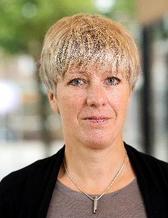
Åsa Wettergren is Professor at the Department of Sociology and Work Science, Faculty of Social Sciences, University of Gothenburg, where she has been employed since January 2010. She holds a PhD from Karlstad University (2005) and has held visiting fellowships at the University of Copenhagen, the European University Institute in Florence, and Karl-Franzens Universität in Graz. She is a leading scholar in the sociology of emotions and its intersections with law, politics, and social movements.
Her research centers on the sociology of emotions, with a focus on emotional dynamics in bureaucratic organizations, legal institutions, and social movements. She investigates how emotions shape objectivity, credibility, and decision-making in courtrooms, particularly in rape trials and prosecutorial practices. Her work also explores emotional mobilization in climate activism, migrant experiences of belonging, and the emotional regulation in financial education. She employs ethnographic and qualitative methods to study emotion as embedded in social practices.
Wettergren’s recent publications (2021–2025) reveal a strong thematic focus on emotions in law—especially empathy, credibility, and objectivity in rape trials—and emotional responses to climate change, including hope, fear, and collective action. Her interdisciplinary work bridges sociology, criminology, gender studies, and legal theory.
- Editor-in-Chief, Emotions and Society (Bristol University Press, 2019–present)
- Co-founder and former coordinator (2005–2007) of ESA Research Network RN11: Sociology of Emotions
- Founder of the Emotion Sociological Seminar at the University of Gothenburg (EmoGu, 2012)
- Frequent speaker at national and international academic and public forums
She has collaborated extensively with researchers such as Stina Bergman Blix, Sara Uhnoo, Moa Bladini, and Mary Holmes. Wettergren has not received any explicitly mentioned scientific awards in the provided text. She advises no listed students but has co-authored with early-career researchers, suggesting a mentorship role. She leads no formal lab but organizes the EmoGu seminar, fostering a research community on emotions. Her future work appears to continue exploring the emotional dimensions of justice, climate change, and institutional rationality.