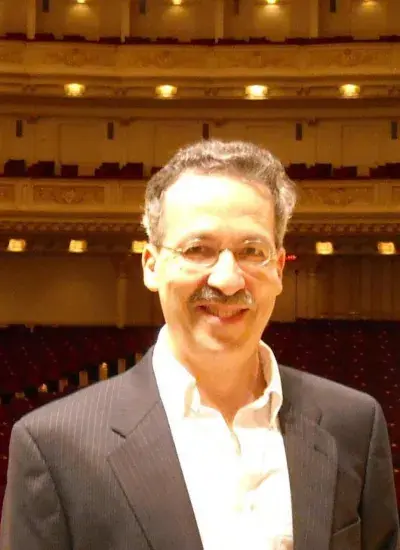
Michael Pawlovich is Assistant Professor of Civil and Environmental Engineering at South Dakota State University's Jerome J. Lohr College of Engineering. His research focuses on traffic safety analytics, statistical modeling of crash data, and transportation infrastructure evaluation. Research expertise includes: Statistical methods for safety evaluation (Empirical Bayes, Bayesian modeling) Geometric design safety impacts Rural intersection safety Infrastructure treatment effectiveness Honors include multiple National Roadway Safety Awards and AASHTO recognitions. Publications demonstrate consistent application of advanced statistics to traffic safety challenges.
Dr. Zhenghao Chen is an Assistant Professor at the University of Newcastle. He holds a B.Eng. H1 and Ph.D. from the University of Sydney (2017 and 2022). His research focuses on Computer Vision, NLP, and Machine Learning, with expertise in Generative AI. He has published in top conferences like CVPR and journals such as IEEE T-IP. Awards include the Google Australia Prize and ACM SIGMM Outstanding Thesis Award. He previously worked at TikTok and Disney Research, and serves on program committees for major conferences. Research interests emphasize generative models and industrial applications. His publications span topics like image compression, facial recognition, and medical imaging. Awards highlight academic and industrial recognition. Teaching includes courses on visual signal understanding and video intelligence. Current roles include HDR recruitment and organizing international workshops.
Brian Leventhal is an Associate Professor of Graduate Psychology and Director of the Assessment & Measurement PhD program at James Madison University. He holds a PhD in Research Methodology, Measurement, and Statistics from the University of Pittsburgh (2017), an MA in Applied Statistics (2013), and a BS in Mathematics from Clarkson University (2011). His work focuses on advancing psychometric methodologies, particularly in item response theory (IRT), Bayesian applications, and survey development. Leventhal’s research emphasizes multidimensional IRT, response style analysis, and the application of IRTree models to assess disengagement and validation processes. He leads the ITEMS (Interactive Tools for Measurement Education) initiative, developing online modules to enhance educational measurement practices. His recent work explores interprofessional collaboration between behavior analysts and school psychologists, as well as alignment between general education and program-specific learning outcomes. He has contributed to the NCME’s digital modules on data visualization and Monte Carlo simulations, and his articles frequently address methodological innovations in psychometrics. Leventhal is actively involved in James Madison University’s CARS (Center for Assessment and Research Studies), driving institutional assessment strategies and program evaluation initiatives.
Carlos Lopezosa is a Visiting Professor at the University of Barcelona (UB) under a Margarita Salas postdoctoral fellowship. Previously, he held an Associate Professor position at the Pompeu Fabra University (UPF), where he taught across the Faculty of Communication, including Journalism, Advertising, and Audiovisual Communication. He also coordinated the Online Master's in SEO/SEM at the Barcelona School of Management (UPF). His research focuses on web visibility strategies (SEO, voice search, social media curation), qualitative methodologies (systematic reviews, semi-structured interviews), and AI applications in digital journalism. He is affiliated with the UB's Faculty of Information and Audiovisual Media, contributing to research groups like Professorat GIDD. His work bridges academic research with practical media strategies, emphasizing ethical AI integration and algorithmic transparency. Key research areas include news curation, AI-driven data analysis, and digital media ethics. Lopezosa has published extensively in journals like Future Internet , DOXA Comunicación , and El Profesional de la Información , with over 50 peer-reviewed articles since 2018. His current projects explore AI's role in newsrooms, Google News algorithms, and multidimensional journal evaluation frameworks. Education: Doctor in Information Sciences Research Interests: SEO strategies, content curation, AI in media, systematic reviews Grants: Margarita Salas Postdoctoral Fellowship (UB) His work often addresses challenges in digital media visibility, ethical AI implementation, and the evolving role of algorithms in news dissemination. Lopezosa collaborates with institutions like the CRICC research center and frequently presents at international conferences on digital media trends.
Jack Mostow is a Research Professor affiliated with the Human-Computer Interaction Institute at Carnegie Mellon University. His work focuses on educational technology, artificial intelligence, and natural language processing. He is renowned for developing Project LISTEN's automated reading tutor that listens to children's oral reading, integrating speech recognition and machine learning to improve literacy. His research addresses challenges in child literacy, automated assessment, and the application of AI in education. Key contributions include advancing speech recognition accuracy for children’s voices, designing adaptive tutoring systems, and exploring EEG and visual features to gauge learning states. He has contributed to global education initiatives, such as the XPRIZE field study, and developed tools for iterative improvement of intelligent tutoring systems. His work emphasizes scalable educational technologies for under-resourced regions and data-driven approaches to enhance learning outcomes. Mostow’s publications span over two decades, addressing topics like reinforcement learning for instructional policies, semi-supervised affect perception, and difficulty-controllable question generation. His research bridges AI, education, and human-computer interaction, aiming to create systems that adapt to learners’ needs while advancing computational methods for educational analytics.
Gerardo L. Blanco is an Associate Professor at Boston College's Lynch School of Education and Academic Director of the Center for International Higher Education (CIHE). His research explores intersections of quality assurance, internationalization, and social justice in higher education, with a focus on accreditation, rankings, and institutional identity construction. Education: Ed.D. in Education (University of Massachusetts Amherst), M.Ed. (University of Maine), B.A. (Universidad de las Américas, Puebla, Mexico) Blanco's work challenges neoliberal and colonial assumptions in global higher education metrics. He examines how institutions communicate quality through digital platforms and advocates for localized, inclusive frameworks over Northern-dominated paradigms. His scholarship spans critical analyses of accreditation practices, internationalization strategies, and equity implications of US policy on refugee and international students. Recent publications highlight trends in global quality assurance, decolonial readings of rankings, and critical visual methodologies. His research scrutinizes the paradoxes of internationalization, including power asymmetries in mobility programs and the commodification of educational experiences. Key Awards: Best Research Article (CIES, 2017) Fulbright Specialist Appointment (2020) Best Dissertation Honorable Mention (CIES, 2014) New Scholars Fellowship (CIES, 2012) Blanco leads editorial roles in top journals and collaborates on grants addressing internationalization challenges, including post-COVID mobility and global student housing equity. His work emphasizes cosmopolitanism, intergroup dialogue, and institutional transformation for social justice.
Dr. Daniel Harrison is an Assistant Professor in the School of Design, Arts, and Creative Industries at Northumbria University, where he serves as EDI and Athena SWAN Co-Lead and leads the HCI+Design Research Group. His academic journey includes a PhD from UCL's Interaction Centre (UCLIC) and research at Georgia Institute of Technology and Microsoft Research Cambridge. His work focuses on Human-Computer Interaction (HCI), digital health, and inclusive technology design, particularly in sports and wellbeing. Education: PhD in Human-Computer Interaction, UCL Interaction Centre (2020) MSc (2012), BSc (Hons) (2010) Research Interests: Intersection of technology, inclusivity, and sports (SportsHCI) Participatory methods (co-design, ethnography) Developing inclusive technologies for underrepresented groups Recent Projects: Co-authored Grand Challenges in SportsHCI Initiatives for inclusive sports technology Design of wellbeing-focused digital tools Advising: Mentors three PhD students researching topics such as neurodivergent workers, financial technology for international students, and gamified sports participation. Labs/Teams: HCI+Design Research Group at Northumbria University.
Andreas Lechner is an Associate Professor at Graz University of Technology (TU Graz) , Institute of Building Science. He is also a Visiting Professor at TU Berlin and Politecnico di Milano , indicating an international academic presence. His office hours are available on Tuesdays from 9:00-11:00, with portfolio requirements for diploma inquiries. Research Focus: Lechner's work explores architectural typologies, urban peripheries, and sustainable building practices. His research emphasizes the intersection of theory, design, and practice, particularly through counterintuitive approaches to architectural typologies and their affordances. Publications Trends: Recent work focuses on hybrid architectural practices, typological affordances, and peripheral urbanism. He examines how architectural typologies can be reimagined through the lens of the "Peripherocene," a concept challenging traditional urban center/periphery dichotomies. Design Philosophy: Lechner's "Counterintuitive Typologies" approach challenges conventional design paradigms, particularly in his analysis of urban buildings and their transformative potential. His work on solar energy integration in architecture demonstrates a commitment to sustainable design. Academic Contributions: Through his publications in journals like Journal of Architecture and edited volumes like GAM series, Lechner has been examining architectural theory, material rethinking, and the paradoxes of urban development since at least 2012. Professional Engagements: He has been involved in exhibitions and curation activities, including guest curatorship at Haus der Architektur in Graz. His personal website and social media presence ( @a_alechner ) demonstrate a commitment to public architectural discourse.
Jakub Macina is a Doctoral Fellow at the ETH AI Center and a PhD Candidate at ETH Zürich . He works in the intersection of Natural Language Processing and Learning Sciences as part of the Language, Reasoning and Education Lab (led by Prof. Mrinmaya Sachan) and the Professorship for Learning Sciences and Higher Education (led by Prof. Manu Kapur). Forbes 30 Under 30 in Science & Education 2023 Recipient of ETH AI Center Fellowship ( Co-founder of a health-tech startup with seed investment Research Interests : Focus on generative large language models (LLMs), dialogue tutoring systems , pedagogical alignment of AI models, and mathematical reasoning . His work explores: Reinforcement learning for pedagogical steering LLM evaluation frameworks Socratic question generation Stepwise error detection and remediation Student-teacher interaction modeling Publications span top conferences like EMNLP , ACL , NeurIPS , and RecSys , with particular emphasis on educational applications of LLMs and dialogue-based learning systems . Scientific Awards : Forbes 30 Under 30 in Science and Education (2023) 2nd Place in ACM IT SPY Computer Science Master's Thesis Competition (2017) ETH AI Center Fellowship (2021) Leadership & Teaching includes: Managing team of 6 data scientists Teaching Assistant for Machine Learning and NLP courses at ETH Zurich Developing large-scale ML pipelines for recommender systems Open-source contributions to Discourse and Google Summer of Code projects
Paul J. Kennedy is a Professor at the University of Technology Sydney's Centre for Artificial Intelligence. He holds a PhD from the same institution (1999). His research focuses on machine learning applications in healthcare, bioinformatics, medical imaging, and data mining. Key areas include developing algorithms for genomic data analysis, healthcare pathway modeling, and edge-cloud frameworks for omics data. Education: PhD in Artificial Intelligence (1999, UTS). Research interests span machine learning, health informatics, and data compression. Notable work includes studies on administrative health records, lung nodule detection, and virtual reality-based cancer cohort analysis. He has co-authored over 100 publications across journals like BMC Bioinformatics, IEEE Transactions, and Artificial Intelligence in Medicine. Advising: Collaborates extensively with students/researchers but no explicit student list provided. Grants and labs: Active in interdisciplinary projects involving medical and computational teams, though specific grants are not detailed here.
Alva L. Couch is an Associate Professor at Tufts University's School of Engineering, Department of Computer Science, with a career spanning over 30 years. His work bridges network/system administration, autonomic computing, and hydrologic data science, focusing on scalable solutions for data management and automated system administration. Education: Ph.D. in Mathematics (1988), B.S. in Architecture (1978), and B.A. in Bassoon/Contrabassoon Performance (1978). Research Interests His research centers on: Network and System Administration: Tools like SLINK, Maelstrom, and Babble for dependency analysis, cloud migration, and policy enforcement. Geo-informatics: MEDFORD metadata language and HydroShare platform for hydrologic data curation and discovery. Autonomic Computing: Promise theory, convergent operators, and closure models for self-managing systems. Recent Work Trends His 2024-2018 publications emphasize: Cloud-based hydrologic data management (AnVILMEDFORD, HydroShare) Metadata standards for interdisciplinary research Machine learning for system administration Agent-based resource sharing models Scientific Awards Liebner Teaching Award (1996) Seymour Simches Advising Award (2017) Best Paper Awards: LISA 1996, AIMS 2008, LISA 2001 LISA 2000 Best Student Paper (with Michael Gilfix) Contributions He developed key software like Peep (network auralization) and Slink (configuration management), supported by NSF grants and industry partnerships. His work with CUAHSI's Water Data Center shapes national hydrologic data infrastructure. He also advocates for science education and privacy in computing.
Michael Sedlmair is a Professor at the University of Stuttgart's VISUS (Visualization Research Center). His research focuses on visualization, augmented reality, and immersive analytics. He holds a PhD in Computer Science from Ludwig Maximilians University Munich (2010). Affiliations: Department of Computer Science, University of Stuttgart Research interests span: Augmented Reality applications in collaboration and industry Immersive analytics and spatial data visualization Human-computer interaction in AR/VR contexts His work emphasizes practical applications such as human-robot collaboration, medical simulations, and molecular visualization. Over 200+ publications since 2008 highlight contributions to visualization theory and tool development.
Dr. Sharon O'Rourke is an Assistant Professor and Ad Astra Fellow at the University College Dublin (UCD) School of Biosystems and Food Engineering since 2019. Previously, she held roles at the University of Sydney and UCD's School of Agriculture and Food Science, focusing on soil science and environmental protection. She holds a BAgrSc from UCD and a PhD in Soil Nutrient Management from Queen's University Belfast. Research Interests: Her work centers on sustainable soil management, soil carbon sequestration, and environmental protection. She employs spectral techniques (e.g., mid-infrared, hyperspectral imaging) and modeling to study soil geochemistry, carbon dynamics, and climate change mitigation. Current projects include ClimateCropping (EU-wide soil carbon management), PRISM (in-field soil sensors), and CFunction (carbon-nutrient stoichiometry). Grants & Projects: Key grants include funding from Teagasc, the Department of Agriculture, and the Sustainable Energy Authority of Ireland. Notable projects include proximal soil sensing for carbon monitoring and bio-based product development via pyrolysis. Teaching: She coordinates modules such as 'Carbon & Sustainability,' 'Soil Technology,' and 'Research Skills,' emphasizing agricultural systems and climate-smart practices. Awards: Recognized as an Ad Astra Fellow, highlighting her contributions to innovative soil science research.
Tony Tang is an Associate Professor in the School of Computing and Information Systems at Singapore Management University (SMU), where he leads the RICELab (Rethinking Interaction, Collaboration, and Engagement). Previously, he held roles at the University of Toronto and University of Calgary. His research focuses on Human-Computer Interaction (HCI), including Human-AI interaction, mixed reality interfaces, and ubiquitous computing. Education : PhD in Electrical and Computer Engineering, University of British Columbia (2010) MSc in Computer Science, University of Calgary (2005) BSc in Computer Science and Psychology, Simon Fraser University (2002) Research Interests : Tang’s work bridges theoretical and applied HCI, emphasizing systems that enhance human collaboration and interaction with technology. His lab explores topics like AI feedback mechanisms, mixed reality environments, and interfaces for distributed teams. Awards & Grants : ACM CHI Academy Member (2014) Funded by NAVER ($1.25M over 5 years), Meta ($30K), and SMU-SUTD Tier 1 Grant (S$100K) Advising & Grants : Supervised 26 graduate students and multiple postdoctoral fellows. His grants include work on immersive analytics and teleconferencing tools for physiotherapy. Labs & Teams : Directs the RICELab, which designs novel interaction systems for collaboration and learning. Active in the HCI community, serving as General Co-chair for CSCW 2022.
Dr. Ivett Orsolya Bacskay is an Assistant Professor at the Department of Analytical and Environmental Chemistry, Institute of Chemistry, Faculty of Science, University of Szeged. Her research focuses on fundamental and applied aspects of separation science, particularly in liquid chromatography, with expertise in retention mechanisms, mass transfer, and stationary phase characterization. Research Interests: Her work spans several key areas in analytical chemistry, including hydrophilic interaction liquid chromatography (HILIC), size-exclusion chromatography, chiral separations, pore size distribution analysis, and molecular imprinting for artificial antibody development. She investigates both theoretical models and practical applications in chromatographic systems. An analysis of her recent publications (2010–2025) reveals a strong emphasis on improving chromatographic efficiency and understanding molecular interactions in separation processes. Her studies frequently address challenges in hold-up volume determination, overloading effects, and mass transfer in various stationary phases, contributing significantly to the advancement of HPLC and LC-MS methodologies. Scientific Awards: No awards mentioned in the provided text. Advising and Grants: While specific details about students or funded projects are not listed, her active research output and faculty position suggest involvement in mentoring graduate students and securing research support. She has contributed to interdisciplinary studies involving neuropharmacology and plant biochemistry, indicating collaborative research efforts. Labs and Teams: Dr. Bacskay is part of the Institute of Chemistry at the University of Szeged, where she conducts research within the Department of Analytical and Environmental Chemistry. Her work likely involves collaboration with analytical chemistry research groups focusing on method development, column technology, and environmental or pharmaceutical analysis.