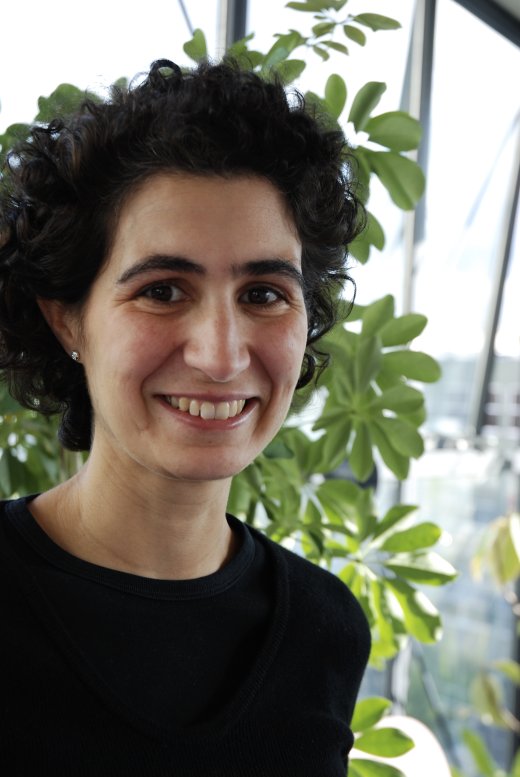
Alexandra Horowitz is a Senior Research Fellow and Adjunct Associate Professor at Barnard College. She has been teaching since 2004, specializing in dog cognition and olfactory research. Her academic roles span the Departments of English and Psychology, reflecting her interdisciplinary focus on animal behavior and human-animal interactions. Education: M.S. and Ph.D. in Cognitive Science from UC San Diego; B.A. in Philosophy from the University of Pennsylvania. Research interests include naturalistic observations of dog social play, testing anthropomorphic assumptions, and characterizing canine olfactory abilities. She has authored influential books like Inside of a Dog and Being a Dog , exploring how dogs perceive the world. Her work frequently appears in top journals and media outlets, including the New York Times and TED-Ed. Recent articles highlight studies on dog navigation, play behavior, and olfactory perception. She has been recognized as among the Top 2% of Cited Authors globally. Her presentations and lectures span academic conferences, museums, and public forums, emphasizing science communication.
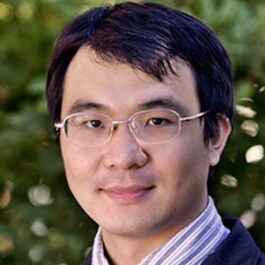
Hyesoon Kim is a Professor at the Georgia Institute of Technology , affiliated with the College of Computing and leading the HPArch research group . She co-directs the Center for Research into Novel Computing Hierarchies (CRNCH) . Her research focuses on Computer Architecture , GPU , Compilers and Runtime Systems , and Hardware Security , particularly for heterogeneous systems. Contact : hyesoon@cc.gatech.edu Location : 266 Ferst Drive, KACB 2344, Atlanta, GA Research Trends Her recent work spans RISC-V extensions for security, CUDA optimization on softcore GPUs, memory safety techniques, and energy-efficient deep learning architectures. Articles emphasize heterogeneous computing , GPU performance scaling, and IoT -oriented neural network methods. Open Source Projects She leads development of Macsim (heterogeneous architecture simulator) and Vortex (open-source GPU platform).
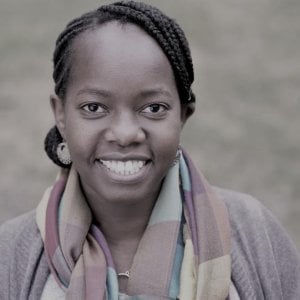
Dr Peninah Murage is an Assistant Professor at the London School of Hygiene & Tropical Medicine in the Department of Public Health, Environments and Society under the Faculty of Public Health and Policy. She specializes in environmental epidemiology with a PhD in Health Geography and focuses on health impacts of environmental changes, particularly climate change mitigation and adaptation strategies. Affiliation: Centre on Climate Change and Planetary Health Her research explores climate change effects on health outcomes like heat-related mortality, cardiovascular diseases, and cognitive development in children. She integrates GIS/spatial analysis with public health and policy frameworks to identify nature-based solutions for sustainable development. Current work examines systemic inequalities in heat risk exposure and interventions such as tree-based strategies in low-income settings. Key grants include: Health Protection Research Unit on Climate Change and Health Security (2025-2030, NIHR) Climate Change and Non-Communicable Diseases in Senegal (2024-2027) Pathfinder 2: Accelerating Climate Action for Health (2023-2026) She actively contributes to the Lancet Pathfinder Commission and serves on the Executive Committee of the International Society of Environmental Epidemiology (African Chapter).
Han Liu is a Professor in the Department of Computer Science at Northwestern University's McCormick School of Engineering. He directs the MAGICS (Modern Artificial General Intelligible and Computer Systems) Lab and the Center for Foundation Models and Generative AI at Northwestern, with prior roles as director of the Deep Reinforcement Learning Center at Tencent AI Lab and professor at Princeton and Johns Hopkins Universities. PhD in Machine Learning and Statistics from Carnegie Mellon University (2012), advised by John Lafferty and Larry Wasserman Han Liu's research focuses on integrating artificial intelligence with computer systems, particularly through foundation models and probabilistic graphical models. His work aims to revolutionize science, engineering, and business by deploying statistical machine learning methods in edge and cloud computing environments. Recent research trends include transformer-based models, modern Hopfield networks, genomic foundation models, and theoretical analysis of attention mechanisms. His 2025 publications explore topics like species differentiation with DNA embeddings, universal approximation capabilities of transformers, and metaverse spatial reasoning. Alfred P Sloan Fellowship in Mathematics IMS Tweedie New Researcher Award ASA Noether Young Scholar Award NSF CAREER Award Presidential Early Career Awards for Scientists and Engineers Han Liu serves as associate editor for the Journal of American Statistical Association, Electronic Journal of Statistics, Technometrics, and the Journal of Portfolio Management. He has directed research centers at Northwestern and contributed to major conferences as area chair (NeurIPS, ICML, ICLR).
Katherine Brickell is Professor of Human Geography at Royal Holloway, University of London (RHUL), where she serves as Research Lead for the Department of Geography. She is editor of the journal Gender, Place and Culture and former Chair of the RGS-IBG Gender and Feminist Geographies Research Group. Her work spans social, political, development, urban and legal geography with a feminist orientation. Brickell's research centers on three interconnected themes: home and home unmaking, labor precarity, and feminist legal geographies. Her longstanding interest in the domestic sphere and home unmaking aims to reaffirm the home as a political entity. Her monograph Home SOS: Gender, Violence and Survival in Crisis Ordinary Cambodia brings together 15 years of research on domestic violence and forced eviction. Since 2017, she has conducted collaborative work in London and Dublin on modular housing for homeless families. She has also led significant research on labor conditions in Cambodia, including the ESRC-DFID funded 'Blood Bricks' project (2016-2019) studying climate change impacts on rural families migrating to brick kilns. Her recent publications reveal a strong focus on debt, microfinance, and climate vulnerability in Cambodia, with multiple 2022-2024 articles examining how over-indebtedness intersects with social reproduction and climate adaptation. Her work consistently applies feminist lenses to understand spatial dimensions of power, particularly in Southeast Asia. Brickell has published in top journals including Transactions of the Institute of British Geographers , Progress in Human Geography , Antipode , and Annals of the American Association of Geographers . Gill Memorial Award (2014) Philip Leverhulme Prize (2016) Times Higher Education Research Project of the Year (2020) Brickell has supervised numerous doctoral students and mentored postdoctoral fellows working on topics including remittances during COVID-19, climate mobilities, moral geographies of garment work, and women's experiences with domestic violence. Her research has been funded by ESRC-DFID, UKRI GCRF, and the Urban Studies Foundation, among others. She collaborates extensively with colleagues in Cambodia and across Europe, with current projects examining climate resilience, credit-taking, and nutrition in Cambodia and South India, as well as the economic impacts of the pandemic on Cambodian garment workers.
Lior Wolf is a Professor at the School of Computer Science, Tel Aviv University. Previously, he was a postdoctoral researcher at MIT's Center for Biological and Computational Learning (CBCL) under Prof. Tomaso Poggio and earned his PhD from Hebrew University of Jerusalem with Prof. Amnon Shashua. His educational background includes: PhD in Computer Science, Hebrew University of Jerusalem Postdoctoral Research, MIT CBCL Prof. Wolf's research centers on artificial intelligence with seminal contributions to deep learning, computer vision, and natural language processing. His work bridges theoretical foundations (e.g., attention mechanisms, transformer analysis) with practical applications in medical imaging, speech processing, and sign language technology. He pioneered methods for neural network interpretability, efficient sequence modeling, and multimodal fusion. Analysis of his 2023-2025 publications reveals dominant trends in large language model optimization (neuron pruning, attention analysis), efficient video generation, and cross-modal learning. His work increasingly integrates medical applications (fMRI/EEG analysis) while maintaining theoretical rigor in model architecture design. His scientific achievements include: Best paper award at EMNLP 2024 for 'Backward Lens: Projecting Language Model Gradients into the Vocabulary Space' Best paper award at SCIA 2023 for 'Gradient Adjusting Networks for Domain Inversion' Best paper award at FG 2021 for 'Generating Master Faces for Dictionary Attacks' Prof. Wolf mentors graduate students in the School of Computer Science and leads research at the ICRC building laboratory. His team collaborates with 'the friends of TAU' on projects spanning biometric security, medical imaging, and generative AI. Current work focuses on efficient transformers, neural network interpretability, and multimodal medical diagnostics.
Lourdes Agapito is a Professor of 3D Vision at the Department of Computer Science, University College London (UCL), within the Faculty of Engineering Sciences. She leads research in Non-Rigid Structure from Motion (NR-SFM) and 3D reconstruction from monocular video sequences. Her work addresses dynamic scenes, deformable objects, and articulated structures, with applications in robotics and computer vision. She holds an ERC Starting Grant (2008–2014) and led the EU Horizon 2020-funded Second Hands project (2014–2019), collaborating with institutions like EPFL and KIT to develop robots with 3D visual perception for maintenance tasks. Her research group focuses on dense optical flow estimation, video registration, and deformable tracking. Agapito’s research interests include monocular 3D reconstruction, non-rigid motion analysis, and neural approaches to 3D modeling. She has supervised multiple PhD students and postdocs, including notable researchers such as Ravi Garg and Marco Paladini (Sullivan Prize recipient). Her contributions to conferences include roles as Program Chair for CVPR 2016 and CVPR 2017, and she has authored influential papers on topics like Video-Popup (ECCV 2014) and Modal Space (CVPR 2017). Current projects involve advancing neural parametric models and real-time 3D reconstruction techniques. Awards include the ERC Starting Grant and recognition for her team’s work in non-rigid reconstruction. She actively mentors students and collaborates on grants, with recent openings for postdocs and PhD candidates in 3D vision and robotics.
Professor Hongdong Li is a Tenured Professor at the School of Computing, Australian National University (ANU), within the College of Engineering and Computer Science. His research focuses on 3D Computer Vision, Machine Learning, and their applications in dynamic environments. He has held visiting roles at Carnegie Mellon University and has contributed to significant projects like the Australia Bionic Eyes initiative. Education: PhD (Electrical Engineering). Research Interests : 3D Computer Vision fundamentals and applied AI systems Learning-based 3D perception for plant sciences Robot navigation in unfamiliar environments Awards : Marr Prize Honourable Mention CVPR Best Paper Award Advising & Grants : Supervised 40+ PhD students, with funding from ARC, CSIRO, Microsoft, and firms like OPPO/Tencent. Active in projects such as bushfire detection via video analytics and sign language translation systems. Labs/Teams : Co-founder of the Australian Centre for Robotic Vision (ACRV). Collaborates globally on cross-view localization and autonomous systems.
Harsha Ram is an Associate Professor in the Department of Comparative Literature at the University of California, Berkeley. His research focuses on Russian and European Enlightenment, modernist literature, and the cultural histories of the Caucasus region. He holds dual B.A. Honors degrees in Italian and Russian from the University of Sydney and University of New South Wales, and a Ph.D. in Comparative Literature from Yale University. His work bridges literary theory, post-colonial studies, and geopoetics, with a particular emphasis on Georgia's literary modernism and its intersections with Russian imperial culture. Key themes include spatial theory, peripheral modernisms, and the transnational dimensions of cultural production. Recent work examines the role of ritual feasts in Georgian national identity and the geopoetics of Eurasian avant-garde movements. Ram has published extensively on figures like Velimir Khlebnikov and Boris Pasternak, exploring their engagement with imperial legacies and revolutionary aesthetics. His book The Imperial Sublime: A Russian Poetics of Empire (2003) remains a seminal study of Russian imperial poetics. Current projects include studies on Georgian literary encounters with Russian culture and the symbolic dimensions of Caucasus representations. His scholarship frequently appears in leading journals such as Modernism/Modernity , Slavic Review , and Ab Imperio . He has held visiting positions at institutions globally and actively participates in interdisciplinary dialogues between literary studies, history, and cultural geography.
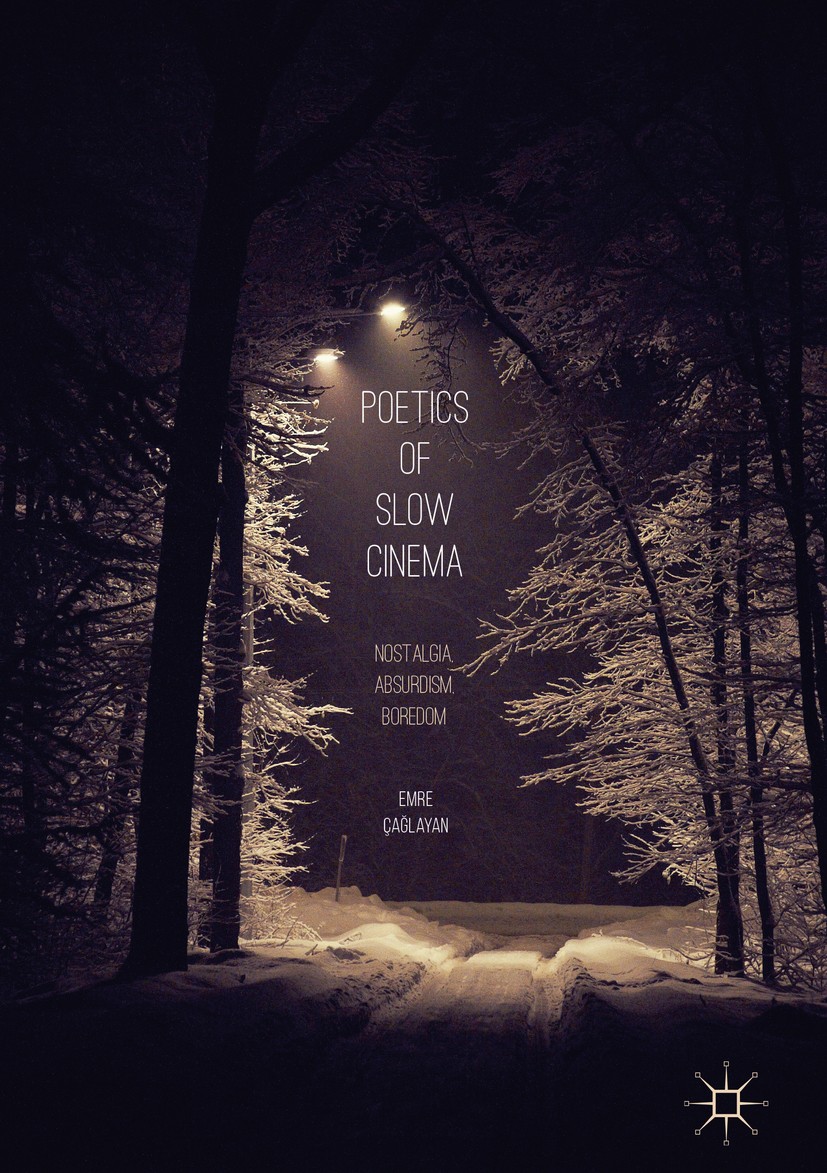
Emre Caglayan is an Assistant Professor and Program Coordinator for Film Studies at the American University of Paris (AUP). He holds a PhD in Film Studies from the University of Kent (2014) and an MA in Film and Television from Istanbul Bilgi University (2009). His research focuses on global art cinema, slow cinema aesthetics, and the intersection of cinematic form with embodied experiences like walking. Caglayan’s work explores how cinema shapes lived experiences through close analyses of film texts and their cultural contexts. Key research interests include the affective qualities of film sound, urban space representations, and ethical dimensions of political filmmaking. His monograph Poetics of Slow Cinema: Nostalgia, Absurdism, Boredom (Palgrave, 2018) is a seminal work in slow cinema studies. He currently investigates walking as an artistic practice linked to cinema, curating film seasons and designing participatory walking activities. Caglayan teaches courses on film theory, international cinema, and cinematic history at AUP. His work has been published in journals like Quarterly Review of Film and Video , Projections , and Jump Cut , with recent contributions on Turkish cinema and film/music intersections.
Prof. Dr. Alexander Stroh-Steckelberg is Professor of Political Science with a focus on African Politics & Development Policy at the University of Bayreuth since 2022. He serves as Deputy Head of the Bayreuth International Graduate School of African Studies (BIGSAS) until 2025 and has held prior roles as Junior Professor and Senior Fellow at BIGSAS (2015–2021). His academic career includes research associate positions at the GIGA German Institute of Global and Area Studies (2006–2015) and teaching roles at the Universities of Abomey-Calavi, Heidelberg, and Lüneburg. Stroh-Steckelberg’s research spans comparative democracy studies , judicial politics , electoral systems , political party dynamics , and development policy in Africa, with regional expertise in Francophone West Africa and Rwanda . His work emphasizes institutional diffusion, informal networks in courts, and the interplay between formal and informal governance structures. Recent publications reveal a focus on judicial appointment policies , electoral manipulation , and local governance challenges across Africa. He contributes to methodological advancements in comparative area studies and network analysis , particularly in non-Western democracies. Stroh-Steckelberg is actively involved in academic communities including the American Political Science Association , German Political Science Association , and Association for African Studies in Germany .
Andrew Zisserman is a Royal Society Research Professor at the University of Oxford's Department of Engineering Science, affiliated with the Visual Geometry Group (VGG). His research focuses on computer vision, artificial intelligence, and neural networks, with significant contributions to multimodal learning, video understanding, and 3D scene analysis. He leads projects exploring visual-language models, audio-visual synchronization, and clinical imaging applications. Key research areas include: Video analysis and temporal modeling Multimodal systems for sign language translation and action recognition 3D shape estimation and physical property inference Foundation models and cross-modal retrieval Recent work highlights: Developed Flamingo and Tapir models for video-language tasks Advancements in spinal MRI analysis and clinical imaging Leadership in EGO4D and VoxCeleb challenges Honors include Fellowship of the Royal Society (FRS) and the ISSLS Prize in Clinical Science 2023 for spinal analysis innovations. His lab collaborates globally, emphasizing real-world applications in healthcare and autonomous systems.
Nancy Margaret Reid is a University Professor of Statistical Sciences at the University of Toronto, holding the Canada Research Chair in Statistical Theory and Applications. She has served as Scientific Director of the Canadian Statistical Sciences Institute (2015–2019) and led the Department of Statistical Sciences as Chair (1997–2002). Her research focuses on theoretical statistics, particularly likelihood inference and foundational aspects of statistical methodology. Reid earned her PhD from Stanford University (1979) under Rupert G. Miller, with Brad Efron and Vernon Johns on her committee. Reid's accolades include Fellowships from the Royal Society, Royal Society of Canada, and National Academy of Sciences, as well as the Guy Medal in Gold (2022) and David R. Cox Award (2023). She has authored influential books like *Theory of the Design of Experiments* and contributed to courses on mathematical statistics and likelihood inference. Active in academic service, she teaches graduate-level courses and has advised numerous students and postdocs in theoretical and applied statistical research.
Professor Stephen Graham at Newcastle University is a leading scholar in critical urban studies, focusing on the intersections of militarism, surveillance, and urban infrastructure. His work explores how cities are shaped by and become sites of geopolitical conflict, technological control, and social inequality. Research spans urban verticality , military urbanism , and digital surveillance . Key themes include infrastructure disruption , elite spatial practices , and post-conflict urbanism . Recent publications analyze the militarization of urban space , robotic imperialism , and surveillance societies . His "Splintering Urbanism" framework remains foundational for understanding fragmented urban networks. Current work investigates vertical geopolitics , elite bunkering , and smart city security , with a focus on planetary-scale urban systems and their vulnerabilities.
Sarah Billington is the UPS Foundation Professor of Civil and Environmental Engineering at Stanford University and a Senior Fellow at the Woods Institute for the Environment. Her research program focuses on sustainable building design, human wellbeing, and ethical supply chain practices. Education: PhD, University of Texas at Austin, Structural Engineering (1997) MSE, University of Texas at Austin, Structural Engineering (1994) BSE, Princeton University, Civil Engineering & Operations Research (1990) Her lab employs interdisciplinary methods to study how built environments impact human physical, psychological, and social wellbeing. Current projects include developing tools to quantify nature exposure in buildings, exploring affordable housing's role in wellbeing, and using AI to assess forced labor risks in material supply chains. While no longer active in this area, her group previously pioneered research on sustainable construction materials like bio-based composites and ductile cement-based composites. Her recent publications address topics such as nature integration in architecture, workplace design optimization, and health impacts of building materials. The Billington Lab at Stanford fosters collaborative team science, welcoming partnerships to advance occupant-centric engineering solutions.