
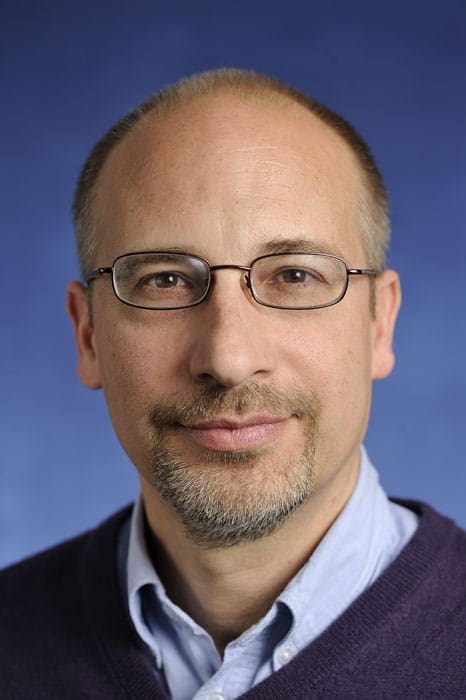
Joel Andreas is a Professor of Sociology at Johns Hopkins University since 2003, serving as Program Director of the East Asian Studies Program. His research focuses on political contention, social inequality, and social change in contemporary China. He holds a PhD in Sociology from UCLA and teaches social theory, political sociology, and courses on Chinese society. He has held visiting positions at universities including the University of Sydney, Hong Kong University, and Ningxia University. His work examines labor movements, rural land policies, and class dynamics in China. Recent research includes analyses of staff-worker congresses, rural land dispossession, and the persistence of militarism in U.S. policy. He critiques market reforms and explores the legacy of the Cultural Revolution. Andreas has contributed to debates on China’s transition to capitalism and the decline of socialist systems. His publications span topics from urbanization to state coercion in rural development. He maintains an active role in academic exchanges and policy-relevant research on China’s socio-political landscape.
جستجوی استاد راهنمای دانشگاهی
برای مسیر پژوهشیتان، استاد راهنما، استاد دانشگاه و پژوهشگر مناسب را پیدا کنید و با آنها ارتباط بگیرید.
نمایش ۱-۱۵ از ۳٬۵۳۰ استاد راهنما
اطلاعات پروفایلها از صفحات عمومی دانشگاهها گرفته شده و ممکن است بهروز نباشد.
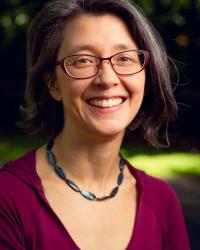
Sasha Su-Ling Welland is Chair & Professor in Gender, Women & Sexuality Studies at the University of Washington, with an adjunct role in Anthropology and affiliation in China Studies. She holds a PhD (2006) and MA (1998) in Anthropology from UC Santa Cruz, and a BA (1991) in Ethnic Studies from Stanford University. Her research focuses on transnational visual culture, women of color, ecocriticism, and post-socialist gender dynamics. Current work explores embodied ecologies, nuclear colonialism, and racial capitalism in the Anthropocene. Welland’s scholarship bridges art, ethnography, and public scholarship. Her book Experimental Beijing (2018) won major prizes for its analysis of gender in Chinese contemporary art. Recent research intertwines military/medical histories with environmental justice in St. Louis. She curates feminist art exhibits in Asia and serves on the Journal of Visual Culture editorial board. Her awards include the 2019 Francis L.K. Hsu Book Prize and 2020 Joseph Levenson Prize. She advises graduate students and leads lab teams investigating transnational feminisms and environmental humanities. Resources include her CV and online office hours via the department’s website.
- Art
- Asian American Studies
- Chinese Studies
- +۶ مورد دیگر
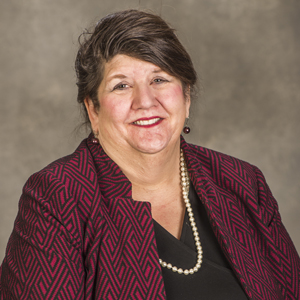
Dr. Elaine T. Jurkowski serves as Professor in Social Work at Southern Illinois University's College of Health and Human Sciences, holding multiple leadership roles including Graduate Program Director (2021-present) and Program Director for Gerontology Programs (2020-present). She maintains cross-appointments as Adjunct Professor in the School of Medicine's Family Practice Residency Program and Professor in the Department of Health Education, demonstrating her interdisciplinary impact. B.S.W. (Industrial Social Work), University of Manitoba, Canada M.S.W. (Policy and Administration), University of Manitoba, Canada Ph.D., Public Health, University of Illinois at Chicago M.B.A., Southern Illinois University Carbondale (2022) Dr. Jurkowski's research program centers on health disparities, access to mental health services, aging, and disability issues, with particular focus on rural populations. Her work bridges public health, social work, and gerontology through innovative approaches to program evaluation, technology-enhanced teaching, and culture change in long-term care settings. She has developed expertise in international health planning and inter-professional collaboration across diverse cultural contexts. Her publication portfolio shows consistent thematic development across decades, with recent work focusing on medical tourism during the pandemic, rural-urban health disparities, and technology applications in gerontology education. These publications reflect her commitment to addressing healthcare access challenges for vulnerable populations through both scholarly inquiry and practical interventions. Great Cities Research Fellow in Health Provost Faculty Fellow (2018) Provost Assessment Fellow (2016) Student Hotspotting certification (2018-present) A.P.M. Assessment Academy certification (2016, 2017) Dr. Jurkowski has successfully secured over $1 million in research funding from agencies including Health Resources and Services Administration, The Hartford Foundation, and Administration on Aging. Her grant portfolio demonstrates sustained commitment to improving services for older adults and people with disabilities, particularly in rural settings. She has served as Graduate Program Director twice (2003-2014, 2021-present), mentoring numerous social work students through their academic and professional development. Her professional activities extend beyond campus through international consulting in West Africa, Hong Kong, India, China, Russia, and Egypt, and community engagement via the "Dare to Care" radio show and board service with Caring Counseling Ministries, Supporting People in Need, and UNA/USA Southern Illinois Chapter.
- Health/Mental Health
- Disability
- Aging
- +۸ مورد دیگر
Professor Stephen Graham at Newcastle University is a leading scholar in critical urban studies, focusing on the intersections of militarism, surveillance, and urban infrastructure. His work explores how cities are shaped by and become sites of geopolitical conflict, technological control, and social inequality. Research spans urban verticality , military urbanism , and digital surveillance . Key themes include infrastructure disruption , elite spatial practices , and post-conflict urbanism . Recent publications analyze the militarization of urban space , robotic imperialism , and surveillance societies . His "Splintering Urbanism" framework remains foundational for understanding fragmented urban networks. Current work investigates vertical geopolitics , elite bunkering , and smart city security , with a focus on planetary-scale urban systems and their vulnerabilities.
Rod Thorntonمشاهده پروفایل
مدرس ارشد
Dr Rod Thornton is a Senior Lecturer in Russian Defence and Security Studies at King’s College London, affiliated with the Defence Studies Department and School of Security Studies. He specializes in the Russian military's kinetic and sub-threshold warfare, with a focus on cyber capabilities, space warfare, and UK homeland resilience. His research includes recent British Academy-funded work on UK civil defense capacity during the pandemic, advocating for dedicated civil defense organizations. He has published extensively on Russian military tactics in Ukraine, AI-cyber integration, and space-based deterrence. Russian military cyber operations Space warfare dynamics UK resilience capacity gaps Scientific awards include a British Academy grant (2020). His students focus on asymmetric warfare, AI, cyber, and regional security issues. He teaches at the UK Defence Academy and has collaborated with institutions in Finland, South Korea, and the Freeman Air and Space Institute.
Hans Beck serves as Professor of Greek History at the University of Münster (Westfälische Wilhelms-Universität) since 2018, with an additional appointment as Adjunct Professor in the Faculty of Arts at McGill University. His academic career includes previous positions as Professor of Ancient History and Director of Classical Studies at McGill University (2005-2018), Heisenberg Fellow at Goethe-Universität Frankfurt (2004-2005), and Research Assistant at the University of Cologne (1997-2004). Beck earned his academic training through doctoral studies at the Universities of Erlangen, Canterbury, and Cambridge (1989-1996), followed by a fellowship at the Center for Hellenic Studies in Washington, DC (2001-2002). His educational background reflects a strong international foundation in classical studies. His research spans multiple interconnected fields within ancient history, with particular emphasis on the history and culture of ancient Greece, historical geography of Greece, environmental studies of the ancient Greek world, political culture of the Roman Republic, and ancient historiography. Beck's work consistently explores themes of localism, federalism, and political structures across ancient societies, with notable contributions to understanding Greek city-states, regional identities, and comparative political systems. His approach often bridges geographical, historical, and cultural perspectives to examine how ancient communities organized themselves politically and maintained regional identities within larger frameworks. Analyzing his recent publications reveals a sustained focus on local political structures within broader contexts, particularly examining how Greek city-states maintained autonomy while participating in federal leagues. His work increasingly incorporates comparative approaches, connecting Greek political structures with those of Rome and even ancient China, reflecting his editorial work on cross-cultural studies. Beck demonstrates particular expertise in analyzing how physical landscapes shaped political organization and how religious practices reinforced regional identities. Fellow of the Royal Society of Canada (2018) Anneliese Maier Research Award from Alexander von Humboldt Foundation (2014) Heisenberg Fellowship from Deutsche Forschungsgemeinschaft (2004) Doctoral scholarship from German Academic Exchange Service (1995) Doctoral scholarship from Hanns Seidel Foundation (1994) Beck has supervised numerous doctoral students including Jordan Christopher (2022), Chandra Giroux (2021), Wentian Fu (2020), Rebecca Robinson (2017), Alex McAuley (2015), and François Gauthier (2015), covering diverse topics from ancient Qin and Macedon to cult practices in ancient empires. His academic leadership extends to directing research projects B3-49 'Belonging in/to Lakonia' and B3-40 'Localism and Religion in Ancient Greece' within the Excellence Cluster focusing on 'Religious Diversity and Legal-Political Unity.' As head of the project 'Belonging in/to Lakonia' and 'Localism and Religion in Ancient Greece,' Beck leads interdisciplinary research teams examining archaeological and historical evidence from the Sanctuary of Apollo at Amyklai and its surroundings. His work integrates textual analysis with material culture studies, creating comprehensive approaches to understanding ancient regional identities and religious practices. Beck's leadership in these projects demonstrates his commitment to bridging traditional disciplinary boundaries in classical studies.
Professor Maarten Prak is a distinguished scholar of Economic and Social History at Utrecht University, where he has been a faculty member since 1992. He is affiliated with the Faculty of Humanities and the Department of History and Art History. Prak serves on the governing board of the Royal Netherlands Academy of Arts and Sciences (KNAW) and All European Academies (ALLEA), having previously chaired the Humanities Board of the Netherlands Organisation for Scientific Research (NWO) from 2014-2016. Prak's research spans social history, urban history, guild systems, citizenship, global history, and early modern European history, with particular focus on the Dutch Golden Age. His scholarly trajectory evolved from local Dutch social history to national history, then to comparative European history, and finally to global historical perspectives. His work demonstrates how urban citizenship, guild structures, and social organization shaped political development across Europe. His publication record reveals consistent engagement with long-term historical processes, particularly examining how citizenship evolved from urban contexts to national frameworks. His research connects economic structures with political institutions, showing how guilds, urban governance, and social hierarchies influenced the development of modern political systems across Europe. Member Royal Netherlands Academy of Arts and Sciences (2008) Teacher of the Year, Universiteit Utrecht (2014) Winner of the 2015 book award of the American Ceramic Circle Winner of the 2019 Prix Dix-Septième Siècle Prak has maintained an active teaching career alongside his research, earning recognition as Teacher of the Year in 2014. His academic governance responsibilities have included serving as research director for his department and faculty, chairing the Humanities Board of NWO (2014-2016), and participating in the governing boards of KNAW and ALLEA. He has organized numerous international workshops and conferences and has been a visiting scholar at prestigious institutions including the University of Cambridge, London School of Economics, and École des Hautes Études in Paris.
- Social history
- Urban history
- Guilds, history of
- +۵ مورد دیگر
Matt Kingمشاهده پروفایل
دانشیار
Matt King is an Associate Professor and Graduate Director in the Department of History at the University of South Florida (USF), within the College of Arts and Sciences. He specializes in medieval Mediterranean history, digital humanities, and the Crusades era, particularly focusing on Norman-Sicily and Zirid-Ifriqiya relations. King holds a Ph.D. from the University of Minnesota (2018) and teaches courses on medieval history, digital methods, and historical pedagogy. His research explores the interconnectedness of medieval Mediterranean polities, leveraging Arabic and Latin sources alongside digital tools like the Old World Drought Atlas. His first book, Dynasties Intertwined (2022), examines Zirid-Norman relations. He has co-authored translations of al-Idrisi’s geography and is currently researching the historical perception of goblins. Education: Ph.D., University of Minnesota (2018); M.A. (2014), B.A. (2012) in History and Latin. King’s teaching emphasizes active learning and digital humanities, including workshops for K-12 educators. He has received grants totaling over $40,000 for research and community projects. Awards include the Outstanding Graduate Instructor Award (UMN, 2018) and the Subvention Award (USF, 2022). His publications span peer-reviewed journals (e.g., Journal of North African Studies , The History Teacher ) and edited volumes, with a focus on medieval Mediterranean dynamics, digital pedagogy, and environmental history. King advises graduate students in medieval Mediterranean history, emphasizing research in Arabic, Latin, or Greek. He is involved in digital initiatives, including departmental websites and archaeological 3D modeling projects.

Ronald McGarvey is a Full Professor at IÉSEG School of Management since 2022, with prior roles including Associate Professor with Tenure at the University of Missouri (2013-2022) and Senior Operations Researcher at RAND Corporation (2002-2022). He holds a Ph.D. in Industrial Engineering and Operations Research from Pennsylvania State University and an H.D.R. in Industrial Engineering from the University of Paul Sabatier, France. Education : H.D.R. (2024), Industrial Engineering, University of Paul Sabatier Ph.D. (2002), Industrial Engineering and Operations Research, Pennsylvania State University His research focuses on Operations Research and Robust Optimization applied to diverse domains: Healthcare Logistics : Modeling access disparities in rural obstetric care for American Indian populations Environmental Sustainability : Analyzing biomass energy systems, forest carbon impacts, and waste management frameworks Network Design : Developing optimization models for supply chain resilience, military logistics, and urban transit safety Policy Analysis : Evaluating multi-state environmental collaborations and localized food systems His publications demonstrate strong interdisciplinary applications of mathematical programming and spatial optimization to real-world challenges in healthcare access, energy sustainability, and transportation systems. Key Collaborations : Working with researchers in public health (Thorsen, Noble), environmental science (Aguilar), and engineering (Mirzaee, Gutierrez-Lopez)

Professor Agnieszka Zabłocka-Kos is a faculty member at the Institute of Art History, University of Wrocław, specializing in Central European architectural history and urbanism. Her work focuses on 19th-20th century architecture, with particular emphasis on Wrocław/Breslau, including post-war reconstruction, national identity construction, and sacred space design. Professor, University of Wrocław Specialist in 19th-20th century Central European architecture Director of postdoctoral internships (NCN FUGA III) Recipient of multiple Rector's awards for research and teaching Research Themes: Urban development in Central Europe, political architecture in Poland/Germany, sacred architecture of the 19th century, post-war modernism, industrial architecture revitalization. Her students have produced award-winning theses on topics like Wrocław urban blocks, Silesian architects, and post-industrial adaptations. Scientific Contributions: Notable works include the edited volume Architecture in the 'long' 19th century (2019), multiple articles on Breslau's architectural conflicts, and international projects on Central European sacred architecture. She has supervised 33 master's and 5 doctoral theses, with several student works published as books. Dettloff Prize for dissertation (1992) Rector's awards for research and didactic achievements International projects with universities in Berlin, Freiburg, and Leipzig Advisor for Wrocław's Monument Office and City Development Bureau Her teaching integrates interdisciplinary approaches, linking art history with political, economic, and social contexts. She promotes student research popularization through conferences, exhibitions, and publications.
Janina Dill holds the Dame Louise Richardson Chair in Global Security at the Blavatnik School of Government, University of Oxford. She is also a Professorial Fellow at Trinity College and Co-Director of the Oxford Institute for Ethics, Law, and Armed Conflict (ELAC). Her academic work focuses on the intersection of law, morality, and international relations in the context of war. Her research spans three interconnected strands: the legal requirements for military operations under international law; theoretical frameworks for understanding how international law serves as an instrument of morality in war; and empirical investigations into how moral and legal norms affect real-world military decision-making and public opinion in conflict zones. Professor Dill's work has particular relevance to contemporary conflicts, with extensive analysis of the wars in Ukraine and Gaza. She has examined how international humanitarian law applies to these conflicts, the moral arguments employed by different parties, and the practical challenges of implementing legal constraints in complex warfare environments. Her research has been recognized with the prestigious Philip Leverhulme Prize in 2021, which she has used to advance her work on the moral psychology of decision-making in war. She is currently leading multiple significant research projects, including a three-year ESRC/NSF-funded study on "Cumulative Civilian Harm" and an expert process with the ICRC on military objectives under international humanitarian law. Professor Dill is frequently consulted by international media outlets including The Guardian, The Economist, BBC, CNN, and major European publications. Her expertise is regularly sought on matters related to the laws and ethics of war, particularly regarding the conflicts in Ukraine and Gaza. She has received recognition for her contributions to the field through numerous speaking engagements, media appearances, and her influential research that bridges theoretical legal scholarship with practical applications in contemporary conflicts.

Kevin M. Kruse is Professor of History at Princeton University and Director of Undergraduate Studies. Specializing in 20th-century U.S. political, social, and urban history, his research examines conflicts over race, rights, and religion. Kruse earned his B.A. from UNC Chapel Hill and Ph.D. from Cornell University, joining Princeton after positions at the University of Virginia. His scholarship explores the civil rights movement, religious nationalism, suburbanization, and modern conservatism. Recent books analyze the corporate invention of Christian America and historical myths in American political discourse. Current projects include studies of civil rights lawyer John Doar and 'law and order' politics in New York City. Honored as a Guggenheim Fellow and Smithsonian Innovator, Kruse has received the Francis B. Simkins Award and Best Book in Urban Politics award. He teaches courses on civil rights, suburban history, and modern U.S. politics, and advises graduate students in 20th-century U.S. history. Kruse frequently engages public discourse through media appearances and collaborative projects with documentary filmmakers.
- Political History
- Urban History
- Race and Ethnicity
- +۵ مورد دیگر
Purnima Dhavanمشاهده پروفایل
دانشیار
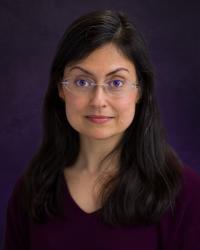
Purnima Dhavan is an Associate Professor of History at the University of Washington's College of Arts & Sciences, holding the Giovanni and Amne Costigan Endowed Professorship. She specializes in early modern South Asia (1500-1800), focusing on religious and cultural identity, Mughal institutions, and literary networks. Her research integrates interdisciplinary methods, with adjunct affiliations in Near Eastern Languages and the Jackson School's South Asia Center. Education: PhD in South Asian History from the University of Virginia (2003), MA (1998), and BA (1996) from the University of Michigan. She has taught at multiple institutions, including the College of St. Benedict/St. John’s University and Bowdoin College. Research Interests: Mughal literary culture, Sikh warrior traditions, gender in pre-colonial societies, and environmental history. Notable works include her book *When Sparrows Became Hawks* (2011) on Sikh militarization and a forthcoming project on literary associations in Mughal urban centers. Publications span peer-reviewed journals and edited volumes, emphasizing pre-colonial South Asia’s intellectual and socio-political dynamics. Awards include the Howard Keller Chair and NEH fellowships. Service: Extensive contributions to academic governance at UW, including roles in the Faculty Senate, departmental leadership, and national professional organizations like the American Historical Association and Association of Asian Studies. Languages: Native Hindi speaker, advanced Urdu/Persian/Punjabi, and proficient in Spanish.
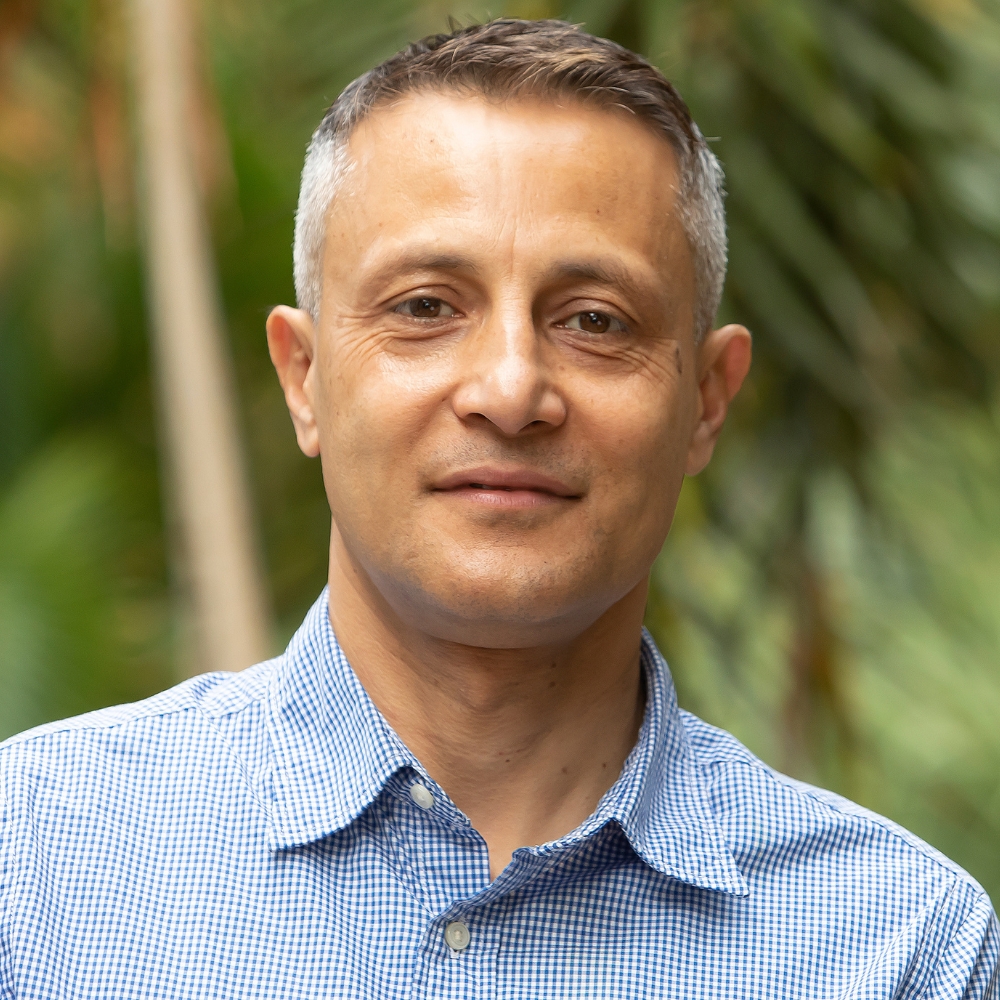
Pawan Adhikari is a Professor of Accounting at Essex Business School, University of Essex , where he serves as Director of Impact and Enterprise and Director of Essex Accounting Centre . He is an Associate Editor of the Journal of Public Budgeting, Accounting and Financial Management and a Executive Board Member of the Comparative International Governmental Accounting Research Network (CIGAR) . Previously, he led accounting reforms at Nepal’s Accounting and Auditing Standards Board and lectured at Nord University, Norway. PhD, Nord University Business School Fellow of the Higher Education Academy His research focuses on public sector accounting in developing countries, particularly accounting reforms , public value creation , and climate accountability . He explores how accrual accounting and participatory budgeting can enhance transparency in South Asian and African contexts. His work has influenced policy-making in Nepal and is recognized with the 2023 Best International Research Impact award by the University of Essex. Recent publications analyze wellbeing economies (2025), NGO accountability in disasters (2024), and climate budgeting (2023). He collaborates with institutions like the World Bank , European Commission , and British Academy , focusing on projects related to financial resilience , circular economy , and health sector accountability . Supervising 8 current PhD students, his advisees have produced work on topics like accrual accounting in Bangladesh and NGO accountability in Palestine . World Bank/PEFA Research Award African Accounting and Financial Association (AAFA) Award ESRC IIA Impact Fund GCRF and SeNSS Grants 2019 Best Postgraduate Supervisor (Essex)

Sara Caputoمشاهده پروفایل
پژوهشگر ارشد
Dr. Sara Caputo is a British Academy Postdoctoral Fellow at the Department of History and Philosophy of Science and an Affiliated Lecturer at the Faculty of History, University of Cambridge. She serves as Director of Studies in History, History and Politics, and History and Modern Languages at Magdalene College. Her research spans transnational maritime history, the history of medicine, cartography, and imperial history. Education: PhD in History from the University of Cambridge (Robinson College), MSc in History from the University of Edinburgh, BA (Hons) in History from Cardiff University. Career Highlights: Lumley Junior Research Fellow (2019–2022), Senior Research Fellow (2022–present) at Magdalene College, Scouloudi Fellow (2018–2019), Lewis-AHRC Scholarship (2015–2018), Honorary Vice-Chancellor’s Scholar (2015–2018). Research Focus: Dr. Caputo explores maritime mobilities, knowledge exchange, and the instability of national boundaries in the British and European navies. Her work integrates transnational perspectives into the study of a quintessentially national institution, challenging notions of Britishness and foreignness. She combines qualitative and quantitative methodologies to analyze legal, social, and cultural contexts of naval service and cartographic practices. Notable Articles: Recent publications include studies on British naval medicine, the evolution of ship tracks into surveillance tools, and the transnational dimensions of naval exploration. Her articles span journals like Past & Present , English Historical Review , and Social History of Medicine , with chapters in edited volumes on transport history and postwar naval recruitment. Scientific Awards: Royal Historical Society Whitfield Prize (2024) British Commission for Maritime History Boydell & Brewer Prize (2020) Fachverband Medizingeschichte wissenschaftlichen Förderpreis (2022) International Committee for History of Technology Maurice Daumas Prize (2021) Scottish History Society Rosebery Prize (2020) Teaching and Outreach: Dr. Caputo teaches courses on the Global Eighteenth Century, Union and Disunion in Britain, and Mediterranean history. She actively participates in outreach programs with the Cambridge University Admissions Office and The Brilliant Club, focusing on widening participation in history education.
نمایش نتایج تا ۷۵۰ مورد اول. برای یافتن نتایج دقیقتر، جستجوی خود را با فیلترها محدود کنید.