
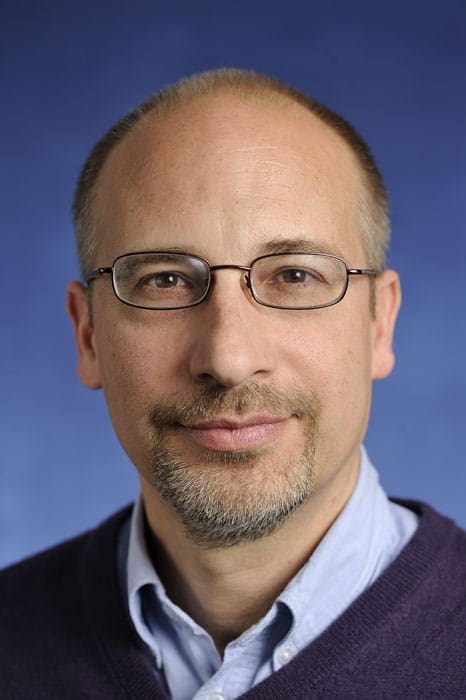
Joel Andreas is a Professor of Sociology at Johns Hopkins University since 2003, serving as Program Director of the East Asian Studies Program. His research focuses on political contention, social inequality, and social change in contemporary China. He holds a PhD in Sociology from UCLA and teaches social theory, political sociology, and courses on Chinese society. He has held visiting positions at universities including the University of Sydney, Hong Kong University, and Ningxia University. His work examines labor movements, rural land policies, and class dynamics in China. Recent research includes analyses of staff-worker congresses, rural land dispossession, and the persistence of militarism in U.S. policy. He critiques market reforms and explores the legacy of the Cultural Revolution. Andreas has contributed to debates on China’s transition to capitalism and the decline of socialist systems. His publications span topics from urbanization to state coercion in rural development. He maintains an active role in academic exchanges and policy-relevant research on China’s socio-political landscape.
جستجوی استاد راهنمای دانشگاهی
برای مسیر پژوهشیتان، استاد راهنما، استاد دانشگاه و پژوهشگر مناسب را پیدا کنید و با آنها ارتباط بگیرید.
نمایش ۱-۱۵ از ۵٬۰۵۷ استاد راهنما
اطلاعات پروفایلها از صفحات عمومی دانشگاهها گرفته شده و ممکن است بهروز نباشد.
Sasha Su-Ling Welland is Chair & Professor in Gender, Women & Sexuality Studies at the University of Washington, with an adjunct role in Anthropology and affiliation in China Studies. She holds a PhD (2006) and MA (1998) in Anthropology from UC Santa Cruz, and a BA (1991) in Ethnic Studies from Stanford University. Her research focuses on transnational visual culture, women of color, ecocriticism, and post-socialist gender dynamics. Current work explores embodied ecologies, nuclear colonialism, and racial capitalism in the Anthropocene. Welland’s scholarship bridges art, ethnography, and public scholarship. Her book Experimental Beijing (2018) won major prizes for its analysis of gender in Chinese contemporary art. Recent research intertwines military/medical histories with environmental justice in St. Louis. She curates feminist art exhibits in Asia and serves on the Journal of Visual Culture editorial board. Her awards include the 2019 Francis L.K. Hsu Book Prize and 2020 Joseph Levenson Prize. She advises graduate students and leads lab teams investigating transnational feminisms and environmental humanities. Resources include her CV and online office hours via the department’s website.
- Art
- Asian American Studies
- Chinese Studies
- +۶ مورد دیگر

Haiyan Lee serves as the Walter A. Haas Professor of the Humanities and Professor of East Asian Languages and Cultures and of Comparative Literature at Stanford University. She has held these positions since joining Stanford in 2009, and currently serves as Chair of the East Asian Languages and Cultures department (2020-present). Her academic journey includes previous teaching appointments at the University of Colorado at Boulder and the University of Hong Kong, along with post-doctoral fellowships at Cornell University and Harvard University. Lee's research spans multiple interdisciplinary fields with particular focus on modern Chinese literature and cultural production. Her work bridges literary studies with law, philosophy, cognitive science, affect theory, gender studies, and environmental humanities. She has developed influential theoretical frameworks including the concept of "high justice" and "low justice" in Chinese legal imagination. Her current research explores animism, cognition, and the Chinese environmental imagination, extending her longstanding interest in human-animal relations. Lee's publications reveal a consistent trajectory examining Chinese cultural production through innovative theoretical lenses. Her recent work shows increasing engagement with legal theory, environmental humanities, and cognitive approaches to literature. She has produced significant scholarship on Chinese concepts of justice, love, and the stranger, moving across historical periods from early 20th century to contemporary China. Biennial Book Prize, Honorable Mention, International Society for Chinese Law and History (ISCLH) (2024) Humanities Seed Grant, Stanford School of Humanities and Sciences (2023-2025) Bass Fellowship in Undergraduate Education, Stanford University (2022-2027) Joseph Levenson Book Prize, The Association for Asian Studies (2009) Professor Lee actively mentors doctoral students across multiple disciplines, serving as dissertation advisor, co-advisor, and committee member for students working at the intersection of Chinese studies, law, literature, and cultural theory. Her teaching includes courses across East Asian humanities, comparative literature, and interdisciplinary environmental studies. She has received significant research support including the Frederick Burkhardt Residential Fellowship from the American Council of Learned Societies and a residency at the Center for Advanced Study in the Behavioral Sciences.
Christopher Rea is a Professor of Modern Chinese Literature in the Department of Asian Studies at the University of British Columbia's Faculty of Arts. He serves as a faculty member and former Associate Head of the Department of Asian Studies, former Director of the Centre for Chinese Research, an associate of the Hong Kong Studies Initiative, and a Faculty Fellow of St. John's College. His academic journey includes a Ph.D. from Columbia University (2008) and a B.A. from Dartmouth College (1999). Rea's research focuses on the modern Chinese-speaking world, with particular expertise in Chinese literature, cinema, print culture, translation, and the cultural history of humor and deception. His scholarly approach bridges literary analysis, cultural history, and film studies, creating a distinctive interdisciplinary perspective on modern Chinese cultural production. He is particularly known for his work on Republican-era China (1912-1949), exploring how cultural forms evolved during this transformative period. His major publications reveal a trajectory from studies of humor and laughter in modern China ( The Age of Irreverence , 2015) to literary hoaxes and deception ( The Book of Swindles , 2017), Chinese cinema ( Chinese Film Classics , 2021), and research methodology ( Where Research Begins , 2022). His current projects include China on the Make: Stories of Chinese Deception and The Unfinished Comedy , a sequel to The Age of Irreverence . National Endowment for the Arts Translation Fellowship (2024) UBC Dean of Arts Mentorship Award (2024) UBC Killam Research Prize (2022) Joseph Levenson Book Prize (2017) Rea actively supervises graduate students and has developed significant digital resources, including the Chinese Film Classics project (chinesefilmclassics.org) featuring 40+ subtitled Chinese films and 22 video lectures, and a YouTube channel with over 250 videos on Chinese cinema and culture. His teaching extends to free online courses on The Modern Chinese Novel and early Chinese cinema, demonstrating his commitment to making scholarly resources accessible beyond traditional academic boundaries.

Professor David A Palmer is a distinguished academic jointly appointed by the Hong Kong Institute for the Humanities and Social Sciences and the Department of Sociology at the University of Hong Kong, where he has been teaching since 2008. His interdisciplinary work bridges anthropology, sociology, religious studies, and Sinology, establishing him as a leading scholar in Chinese religious studies and transnational religious movements. Palmer's educational background includes a PhD in Anthropology of Religion from Ecole Pratique des Hautes Etudes (Sorbonne, Paris), an MPhil in Clinical Psychology/Medical Anthropology from University of Paris-VIII, and a BA in Anthropology and East Asian Studies from McGill University. His scholarly contributions span multiple disciplines with particular emphasis on Chinese religious traditions and their global manifestations. His research interests focus on the anthropology and sociology of spirituality and religion, especially Daoism and Chinese religion; religion in modern and contemporary China; inter-Asian and transnational religious circulations; Baháʼí Faith; civil society, volunteering, philanthropy, community engagement; and cultural and religious interactions on the Belt and Road. His work examines how religious traditions navigate modernity, state power, and globalization, with particular attention to the Belt and Road Initiative's cultural dimensions. Palmer's publications reveal a consistent focus on understanding Chinese religious traditions within broader theoretical frameworks of social theory, civil society, and transnational religious networks. His articles demonstrate how Chinese religious practices and institutions both adapt to and shape contemporary social and political contexts, with particular attention to the intersections of spirituality, modernity, and state-society relations. Joseph Levenson Award of the Association for Asian Studies PROSE award of the American Publishers' Association Francis L.K. Hsu Award of the Society for East Asian Anthropology Edward Bruner Prize for the best book in Anthropology of Tourism HK Research Grants Council RGC Research Fellowship (2021-2025) HK Research Grants Council Humanities and Social Sciences Prestigious Fellowship (2019) Palmer currently leads multiple significant research projects including 'Global China, Local Cultures: Chinese Modernity and Soft Power on the Belt and Road' (RGC Research Fellowship, 2021-2025), 'Infrastructures of Faith: Religious Mobilities on the Belt and Road' (CRF, 2019-2023), 'Rituals and Manuscripts of the Lanten Yao (Laos)' (GRF, 2021-2024), and 'Religious Cosmopolitanism in China, 1895-1927' (GRF, 2021-2024). He leads the 'Asian Religious Connections' research cluster at HKIHSS, co-convenes the 'Culture, Community and Social Equity' research cluster in the HKU Faculty of Social Sciences, and serves as co-convenor of the HKU Anthropology Research Network. As President of the East Asian Society for the Scientific Study of Religion, he plays a key role in advancing scholarly understanding of religion in the region.
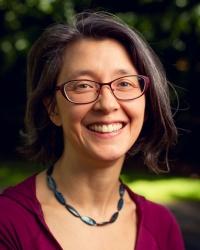
Sasha Wellandمشاهده پروفایل
دانشیار مدعو
Sasha Welland is an Adjunct Associate Professor in the Department of Anthropology at the University of Washington, affiliated with Gender, Women & Sexuality Studies; China Studies; Comparative History of Ideas; and graduate certificate programs in Cinema & Media Studies and Public Scholarship. Her research focuses on Asian American studies, East Asian ethnography, feminism, visual culture, and sociocultural anthropology. Welland’s scholarship bridges historical and contemporary analyses. Her book Experimental Beijing (2018) explores Chinese contemporary art as a site of cultural negotiation around gender, globalization, and post-socialist transformations. Her earlier work A Thousand Miles of Dreams (2006) traces the transnational lives of two 20 th -century Chinese women activists. She contributes to Journal of Visual Culture and has published in Signs and Yishu . An engaged public scholar, Welland has curated feminist art exhibitions in Beijing, Shanghai, and Hong Kong, blending academic research with cultural practice. Her work interrogates intersections of gender, space, and global flows in East Asian contexts.
Vincent J. Cheng is a Distinguished Professor of English at the University of Utah, holding appointments since July 2019. He previously served at the University of Southern California (1979–2019) in roles including Professor of English and Director of Asian American Studies. His academic leadership includes directing the Tanner Humanities Center (2003–2007). Cheng specializes in modernist literature, particularly James Joyce, with research focusing on cultural memory, national identity, and postcolonial studies. He has authored influential works like Amnesia and the Nation and edited volumes on Joyce’s legacy. Recognized for teaching excellence, he received the Calvin S. and JeNeal Hatch Prize in Teaching (2024) and the Distinguished Teaching Award (2014). Cheng’s research integrates philosophy, history, and literature, exploring themes like migration, empathy, and ethical remembrance. His recent work analyzes Joyce’s treatment of memory and history, connecting Irish and American Southern narratives. He also contributes to Joyce Studies Annual and serves on editorial boards for Western Humanities Review . Teaching-wise, he leads advanced seminars on literary studies and British writers, guiding Ph.D. thesis research. Award highlights include the Fulbright Scholar Award (2015) and the Carole & Gordon Segal Visiting Chair in Irish Studies (2014). He remains active in community outreach, such as presenting Joyce’s Dubliners to high school students. His interdisciplinary approach bridges literary analysis with cultural and ethical inquiry.
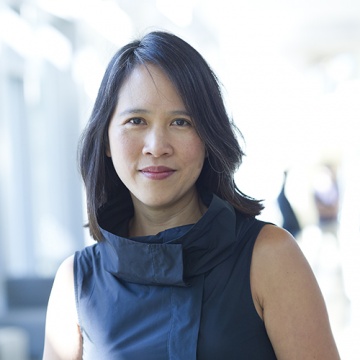
Lily L. Tsai is the Ford Professor of Political Science at the Massachusetts Institute of Technology (MIT) and founder/director of the MIT Governance Lab (MIT GOV/LAB). She previously chaired the MIT Faculty and focuses her research on governance, accountability, and political participation in developing contexts, particularly Asia and Africa. Her research explores how decentralization, democratic reforms, informal institutions, and economic development influence public goods provision. She also investigates the dual impacts of social capital and civil society on political outcomes, and analyzes political behavior in authoritarian and transitional systems through surveys, interviews, and field experiments. Recent publications span topics including collective governance, vaccine compliance in Uganda, anticorruption strategies in China, and the role of informal institutions in rural China. Tsai’s work appears in journals like American Political Science Review and World Development . Dogan Award for best book in comparative research (2007-08) She leads interdisciplinary projects such as the Compass Initiative (SHASS Education Innovation Fund) and The Science of Respect with MIT’s Brain and Cognitive Sciences department. MIT GOV/LAB, which she founded in 2014, emphasizes real-time empirical collaboration between researchers and practitioners to address governance challenges.
- Governance
- Accountability
- Political Participation
- +۱۰ مورد دیگر

Steven Jackson is a Professor of Information Science and Science and Technology Studies at Cornell University's Bowers College of Computing and Information Science, with additional graduate field appointments in Communication and Public Affairs. Since July 2023, he has served as Vice-Provost for Academic Innovation at Cornell, and previously held leadership positions as Chair of Information Science and Dean of William Keeton House. His work bridges academic research with significant institutional leadership in higher education innovation. Dr. Jackson's research focuses on critical intersections of technology, society, and the environment, with three primary strands: technology ethics, law and policy; maintenance, repair and sustainability; and technology, inequality and global development. His work draws from American pragmatism, political economy, and science and technology studies, integrating methods from sociology, anthropology, philosophy, and media studies. He is particularly interested in how computing practices meet social and material worlds, with implications for infrastructure, collaboration, sustainability, and cultural practice. His recent publications reveal a strong emphasis on repair as both theoretical concept and practical methodology, exploring 'ordinary hope' as a framework for technological engagement and examining unmaking as a necessary counterpart to design. The research spans diverse geographical contexts from the global North to South, addressing caste dynamics in computing, digital authoritarianism, and infrastructure challenges in developing contexts. Dr. Jackson has received significant recognition including an NSF CAREER award and more than twenty paper awards at leading computing and information science venues. His research has been supported by major organizations including the U.S. National Science Foundation, Social Science Research Council, Ford Foundation, Sloan Foundation, World Bank, Intel Research, Atkinson Center for Sustainability, and the Canadian Social Science and Humanities Research Council. As an advisor, Dr. Jackson has mentored numerous graduate students who have gone on to prominent positions at institutions worldwide. He currently advises Jen Liu, Amy Cheatle, Daniel Mwesigwa, Johan Michalove, and Ritik Batra, while his former students include Palashi Vaghela (Assistant Professor at Simon Fraser University), Samir Passi (Responsible AI Researcher at Microsoft), Maggie Jack (Assistant Professor at NYU), and Ranjit Singh (Senior Researcher at Data and Society). Dr. Jackson convenes the Computing On Earth Lab, an experimental collaboration bringing together social scientists, humanists, artists, and engineers to rethink the material and planetary foundations of computing. The lab reflects his commitment to interdisciplinary approaches that address computing's environmental impacts and sustainability challenges.
Maile Arvinمشاهده پروفایل
استادیار
Maile Arvin is a Kanaka Maoli feminist scholar and Assistant Professor at the Department of Ethnic Studies, University of Hawaiʻi at Mānoa. Her research and teaching focus on Indigenous relationships to land, histories of race and settler colonialism in Hawaiʻi, Oceania, and the United States. Previously, she was faculty in History and Gender Studies at the University of Utah and founding director of the Center for Pasifika Indigenous Knowledges. PhD in Ethnic Studies, University of California San Diego (2013) MA in Ethnic Studies, University of California San Diego (2009) BA in English, Swarthmore College (2005) Her research examines: Colonial production of racial categories, particularly Polynesians as an 'almost white race' in historical social science History of incarceration of Native Hawaiian children in government institutions (1865–1960s) Intersection of settler colonialism and Indigenous feminisms Critique of eugenics and genomic studies in the Pacific Community-engaged memorialization projects in Hawaiʻi Recent scholarly trends include analyses of Indigenous sovereignty, critiques of settler colonial whiteness, and interdisciplinary studies of race-gender dynamics. Arvin's publications explore Polynesian racialization, decolonial feminism, and the socioeconomic impacts of colonial institutions. NEH Chair's Grant for Nā Lei Poina ʻOle ACLS Digital Justice Seed Grant Arvin leads Nā Lei Poina ʻOle (Beloved Children Never Forgotten), a community history project about reformatories and industrial schools in Hawaiʻi. In collaboration with Kawela Farrant and the North Shore Community Land Trust, this project uses archival and oral histories to confront the legacy of child incarceration. She also critiques the nonprofit-industrial complex's role in limiting Indigenous sovereignty.
- Indigeneity
- Settler Colonialism
- Race Studies
- +۶ مورد دیگر

Katherine Brickell is Professor of Human Geography at Royal Holloway, University of London (RHUL), where she serves as Research Lead for the Department of Geography. She is editor of the journal Gender, Place and Culture and former Chair of the RGS-IBG Gender and Feminist Geographies Research Group. Her work spans social, political, development, urban and legal geography with a feminist orientation. Brickell's research centers on three interconnected themes: home and home unmaking, labor precarity, and feminist legal geographies. Her longstanding interest in the domestic sphere and home unmaking aims to reaffirm the home as a political entity. Her monograph Home SOS: Gender, Violence and Survival in Crisis Ordinary Cambodia brings together 15 years of research on domestic violence and forced eviction. Since 2017, she has conducted collaborative work in London and Dublin on modular housing for homeless families. She has also led significant research on labor conditions in Cambodia, including the ESRC-DFID funded 'Blood Bricks' project (2016-2019) studying climate change impacts on rural families migrating to brick kilns. Her recent publications reveal a strong focus on debt, microfinance, and climate vulnerability in Cambodia, with multiple 2022-2024 articles examining how over-indebtedness intersects with social reproduction and climate adaptation. Her work consistently applies feminist lenses to understand spatial dimensions of power, particularly in Southeast Asia. Brickell has published in top journals including Transactions of the Institute of British Geographers , Progress in Human Geography , Antipode , and Annals of the American Association of Geographers . Gill Memorial Award (2014) Philip Leverhulme Prize (2016) Times Higher Education Research Project of the Year (2020) Brickell has supervised numerous doctoral students and mentored postdoctoral fellows working on topics including remittances during COVID-19, climate mobilities, moral geographies of garment work, and women's experiences with domestic violence. Her research has been funded by ESRC-DFID, UKRI GCRF, and the Urban Studies Foundation, among others. She collaborates extensively with colleagues in Cambodia and across Europe, with current projects examining climate resilience, credit-taking, and nutrition in Cambodia and South India, as well as the economic impacts of the pandemic on Cambodian garment workers.
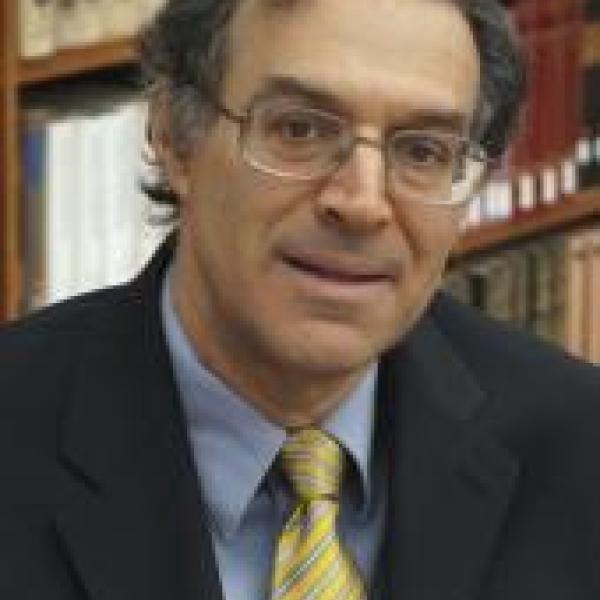
Kenneth Pomeranz is the University Professor of Modern Chinese History at the University of Chicago in the Department of East Asian Languages and Civilizations (EALC). Previously taught at the University of California, Irvine , his research spans late Imperial and twentieth-century China , comparative world history , and global economic systems . Research Focus: Reciprocal influences between state, society, and economy; origins of the world economy through mutual regional influences; comparative studies of labor, family organization, and economic history. Current Projects: A history of Chinese political economy from the seventeenth century to the present; a book titled Why Is China So Big? exploring China's political unity despite its vast size. Scientific Awards and Fellowships: John K. Fairbank Prize (twice) World History Association Book Prize (shared) Guggenheim Fellowship American Academy of Arts and Sciences Fellow Publications: Key works include The Great Divergence , The Making of a Hinterland , and The World that Trade Created . His articles address topics such as labor-intensive industrialization, global environmental history, and Qing state-building.

Karl Gustafsson is a Professor at Stockholm University within the Department of Economic History and International Relations. His work bridges security studies , collective memory , and digital research methods in international relations. Current Role: Professor of International Relations, Stockholm University Previous Positions: Post-Doc at Lund University, Researcher at Swedish Institute of International Affairs Visiting Appointments: University of Tokyo, Osaka University, Keio University, Academia Sinica, Nordic Institute of Asian Studies Research Focus: Karl specializes in memory politics , ontological security , and anxiety-driven international dynamics , particularly in Sino-Japanese relations and digital platforms . His studies explore how historical narratives and online memory construction influence state identity and policy. Awards & Grants: Recipient of the Wang Gungwu Prize (2014) and Stockholm University Association’s award (2011). Holds Swedish Research Council and Marianne & Marcus Wallenberg Foundation grants for projects on apologies in international politics and digital memory in East Asia . Publications: His work appears in journals such as International Studies Quarterly , European Journal of International Relations , and Memory Studies , addressing topics like narrative power in East Asia, anxiety’s role in policy change , and digital humanities applications in IR.
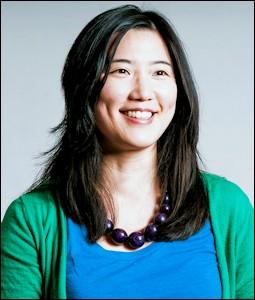
Elaine Chunمشاهده پروفایل
دانشیار
Elaine Chun is an Associate Professor in the Department of English Language and Literature at the McCausland College of Arts and Sciences, University of South Carolina. She holds a Ph.D. in Linguistics from the University of Texas at Austin (2007) and an A.B. in Linguistics from Stanford University (1995). Education: Ph.D. in Linguistics, University of Texas at Austin (2007); A.B. in Linguistics, Stanford University (1995). Research Interests Dr. Chun specializes in sociolinguistics and linguistic anthropology, with a focus on language, race, gender, and sexuality. Her work examines how language practices traverse racial and national boundaries, particularly in contexts like Asian American YouTube commentary, K-pop fandom, and U.S. public spaces. She investigates ideologies of race and gender, collaborative interpretation in social media, and anti-racist strategies. Publication Trends Her recent publications emphasize language in digital media, racial ideologies, and sociocultural identity. Topics include racism in public discourse, transnational social media analysis, racial parody, and the intersection of language with race and gender. Her work spans journals like American Speech , Language in Society , and Discourse & Society .
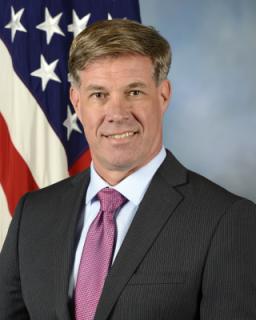
Joseph Felterمشاهده پروفایل
پژوهشگر ارشد
Joseph Felter is a Research Fellow at the Hoover Institution (Stanford University) and the William J. Perry Fellow at the Center for International Security and Cooperation. His career bridges academia, military service, and policy advising, with expertise in counterinsurgency, national security, and US-China relations. He coauthored the influential book Small Wars, Big Data: The Information Revolution and Modern Conflict (2018) and developed the Hacking for Defense curriculum to connect military needs with Silicon Valley innovation. Military Background: Former US Army Special Forces officer with combat deployments in Panama, Iraq, and Afghanistan. Served as commander of the COMISAF Counterinsurgency Advisory and Assistance Team. Academic Roles: Assistant Professor at West Point’s Department of Social Sciences, Adjunct Associate Professor at Columbia University’s School for International and Public Affairs, and current codirector of Stanford’s Empirical Studies of Conflict Project. Research Focus: Politically motivated violence, economic development in conflict zones, and defense innovation. His work appears in top journals like American Economic Review and Journal of Conflict Resolution . Policy Engagement: Key advisor on US defense strategy (2017–2019) and founder of BMNT, a Silicon Valley defense technology incubator. Currently serves on Spirit of America’s board. Scientific Awards: Recognized as a William J. Perry Fellow and US Army War College Fellow. His empirical conflict research informs both academic and policy debates.
نمایش نتایج تا ۷۵۰ مورد اول. برای یافتن نتایج دقیقتر، جستجوی خود را با فیلترها محدود کنید.