Dr. Hai Shu is an Assistant Professor in the Department of Biostatistics at NYU's School of Global Public Health. He earned his Ph.D. in Biostatistics from the University of Michigan and B.S. from Harbin Institute of Technology. Previously, he was a Postdoctoral Fellow at MD Anderson Cancer Center. Education: Ph.D. in Biostatistics - University of Michigan B.S. in Information and Computational Science - Harbin Institute of Technology His research focuses on high-dimensional data analysis, machine/deep learning, and medical image applications in neurodegenerative diseases and oncology. He develops statistical methods for analyzing complex biomedical data from neuroimaging and genomics. His publications demonstrate consistent focus on developing novel statistical methods for medical imaging data, with increasing emphasis on deep learning approaches and multi-modal data integration in recent years. Awards: NYU GPH Goddard Award (2023) He mentors graduate students and serves as associate editor for Statistica Sinica and The American Statistician. His NIH-funded research includes studies on neuroimaging analysis and AI applications in healthcare. Leads research in medical image analysis and statistical learning, collaborating with neuroscience and oncology teams to develop computational tools for disease diagnosis and progression tracking.
Tassos Koidis is a Lecturer in the School of Biological Sciences at Queen's University Belfast, affiliated with the Institute for Global Food Security. He is actively engaged in research, teaching, and public outreach, with a focus on food chemistry and authenticity. His work integrates advanced analytical techniques with chemometrics to ensure food safety and integrity. Research Interests: His research spans food authenticity, adulteration detection, and the application of multivariate statistical methods and spectroscopic techniques in food analysis. Key areas include olive oil quality, plant-based milk alternatives, and meat color stability. He develops cutting-edge analytical methods to understand the chemical and physical properties of foods, particularly in relation to bioactivity and structural integrity. The recent publications highlight a strong trend in food safety, with emphasis on detecting adulterants in honey, edible oils, and plant-based products using DNA barcoding, mass spectrometry, and infrared spectroscopy. His work increasingly integrates chemometrics and non-destructive testing to support sensory evaluation and quality control. Teaching Contribution Award (SOBS/FQSN course), 2019 Top Cited Article - Wiley - European Journal of Lipid Science and Technology, 19 Mar 2025 Tassos Koidis has supervised PhD students and is currently accepting new PhD candidates. He has been involved in significant research grants, including the FOODINTEGRITY and ASSET projects, and currently serves as Co-Investigator in the 'Facilitating Innovations for Resilient Livestock Farming Systems' project. His editorial roles include service on the boards of Food Chemistry and Food and Humanity . He is also active in public engagement, having contributed to BBC and safefood media initiatives on food authenticity and preservation. He is a member of professional networks and collaborates internationally, particularly in chemometrics and food safety. His participation in workshops, conferences, and advisory panels underscores his role in translating research into policy and industry practice.
Prof. Vladimir Kaishev is a Professor of Actuarial Science at the Faculty of Actuarial Science and Insurance (FASI), Bayes Business School, City, University of London. He holds a PhD in Statistics and Information Theory from Moscow Technical University and has held visiting positions at Kyoto University, the University of Melbourne, and Heriot-Watt University. His research focuses on actuarial mathematics, risk theory, reinsurance modeling, and the application of spline functions in finance and insurance. He has supervised numerous PhD students and contributed to over 30 journal articles, conference papers, and software packages such as StMoMo and KSgeneral . His work includes advancements in ruin probability modeling, copula functions, and operational risk assessment, alongside consultancy roles for institutions like Swiss Reinsurance and the Bulgarian Actuarial Society. He is an Associate Editor of Economic Quality Control and a member of professional societies including the American Mathematical Society. Education: MSc and PhD in Statistics from Moscow Technical University, followed by postdoctoral research at the University of Wisconsin-Madison and UCLA. Research Interests: Multivariate Lévy processes, ruin theory, optimal reinsurance, spline functions, and stochastic modeling. His work bridges actuarial science with financial mathematics and statistical methods. Publications: Over 40 peer-reviewed articles and book chapters, with recent focus on generalized linear models, survival analysis, and actuarial software development. His 2023 paper in Applied Mathematics and Computation introduced novel variable knot spline methods. Awards: Received the Cass Business School Certificate for Excellence in Research in 2009 and 2013. Consultancy & Grants: Projects include stochastic mortality modeling for the UK Office for National Statistics and economic scenario generator development for Aon-Benfield. His research has been supported by grants from the Leverhulme Trust and the Swiss Re. Labs/Teams: Leads the Actuarial Research Center and collaborates internationally on projects such as the StMoMo R package for stochastic mortality modeling.
Lau Caspar Thygesen is a Professor in Public Health Epidemiology at the National Institute of Public Health, University of Southern Denmark. He leads the Public Health Epidemiology research group and serves as Head of Studies for the BA and MA programs in Public Health Science. His work is centered on register-based epidemiology, utilizing large-scale surveys and national health registers to investigate both preventive and clinical health issues. Degree: MSc Public Health, PhD Institution: University of Southern Denmark Role: Professor and Research Group Leader Email: lct@sdu.dk ORCID: 0000-0001-8375-5211 His research interests include socio-economic health disparities, pharmacoepidemiology, clinical epidemiology, and advanced statistical methods. He has extensive experience in cohort studies and register-based research, with a focus on vulnerable populations such as those with intellectual disabilities and high-risk occupational groups. His work also addresses vaccination uptake, environmental health, and mental health during public health crises like the COVID-19 pandemic. The trends in his recent articles reflect a strong emphasis on large-scale, data-driven public health research. His publications frequently employ nationwide Danish register data to explore risk factors for disease, evaluate healthcare interventions, and assess health inequities. Common themes include cancer screening disparities, environmental exposures, mental health outcomes, and methodological rigor in epidemiological design. His collaborative network is extensive, involving multi-center and international studies. While no specific scientific awards are listed in the provided text, his research has been widely disseminated through 409 research outputs and featured in 63 media contributions, indicating significant public and academic impact. Lau Caspar Thygesen actively supervises bachelor’s, master’s, and PhD students and serves as principal or co-supervisor on multiple research projects. He is involved in key grants such as Danmarks mentale status (as PI) and Declining Response Proportions in the Danish National Health Survey (as co-supervisor), reflecting his leadership in national public health research initiatives. His teaching includes courses in epidemiology and theory of science. He is a central figure in several research teams and projects focused on health equity, including studies on people with developmental disabilities ( Sundhed og sygelighed blandt personer med udviklingshandicap ) and digital mental health interventions ( Mindhelper ). His work often involves interdisciplinary collaboration across public health, clinical medicine, and social science, leveraging register data for impactful policy-relevant findings.
Michael Sørensen is a Professor at the Department of Mathematical Sciences, University of Copenhagen. His primary research focuses on statistical inference for stochastic processes, particularly stochastic differential equations and jump processes, with applications in finance, physics (e.g., wind-blown sand dynamics), and biology. He has authored/co-authored influential books such as Exponential Families of Stochastic Processes and edited volumes on empirical process techniques and statistical methods for stochastic differential equations. His work bridges theoretical statistics with applied problems in natural sciences and finance. Research interests include modeling turbulence, sand transport dynamics, and protein structure evolution. Collaborations with earth scientists like Keld Rømer Rasmussen have advanced understanding of aeolian processes. His methodologies emphasize likelihood-based inference and estimating functions, with contributions to high-frequency data analysis and diffusion bridge simulations. A comprehensive CV and full publication list are available on his profile. Key contributions span stochastic modeling in physics (e.g., sand dune dynamics), financial econometrics, and computational statistics. He has pioneered techniques for analyzing multi-modal diffusions and developed frameworks for mixed-effects stochastic differential equations. His work is widely cited in both theoretical and applied statistical literature.
Johan Braeken is a Professor at the University of Oslo's Centre for Educational Measurement (CEMO). He holds expertise in psychometric modeling, particularly in modern test design, including computerized adaptive testing (CAT) and item response theory (IRT). His research focuses on improving assessment methodologies in education and large-scale evaluations. Education: PhD in Psychology (Psychometrics) from K.U.Leuven, Belgium (2008). Previous roles include Associate Professor (2014–2017) and Assistant Professor positions at Wageningen University and Tilburg University in the Netherlands. He has also worked as a psychometrician at CITO (2008–2009). Research Interests: Development and application of latent variable models, CAT optimization, and evaluation of international educational assessments. He explores statistical methods for improving measurement precision and addressing model violations. Software Contributions: Creator of the 'Empirical Kaiser Criterion' app for factor analysis, 'Fixed-precision MCAT selection rules' for R's mirtCAT package, and an Item Characteristic Curve visualization tool. Labs/Groups: Active in the CREATE and FREMO research groups, focusing on educational measurement and frontier research in psychometrics.
Pauliina Ilmonen is an Associate Professor and Vice Dean in the Department of Mathematics and Systems Analysis at Aalto University, within the School of Science. Her research focuses on mathematical statistics, probability theory, and data science, with applications in healthcare and engineering. She holds academic positions in both the Department of Mathematics and Systems Analysis and Statistics and Mathematical Data Science. Her work spans statistical methodology, stochastic processes, and interdisciplinary collaborations in biomedicine. Notable research areas include extreme value analysis, functional data analysis, and the modeling of dependent data. She has contributed to studies on HIV transmission dynamics, prostate cancer genomics, and the statistical analysis of infectious diseases. Dr. Ilmonen’s recent publications (2020–2025) emphasize methodological advancements in statistical inference, computational statistics, and applications in healthcare. She leads projects on predictive modeling, cost-effectiveness analysis in cancer screening, and network traffic prediction. Her findings bridge theoretical statistics with practical challenges in medicine and technology. She advises 8 theses and collaborates on grants exploring mathematical data science, biostatistics, and stochastic systems. Active in academic service, she contributes to curriculum development and promotes ethical use of statistics in research.
Dr. Magda Cepeda-Zorrilla is a Research Fellow in the Department of Strategy and International Business at the University of Birmingham's Birmingham Business School, where she is affiliated with City-REDI. She joined the institution in February 2019. Education: PhD in Transport, University of Leeds, 2017 MSc in Transport (Sustainability), University of Leeds, 2013 BSc (Hons) in International Relations, National Autonomous University of Mexico, 2011 Her primary research focuses on the factors influencing individuals' travel choices, with a strong emphasis on strategies to promote sustainable travel. Her expertise includes the psychosocial aspects of modal choice, the application of social marketing techniques for tailoring transport interventions, and the analysis of transport infrastructure's impact on economic growth and productivity. She has extensive experience with both qualitative and quantitative research methods, including surveys, interviews, focus groups, and multivariate statistical analysis. Her recent publications show a consistent trend in understanding human behavior within the transport sector, particularly focusing on psychological and social determinants of sustainable travel adoption, such as cycling. Her work bridges the gap between transport planning, behavioral psychology, and policy development. Scientific Awards: No awards listed in the provided text. Dr. Cepeda-Zorrilla has contributed to research projects as a Research Assistant at the University of Leeds, including work on positive incentives for behavior change, and as a Graduate Consultant for a transport consultancy, where she analyzed traffic impacts for major projects like HS2. She has not supervised any students mentioned in the text. She is a key researcher within the City-REDI team at the Birmingham Business School, contributing to research on regional economic development and transport.
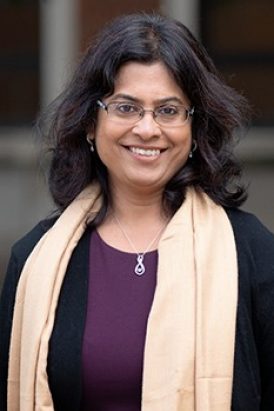
Mousumi Banerjee is the Anant M. Kshirsagar Collegiate Research Professor in the Department of Biostatistics at the University of Michigan School of Public Health. She also holds the position of Research Professor in Global Public Health and serves as Director of Biostatistics for the Pediatric Cardiac Critical Care Consortium (PC4) Analytic Center and Director of Global StatCore. Her affiliations include the Rogel Cancer Center, Institute for Healthcare Policy and Innovation, Center for Global Health Equity, and Michigan Institute for Data Science (MIDAS). Bachelor's & Master's in Statistics from Indian Statistical Institute, Kolkata PhD in Statistics from University of Wisconsin-Madison (1994) Dr. Banerjee develops advanced statistical methodologies for biomedical applications, particularly in cancer and pediatric heart disease. Her research includes predictive modeling, machine learning, causal inference, survival analysis, and correlated data techniques. She focuses on health disparities and equitable care delivery, collaborating across disciplines including neurology, surgery, and social determinants of health. Recent publications demonstrate her expertise in statistical algorithm development for clinical quality assessment, disease classification, and healthcare outcomes. Her work spans applications in bladder cancer detection, thyroid cancer follow-up imaging, HPV-related oropharyngeal carcinoma analysis, and cardiac arrest prevention in pediatric critical care settings. Scientific Awards Fellow of the American Statistical Association Elected member of the International Statistical Institute As Director of Global StatCore, Banerjee enhances biostatistical support for global public health initiatives. She leads major methodological projects for the Pediatric Cardiac Critical Care Consortium (PC4) and works with national datasets like SEER, NCDB, and Medicare claims to analyze healthcare disparities and quality improvement metrics.
Prof. Dr. Steffi Pohl is a Professor of Methods and Evaluation/Quality Assurance at the Department of Methods and Evaluation/Quality Assurance, Faculty of Education and Psychology, Freie Universität Berlin. She holds editorial roles in prominent journals like Psychometrika and Journal of Educational and Behavioral Statistics . Her research focuses on psychometrics, log data analysis, missing data mechanisms, and causal inference in educational assessments. Steffi Pohl's academic journey includes a Diplom in Psychology from Freie Universität Berlin (1998–2004) and a Ph.D. in Psychometrics (2005–2010) from Friedrich-Schiller-Universität Jena. She has held various research positions, including at the National Educational Panel Study (NEPS) and the University of Hertfordshire, UK. Her work emphasizes methodological advancements in testing, missing data, and measurement invariance across populations. Her research interests span psychometric modeling, log data analysis, and addressing challenges in large-scale educational assessments. Key contributions include innovations in response time analysis, disentangling engaged/disengaged test behaviors, and improving cross-cultural comparisons in educational rankings. She has been recognized with the 2020 Early Career Award from the Psychometric Society and the 2011 Gustav A. Lienert Dissertation Prize. In addition to research, Pohl teaches courses on empirical social research methods and multivariate analysis techniques. She actively contributes to university governance as a member of the Academic Senate at Freie Universität Berlin and serves as a trusted advisor for the German National Academic Foundation.
Shuchismita Sarkar is an Assistant Professor in the Department of Applied Statistics and Operations Research at Bowling Green State University (BGSU), housed within the Allen W. and Carol M. Schmidthorst College of Business. Her research primarily focuses on model-based clustering methodologies, including finite mixture models, hidden Markov models, and change point estimation. Prior to academia, she worked in credit risk analytics. Education: Ph.D. in Applied Statistics, University of Alabama, 2019 M.Sc. in Applied Statistics, Western Michigan University, 2008 M.Sc. in Applied Statistics and Informatics, Indian Institute of Technology Bombay, 2002 B.Sc. in Statistics, University of Calcutta, 2000 Research Interests: Her work spans computational statistics, cluster analysis, finite mixture modeling, hidden Markov models, and change point estimation. These techniques are applied to diverse fields such as network analysis, epidemiology, and financial risk assessment. She has developed the R package netClust for network data clustering. Teaching: She teaches graduate and undergraduate courses in Data Mining and Regression Analysis, employing both face-to-face and online modalities. Her teaching excellence was recognized by the Jeff Kurkjian Teaching Award (2018). Awards & Grants: 2020: Classification Society Distinguished Dissertation Award (Honourable Mention) 2018: Summer in Excellence Research Grant ($5,000) 2018: Jeff Kurkjian Teaching Award Software Contributions: Authored the netClust R package for model-based clustering of network data.
Donato Posa is a Full Professor in Statistics at the Department of Economic Sciences, University of Salento. He holds the academic position of Professor Ordinario (Full Professor) in the field of Statistics (SECS-S/01) and is actively engaged in research and academic leadership. His work bridges economics, environmental science, and advanced statistical modeling. University: University of Salento Department: Department of Economic Sciences Academic Rank: Professor Email: donato.posa@unisalento.it Office: Centro Ecotekne Pal. C, S.P. 6, Lecce - Monteroni, LECCE (LE) Phone: +39 0832 29 8737 Donato Posa earned his degree in Physics, cum laude, from the University of Bari with a thesis conducted at CERN, Geneva, and completed a specialization in Physics. His international academic experience includes extended research stays at Stanford University (USA), the University of Arizona, and the University of North Carolina. His research focuses on spatial and spatio-temporal statistics, with major contributions in geostatistics, multivariate geostatistics, stochastic simulation, and time series analysis. He has developed theoretical and applied models for environmental monitoring, pollution assessment, and socioeconomic data analysis. His work has been applied in risk mapping, environmental policy, and urban planning. The 15 most recent articles reflect a consistent trend in spatio-temporal modeling and geostatistical innovation. They span theoretical developments in covariance modeling and variogram analysis to practical applications in environmental monitoring, pollution dispersion, and ecosystem well-being. The research demonstrates a strong interdisciplinary focus, integrating statistical theory with environmental, economic, and computational sciences. His scientific recognition includes multiple CNR and NATO research grants, CERN awards, and an International Diploma of Honour from the American Biographical Institute for contributions to geostatistics. He has served on editorial boards, chaired international conferences (e.g., GeoEnv 2012), and participated in national scientific qualification committees. Posa has supervised numerous research projects funded by CNR, MIUR, Fondazione Caripuglia, and EU programs. He has acted as a scientific referee for leading journals such as Stochastic Environmental Research and Risk Assessment and Computational Statistics and Data Analysis . He has also led educational initiatives in statistical methods and GIS for environmental and cultural heritage applications. He has been actively involved in academic governance, serving as President of the Research Observatory at the University of Salento (2013–2017) and as a member of national evaluation committees. He has chaired international conferences and contributed to major scientific associations including the Bernoulli Society, the International Association for Statistical Computing, and the American Statistical Association.
Paulo M. M. Rodrigues is a Full Professor at the Nova School of Business and Economics, Universidade Nova de Lisboa , and a senior research economist at the Department of Economic Studies, Bank of Portugal , where he has been employed since 2008. He previously served as Associate Professor and held leadership roles including vice-dean and dean at the Faculty of Economics, University of Algarve. Education Agregação, University of Algarve (2015) PhD in Econometrics, University of Manchester (1998) Masters in Economics and Econometrics, University of Manchester (1995) Degree in Business Management, University of Algarve (1993) His primary research interests lie in time-series econometrics, financial econometrics, and empirical macroeconomics and finance . His work emphasizes methodological innovation in nonstationary and seasonal time series, long memory processes, predictive regression, and quantile-based modeling. He has made significant contributions to the development and application of unit root tests, cointegration analysis, and forecasting techniques under structural breaks and heteroskedasticity. The recent trends in his publications show a strong focus on advanced econometric methods, including IVX and residual-augmented approaches for predictive regression, fractional integration in multivariate settings, tail risk modeling in financial markets, and applications in tourism and labor economics. His work frequently appears in top journals such as the Journal of Econometrics , Econometric Theory , and Review of Economics and Statistics . Editorial and Professional Service Serves on the editorial board of several scientific journals. Advising and Grants While specific details on PhD students or grant funding are not provided in the text, his extensive collaborative research—particularly with scholars like Matei Demetrescu, João Nicolau, and A.M. Robert Taylor—indicates a strong record of academic mentorship and collaborative research leadership. His position at the Bank of Portugal also suggests involvement in policy-relevant research projects and potential funding from central bank or national research agencies. Laboratories and Research Teams He is affiliated with the Economics and Research Department at the Bank of Portugal, a leading institution for economic research in Portugal. This affiliation provides a collaborative environment for empirical macroeconomic and financial research with policy implications.
Özgür Aktürk is an Assistant Professor in the Department of Geological Engineering at Akdeniz University, Faculty of Engineering, where he has been serving since 2011. His academic journey began at Ankara University, continued with a master's and doctorate at Middle East Technical University, and includes research experience at the University of Tennessee. He is actively involved in teaching and research in geotechnical and geophysical engineering, with strong industry collaboration through his R&D company. Doctorate: Middle East Technical University, 2010 Undergraduate: Ankara University, 2001 His research interests span Applied Geophysics , Engineering Geology , Electrical Resistivity Imaging , Soil and Rock Mechanics , Seismic Hazard Assessment , and Numerical Modeling . He applies these to practical problems such as tunnel stability, dam safety, karst investigations, and urban infrastructure. His work integrates field geophysics with computational models to assess geotechnical risks. The recent articles reflect a consistent focus on geophysical subsurface characterization, particularly using electrical resistivity methods, and geotechnical stability analysis. Key themes include urban geophysics for subway systems , karst cavity detection , soil liquefaction , and statistical analysis of geological materials . His collaborations with researchers like V. Doyuran, K. Kayabalı, and F. Uçar highlight interdisciplinary and applied research trends. He has supervised multiple master's students on topics related to tunnel deformation, landslide hazards, and geophysical site assessment. Although no formal scientific awards are listed, his extensive publication record and participation in funded projects indicate active research engagement. He is a member of the Engineering Geology Association and the Chamber of Geological Engineers, and has served on thesis juries. Özgür Aktürk has founded JeoTasarım Proje ve Mühendislik under Akdeniz University TEKNOKENT, demonstrating a commitment to applied research and technology transfer. His work bridges academic research and practical engineering solutions, particularly in water resources and geohazard mitigation projects.
Daunis i Estadella, Pepus is an Associate Professor in the Department of Computer Science, Applied Mathematics and Statistics at the University of Girona, where he is also the Vice-Rector for Quality and Transparency since December 2017. He is a core member of the recognized research group GR-EADC (Research Group in Statistics and Compositional Data Analysis), supported by the Catalan government. His research interests include: Compositional Data Analysis Data Fusion Methods Multivariate Statistical Analysis Applications in Medical Imaging, Radiology, and Public Health Statistical Methodology in Geology and Archaeology The recent articles reflect a strong trend in applying advanced statistical techniques—particularly compositional data analysis and data fusion—to interdisciplinary domains such as healthcare, consumer behavior, geosciences, and archaeology. His work emphasizes methodological innovation and real-world application, especially in integrating heterogeneous data sources and improving multivariate analysis in medical and social contexts. Scientific contributions and recognitions include: Active publication in high-impact journals like Computational Statistics & Data Analysis and American Journal of Neuroradiology ORCID: 0000-0001-6134-9255 Researcher ID: B-9082-2011 Scopus Author ID: 14041287900 He has supervised various research projects and played key administrative roles, including former Coordinator of University Access Exams (PAU) and departmental secretary. He has contributed significantly to academic governance and statistical education. His work bridges theoretical statistics with practical applications across health, engineering, and social sciences. He is affiliated with the Grup de Recerca en Estadística i Anàlisi de Dades Composicionals (GR-EADC), a consolidated research team focused on advancing statistical methods for compositional and multivariate data.