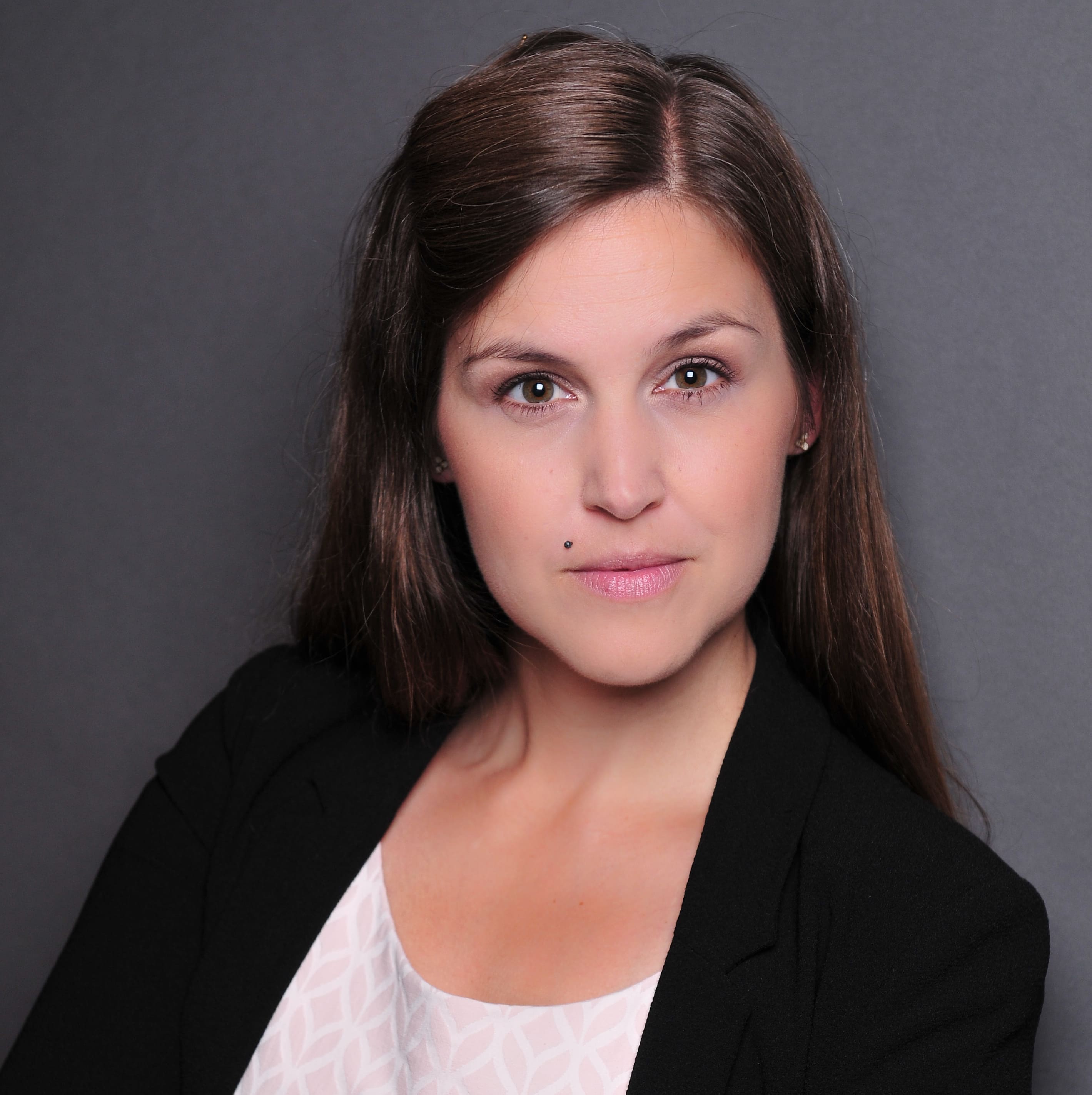
Alireza Habibi is a Researcher at the Chair of Learning Technical Systems within the Faculty of Electrical Engineering and Information Technology at Ruhr University Bochum. His work focuses on applying machine learning to technical systems, spanning robotics, control engineering, and medical technology applications. Contact details: Address: Universitätsstraße 150, D-44801 Bochum, Germany Email: alireza.habibi@rub.de Room: ID 2/415 Research interests include Development of learning algorithms for technical systems Integration of AI in robotics and control systems Applications in medical technology and microsystems
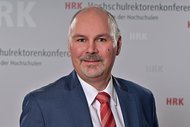
Prof. Dr. Jörg Bagdahn is President of Anhalt University of Applied Sciences (since 2016) and holds a professorship in Materials of Photovoltaics (since 2009). He serves as Spokesperson for the HRK Universities of Applied Sciences Member Group and Vice-President of Saxony-Anhalt State Rectors' Conference. Previously, he held leadership roles at Fraunhofer Society including Director of the Fraunhofer Center for Silicon Photovoltaics (2007-2016) and Department Head at Fraunhofer Institute for Mechanics of Materials. Education: Doctorate in Materials Science, Martin Luther University Halle-Wittenberg (2000) European Welding Engineer certification, Schweißtechnische Lehr- und Versuchsanstalt Halle (1996) Diploma in Materials Science, Chemnitz University of Technology (1995) Research Focus: Specializes in photovoltaic materials, silicon photovoltaics, microsystems technology, and mechanical properties of microcomponents. His work bridges materials engineering with renewable energy applications, particularly in solar technology development and microelectronic systems. Leadership & Teams: Directed Fraunhofer Center for Silicon Photovoltaics (2007-2016) and led research groups focused on microsystem technologies. Currently oversees institutional leadership and strategic development at Anhalt University.
Seth Marder is a Professor of Chemical and Biological Engineering Chemistry at the University of Colorado Boulder and a Senior Research Fellow at the National Renewable Energy Laboratory (NREL). He serves as Director of the Renewable and Sustainable Energy Institute, a joint venture between CU Boulder and NREL. Education: B.S. in Chemistry (MIT), Ph.D. in Chemistry (University of Wisconsin-Madison) His research focuses on designing polymeric, organic, and organometallic materials for nonlinear optical studies , organic electronics (LEDs, photovoltaics, transistors), infrared dyes , and electron transfer molecules . Recent work explores doping mechanisms , chirality transfer , and thermochemical nanolithography . Scientific Awards include: Arthur C. Cope Scholar Award (2011) Distinguished Professor Award (2018) Humboldt Research Award (2018) Mid-Career Award (2015) Outstanding Award in Research Program Development (2009) He is a Fellow of the American Association for the Advancement of Science, Materials Research Society, National Academy of Inventors, and Optical Society of America. His collaborative work spans institutions like Emory University, University of Michigan, and startups such as Arizona Microsystems and LumoFlex LLC.
Wilbur Lam, MD, PhD is a Professor at Emory University School of Medicine and Georgia Institute of Technology , holding the W. Paul Bowers Research Chair in the Wallace H. Coulter Department of Biomedical Engineering . He serves as Associate Dean of Innovation at Emory University School of Medicine, Chief Innovation Officer for Children's Healthcare of Atlanta Pediatric Technology Center, and Inaugural Vice Provost for Entrepreneurship at Emory University. Dr. Lam earned his PhD in Bioengineering from University of California, Berkeley , MD from Baylor College of Medicine , and completed Pediatrics Residency and Pediatric Hematology/Oncology Fellowship at University of California, San Francisco . His research focuses on micro/nanotechnology , microfluidics , and cell mechanics to innovate diagnostics and therapies for hematologic disorders and cancer . Articles span thromboinflammation-on-a-chip , AI-augmented anemia screening , CAR-T cell interactions in multiple myeloma , and complement activation in acute chest syndrome . He has secured multiple NIH grants, including 1R35HL145000-01 for biophysical microtechnologies and U54EB027690 for Atlanta Center for Microsystems Engineered Point-of-Care Technologies (ACME POCT) . National Academy of Medicine Fellow of American Institute for Medical and Biological Engineering Inductee of American Society for Clinical Investigation
Sam Brondfield is a Clinical Associate Professor in the Department of Medicine, Division of Hematology/Oncology at the University of California San Francisco (UCSF). He serves as Chief of the Hospital-Based Oncology group and teaches clinical trainees on inpatient oncology consult services at Moffitt-Long Hospital. Educational Background: Harvard College - A.B. in Biochemical Studies (2008) UCSF - M.D. with distinction in Medicine (2013) UCSF - Residency in Internal Medicine (2016) UCSF - Chief Residency in Internal Medicine (2017) UCSF - Fellowship in Medical Oncology (2019) UC Berkeley - M.A. in Education (2019) Research Focus: Sam's work bridges Medical Education and Clinical Oncology , examining cognitive load in medical trainees, virtual teaching methodologies, and gender-affirming communication practices. His research spans educational theory, clinical skills development, and patient-centered care. Publication Trends: Recent work addresses constructivist educational approaches , cognitive load modeling , gender-inclusive clinical language , and immunotherapy complications , reflecting interdisciplinary interests in medical education, oncology, and healthcare equity. Honors & Awards: Outstanding Resident Teaching Award (2023) Research Paper Award (2022) M. Brownell Anderson Award for New and Emerging Educators (2022) Conquer Cancer Foundation Merit Award (2019, 2016) Accepted into ASCO Education Scholars Program (2018) Multiple teaching excellence awards (2014-2023) Grants: Current funding includes a DOCS Ronald Silvestri Clinical Skills Education Grant for peer teaching studies and multiple UCSF Education Innovations grants exploring transgender medical student experiences, cognitive load theory applications, and inpatient consultation education.
Mariana Medina Sanchez is a leading Researcher at the Institute for Integrative Nanosciences (IIN) under the Leibniz Institute for Solid State and Materials Research Dresden (IFW Dresden). She has served as Group Leader of the Micro- and Nanobiomedical Engineering Group since 2016, following postdoctoral work at IFW-IIN (2014–2016). Her career spans roles at the Catalan Institute of Nanoscience and Nanotechnology (2010–2013) and as a Full-Time Assistant Professor at San Buenaventura University (2005–2009). Her research focuses on biohybrid microrobotics , integrating sperm cells with micro/nanotechnologies for targeted drug delivery and assisted reproduction . She has pioneered innovations in 3D/4D lithography , onboard sensors , and ultrasensitive bioimpedance platforms . Her work has been cited 3046 times with an h-index of 30 . Key publications include breakthroughs in ACS Nano , Nature Nanotechnology , and Advanced Functional Materials . She holds an ERC Starting Grant (2020–present) and has edited special issues on magnetic microrobots and small-scale swimmers . Teaching roles include Lectures on Micro- and Nanobiomedical Engineering at TU Chemnitz (2015–2021). She cofounded the National Nanoscience and Nanotechnology Council of IEEE-Colombia and contributed to 61 journal papers , 8 proceedings , and 55 invited talks globally. Notable awards include the ERC Starting Grant . Her work bridges robotics , materials science , and clinical translation , with emphasis on medical microbots , biohybrid systems , and smart biomedical devices . She actively collaborates across Germany , Spain , and Colombia , advancing ultrasensitive diagnostics and in vivo microrobot applications .
Andreas Winkler is a Researcher at the Leibniz Institute for Solid State and Materials Research Dresden (IFW Dresden) , leading the Acoustic Microsystems group and co-leading SAWLab Saxony . His work focuses on integrating microfluidic, electric, and acoustic components into next-generation Lab-on-a-Chip devices for diagnostic and therapeutic applications. Current position: Research Associate at IFW Dresden Leadership roles: Group leader and SAWLab co-leader Research themes: Acoustic wave interactions with fluids, functional thin films, unconventional lithography His research spans Acoustofluidics , Surface Acoustic Wave (SAW) technology , and microscale material functionalization . Recent work explores SAW-driven aerosol generation , de-icing mechanisms , and biomedical microfabrication . Publications highlight collaborations with international institutions and applications in cell manipulation , plasma activation , and thin film sensors . The 15 most recent articles (2025-2021) demonstrate expertise in acoustic wave actuation , microfluidic integration , and materials optimization . Topics include de-icing , cell sorting , plasma-activated aerosols , and thermomechanical characterization , with applications in biomedical devices , environmental engineering , and advanced manufacturing . Active talks at institutions like Monash University (2024), TU Berlin (2024), and MIT (2017) show ongoing international engagement. Collaborations span Germany , Australia , Spain , and USA -based institutions.
Samuel Sánchez Ordóñez is an ICREA Research Professor and Group Leader at the Institute for Bioengineering of Catalonia (IBEC), with additional roles as Honorary Visiting Professor at HIT Harbin (China) and Adjunct Professor at POSTECH (South Korea). His academic career spans institutions in Germany, Japan, and Spain, including Max Planck Institute for Intelligent Systems and IFW Dresden. His research focuses on self-propelled nanomotors for biomedical applications, 3D bioprinting of biohybrid actuators , and enzyme-powered microsystems . Key areas include antimicrobial resistance, cancer therapy, and biocompatible nanodevices. Recent publications analyze swarm dynamics of enzymatic nanomotors, electrical stimulation in biohybrid machines , and pluronic-assisted bioprinting for muscle tissue engineering. Awards highlight his status as a leading innovator in nanobiotechnology. Scientific Awards & Grants: ERC Consolidator Grant (2019) Bank Sabadell Foundation Award (2025) MIT TR35 Spain (2014) Guinness World Records (2010, 2017)
Larysa Baraban is a Professor and Chair of Medical Nanotechnology at the Faculty of Medicine Carl Gustav Carus (Dresden University of Technology) since May 2024, with a dual affiliation to the Helmholtz-Zentrum Dresden-Rossendorf (HZDR) and Else Kröner Fresenius Center (EKFZ) for Digital Health . She leads the Nano-Microsystems for Life Sciences department at HZDR. Her research focuses on nanoelectronics and microfluidics for cancer immunotherapy and pathogen detection , including development of smart biosensors and nanochips for personalized medicine. Her recent work emphasizes lab-on-a-chip systems , single-cell analysis , and real-time clinical monitoring . Scientific awards include the ERC Consolidator Grant . She leads interdisciplinary projects bridging materials science and clinical oncology , supported by the Helmholtz first-time professorial appointment program for female scientists.
Simone De Carolis serves as an Assistant Professor in the Department of Mechanics, Mathematics & Management at Politecnico di Bari, specializing in Applied Mechanics (ING-IND/13 classification). His institutional email address simone.decarolis@poliba.it confirms his active faculty status within this prominent Italian technical university located in Bari, Italy. Professor De Carolis' research spans multiple domains of mechanical engineering with particular focus on viscoelastic materials behavior, structural dynamics, and advanced modal analysis techniques. His work bridges theoretical modeling with experimental validation across applications including vehicle dynamics, structural health monitoring, and material characterization. His expertise encompasses vibration analysis, crack propagation in viscoelastic solids, and innovative approaches to operational modal analysis that don't require external excitation (no-NExT). Analysis of his publication record from 2020-2025 reveals consistent output with increasing emphasis on computational methods and machine learning applications in mechanical systems. His research demonstrates strong interdisciplinary connections between applied mechanics, materials science, and automotive/aerospace engineering, with particular attention to practical implementation challenges in real-world systems. While specific scientific awards aren't documented in the available information, his publication record in specialized mechanical engineering journals indicates recognition within his research community. His work on R-FRFs (Response-based Frequency Response Functions) and viscoelastic foundation modeling represents notable contributions to structural dynamics methodology. Though specific student advisement information isn't provided in the available materials, his research areas would typically involve graduate students working on thesis projects related to structural health monitoring, vibration analysis, and computational mechanics. His departmental affiliation suggests potential involvement in research grants related to mechanical systems engineering and applied mechanics.
JProf. Dr. Julia von Ditfurth is a Junior Professor for Medieval Image and Cultural Studies at the University of Freiburg and Corpus Vitrearum Medii Aevi. She has been a member of the Medieval Centre of the University of Freiburg's Board of Directors since 2021. Her academic journey includes a 2010 Master's thesis on the Rochus retable in Rostock's St. Mary's Church and a 2015 doctoral dissertation on baroqueization processes in medieval women's convents. 2005-2010: Art History, Medieval/Modern History, Protestant Theology, Kiel 2015-2021: Research Associate, Institute of Art History, Christian-Albrechts-University Kiel Research Interests: Her work focuses on Medieval and Early Modern Art , including the re-semanticization of medieval art, architecture-furnishing interactions, women's convent art, medieval manuscripts, and stained glass. She leads the GlassAge transdisciplinary project (with University of Freiburg's English Department, Institute of Microsystems Technology, and Byzantine Archaeology) and co-founded the Cultures of Use and Reuse international network. Scientific Awards: 2019 Gallitzin Prize for her dissertation 2018 Felix Sümmermann Prize for co-edited volume 2011-2014 Doctoral Scholarship, Evangelisches Studienwerk Villigst Her publications span monographs, edited volumes, and articles on topics like medieval stained glass, manuscript reuse, and baroque transformations. She teaches courses on Gothic architecture, digital humanities, and interdisciplinary object studies.
Peter Schneider is a Professor at Technische Universität Dresden, holding the Professorship for Design Methods for Adaptive Microelectronic Systems. He leads the institute's research on modeling methodology, development tools for learning systems, and optimization methods in system design. His work spans electronic, mechatronic, and 3D-integrated systems. Education: Diploma in Electrical Engineering (specialization: Information Technology), TU Dresden (1988–1993) Doctorate, TU Dresden (2010) Research Focus: Systematic behavioral modeling for electronic/mechatronic systems Design methods and tools for learning systems Optimization techniques in system design Sensors, measurement systems, and 3D-integrated electronics Professional Roles: Head of Fraunhofer IIS/EAS (since 2011) Group Leader and Department Head "Heterogeneous Systems" at Fraunhofer IIS/EAS (2000–2011) Research Associate at Fraunhofer IIS/EAS (1993–2000)
Chris Backhouse is a Professor in the Department of Electrical and Computer Engineering at the University of Waterloo. His research focuses on interdisciplinary engineering fields combining microfabrication, nanotechnology, and biomedical applications. Research interests include: Microelectronics and semiconductor device design Biomedical microdevices for diagnostics and therapy Nanoscale fabrication techniques Integrated circuit development for specialized applications Microsystem technologies
Ragnar Larsson is a Professor in Computational Material Mechanics at Chalmers University of Technology. He leads the Division for Material and Computational Mechanics, focusing on advanced numerical methods for material deformation and failure analysis. His research spans continuum mechanics, computational modeling, and multiscale simulations. Applications in automotive safety, machining processes, and composite material simulation Specialization in localized deformation, crack propagation, and porous material-fluid interaction Developed models for ductile fracture, kink-band formation, and resin flow-deformation coupling in composites His publications demonstrate a consistent focus on computational methods in material failure analysis, with recent work on machine learning applications for machining processes and multiscale modeling of composite materials. Key collaborations include researchers in manufacturing, fracture mechanics, and composite science. Ragnar's work has been published in leading journals like Computer Methods in Applied Mechanics and Engineering , International Journal of Solids and Structures , and Composites Science and Technology , covering applications from microsystem interconnects to large-scale railway simulations.
Dr. Alison M. Cupples is a Professor in the Department of Civil and Environmental Engineering at Michigan State University's College of Engineering. Her research focuses on environmental microbiology and biodegradation of contaminants in soil and water systems. Dr. Cupples' primary research interests include: Biodegradation of organic contaminants Whole genome sequencing applications Microbial ecology in contaminated environments Functional gene analysis for contaminant degradation Molecular methods in environmental microbiology Her work addresses both traditional contaminants (chlorinated solvents, BTEX, MTBE, RDX, 1,4-dioxane) and emerging contaminants (antimicrobials, pharmaceuticals, personal care products) in agricultural soils and water systems. Dr. Cupples teaches multiple courses including ENE 280 - Principles of Environmental Engineering and Science, ENE 487 - Microbiology for Environmental Science and Engineering, and ENE 805 - Contaminated Site Remediation. ENE 280 covers physical, chemical and biological processes related to environmental systems ENE 487 focuses on microbiology applications in environmental engineering ENE 805 provides overview of remediation technologies for contaminated sites She has supervised numerous graduate students and is actively involved in outreach programs including High School Engineering Institute Laboratories, Wireless Integrated MicroSystems for TEENS Program, and Woman in Engineering Summer Program.