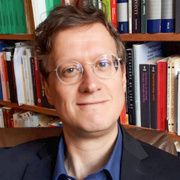
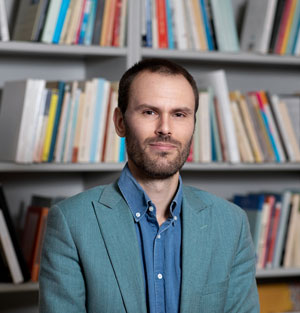
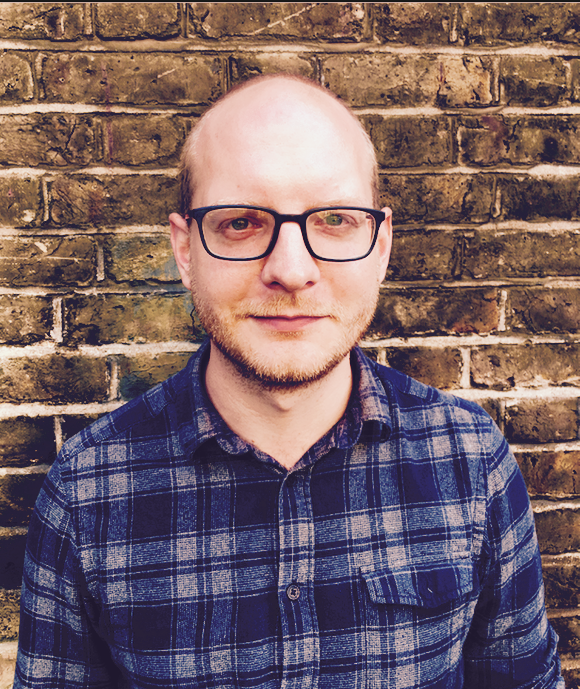
Michael Lucey is the Sidney and Margaret Ancker Chair and Distinguished Professor of French and Comparative Literature at the University of California, Berkeley. His work bridges French literature from the 19th to 21st centuries with social theory, sexuality studies, and linguistic anthropology. He has authored the critically acclaimed What Proust Heard: Novels and the Ethnography of Talk (2022) and Thinking about Sexuality with Novels (forthcoming). As founding director of the Center for the Study of Sexual Culture , he has shaped interdisciplinary research in queer theory and gender studies. Current research focuses on novels as ethnographic tools Specializes in Proust, Balzac, Woolf, and contemporary French fiction Translation work includes Didier Eribon and Édouard Louis His recent articles explore phonetics in narrative, readability frameworks, and sociological implications of literary form. He actively engages with comparative methodologies and critical theory, while his teaching spans British and American literature’s intersections with French modernism. Lucey’s academic leadership includes directing Berkeley’s Center for the Study of Sexual Culture, which supports global discourse through fellowships and conferences. His office hours are held in Dwinelle Hall and via Zoom. Contact: mlucey@berkeley.edu
Prof. Dr. Oliver Müller is a Professor at the Department of Philosophy, University of Freiburg, and serves as Vice Dean of the Faculty of Philosophy. His academic journey includes a doctorate from Humboldt University Berlin (2005) and a habilitation in Philosophy (2012). Müller leads research on Philosophical Anthropology, Philosophy of Technology, and Ethics, with a focus on human-machine interactions and Anthropocene ethics. He supervises doctoral and postdoctoral researchers across projects like livMatS and BrainLinks-BrainTools. Research interests span neuroethics, transhumanism, and socio-technological systems, emphasizing ethical frameworks for emerging technologies. Publications explore AI ethics, drone warfare, and phenomenological embodiment, reflecting interdisciplinary engagement with neuroscience and environmental philosophy. Honors include the MTZ Bioethics Award and Heisenberg Fellowship. Müller directs participatory discourse initiatives bridging art and science, fostering public engagement with technological ethics. His work advances critical dialogues on human enhancement and ecological responsibility in the digital age.
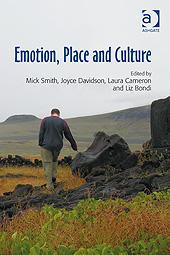
Mick Smith is a Professor and Queen's National Scholar at Queen's University, holding joint appointments in the Department of Philosophy and the School of Environmental Studies within the Faculty of Arts and Science. He earned his Ph.D. in Environmental Values from the University of Stirling (1993), following earlier degrees in Ecology and European Thought. His research integrates environmental ethics, social theory, and phenomenology to explore nature-culture intersections, including emotional geographies, ecological sovereignty, and tourism ethics. Education: Ph.D. (1993): University of Stirling, UK M.Phil (1988): North Staffordshire Polytechnic, UK M.A. (1988): Thames Polytechnic, UK B.Sc. H. (1982): University of York, UK Research Focus: Smith investigates how humans interpret and value environments through hermeneutics, ethics, and emotion. His six key areas include environmental hermeneutics, ethics, social-theoretical frameworks, emotional mediation of environmental responses, political theory, and tourism ethics. Advising & Grants: Supervises graduate students in Philosophy and Environmental Studies. His grants and collaborative projects focus on ecological ethics and sustainability. He co-edits Emotion, Space and Society and contributes to interdisciplinary environmental studies. Affiliations: Founding Editor of Emotion, Space and Society ; contributor to the Center for Humans and Nature.
Dr. Ewan Jones is Associate Professor in Nineteenth-Century Literature at the University of Cambridge's Faculty of English and a Fellow at Downing College, where he serves as Director of Studies for Part II. He completed his BA, MPhil, and PhD at King's College, Cambridge, and was previously Thole Research Fellow at Trinity Hall. His educational background includes comprehensive training in English literature at Cambridge, with specialization in nineteenth-century literary studies. His academic journey reflects deep engagement with both traditional literary scholarship and innovative computational approaches to textual analysis. Dr. Jones's research concentrates on poetics, embodied cognition, and computational approaches to intellectual history. His work fundamentally questions how we understand 'close reading' not as interpretation but as a specific cognitive practice. He explores how aesthetic phenomenology can illuminate historical reading communities, develops pedagogical routines to de-habituate standard attention modes, and seeks constructive engagement between computational analysis and traditional reading practices. His scholarship bridges literary studies with cognitive science, demonstrating how rhythm, attention, and cognition intersect in literary form. His research trajectory shows increasing focus on attentional practices in reading, with recent work examining group attention practices and rhythm in Victorian poetry. The computational dimension of his work has grown steadily, moving from individual textual analysis to large-scale corpus studies through projects like the Concept Lab. Fulbright Scholar Leverhulme Research Fellowship (2021/22) on 'Close Reading as Attentional Practice' Residential fellow at the Swedish Collegium of Advanced Study Visiting fellow at Ludwig Maximilian Universität Visiting fellow at Pomona College Dr. Jones supervises doctoral work on diverse topics including 'radical conservatism' in Victorian poetry, queer theory and historical poetics, Wagner reception in Anglophone poetry, morphogenetic conceptions of form, and metre and exact measurement. His interdisciplinary collaborations include work with Phyllis Weliver on digitizing Tennyson manuscripts and with Peter de Bolla on computational concept analysis projects that have secured significant research funding. He has developed innovative teaching approaches that integrate cognitive science with literary analysis. He co-founded and participates in the Concept Lab, an interdisciplinary project developing open-source computational resources for historical dataset analysis. This initiative has fostered collaborations across humanities and computer science disciplines, creating tools that bridge traditional literary scholarship with digital methods. His work with the Princeton Prosody Archive demonstrates his commitment to building scholarly infrastructure for rhythm and meter studies.
Associate Professor James Andrew Phillips is a faculty member in the Department of Philosophy within the School of Humanities and Languages at the University of New South Wales (UNSW). He has been at UNSW since 2006, initially serving as a Vice-Chancellor's postdoctoral fellow, followed by an ARC Australian Research Fellow from 2007-2011, before assuming his current combined research-teaching position. His educational background includes undergraduate studies at the University of Queensland, an MA in Comparative Literature and Critical Theory from Monash University, and a PhD in Philosophy from the University of Tasmania (2002). During his doctoral studies, he spent time as an OeAD scholar in Innsbruck and a DAAD scholar in Potsdam. He has also been a visiting research fellow at the Institute for Advanced Studies in the Humanities at the University of Edinburgh and a resident associate at the National Humanities Center in North Carolina. Phillips' research focuses on aesthetics, phenomenology, film and philosophy, political theory, literary criticism, and British and Irish literature. His current book project explores the philosophy of fiction, drawing on concepts of 'world' in Kant and Heidegger. He has translated two significant philosophical works: Christoph Menke's Tragic Play: Irony and Theater from Sophocles to Beckett (2009) and Alexander García Düttmann's Philosophy of Exaggeration (2007). His recent publications demonstrate a strong focus on the intersection of philosophy, aesthetics, and cinema, with particular attention to phenomenological approaches to film studies and the political dimensions of aesthetic experience. His work bridges continental philosophy with contemporary cultural analysis, creating connections between historical philosophical traditions and modern artistic practices. Philosophy Group Convenor Research Committee Member - School of Humanities and Languages Phillips currently supervises PhD candidate Finnegan Hassey (on Arendt's concept of nationalism, jointly with Jess Whyte) and MA student Sofia Kartavtseva (on Sade and aesthetics). He teaches political philosophy, aesthetics, and the history of German philosophy, with planned courses for 2025 including ARTS3368 'Modern European Philosophy' and ARTS2384 'Political Philosophy'.
Tom Greaves is an Associate Professor in Philosophy at the University of East Anglia (UEA), affiliated with the School of Politics, Philosophy and Area Studies. He holds a PhD from Warwick University (2007) and has been at UEA since 2008. His research focuses on ecological phenomenology, environmental ethics, and the philosophical engagement with nature, particularly through the lens of thinkers like Heidegger and Collingwood. His work explores how aesthetic, ethical, and historical perspectives shape human-nature relationships. Greaves teaches courses on phenomenology, environmental philosophy, Nietzsche, and the philosophy of art. His recent publications (2023–2025) address topics such as ecological finitude, the role of movement in animal aesthetics, and the rewilding paradigm. He actively participates in academic events, including conferences on environmental humanities and workshops on nature valuation. His research emphasizes the intersection of ecological communities and valuation processes, advocating for an ecologically grounded understanding of value that transcends traditional economic frameworks. Greaves’ academic activities include editorial roles, hosting academic visitors, and examining PhD theses.
Ernest Julius Mitchell serves as Assistant Professor of English and Humanities at Yale University, where he contributes to the Department of English within the Faculty of Arts and Sciences. His interdisciplinary work bridges literature, philosophy, and religion with methodological grounding in Black studies. Education: Ph.D., Harvard University, 2019 M.T.S., Harvard Divinity School, 2009 A.B., Princeton University, 2006 Professor Mitchell's research centers on the intersections of literature, philosophy, and religion, with particular focus on the Harlem Renaissance viewed expansively as integral to transatlantic modernism. His work spans aesthetics and phenomenology in German thinkers from Kant to Benjamin, and religious traditions from the ancient Mediterranean to the contemporary Caribbean. He is currently completing three major book projects: a biography of Jamaican writer Claude McKay for Yale University Press, a new edition of Jean Toomer's Cane for the Norton Library, and a study of theological elements in Zora Neale Hurston's work, all reflecting his interest in questions of literary style—charm, revision, and grace. His scholarly publications demonstrate consistent engagement with African American literary traditions, particularly examining figures from the Harlem Renaissance era. Mitchell's work shows strong interdisciplinary connections between literary analysis, philosophical inquiry, and religious studies, with particular attention to how these fields shape modern consciousness and identity formation within Black literary production. Current Teaching: ENGL 351: Fictions of the Harlem Vogue (HUMS 370 / AFAM 354) ENGL 127: Readings in American Literature HUMS 223: Claude McKay: Interpretations (ENGL 242) DRST 002: Directed Studies: Literature
James MacDowell is an Associate Professor in Film & Television Studies at the University of Warwick, serving as Departmental Examinations Secretary within the Faculty of Arts. His academic work bridges traditional film criticism with contemporary digital media forms, particularly examining aesthetic strategies across mainstream Hollywood cinema, independent American film, and YouTube culture. His research interests encompass film aesthetics, irony in cinema, Hollywood narrative conventions, audiovisual essays, and the philosophical dimensions of film interpretation. MacDowell approaches these topics through the lens of philosophical aesthetics, emphasizing the interdependence of style and meaning in visual storytelling. His scholarly output reveals a significant trend toward analyzing digital media forms, particularly YouTube, while maintaining deep engagement with Hollywood traditions. Recent work demonstrates growing interest in autofiction, queer theory applications to film interpretation, and the aesthetics of 'so bad it's good' cinema, showing how his research has evolved from traditional film analysis to incorporate contemporary digital culture. As co-director of Warwick's Centre for Research in Philosophy, Literature and the Arts (CRPLA), MacDowell contributes to interdisciplinary scholarship while maintaining active membership in professional organizations including BAFTSS and SCMS. His supervisory work with PhD candidates Danielle Childs and Henrique Bolzan Quaioti reflects his ongoing commitment to mentoring emerging scholars in film studies.
Steven Rings serves as Associate Professor in the Department of Music and Director of Professional Development at the University of Chicago. His scholarship centers on popular music analysis, vocal studies, and transformational theory frameworks, with significant contributions to understanding Bob Dylan's work and Black experimental music traditions. Education: PhD in Music, Yale University (2006) Rings' research explores the intersection of musical cognition, cultural context, and performance practice. His work bridges theoretical musicology with vernacular traditions, examining vocal expression across genres from Dylan's protest songs to Albert Ayler's free jazz. Current projects investigate tonal hearing models and the relationship between song structures and recorded performances. His publications reveal consistent focus on analytical frameworks for popular music, particularly transformational approaches to vocal delivery and historical performance practices. Rings frequently connects technical music theory with broader cultural narratives, especially regarding racial identity in experimental music. Scientific Awards: 2014 Outstanding Publication Award (SMT Popular Music Interest Group) Society for Music Theory Award for 'Tonality and Transformation' Society for Music Theory Award for 'Oxford Handbook of Critical Concepts in Music Theory' Rings secured Mellon Foundation funding for a collaborative project with Wilco drummer Glenn Kotche, reimagining musical categories of voice and groove. He chairs the University of Chicago Society of Fellows and co-founded City Elementary, a therapeutic school in Hyde Park. His teaching spans undergraduate theory courses, graduate seminars on Black experimental music, and College Core musical interpretation classes. Additional roles include series editor for Oxford Studies in Music Theory and former Professor of Guitar at Portugal's Conservatório Regional de Angra do Heroísmo, where he performed extensively as a classical guitarist prior to his music theory career.
Prof Paul Standish serves as Chair of Philosophy of Education at the UCL Institute of Education, University College London, where he is affiliated with the Education, Practice & Society department. He concurrently holds the position of Visiting Research Scholar and Distinguished Visiting Professor at Kyoto University since April 2015 with an indefinite tenure through January 2100. His research spans multiple interconnected domains including: Philosophy of Education as foundational to understanding knowledge transmission History and Philosophy of Education examining conceptual evolution Applied Ethics in educational contexts addressing moral dilemmas Literary Studies intersecting with pedagogical theory Education Policy, Sociology, and Philosophy analyzing institutional frameworks Analysis of his recent publications reveals a sustained engagement with Wittgensteinian philosophy, language theory, and educational ethics. His work demonstrates consistent exploration of knowledge forms, cultural transmission, and responses to global crises through philosophical lenses. The research trajectory shows deepening focus on planetary crisis responses, testimony ethics, and cross-cultural educational dialogue since 2020. His academic leadership extends through editorial roles and international collaborations, particularly with East Asian philosophical traditions as evidenced by translations of his work in Korean academic circles.
Irene McMullin is a Professor at the University of Essex within the School of Philosophical, Historical, and Interdisciplinary Studies, affiliated with the Department of Philosophy. She joined the university in 2013 after postdoctoral work at Bergische Universität Wuppertal and six years teaching at the University of Arkansas. Her academic background includes a PhD from Rice University, an MA from the University of Toronto, and a BA Hons from St. Francis Xavier University. Her research examines questions of personhood, agency, and self-becoming, particularly emphasizing the role of others in these processes. Drawing from both Continental and Analytic traditions, McMullin explores: Existentialism and Phenomenology Virtue ethics and Kantian ethics Moral psychology and social relations Current investigations focus on the phenomenology of ideality and how encounters with 'the good' shape practical agency. Her publications demonstrate sustained engagement with themes of moral deliberation, trust, and rationality across philosophers including Heidegger, Kant, and Løgstrup. Analysis reveals consistent interdisciplinary bridges between ethics, phenomenology, and social theory, with recent work increasingly addressing normative foundations of shared human experience.
Susan Scott is a Professor of Management and Artificial Intelligence at Imperial College London, holding a joint appointment with the Imperial College Business School and IX, the university’s AI initiative. She previously held academic roles at the London School of Economics and Political Science (LSE), including Professor of Information Systems and Innovation and Faculty Group Lead in the Department of Management. Her research spans Information Systems, Organization Theory, and Technology Management, with a focus on sociomateriality, digital transformation, and ethical innovation. Scott earned a PhD in Management (Information Systems) from the University of Cambridge, an MSc in Information Systems from LSE, and a BA in History and Politics from SOAS, University of London. Her work bridges theoretical and applied domains, addressing challenges in digital accountability, institutional displacement, and the societal impacts of emerging technologies. She has contributed to major initiatives like the SWIFT financial network analysis and explored ethical dimensions of AI and big tech. Her articles critically examine topics such as crowd-based accountability, digital undertows in industry standards, and the material-discursive practices shaping organizational practices. Though no awards are listed, her extensive publications reflect a commitment to rigorous qualitative and mixed-methods research, emphasizing phenomenon-focused theorizing in Information Systems. Scott’s research agenda integrates academic and practical insights, addressing future challenges like AI governance, digital responsibility, and the sociotechnical reconfigurations reshaping institutions and industries.
Grey Nelei, PhD, is a Licensed Professional Clinical Counselor and Teaching Faculty member at Antioch University's Clinical Mental Health Counseling program. They hold a PhD in Counselor Education and Supervision (2023) and specialize in queer theory, narrative therapy, and social justice advocacy within counseling practices. Doctor of Philosophy, Counselor Education and Supervision, Adams State University, 2023 Master of Science, Clinical Mental Health Counseling, Northern Kentucky University, 2015 Bachelor of Arts, Psychology (Minor in Sociology & Certificate in Diversity Studies), University of Cincinnati, 2012 Their research focuses on queer and trans counselor experiences, multicultural counseling, and supervision practices. Publications and presentations emphasize systemic inequities, identity exploration, and burnout prevention in counseling. Grey serves as President-Elect of SAIGE of Ohio and has held leadership roles in multicultural counseling organizations. Their teaching philosophy prioritizes ethical practice, cultural humility, and critical analysis of dominant narratives.
Alva Noë is a Professor of Philosophy at the University of California, Berkeley. His research bridges the philosophy of mind, cognitive science, and aesthetics, emphasizing the embodied and interactive nature of perception and consciousness. B.A., Columbia B.Phil., Oxford Ph.D., Harvard His work explores the interplay between art, philosophy, and human cognition, arguing that consciousness is not confined to the brain but arises from bodily and environmental engagement. Recent projects include studies on love, AI, and pictoriality. Alva's publications span interdisciplinary themes, integrating philosophy with cognitive science and art theory. Notable works include The Entanglement (2023), which examines how art and philosophy shape human identity, and Action in Perception (2004), a foundational text on embodied cognition. No scientific awards or patents are explicitly mentioned in the provided text.
Angelos Mouzakitis serves as Assistant Professor in the Department of Sociology at the University of Crete's School of Social Sciences. His academic career spans multiple Greek institutions including the University of Macedonia in Thessaloniki and the University of Patras, alongside international appointments at the Alpen-Adria Universität Klagenfurt in Austria and fellowships at the European University Institute in Florence. His educational background includes: PhD in Sociology from the University of Warwick (2002) MA in Philosophy and Social Theory (with Distinction) from the University of Warwick (1997) Degree in Sociology from Panteion University, Athens, Greece (1996) Mouzakitis specializes in social theory with particular emphasis on social ontology, social change, and the constitution of the 'subject.' His research deeply engages with phenomenology and hermeneutics as approaches to understanding social sciences epistemology, with significant contributions to Castoriadis scholarship. His work explores how historical consciousness shapes social institutions and examines the philosophical foundations of social autonomy. He has developed particular expertise in the works of Heidegger, Gadamer, and Ricoeur, analyzing their relevance for contemporary social theory. His recent publications reveal a sustained engagement with political imaginaries, the concept of progress in modernity, and the philosophical underpinnings of social autonomy. Working across multiple languages (Greek, English, French, German, and Italian), his scholarship bridges continental philosophy with sociological theory, particularly examining how historical consciousness shapes social institutions. His work consistently explores the tension between tradition and innovation in social thought, with special attention to how philosophical concepts illuminate contemporary social challenges. Associate Editor, Frontiers in Sociology, Section Sociological Theory Member of the Editorial Review Board of the "Social Imaginaries" series by Rowman & Littlefield Member of the Hellenic Sociological Association Member of the European Sociological Association Member of the Scientific Committee of CERAP (Centre d'étude et de recherche appliqué en Psychopédagogie perceptive) As an educator, Mouzakitis has supervised numerous graduate students and contributed to sociological theory curricula across multiple institutions. His international academic experience, including his prestigious Jean Monnet Fellowship, has informed his comparative approach to sociological inquiry. His teaching spans undergraduate and graduate levels, with courses on social theory, philosophy of social sciences, and specialized topics related to his research interests in phenomenology and hermeneutics.