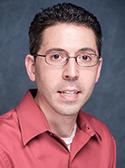
Christian Wolf is a Professor of Mathematics at The City College of New York (CCNY) and a member of the doctoral faculty at the CUNY Graduate Center. He serves as the Executive Officer of the Ph.D. program in Mathematics at the Graduate Center. Wolf’s research spans the fields of ergodic theory, dynamical systems, thermodynamic formalism, computability theory, and applications to mathematical biology. Research Trends: His publications highlight intersections between dynamical systems and computability, with a focus on topological pressure, rotation sets, entropy, zero-temperature measures, and geometric properties of symbolic and smooth systems. Topics include phase transitions, localized equilibrium states, and algorithmic analysis of dynamical invariants. Scientific Awards: Simons Foundation Collaboration Grant for Mathematicians #637594 Grants and Advising: Wolf’s research on computability in dynamics and thermodynamic formalism has been supported by the Simons Foundation. He mentors students in research and independent study projects at CCNY and the Graduate Center.
Tobias Andermann serves as an Assistant Professor at Uppsala University's Department of Organismal Biology, specializing in Systematic Biology. He leads the Biodiversity Data Lab, an interdisciplinary research group combining ecology, molecular biology, geomatics, and machine learning to address the biodiversity crisis through innovative computational approaches. His research focuses on quantifying biodiversity loss using AI-driven analysis of environmental DNA, remote sensing data, and fossil records. Key interests include modeling extinction rates across geological timescales, developing standardized biodiversity assessment methods, and predicting species distribution changes under anthropogenic pressures. His work demonstrates current extinction rates are 2000-10,000 times higher than natural background levels, comparable to historical mass extinction events. Methodologically, Andermann integrates machine learning with large-scale environmental DNA datasets and high-resolution remote sensing to develop predictive models of biodiversity distribution. His lab pioneers field sampling protocols for environmental DNA collection and AI frameworks that translate remote sensing data into biodiversity metrics for unsurveyed sites. The Biodiversity Data Lab maintains a dynamic, non-hierarchical research environment focused on high-impact solutions to the biodiversity crisis. Current projects include developing environmental DNA protocols for fungi and insects, analyzing land-use impacts on species communities, and creating neural network models for cross-scale biodiversity forecasting. The lab emphasizes practical applications for conservation policy, notably supporting the UN's 30% protected area target established at COP15.
Brian Weeks is an Associate Professor in the School for Environment and Sustainability at the University of Michigan, where he joined as an Assistant Professor in 2019. His research focuses on understanding how species and communities respond to human-induced environmental changes, with particular emphasis on avian systems. Weeks leads an active research group that integrates museum specimen-based work, genomics, and field studies to investigate biodiversity responses to global change. Weeks' research interests span evolutionary ecology, climate change biology, and biodiversity conservation. His work primarily examines how bird species and communities have responded to environmental change through morphological adaptations. He combines museum-, field-, and lab-based approaches to study evolutionary processes across multiple scales, from macroevolutionary patterns in the Solomon Islands to contemporary changes in North American migratory birds. His lab has developed innovative methods like Skelevision for high-throughput measurement of functional traits from museum skeletal specimens. His publication record shows a strong focus on climate-driven morphological changes in birds, with recent work demonstrating how warming temperatures drive size reductions while simultaneously increasing wing length. His research has revealed that smaller-bodied species change at faster rates, and that migration timing shifts are decoupled from morphological changes. Weeks' lab also investigates biodiversity-ecosystem functioning relationships and extinction risk prediction. Packard Fellowship in Science and Engineering (2022) Ecological Society of America's George Mercer Award (2022) Katma Award, American Ornithological Society ISI Highly Cited paper (2021) Weeks advises multiple PhD and Master's students, and his lab collaborates extensively with researchers across institutions. His work has received significant media attention, with coverage in Science, The Wall Street Journal, The Washington Post, BBC News, and numerous international outlets. His research on birds shrinking due to climate change achieved an Altmetric score higher than 99.98% of papers tracked, reflecting its substantial scientific and public impact.
Dirk Thierens is an Associate Professor in the Department of Computer Science at Utrecht University's Faculty of Science, specializing in Intelligent Systems within AI & Data Science. His academic career spans over 25 years, with continuous publications from 1996 through 2025, demonstrating sustained research activity and leadership in his field. He maintains an active research program with numerous collaborations, most notably with Peter A.N. Bosman, indicating a long-standing productive research partnership. Thierens' research focuses on evolutionary computation, particularly model-based evolutionary algorithms, genetic algorithms, and optimization techniques. His work has evolved from foundational genetic algorithm research in the late 1990s and early 2000s to more specialized model-based approaches in recent years, including significant contributions to Gene-pool Optimal Mixing Evolutionary Algorithms (GOMEA). His expertise spans single-objective and multi-objective optimization, permutation problems, mixed-integer problems, and real-valued optimization. In recent years, his research has expanded into applications in machine learning, particularly semi-supervised learning and neural network optimization. His publication record shows a consistent output of high-quality research, with numerous papers in top conferences like GECCO and journals in evolutionary computation. His most recent work (2023-2025) demonstrates continued innovation in synthetic data generation, neural network combination techniques, and parameterless evolutionary algorithms. The breadth of his work spans theoretical algorithm development, benchmarking methodologies, and practical applications in healthcare and other domains. While no specific scientific awards are mentioned in the available information, his extensive publication record, tutorial contributions at major conferences, and sustained research productivity over multiple decades indicate recognition within the evolutionary computation community. His tutorial work at GECCO conferences suggests he is considered an authority on model-based evolutionary algorithms. Thierens maintains an active research laboratory focused on evolutionary algorithms and their applications, with recent work exploring the intersection of evolutionary computation and deep learning. His research continues to advance both theoretical understanding and practical applications of optimization techniques in complex problem domains.
Sarah Cobey is a Professor in the Department of Ecology and Evolution at the University of Chicago. Her research focuses on the coevolution of pathogens and host immunity , particularly influenza , using computational and mathematical models . Education: AB from Princeton (2002), PhD from University of Michigan (2009), Postdoc at Harvard School of Public Health (2013) Research Interests : The Cobey Lab studies adaptive immunity dynamics , including antibody repertoire evolution , vaccine effectiveness , and immune-mediated pathogen competition . Key areas include influenza evolution , vaccination strategies , and B cell response predictability . Publication Trends (2023–2025): Recent work examines longitudinal immune modeling , influenza antigenic diversity , and cross-reactive antibody dynamics . Collaborations span immunology , virology , and public health . Scientific Awards : NIH New Innovator Award (2014) James S. McDonnell Scholar (2014) Neubauer Fellowship (2016) NSF GRF (2005) Grants : Past and current NIH funding includes U01AI187063 (2025–2029) on Adaptive Immunity to Influenza and R01AI170116 (2022–2027) on Influenza Vaccine Response Variability . Labs & Collaborations : Leader of the Cobey Lab , with collaborations at Harvard, NIH, and WHO. Projects often involve multi-scale modeling linking individual immune responses to population-level viral evolution .
Dr. Aydan Bulut-Karslıoğlu is a Research Group Leader at the Max Planck Institute for Molecular Genetics in Berlin, where she leads the Bulut-Karslıoğlu Lab focused on gene-environment interactions in stem cells and development. Her work has significantly advanced our understanding of embryonic diapause and stem cell state transitions. Dr. Bulut-Karslıoğlu's educational background includes: B.Sc. in Chemical Engineering (major) and Biology (minor) from Middle East Technical University, Ankara, Turkey (2006) M.Sc. in Molecular Biology and Genetics from Bilkent University, Ankara, Turkey (2008) Ph.D. from Max Planck Institute of Immunobiology and Epigenetics, Freiburg, Germany (2013) Her research focuses on mechanisms regulating stem cell state transitions and fate commitment, particularly how cells communicate signals from their surroundings to the gene expression machinery. She has pioneered work on mammalian embryonic diapause - a reversible dormant state that gives embryos extra time to develop. Her lab uses a combination of functional perturbation methods in stem cells and early mouse embryos with omics, imaging, and biochemistry to reveal how genetic networks adjust to the status of the embryo. Analysis of her recent publications reveals a strong focus on the epigenetic and metabolic regulation of embryonic diapause, with particular emphasis on mTOR signaling, lipid metabolism, and DNA methylation dynamics. Her work bridges developmental biology, stem cell research, and metabolism, demonstrating how environmental cues like oxygen levels and nutrient availability influence developmental timing and cell fate decisions. Her notable scientific achievements include: Sofja Kovalevskaja Award (2018) ERC Starting Grant (2023) ERC Proof of Concept Grant (2025) GSCN Young Investigator Award (2025) Dr. Bulut-Karslıoğlu actively mentors the next generation of scientists, currently supervising multiple PhD students including Persia Akbari-Omgba, Anastasios Balaskas, Heleen Mallie, and Gunwant Patil. Her lab has received substantial funding through prestigious grants, including the Sofja Kovalevskaja Award, ERC Starting Grant, and ERC Proof of Concept Grant, enabling her team to pursue innovative research at the intersection of developmental biology and metabolism. The Bulut-Karslıoğlu Lab maintains a vibrant research environment with both computational and experimental scientists working together to unravel the mysteries of embryonic diapause and stem cell regulation. The lab actively participates in the International Max Planck Research School for Biology And Computation (IMPRS-BAC), contributing to the training of doctoral candidates at the interface of molecular life sciences and computational sciences.
Robert Laubacher is a Research Fellow at the MIT Center for Collective Intelligence within the Sloan School of Management , focusing on how technological innovations like generative AI and large language models are reshaping organizational practices, work structures, and social patterns. Education: B.A. in American Studies, Northwestern University M.A., Doctoral Coursework in Modern History, Harvard University His research explores: Developing ontologies for work activities inspired by biological taxonomy Enhancing human creativity through AI collaboration frameworks Building collective intelligence systems for global challenges like climate change and sustainable development Identifying foundational elements of collective intelligence Historical analysis of IT's impact on employment relationships Recent publications focus on human-AI co-creation , crowdsourced problem-solving , and organizational adaptation to digital transformation. His work has been featured in Harvard Business Review , Sloan Management Review , and ACM conference proceedings.
Dr. Sarah Wolf serves as Head of the Junior Research Group 'Mathematics for Sustainability Transitions' at Free University of Berlin's Department of Mathematics and Computer Science and as a Senior Researcher and Board Member at the Global Climate Forum (GCF). Her dual affiliation bridges rigorous mathematical modeling with real-world sustainability policy, focusing on complex socio-ecological systems through an interdisciplinary lens since joining GCF's Green Growth initiative in 2012. Wolf earned her PhD in Mathematics from Freie Universität Berlin in 2010 with the thesis 'From Vulnerability Formalization to Finitely Additive Probability Monads,' developed during interdisciplinary work at the Potsdam Institute for Climate Impact Research. Her academic foundation combines pure mathematics with applied climate impact research, establishing her unique approach to formalizing sustainability concepts. Her research centers on agent-based modeling of socio-technical systems, with core expertise in sustainability transitions , green growth mechanics , and sustainable mobility . She develops mathematical frameworks to clarify vulnerability concepts while embedding simulations in stakeholder dialogues through innovations like the 'Decision Theatre Triangle.' This work uniquely positions mathematics as both analytical tool and communication medium for climate policy. Analysis of her 15 most recent publications reveals an evolutionary trajectory from foundational vulnerability formalization (2009-2012) toward applied stakeholder-integrated modeling (2021-2023). Her work consistently bridges mathematical rigor with policy relevance, showing increasing emphasis on participatory approaches while maintaining computational sophistication in agent-based systems. No scientific awards are documented in the source material, though her leadership in the MATH+ junior research group indicates competitive funding attainment. As group head, she directs research strategy and likely mentors junior researchers, though no formal student advisees are listed. Wolf leads the 'Mathematics for Sustainability Transitions' junior research group within FU Berlin's Biocomputing Group, collaborating with institutions like the Potsdam Institute. Her team develops computational frameworks for green growth transitions, emphasizing stakeholder co-creation through platforms like the Decision Theatre while maintaining strong ties to GCF's global policy networks.
Kate Ritterbush is an Associate Professor in the Department of Geology & Geophysics at the University of Utah, where she has been a faculty member since July 2015. She was promoted to Associate Professor in July 2022 after serving as an Assistant Professor from 2015-2022. Her research focuses on marine ecological transitions across geological time scales, with particular emphasis on the fossil record of mass extinctions and animal-environment interactions. Dr. Ritterbush earned her BS in Environmental Science from California Lutheran University in 2006, followed by a PhD in Earth Sciences from the University of Southern California (2008-2013) under the supervision of David Bottjer. She completed a NASA postdoctoral research position at the University of Chicago working with Michael Foote and Arnie Miller before joining the University of Utah faculty. Her research interests span multiple areas of paleontology and earth sciences: Marine ecological transitions over large spatial and temporal scales Role of marine invertebrates in habitat development and marine chemistry Sedimentary and fossil record of mass extinctions Critical transitions in biogeography Small scale animal-environment interactions Dr. Ritterbush's recent publications demonstrate expertise in cephalopod paleobiology, particularly ammonoids, with applications to understanding hydrodynamics, buoyancy control, and evolutionary responses to mass extinction events. Her work often combines computational modeling with traditional paleontological analysis to reconstruct the life habits of extinct organisms. She has received significant research funding, including an ongoing NSF grant titled "Fossil Ammonoids Reveal Open Ocean Ecology in Deep Time" (2020-2026) and a previous American Chemical Society grant on "Permian Spiculites" (2016-2019). Her scientific contributions have been recognized through numerous publications in high-impact journals such as Nature Communications, Scientific Reports, Paleobiology, and Palaeontology. Dr. Ritterbush is actively involved in mentoring students and has led numerous field programs. She teaches courses including "Evolving Earth" and "Wasatch in the Field," and has organized research experiences for undergraduates focused on ammonite motility modeling.
Daniel Baum is a Research Professor and Head of the Visual Data Analysis research group at the Zuse Institute Berlin (ZIB), which is affiliated with Freie Universität Berlin. His work spans across scientific visualization, computational biology, and image analysis, with a particular focus on developing methods for analyzing complex biological structures and neural circuits. He is actively involved in multiple interdisciplinary research projects including HFSP Chitons, Geometric Learning for Single-Cell RNA Velocity Modeling, and RobustCircuit. Dr. Baum's research interests center on visual and data-centric computing approaches to solve complex problems in biology and medicine. His work bridges the gap between computational methods and biological applications, with significant contributions to cryo-electron tomography analysis, neural circuit mapping, and geometric morphometrics. He develops innovative algorithms for 3D reconstruction, image segmentation, and visualization of biological structures, from molecular to organismal scales. His publication record demonstrates consistent contributions to visualization techniques applied to biological problems, with recent work focusing on neural circuit analysis in zebrafish and Drosophila, biomechanical studies of animal structures, and advanced methods for analyzing ancient artifacts. The research shows a clear trajectory toward increasingly sophisticated multimodal data integration and machine learning approaches. Dr. Baum leads a productive research group with several key collaborators who frequently appear as co-authors on his publications, indicating a strong mentoring relationship. His projects involve substantial funding from various sources supporting interdisciplinary collaborations across biology, computer science, and engineering. His laboratory at ZIB focuses on visual data analysis for complex biological systems, with particular strength in developing computational methods for neuroscience applications and biomaterial analysis. The group maintains strong collaborations with multiple institutions working on cutting-edge imaging technologies and biological model systems.
Dr. Denis Jacob Machado is an Assistant Professor in the Department of Bioinformatics and Genomics at UNC Charlotte and a key member of the CIPHER Center. Starting in August 2022, he established the Phyloinformatics Lab, focusing on computational intelligence and phylogenetics to address challenges in One Health through multi-omics integration. Research areas: Pathogen evolution, zoonotic disease risks, and biorepository data solutions Labs: Phyloinformatics Lab (CIPHER Center) His work intersects computational biology, evolutionary frameworks, and public health, with additional service roles in campus safety (Green Dot strategy) and diversity advocacy as part of UNC Charlotte’s Latinx/Hispanic Faculty and Staff Caucus. Awards: Willi Hennig Society Fellow (2024)
Paul Johnson, Ph.D. is a Professor in the Biology Department at the University of North Georgia, specifically within the College of Health and Natural Sciences. He maintains an office in the Health and Natural Sciences building, room 435, in Dahlonega. Dr. Johnson teaches several courses including Microbiology for Allied Health Professions, Genetics, Food Microbiology (Study Abroad), Environmental Microbiology, and General Microbiology. Dr. Johnson earned his Ph.D. in Microbiology and Molecular Genetics from Emory University in 2010 and his B.S. in Biology from North Georgia College & State University in 2002. Following his doctoral studies, he completed a Postdoctoral Fellowship at Emory University from 2010-2012. Dr. Johnson's research focuses on understanding bacterial mechanisms for evading antimicrobial agents, specifically differentiating between antibiotic resistance (heritable genetic mechanisms) and antibiotic tolerance/persistence (survival of genetically identical subpopulations). His work primarily utilizes two model organisms: N. gonorrhoeae and S. aureus . This research has important implications for developing more effective antimicrobial therapies and understanding treatment failures. Dr. Johnson has made significant contributions to understanding efflux pumps, gene regulation in pathogenic bacteria, and the molecular mechanisms underlying antibiotic resistance. Analysis of Dr. Johnson's publication record reveals a consistent focus on antimicrobial resistance mechanisms, particularly in Neisseria gonorrhoeae and Staphylococcus aureus . His work spans molecular genetics, bacterial physiology, and the clinical implications of resistance mechanisms. Over time, his research has expanded from basic mechanisms of efflux pumps to broader questions about bacterial persistence and the evolutionary dynamics of resistance development. The interdisciplinary nature of his work connects microbiology, molecular genetics, and clinical medicine. Dr. Johnson serves as an advisor for Biology and Pre-Medicine students at UNG. His expertise in microbiology and antimicrobial resistance informs both his research and teaching, creating a strong connection between his scholarly work and classroom instruction. While specific grant information isn't provided in the available materials, his productive publication record suggests successful research funding. Based on his research focus on N. gonorrhoeae and S. aureus , Dr. Johnson likely maintains laboratory facilities for bacterial culture, genetic manipulation, and antimicrobial susceptibility testing. His work on microbial population dynamics suggests sophisticated experimental approaches to studying bacterial communities and their responses to antimicrobial challenges.
Maryam Imani is an Associate Professor of Water Systems Engineering at Anglia Ruskin University's School of Engineering and the Built Environment. As a Chartered Civil Engineer (CEng) and Fellow of the Higher Education Academy (FHEA), she specializes in water infrastructure resilience, sustainable drainage systems (SuDS), and computational modeling techniques. BEng (Hons) Civil Engineering, 2001 MEng Water Systems Engineering, 2006 PhD Water Systems Engineering, University of Exeter, 2012 PG Cert in Learning and Teaching in Higher Education, Anglia Ruskin University, 2016 Her research focuses on resilience modeling for water infrastructure, machine learning applications in water systems, and climate adaptation strategies . She leads projects addressing urban wastewater resilience, SuDS implementation in developing countries, and interdependent infrastructure systems. Maryam's work demonstrates a strong emphasis on multi-objective optimization and decision support systems for sustainable water management. Her recent publications explore challenges in Brazil, India, and the UK, integrating climate projections with urban planning. Exeter Research Scholarship (ERS) Fellow of the Higher Education Academy (FHEA) She contributes to major projects like Safe&SuRe water management and RESoURce@Brandia , securing grants from UKRI-GCRF, NERC, and EPSRC. Maryam collaborates with institutions across the UK, Brazil, and the US, including the University of Utah.
Raul Giraldez Rojo is a Professor at the University of Pablo de Olavide in Seville, Spain, working in the Department of Sports and Information Technology within the area of Computer Languages and Systems. He is affiliated with the DASE (Data Analytics Science & Engineering) research group and contributes to PhD programs in Engineering, Data Science, and Bioinformatics. His research interests focus on computer science with specialization in machine learning, evolutionary algorithms, and data analytics. Dr. Giraldez Rojo has made significant contributions to supervised learning techniques, clustering algorithms, and genetic programming applications. His work bridges theoretical computer science with practical applications in bioinformatics and data mining. His publication record demonstrates expertise in developing algorithms for data analysis, particularly in biclustering methods for expression data and supervised clustering techniques. His research shows a consistent focus on improving efficiency and effectiveness of computational methods for handling complex datasets. Dr. Giraldez Rojo collaborates extensively with researchers including Jesús Salvador Aguilar-Ruiz and José Cristobal Riquelme Santos, indicating strong research partnerships within the Spanish academic community specializing in computational intelligence.
Domingo Savio Rodríguez Baena is a Professor at Pablo de Olavide University, affiliated with the Department of Computer Languages and Systems. His research focuses on data mining, bioinformatics, and computational biology, with a particular emphasis on biclustering algorithms, gene co-expression networks, and high-performance computing applications. PhD in Engineering, Data Science, and Bioinformatics (2012) from Pablo de Olavide University His work spans interdisciplinary domains, including recommender systems , livestock behavior analysis , and biological data interpretation . Recent articles highlight his contributions to multi-GPU optimization , ensemble learning , and historical database construction . Key collaborations include the DATAi Intelligent Data Analysis and DASE Data Analytics Science & Engineering research groups. He has developed tools like the CyEnGNet–App for gene network visualization and BIGO for gene enrichment analysis. Contact: dsrodbae@upo.es