معرفی
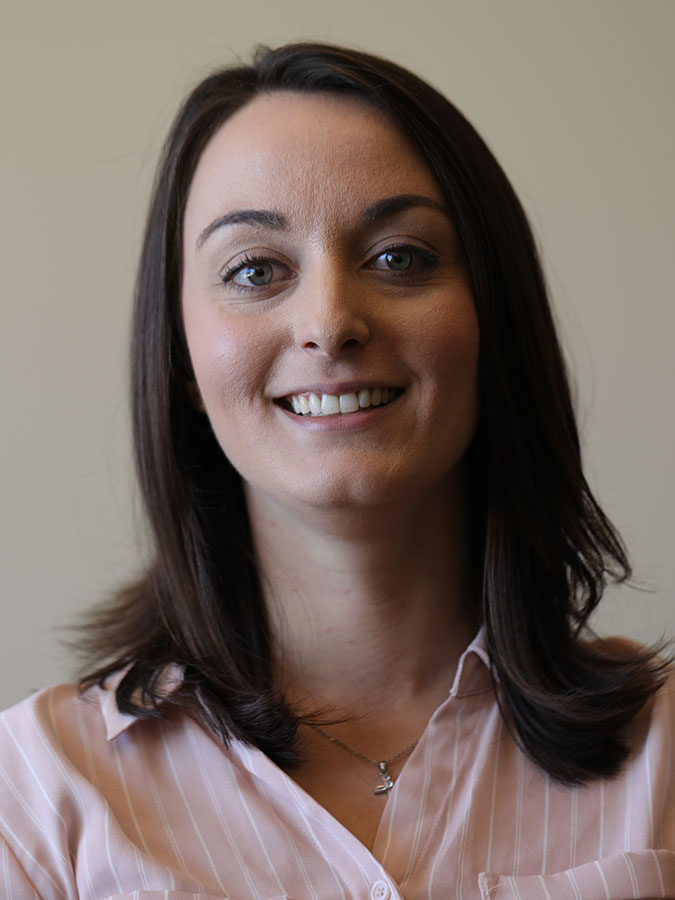
Kate Ritterbush is an Associate Professor in the Department of Geology & Geophysics at the University of Utah, where she has been a faculty member since July 2015. She was promoted to Associate Professor in July 2022 after serving as an Assistant Professor from 2015-2022. Her research focuses on marine ecological transitions across geological time scales, with particular emphasis on the fossil record of mass extinctions and animal-environment interactions.
Dr. Ritterbush earned her BS in Environmental Science from California Lutheran University in 2006, followed by a PhD in Earth Sciences from the University of Southern California (2008-2013) under the supervision of David Bottjer. She completed a NASA postdoctoral research position at the University of Chicago working with Michael Foote and Arnie Miller before joining the University of Utah faculty.
Her research interests span multiple areas of paleontology and earth sciences:
- Marine ecological transitions over large spatial and temporal scales
- Role of marine invertebrates in habitat development and marine chemistry
- Sedimentary and fossil record of mass extinctions
- Critical transitions in biogeography
- Small scale animal-environment interactions
Dr. Ritterbush's recent publications demonstrate expertise in cephalopod paleobiology, particularly ammonoids, with applications to understanding hydrodynamics, buoyancy control, and evolutionary responses to mass extinction events. Her work often combines computational modeling with traditional paleontological analysis to reconstruct the life habits of extinct organisms. She has received significant research funding, including an ongoing NSF grant titled "Fossil Ammonoids Reveal Open Ocean Ecology in Deep Time" (2020-2026) and a previous American Chemical Society grant on "Permian Spiculites" (2016-2019).
Her scientific contributions have been recognized through numerous publications in high-impact journals such as Nature Communications, Scientific Reports, Paleobiology, and Palaeontology.
Dr. Ritterbush is actively involved in mentoring students and has led numerous field programs. She teaches courses including "Evolving Earth" and "Wasatch in the Field," and has organized research experiences for undergraduates focused on ammonite motility modeling.