Klaus Altendorfer is a Professor at FH Steyr - University of Applied Sciences, affiliated with the School of Production and Operations Management. He leads the Research Center Steyr's work on smart production systems, focusing on topics like material requirements planning, production scheduling, and simulation-based optimization. His research contributes to UN Sustainable Development Goals related to Industry, Innovation, and Infrastructure (SDG9). Key areas of expertise include production system engineering, lead time optimization, service level management, and robust production planning. His work emphasizes simulation modeling for evaluating planning parameters under uncertainty, with recent projects addressing energy cost balancing and stochastic demand scenarios. Altendorfer has received the FH OÖ Forscher*innen Preis 2020 award and actively participates in academic activities, including organizing conferences like the ASIM Dedicated Conference on Simulation in Production and Logistics. He has supervised 9 research projects and holds an h-index of 49 with 14 citations. His current grants include leadership roles in projects such as 'SimGenOpt2 - Integrated Methods for Robust Production Planning and Control' (2017-2021) and 'Optimal Workforce' (2016-2018), focusing on workforce planning and simulation optimization in manufacturing environments. Research activities span interdisciplinary collaboration with industry partners, emphasizing practical applications of simulation-based methods in production systems and logistics optimization.
Dominik Zellhofer is a Senior Scientist at the Human Resource Management Group within the Department of Business Administration at the Faculty of Law, Business and Economics , University of Salzburg. He holds a PhD in Management from Vienna University of Economics and Business (WU Wien, 2023) and has held academic roles including University Assistant Prae Doc at the Interdisciplinary Institute for Management and Organizational Behavior (2014-2020) and External Lecturer at WU Vienna, University of Salzburg (PLUS), and IMC Krems since 2021. His research focuses on Human Resource Management , career research , and information security policies in organizations , particularly through the lens of convention theory . He also explores organizational theory and applies both qualitative and quantitative social science methods in his teaching and research. Dr. Zellhofer's publications (2015-2023) examine intersections between career success predictors, refugee workforce integration, healthcare safety protocols, and institutional approaches to information security. His work combines theoretical frameworks like convention theory with practical implications for HR policy and organizational behavior. Contact: dominik.zellhofer@plus.ac.at | ORCID | ResearchGate | Google Scholar
Jochen Mosbacher is a Research Fellow at the Department of Psychology, Karl Franzens University Graz. His work spans neuroscience, cognitive psychology, and human-technology interaction, with affiliations to the Faculty of Natural Sciences and Research Careers Campus consortia. Focus: Neuropsychology & Non-invasive Brain Stimulation Specialization: Arithmetic Learning & Cognitive Processes Active in interdisciplinary networks like "Gehirn und Verhalten" His recent research explores the intersection of AI, wearable biosensors, and cognitive resilience. Publications highlight applications of transcranial stimulation in arithmetic learning and stress monitoring in industrial settings. Current projects include gamified mental health interventions and explainable AI frameworks. Scientific recognition includes: Giselher Guttmann Preis (2022) Young Investigators Preis der Österreichischen Alzheimergesellschaft (2016, 2014) INGE St. Forschungspreis (2013) Mosbacher contributes to academic governance as ÖGP Jung-WissenschaftlerInnensprecher since 2017, advocating for early-career researchers in Austria.
Christoph Teller serves as a Full Professor at Johannes Kepler University Linz's Business School within the Department of International Marketing and leads the Institute of Retailing, Sales and Marketing. His academic profile demonstrates extensive expertise in retail management with particular focus on e-commerce transformations, rural retail development, and customer behavior analysis. Professor Teller's research interests center on retail innovation under disruption , examining how retail ecosystems adapt to technological, environmental, and societal challenges. His work spans Customer deviance management in omnichannel environments Autonomous retail solutions for rural communities Pandemic-era e-commerce acceleration across EU markets Sustainable retail operations and environmental impact mitigation His research integrates behavioral economics with operational logistics to develop practical retail management frameworks. Analysis of recent publications reveals a clear evolution from pandemic-response retail studies (2021-2022) toward future-oriented topics including metaverse retail applications, autonomous store ecosystems, and generational consumption patterns. The work consistently bridges academic rigor with industry applicability, addressing both theoretical contributions and operational implementation challenges. Professor Teller's recognition includes: Kepler Award for Science Communication (2025) Extensive media engagement (1,395 appearances) on retail trends Editorship of influential IHaM-Analysen research series His research leadership manifests through 11 funded projects including the EU-27 Online Shopping Report series tracking cross-border e-commerce evolution, environmental impact studies, and rural retail innovation initiatives. Current supervision encompasses 28 graduate students working on retail management topics with strong industry relevance. As director of the Institute of Retailing, Sales and Marketing, Professor Teller fosters collaborative research environments connecting academia with retail practitioners through regular industry forums and applied research projects addressing real-world retail challenges.
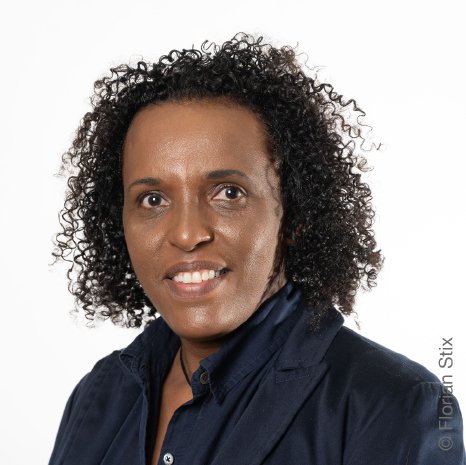
FH-Prof. Dr. Hirut Grossberger is a Senior Researcher at the Carl Ritter von Ghega Institute for Integrated Mobility Research and International Coordinator for the Department of Rail Technology and Mobility at University of Applied Sciences St. Pölten. She teaches in three programs: Rail Technology and Management of Railway Systems (MA), Rail Technology and Mobility (BA), and Rail Vehicle Technology (BA). Her research bridges railway engineering, sustainable infrastructure, and digital mobility solutions. Education includes: BSc in Agricultural Engineering (Debub University, Ethiopia) MSc in Water Management and Environment (BOKU Vienna) MSc in Land Management, Infrastructure and Civil Engineering (BOKU Vienna) Doctoral research at Institute of Structural Engineering (BOKU Vienna) Research focuses on: Railway Technology : Infrastructure lifecycle assessment, noise reduction, and sensor-based monitoring Sustainable Mobility : Eco-materials (e.g., clay noise barriers), emission reduction, and circular economy applications Digital Transformation : Mobile inspection tools, digital product passports, and acoustic sensing systems Recent publications (2019-2025) emphasize sustainability in transport infrastructure, with trends toward: Environmental action programs (CLEA) Eco-material innovation for noise control Distributed Acoustic Sensing for rail safety Digital tools for infrastructure management Leads/contributes to 20+ EU projects including: STAFFER (rail skill development) ZeroEmissionCityBahn (sustainable infrastructure) DPP4ALL (digital product passports) Smart Inspection (AI-assisted bridge maintenance) ECO-TCO (operational efficiency)
Johann Heinzelreiter serves as an FH-Prof. DI at the University of Applied Sciences Hagenberg, actively contributing to the Assistive Technology Lab and Center of Excellence for Smart Production . His research spans industrial automation, smart factory systems, and cloud computing applications in production environments. His research interests focus on assembly task modeling , low-cost tracking systems for industrial environments, and human-centered workplace design . Heinzelreiter develops practical solutions for real-world manufacturing challenges, particularly in optimizing human-machine collaboration on shop floors through the General Assembly Task Model (GATM) framework. Publication analysis reveals consistent contributions to industrial informatics, with recent work emphasizing smart factory implementation (2019-2020), cloud-based optimization (2014), and digital identity management (2015). His research demonstrates strong industry relevance through COIN Cooperation & Innovation projects. With an h-index of 34, Heinzelreiter has secured significant research funding through multiple COIN projects: Human Centered Workplace (2016-2021) - Co-Investigator Themis - Conserve Your Digital Life (2013-2015) - Principal Investigator BackmeUp - Offline Datensicherung Web 2.0 (2010-2012) - Principal Investigator He collaborates extensively with researchers including Pimminger, Kurschl, and Augstein across production environments and assistive technology domains. His work bridges academic research with practical industrial applications through the Smart Automation and Robotics initiative.
Theresa Madreiter is a Lecturer & Doctoral Student at the Institute of Management Sciences within the Faculty of Mechanical Engineering and Industrial Management at Vienna University of Technology (Technische Universität Wien). Her research focuses on Production and Maintenance Management, where she combines engineering expertise with data science approaches to advance industrial maintenance practices. Her educational background includes: Dipl.-Ing. in Industrial Engineering and Mechanical Engineering from the Faculty of Mechanical Engineering and Industrial Management, Vienna University of Technology BSc. in Industrial Engineering and Mechanical Engineering from the Faculty of Mechanical Engineering and Industrial Management, Vienna University of Technology Madreiter's research interests center on knowledge-intensive approaches to industrial maintenance. She explores how knowledge-based maintenance , predictive and prescriptive maintenance systems , and knowledge discovery from text can transform traditional maintenance practices. Her work leverages semantic technology and Natural Language Processing to extract valuable insights from maintenance documentation, and applies predictive data analysis and machine learning techniques to anticipate equipment failures before they occur. This interdisciplinary approach bridges the gap between industrial engineering and data science, positioning her at the forefront of Maintenance 4.0 research. Her publications demonstrate a strong focus on applying text mining and AI techniques to industrial maintenance challenges. The trend in her work shows increasing sophistication in combining multiple data sources (both structured sensor data and unstructured text documentation) to create comprehensive maintenance solutions. Her research spans both theoretical development of algorithms and practical implementation in manufacturing environments, with a particular emphasis on discrete manufacturing systems. Madreiter's scientific achievements have been recognized with several prestigious awards: Schnieder Prize YOUNG MAKER 2021 from acatech Industrial Management - Thesis Award 2020 from Austrian Association for the Promotion of Business Research and Education Best Paper Award for "Combining process monitoring with text mining for anomaly detection in discrete manufacturing" at the Conference on Learning Factories 2022 As a doctoral student and lecturer, Madreiter is actively involved in academic mentoring and education. Her master's thesis on "Design and Development of a Prototype of a Text Understanding Tool for Maintenance 4.0" has served as the foundation for her current doctoral research and multiple research projects including TU-MARS, True_Usage, DigiMain 4.0, and DigiTS-ME. Beyond her formal academic role, she demonstrates significant commitment to social causes through her work with the Computerclubhouse Vienna (CCV), where she leads technology workshops for children from disadvantaged backgrounds. Madreiter is part of research teams working on the intersection of industrial engineering and data science, particularly focused on how AI and text analytics can transform maintenance practices in manufacturing. Her work connects closely with Industry 4.0 initiatives and represents an important bridge between traditional engineering disciplines and emerging data-driven approaches.
Steffen Nixdorf is a Consultant Lecturer at the Vienna University of Technology , affiliated with the Faculty of Mechanical Engineering and Operations Science and the Department of Production and Maintenance Management . His work bridges academic research and industrial applications. Ph.D. in Industrial Engineering (Mechanical Engineering specialization) Dipl.-Ing. and B.Sc. in Industrial Engineering (Mechanical Engineering) Research Interests : Knowledge Management in Production Systems Reciprocal Learning in Human-Robot Interaction Predictive Data Analytics for Maintenance Digital Twins in Cyber-Physical Systems Work-Based Learning Frameworks Recent Research Trends : Focus on adaptive learning systems for robotics training, reciprocal learning mechanisms in Industry 5.0 environments, and predictive analytics for maintenance optimization. Publications emphasize collaboration between humans and machines in smart manufacturing contexts. Scientific Recognition : Best Paper Award (2020) at IFAC Conference on Advanced Maintenance Engineering Teaching Activities : Leads courses on Production Information Management Systems at TU Wien since Wintersemester 2022.
Dorian Achim Prill is a Researcher at the School of Information Technology and Systems Management, Salzburg University of Applied Sciences, specializing in digitization and digital transformation within Industry 4.0 contexts. He serves as Deputy Project Manager for DIH-West-Neu (2024-2028) and contributes to multiple funded research initiatives including Retailization 4.0 and RetailLab4.0, focusing on practical implementations of digital technologies in production and retail environments. His research integrates Machine Learning and Data Science with industrial maintenance systems, developing intelligent frameworks for predictive maintenance scheduling and service choreography. Key interests include Publish-subscribe architectures, Learning Systems for production optimization, and Planning Frameworks that bridge theoretical models with real-world manufacturing applications. His work emphasizes data-driven process monitoring and cloud-based intelligence for industrial IoT ecosystems. Recent publications demonstrate a clear trajectory toward applied machine learning in maintenance engineering, with increasing focus on smart factory implementations and service-oriented architectures. The research consistently connects broad computer science principles with specific industrial subfields like friction coefficient measurement for vehicle safety and retail digitalization. Prill actively participates in externally funded projects totaling 11 initiatives since 2017, securing grants for Digital Innovation Hubs and living labs. His collaborative approach involves interdisciplinary teams across academia and industry, particularly evident in RetailLab4.0's living lab environment and FriCamMod's vehicle safety research. He has shared expertise through invited lectures on data-driven maintenance planning and marine maintenance intelligence. He operates within dynamic project teams including RetailLab4.0's retail digitalization consortium and FriCamMod's vehicle safety collaboration, working closely with principal investigators like S. Kranzer and R. Zniva. Current projects emphasize scalable digital transformation frameworks for both manufacturing and retail sectors through the DIH-West-Neu initiative.