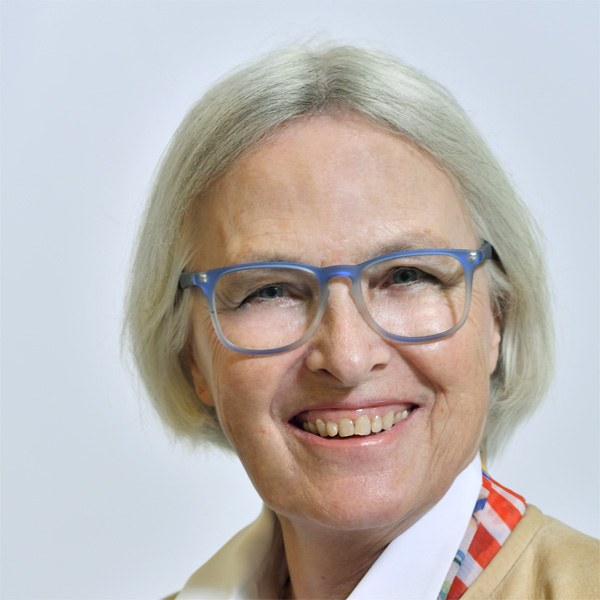
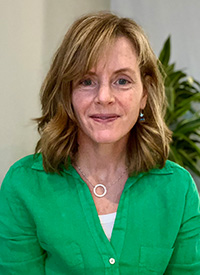
Adrian Schmidt is a Researcher at the Karlsruhe Institute of Technology (KIT), affiliated with the Institute for Technology Assessment and Systems Analysis (ITAS) and its "Health and the Technization of Life" research group. Holding a Master's degree in Physics from Leibniz University Hannover, his work bridges quantum technologies, technology assessment, and science education through interdisciplinary collaboration. Research Focus: Hermeneutic technology assessment, responsible quantum innovation, grassroots science education, and art-science intersections. Academic Engagement: Active in EU doctoral networks, international conferences (ETAC6, SPT 2025, IANUS), and outreach initiatives like QuTec. Publications: His 2025 work explores quantum ethics, educational equity, and artistic interpretations of quantum concepts, building on 2024 studies about grassroots-led quantum literacy. Leadership: Participates in discourse frameworks for responsible quantum development and contributes to global policy alignment via TA activities. Adrian's projects emphasize societal integration of quantum advancements, balancing technical innovation with ethical considerations and public understanding.
Prof. Dr. Jürgen Schwill serves as Professor in the Department of Economics at Brandenburg University of Technology (Technische Hochschule Brandenburg), based in the Business and Economics Center (Building A, Room A.2.32) in Brandenburg an der Havel, Germany. His academic profile centers on General Business Administration with specialized expertise in International Marketing and Sales, supported by institutional contact details including email juergen.schwill@th-brandenburg.de and direct telephone line +49 3381 355-200. Prof. Schwill's research program integrates International Marketing with Sustainability Marketing through rigorous examination of Relationship Management frameworks. His work systematically addresses Customer Loyalty Management in global contexts, Intercultural Team Management dynamics, and stakeholder integration methodologies for sustainable business practices. Recent investigations explore crisis-responsive partnership models, value co-creation processes, and strategic alignment mechanisms in sustainability-driven marketing ecosystems, reflecting deep engagement with both theoretical foundations and practical business applications. Analysis of Prof. Schwill's publication trajectory (2019-2025) reveals a decisive scholarly pivot toward Sustainability Marketing, characterized by comprehensive frameworks for sustainability sponsorship, crisis management protocols, and stakeholder integration models. His research demonstrates increasing methodological sophistication in reconciling Relationship Marketing principles with sustainability imperatives, particularly within European business contexts. This body of work consistently bridges academic theory and industry practice through toolkits, workbooks, and process-oriented implementations that address real-world challenges in sustainable marketing operations. While available documentation does not specify Prof. Schwill's graduate student mentorship activities or externally funded research grants, his extensive publication record—including foundational texts, instrumental guides, and conceptual frameworks—indicates significant scholarly leadership and practical influence within the marketing discipline. His contributions appear particularly impactful in shaping sustainability-focused marketing strategies for academic and professional audiences.
Prof. Dr. Dr. Thomas Schildhauer is Research and Founding Director of the Alexander von Humboldt Institute for Internet and Society (HIIG) and Professor of Electronic Business at Berlin University of the Arts (UdK). He heads the Innovation, Entrepreneurship & Society research group and founded the Digital Urban Center for Aging & Health (DUCAH). As Principal Investigator at the Weizenbaum Institute (German Internet Institute), he oversees BMBF-funded projects on digital society transformations. Education includes PhDs in Software Marketing, Information Management, and Public Health from Technische Universität Berlin. His transdisciplinary background spans computer science, business, and health systems. Research focuses on three interconnected domains: Internet-enabled innovation (corporate accelerators, platform economies), Digital education (workforce reskilling, MOOC development), and Digital health (aging-in-place technologies, urban health ecosystems). He pioneers applied research in entrepreneurial organizations and social impact ventures. Publications emphasize digital business model innovation, startup ecosystems, and technology-supported aging. Recent works demonstrate strong focus on B2B platforms, health tech accessibility, and ethical AI governance. Cross-cutting themes include corporate-startup collaboration, data privacy frameworks, and societal impacts of digitalization. Honors include being a Finalist for Science and Innovation Management Breakthrough of the Year at Falling Walls Summit 2021. Leads industry-academic initiatives like the Task Force European Platform Economy. Directs Berlin Career College's professional education programs and founded Institute of Electronic Business (IEB), executing over 100 industry transfer projects in digital transformation. Facilitates international research networks including DUCAH's transatlantic health tech partnerships. Leads experimental spaces like DUCAH's co-creation labs developing IoT solutions for elderly care. Serves on advisory boards for companies and policy initiatives including Berlin's supervisory board for economic technology.
Chiara Faggiolani is an Associate Professor at the Department of Modern Literature and Culture , Sapienza University of Rome. She specializes in Library Science and Social Librarianship , focusing on the cultural impact of libraries , data-driven evaluation systems , and digital reading practices . Her work bridges humanities with quantitative analysis , particularly through network science and text mining applications. Her research explores libraries as multifunctional cultural platforms , emphasizing their role in sustainable development (aligned with the UN Agenda 2030 ), community well-being , and health humanities . She has pioneered studies on social reading and narrative-based librarianship , advocating for libraries as oases of deceleration in fast-paced digital societies. While no specific scientific awards or student advisees are mentioned in available texts, her teaching portfolio includes courses like Book Publishing and Reading and Library Economy , delivered through hybrid formats (physical + Zoom platforms). She actively contributes to AIB STUDI and BIBLIOTECHE OGGI , shaping discourse on library science and cultural policy .
Alice M. Carter is an Assistant Professor at the Department of Mathematics and Statistics, Utah State University. As an ecosystem statistician and river biogeochemist, she combines empirical field research with advanced statistical modeling to study carbon cycling in aquatic systems. Research Focus Bayesian inference for watershed-scale analysis Process-guided machine learning in river energetics Time series modeling of biogeochemical fluxes Continental-scale aquatic ecosystem dynamics Key Contributions Her work addresses how local ecological controls interact with watershed-scale geomorphic constraints, particularly focusing on carbon cycling responses to environmental changes. Publications highlight innovations in process-guided deep learning approaches and hypoxia dynamics in river systems. Academic Engagement Actively mentors ecology graduate students in statistical methods and contributes to open-source research code through her GitHub repositories.
Dr. Juliana Vasileva is Associate Professor at the Department of Administration and Management, New Bulgarian University (NBU). She holds a PhD in Business Administration with a thesis on "Competitiveness and Enhancement of the Environment for Business Development" and has Master's degrees from the University of Liège (Belgium) and the University of National and World Economy (Bulgaria). Research focuses: International economic relations, management, innovation, entrepreneurship, good governance, and state modernization Teaching: Courses in competitiveness, innovation, entrepreneurship, strategic management, and project management Professional experience: 25+ years in public institutions, private consulting, and project management Key project areas: Education reform, vocational training, public service modernization, EU-Mercosur agreements Her publications reflect expertise in digital transformation, smart city development, and cross-regional economic cooperation. Current affiliations include scientific committee memberships and editorial contributions to economic journals.
Beatrice Bauer serves as Associate Professor of Practice in the Department of Leadership, Organization & Human Resources at Bocconi University's School of Management. With thirty years of experience since 1988, she designs leadership development programs for multinational corporations globally, specializing in organizational transformation during periods of social and structural upheaval. Her research focuses on adaptive leadership frameworks for high-stress environments, integrating cognitive behavioral modification with positive psychology principles. Key areas include conflict resolution in corporate settings, generational leadership dynamics (particularly with Millennials), stress management for elite performers like Olympic athletes, and ethical leadership development. Her methodology emphasizes practical application through innovative teaching techniques that bridge psychological theory and corporate strategy. Recent publications reveal a consistent trajectory examining leadership evolution in volatile contexts—from abrasive management styles (2017) to positive leadership for generational transitions (2019-2020) and contemporary youth work-life balance challenges (2024). This body of work demonstrates increasing focus on psychological resilience and motivational architecture within organizational ecosystems. Scientific recognition includes: Professional Excellence as Psychologist award from the Register of Psychologists (2002) Bauer actively contributes to professional development beyond academia through 300+ international conference presentations and advisory roles. She serves on Wellbusiness Luxembourg's Advisory Board (since 2017) and co-founded AIAMC, Italy's cognitive behavioral psychotherapy training association. Her industry collaborations translate research into corporate leadership curricula across Germany, England, Canada, and the USA. She established Bocconi University's Center for Teaching and Learning (1992-2003), pioneering faculty development programs that integrated psychological methodologies into business education. Current initiatives involve steering committees for international medical-psychological associations, advancing behavioral modification applications in high-performance organizational contexts.
Melikyan Alisa Valerievna is an Associate Professor at the Faculty of Computer Science, Department of Software Engineering at the National Research University Higher School of Economics (HSE). She has been working at HSE since 2008 with 16 years of scientific and teaching experience. Currently, she serves as Academic Director of the educational program "Product approach and data analytics in HR management". PhD in Educational Sciences (2019) from HSE Postgraduate studies in Sociology of Management (2009) Dual Master's degrees in Management Strategy from Université Paris-Est Créteil and Management from HSE (2007) Bachelor's degree in Management from HSE (2005) Dr. Melikyan specializes in higher education research with focus areas including the higher education system, education statistics, quantitative data analysis, international education markets, university-business cooperation, data science, and data analytics. Her research combines statistical methods with educational policy analysis, particularly examining how Russian universities operate in international markets and collaborate with business entities. She has developed expertise in applying data science techniques to educational research questions. Her recent publications demonstrate a consistent focus on analyzing Russian higher education through statistical methods, with particular attention to university internationalization, export activities, and collaboration with business. The research shows progression from broader system analysis to more specific examinations of university-business cooperation, IT specialist training, and data-driven approaches to understanding higher education dynamics. Her scientific achievements have been recognized through various awards: Gratitude of the first pro-rector of HSE (January 2024) Medal "Recognition - 15 years of successful work" HSE (December 2022) Gratitude of the Faculty of Computer Science HSE (September 2020) Rector's personal allowance (2017-2018) Academic work allowance (2013-2017) Named "Best teacher" for 2025 and 2019-2022 Dr. Melikyan has led research projects on improving procurement legislation (2022-2024), methodology for assessing regional education systems (2013-2014), database harmonization for Russian publications (2012-2013), and bibliometric analysis of Russia's position in global science (2011). She has been actively involved in developing and teaching courses related to data analysis, programming, and quantitative methods for social sciences.
Dr. Jonathan Vincent is a Lecturer in Higher Education Research at the School of Social Sciences, Lancaster University. He serves as Programme Director for the Education and Social Justice MA and Director for Internationalisation, with key academic roles focused on disability inclusion, neurodiversity, and qualitative methodologies. PhD , Lancaster University MA Education , University of Cambridge PGCE , University of Cambridge BA (Hons) , Queen's University, Belfast His research investigates life course transitions for neurodivergent/disabled learners and staff in education and employment, emphasizing qualitative and inclusive methodologies. Notable projects include: STEPS (School Transitions across Education for Pupils with SEN/D): Develops participatory resources (animations, toolkit) to improve primary-to-secondary transitions for neurodivergent youth. AJOLI (Autism JOint Local Initiative, Uganda): Conducts community-based autism screening, interviews, and stigma-reduction resources in northern Uganda. IDEA (Indonesian Disability-Inclusion for Education and Accessibility): Evaluates Indonesian universities' disability-inclusion practices through environmental scans, stakeholder focus groups, and policy briefs. Vincent provides expert evidence to governments (Malta, Indonesia, Australia) and has testified before the UK House of Lords Autism Act 2009 Committee. He supervises PhD applicants exploring inclusion, belonging, and neurodivergence in education.
Astra Auziņa-Emsiņa is an Associate Professor and Leading Researcher at Riga Technical University. With a Doctoral degree in Economics, she specializes in macroeconomic modeling, econometrics, and sustainable transport development. Macroeconomic and intersectoral analysis Green transportation systems Input-output modeling Regional development Transport policy In recent projects, she has led work packages on manufacturing sector performance evaluation and participated in Ukraine war impact assessments. She contributes to EU income convergence studies and sustainable last-mile delivery research. Her work appears in journals like Engineering for Rural Development and conference proceedings. Active in academic governance, she: Co-develops econometric models Advises the Latvian Council of Science Co-founded the Latvian Association of Young Researchers Collaborates with European input-output experts
Karl D. Schubert serves as a Professor of Practice and Associate Director of the Data Science Program spanning the University of Arkansas College of Engineering, Sam M. Walton College of Business, and J. William Fulbright College of Arts & Sciences. With a PhD in Engineering from the University of Arkansas, he leads interdisciplinary initiatives connecting multiple academic colleges to develop comprehensive data science education pathways. His administrative roles include directing statewide data science program development and serving on Arkansas' Governor's Innovation Council. BS in Chemical Engineering from University of Arkansas MS in Chemical Engineering from University of Kentucky PhD in Engineering from University of Arkansas Schubert's research focuses on data science and analytics, innovation methodologies, and interdisciplinary project-based learning. His work bridges academic theory with industry applications, particularly in creating educational frameworks that prepare students for real-world data challenges. He has developed statewide data science curriculum from high school through undergraduate levels, emphasizing practical applications across multiple domains including business, healthcare, and engineering. Analysis of his recent publications reveals a strong trajectory toward building comprehensive data science education ecosystems, with emphasis on workforce development, interdisciplinary collaboration, and innovative teaching methodologies. His work increasingly focuses on creating pathways for underrepresented students in STEM fields while addressing industry needs for data-literate professionals. UofA College of Engineering Distinguished Alumni Award (2008) Fellow of the Institute of Engineering & Technology (IET) (2015) Charter member of University of Arkansas Academy of Computer Science and Computer Engineering (2017) Awarded multiple patents in storage systems architecture, data analysis methods, and touch screen technologies Schubert actively secures substantial research funding, currently leading a $24M NSF EPSCoR grant initiative and a nearly $1M NSF grant focused on introducing innovation and data science to underserved STEM students. His grant portfolio demonstrates strong industry and government partnerships aimed at transforming data science education. He advises capstone projects and has established multiple endowed scholarships to support engineering students, particularly focusing on underrepresented populations. As Associate Director of the Data Science Program, Schubert coordinates efforts across three major colleges at the University of Arkansas, working with faculty teams to develop the nation's first known interdisciplinary data science program spanning engineering, business, and arts & sciences. His work with the Arkansas Center for Data Science focuses on creating a cohesive educational pipeline from high school through undergraduate studies.
Charles P. Friedman serves as the Josiah Macy Jr. Professor of Medical Education and Chair of the Department of Learning Health Sciences at the University of Michigan Medical School, while also holding a professorship in Health Management and Policy. He joined the university in September 2011 after executive roles at the Office of the National Coordinator for Health IT (ONC), where he served as Deputy National Coordinator (2007-2009) and Chief Scientific Officer (2009-2011), overseeing initiatives including the initial funding for the SMART platform. His educational background includes: Advanced Study in Medical Informatics from Stanford University PhD in Education from the University of North Carolina at Chapel Hill MS in Physics from the Massachusetts Institute of Technology BS in Physics from the Massachusetts Institute of Technology Dr. Friedman's research centers on the intersection of biomedical informatics and educational processes, with primary focus areas including national-scale learning health system development, enterprise knowledge resource sustainability, knowledge-based decision support applications, effectiveness evaluation of technological interventions, and educational technology innovations. His work bridges clinical practice, health IT infrastructure, and pedagogical theory to transform healthcare delivery through continuous learning. His publication portfolio demonstrates consistent leadership in advancing learning health systems and biomedical informatics, with recurring themes in scalable health IT infrastructure, rigorous evaluation methodologies for community-based interventions, and strategic workforce development for informatics professionals across medical and public health domains. Dr. Friedman leads the Department of Learning Health Sciences—the nation's first medical school academic department dedicated to learning sciences at all scales from individual clinicians to national systems—and previously directed the Michigan health informatics program. His department pioneers research on organizational learning mechanisms and knowledge translation frameworks within ultra-large-scale healthcare ecosystems. While specific grant details and student advising records aren't documented in the source material, his leadership of major initiatives like the ONC portfolio and departmental development indicates substantial research funding and mentorship impact across biomedical informatics and medical education fields.
Agostinho Manuel Antunes da Silva is an Adjunct Professor at the School of Technology and Management, Instituto Politécnico de Leiria, and Associate Professor at Business and Economics School. Holding multiple PhDs in Management, Industrial Engineering, and Operations Management, he specializes in Industry 4.0, Coopetition Ecosystems, and Digital Transformation across industrial sectors. His educational background includes a PhD in Management (Industry 4.0 Improving) from Évora University, Advanced Studies in Operations Management from ISCTE, and MSc degrees in Naval Engineering and Strategy and International Investment. His research bridges academic theory with industrial application through extensive R&D projects. Dr. da Silva's research focuses on technology-enabled coopetition networks, where he develops frameworks for SME collaboration using Industrial Internet of Things, Digital Twins, and Service-Dominant Logic. His work demonstrates how digital technologies can enhance operational efficiency, sustainability, and value co-creation in traditional industries like stone processing and footwear manufacturing. His recent publications reveal strong trends in applying service science perspectives to Industry 4.0 challenges, with particular emphasis on circular economy implementation, carbon footprint reduction, and BIM integration in supply chains. The research consistently addresses practical industrial problems through theoretical frameworks grounded in network science and service ecosystems. Medalha Municipal de Mérito: Grau Ouro – Câmara Municipal de Oeiras (2024) Medalha Municipal de Mérito: Câmara Municipal de Pombal (2023) Prémio Carreira e Mérito - Escola Superior Náutica Infante D. Henrique (2022) Grau de Comendador da Ordem do Mérito Empresarial (2015) As a research supervisor, he has mentored over a dozen master's students in projects spanning operational safety, digital hubs for local economies, health tourism, and blockchain applications in maritime industries. His leadership extends to major EU-funded projects including Sustainable StonebyPortugal, ARNET, and PRODUTECH R3, where he serves as Principal Investigator driving industrial innovation. Dr. da Silva leads the EM@IPLeiria Mission Structure for Leiria & West Ecosystem Development and maintains strategic roles in ASSIMAGRA (Portuguese Mineral Resources Association) and Lisbon Rough Diamond Bourse. His work with CEI-Zipor Engineering Group since 1995 demonstrates continuous bridging between academic research and industrial implementation, particularly through pilot plants like Solancis - Industry 4.0 plant for stone processing.
Emilie Mølholm Kjærulff is a Postdoc and PhD Student at the Department of Public Health, University of Copenhagen, working across the Section of Health Services Research and Section of Social Medicine. Her research investigates the intersection of chronic disease management, digital health platforms, and patient-clinician dynamics, with a primary focus on diabetes care. Her academic trajectory includes doctoral research on adolescent and young adult self-management of type 1 diabetes, examining how competing social logics are calibrated in daily life. This work extends to type 2 diabetes, binge eating behaviors, and peer support mechanisms within social media ecosystems. Research interests prominently feature Health Services Research, Social Medicine, and Digital Health, emphasizing qualitative analysis of patient experiences. She explores how individuals with chronic conditions navigate legitimacy of health knowledge on Facebook, integrate social media insights into clinical consultations, and manage comorbidities through online communities. Analysis of her 2023-2024 publications reveals consistent methodological rigor through qualitative studies and systematic reviews. Key themes include diabetes management across age groups, boundary-work in peer support groups, professional development impacts on nursing, and implications for healthcare provider relationships when patients use social media. Scientific awards: No specific awards were documented in the provided materials. Regarding academic guidance, no student mentorship details appear in the text, though her collaborative publications suggest team-based research. Grant funding specifics remain unmentioned, yet her high-output publication rate in peer-reviewed journals indicates active participation in funded projects. She operates within Copenhagen's public health infrastructure at Øster Farimagsgade 5, contributing to interdisciplinary teams focused on health services innovation and social medicine applications in chronic disease contexts.
Tracy Hogan is a Professor in the Department of Science Education at Adelphi University's Ruth S. Ammon College of Education and Health Sciences. She holds office in Alumnae Hall 224 and serves as Principal Investigator for major NSF-funded initiatives including the Noyce Adelphi STEAM Pipeline. Education: Ph.D. in Educational Psychology, Fordham University (2004) M.A.T. in Science Education, University of Iowa (1996) B.S. in Fisheries and Wildlife Biology, Iowa State University (1994) Her research centers on science education innovation, with particular focus on critical literacy in science, teacher expertise development, and clinically rich teacher preparation models. She pioneers STEAM integration through maker education and forensic science applications, emphasizing social justice connections in science classrooms. Her work bridges cognitive psychology with practical teacher education, examining how experience shapes problem representation in instruction. Analysis of her publication record reveals consistent focus on transforming science education through inquiry-based approaches, with recent work emphasizing STEAM integration and social justice. Her scholarship evolves from foundational studies on teacher cognition toward practical applications in bilingual teacher preparation and K-12 curriculum reform. Dr. Hogan directs significant grant-funded initiatives including the $1.2M NSF Noyce Adelphi STEAM Pipeline (2019-2024) and the $1.24M SUNY Teacher Workforce Investment Grant R2E2ADI (2024-2027). She coordinates multiple clinical residency programs including the Oceanside-Adelphi Teacher Residency and serves as evaluator for educational initiatives across Long Island school districts. She maintains active service roles including National Board of Professional Teaching Standards working group membership, NSF grant review panels, and as reviewer for the International Journal of Science and Mathematics Education since 2005.