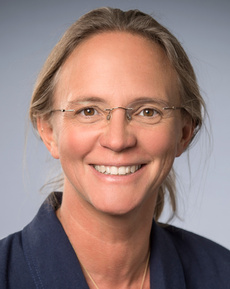
José Herrera Sanz is an Assistant Professor at the Department of Automation, University of Alcalá (Spain). He holds a Doctorate from Universidad Complutense de Madrid (2008) with a thesis titled Modelo de programación para infraestructuras Grid computacionales , supervised by Dr. Rubén Manuel Santiago Montero and Dr. Ignacio Martín Llorente. His research focuses on Grid computing, distributed systems, and sustainability in programming models. He is affiliated with the PROGRESSUS research group (Programming & Sustainability), exploring topics like distributed task scheduling, grid middleware, and high-performance computing applications. His work spans over 15 peer-reviewed articles since 2003, addressing challenges in virtual machine placement, genetic algorithms, and bioinformatics grid benchmarking. Key contributions include the GridWay DRMAA implementation, optimization of fusion physics workflows, and distributed loop execution frameworks. His research emphasizes sustainable computing practices and scalability in grid environments.
Elena Katia Leal Algara is an Associate Professor at Universidad Rey Juan Carlos, affiliated with the Department of Telematic and Computing Systems. She holds a PhD from Universidad Complutense de Madrid (2010) with a thesis on federated grid scheduling. Her research focuses on Grid Computing, Ubiquitous/Pervasive Systems, and Distributed Scheduling. She contributed to projects like Plan B OS, a middleware-free environment for pervasive computing. Notable research groups include PROGRESSUS (Programming & Sustainability) and PMI (Intelligent Mobile Platforms). Her work emphasizes energy-efficient resource allocation, adaptive scheduling in federated grids, and security protocols in ubiquitous environments. Key achievements include proposals for self-adjusting resource sharing policies and reallocation strategies in dynamic systems. Over 20 peer-reviewed articles span scheduling algorithms, grid infrastructure optimization, and pervasive computing design. Leal Algara's academic career involves advancing decentralized scheduling frameworks and exploring middleware alternatives for distributed systems. Current research interests include sustainable computing and autonomous resource management in federated environments.
Dr. Jennifer Roberts-Smith is a Professor and Chair of the Department of Dramatic Arts at Brock University. She holds a PhD in English from the University of Toronto (2007) and has held academic appointments at the Universities of Ottawa, Toronto, Windsor, and Waterloo before joining Brock in 2022. Her work bridges performance studies, digital media, and social justice, emphasizing collaborative, transdisciplinary approaches to address systemic issues like racism, prison reform, and reconciliation in post-conflict zones. Key research initiatives include the qCollaborative , an intersectional feminist design lab, and the SSHRC-funded Staging Better Futures partnership (CAD 2.5M) promoting equity in theatre education. She co-directs projects such as DOHR (Digital Oral Histories for Reconciliation), using VR to engage with marginalized histories. Awards include the Ontario Early Researcher Award (2014–19) and the University of Waterloo Faculty of Arts Outstanding Performance Award (2015). Her articles span digital humanities, performance design, and ethical technology, with publications in Routledge , Intellect Books , and Journal of Interactive Technology and Pedagogy . She serves on multiple academic boards and collaborates with organizations like Green Light Arts Theatre to foster socially engaged art.
Daniel Strüber is an Associate Professor in Software Engineering at Chalmers University of Technology and the University of Gothenburg, Sweden, and an affiliate of the Department of Software Science at Radboud University Nijmegen, Netherlands. His research focuses on model-driven engineering, AI engineering, and empirical software engineering, addressing challenges in software quality, variability management, and security. He holds a PhD (summa cum laude) from Philipps University Marburg and has held academic positions including Assistant Professor at Chalmers and postdoctoral roles at King's College London and Philipps University Marburg. Education: PhD in Computer Science, Philipps University Marburg (2011–2016) Diplom (M.Sc. equivalent) in Computer Science, Philipps University Marburg (2005–2011) Research Interests: Strüber's work spans model-driven engineering, AI integration in software systems, and empirical studies. Key areas include: Model-based languages and tools for software quality assurance Machine learning-enabled systems and their engineering principles Robotics software engineering and variability management Formal methods for consistency and security Search-based optimization in model-driven development Recent Contributions: Recent work includes studies on LLM-assisted reverse engineering, empirical analysis of manual abstraction in software systems, and model-driven approaches for edge deployment of ML models. His research bridges theory with practical implementations in domains like robotics and web-based systems. Awards: Best Reviewer Award (SoSyM 2025) Distinguished Reviewer Awards (GPCE 2024, SPLC 2023) Transformation Tool Contest Awards (2020, 2016) EASST Best Paper Awards (ICGT 2020, ICGT 2017) Grants & Leadership: Co-editor of a JSS special issue on Product Line Engineering (2024) and program co-chair of SPLC 2024. Active in conferences like ICSE, ICGT, and MODELS. Leads grants such as the VR SEMLA project (2022–2024) and the DFG EUphORia fellowship (2019). Teaching: Courses include 'Software Engineering for AI Systems' at Chalmers and 'Software Product Lines' at Radboud University. Involves students in real-world projects via GiPHouse, a student-run company.
Greet Van de Perre is a Research Fellow at the Vrije Universiteit Brussel, affiliated with the Applied Mechanics Department within the Faculty of Engineering. They are also a postdoctoral researcher in the Federated labs AI and Robotics. Their work focuses on robotics, human-robot interaction, ergonomics, and applications in autism therapy. Van de Perre leads or collaborates on projects like the Brubotics initiative, exploring sustainable robotics and safe control systems for flexible manipulators. They have published extensively in areas such as collaborative robots, ergonomic optimization, and social robotics. Key research interests include improving human-robot collaboration through ergonomic design, developing energy-efficient robot systems, and advancing social interaction capabilities in robots for therapeutic applications. Notable projects include the design of lightweight cobots with high payload capacity and the exploration of flexible link technologies for enhanced robot performance. Van de Perre’s recent work emphasizes safe control strategies for industrial and assistive robotics, integrating optimization algorithms and advanced control systems. Their contributions span theoretical advancements and practical applications, including studies in virtual environments and real-world robotic systems. Collaborations with interdisciplinary teams highlight their commitment to bridging robotics engineering with human-centric design.
Hugh Gorick is an Associate Tutor in the School of Health Sciences within the Faculty of Medicine and Health Sciences at the University of East Anglia (UEA). He is currently pursuing a part-time PhD and holds a Postgraduate Certificate in Medical Education from UEA, an MSc in Health Studies from the University of the West of Scotland, and a BSc in Health Studies from City College Norwich. Master in Science, Health Studies – University of the West of Scotland (2021) Post Graduate Certificate in Medical Education – University of East Anglia (2021) Bachelor of Health Science – City College Norwich (2018) Hugh's research is centered on triage in emergency admission areas, with a focus on how nurses assess patient acuity, the impact of these decisions, and how the triage process can be enhanced for better safety and effectiveness. His work spans emergency department nursing, public health, and clinical education, emphasizing patient safety and healthcare delivery optimization. His recent publications demonstrate a strong trend in evaluating triage systems such as the Manchester Triage System, exploring non-clinical roles like receptionists in emergency departments, and advocating for emotional support mechanisms like Schwartz Rounds in educational settings. These works reflect a multidisciplinary approach combining clinical practice, policy, and educational innovation. Fellow of the Higher Education Academy (2022 – present) Hugh has delivered invited talks on evidence-based practice in triage decision-making and is actively involved in research dissemination. While no formal grants are mentioned, his research output and external collaborations indicate active engagement in academic and clinical networks. He also contributes to teaching and clinical education, bridging practice and academia. His work at the Norfolk & Norwich University Hospitals NHS Foundation Trust as an Assistant Practitioner complements his academic efforts, grounding his research in real-world healthcare settings. Hugh is part of a broader research network involving collaboration across institutions, particularly in emergency medicine and healthcare education. His activities include presenting at events and contributing to peer-reviewed journals, with a focus on improving emergency care systems and supporting healthcare professionals emotionally and educationally.
Sara Reichenbach is a researcher and Deputy Institute Director at the Institute of Building Construction, Timber Construction and Circular Construction, Department of Landscape, Water and Infrastructure, University of Natural Resources and Life Sciences, Vienna (BOKU). She holds a Dr.techn. and Dipl.-Ing. in civil engineering from TU Wien and has held postdoctoral positions at both TU Wien and BOKU. Her work bridges structural engineering, sustainable construction, and digital fabrication. Research Interests: Her research focuses on resource-efficient building construction, particularly in concrete and timber systems. She investigates topology optimization, life cycle analysis (LCA), additive manufacturing of bio-based materials, FRP reinforcement, and the development of reusable, circular building components. Her work aims to reduce environmental impacts while enhancing structural performance and economic viability in prefabricated construction. Publication Trends: Her recent publications reflect a strong trend toward sustainable and digital construction, emphasizing 3D printing of recyclable walls (3DP BIOWALLS), topology-optimized concrete elements, and the use of renewable and FRP materials. The integration of automation, robotics, and computational design is a recurring theme, aligning with Industry 4.0 principles in construction. Scientific Awards: FSV-Preis für Diplomarbeit (2013): For her thesis on load testing of existing prestressed concrete bridge girders to assess shear capacity. Advising and Grants: She supervises master's theses on topics such as life cycle assessment of 3DP Biowalls and automated production strategies. She is actively involved in research projects funded by FFG and EU sources, including the 'Additive manufacturing of fully-recyclable wall systems made from renewable materials' project led by Benjamin Kromoser. She also serves as a reviewer for journals like Applied Sciences and Scientific Reports , and as an expert in the ÖBV working group on non-metallic reinforcement. Labs and Teams: She is part of the research team at the Institute of Building Construction, Timber Construction and Circular Construction at BOKU, collaborating closely with Prof. Benjamin Kromoser. The team operates in a multidisciplinary environment focusing on innovative construction technologies, with access to advanced digital fabrication and structural testing facilities.
Dr. Mia McLanders serves as an Adjunct Lecturer in the School of Psychology at the University of Queensland, where she bridges psychological science with clinical healthcare improvement through human factors engineering and simulation-based methodologies. Her work directly impacts neonatal resuscitation protocols, trauma care systems, and medical device design for high-acuity environments. She completed her PhD at the University of Queensland in 2018 with the thesis "Developing the NeoReady TM : a systems approach to supporting teams during neonatal resuscitation", establishing her focus on systems-level interventions in emergency care. Dr. McLanders' research centers on human factors in healthcare , emphasizing medical simulation , neonatal resuscitation , and trauma care systems . Her methodology integrates cognitive task analysis, teamwork observation, and technology evaluation to address critical gaps in clinical workflows. Key contributions include designing cognitive aids for resuscitation teams and developing vibrotactile monitoring systems that reduce cognitive load during emergencies. Analysis of her publication trajectory reveals consistent interdisciplinary collaboration across medicine and psychology, with recent work (2024) prioritizing scalable solutions for rural healthcare barriers and standardized neonatal training. Her studies uniquely combine laboratory validation with real-world clinical implementation, particularly through the Queensland Trauma Education (QTE) program. No scientific awards or fellowships are documented in available materials. While no graduate student supervision is indicated, her collaborative network spans anesthesiology, emergency medicine, and human factors research groups. Current projects appear focused on expanding telehealth-supported trauma care and refining the NeoReady TM system for broader clinical adoption. Her research is operationally linked to the Queensland Trauma Education initiative and neonatal resuscitation improvement programs, involving multidisciplinary teams of psychologists, clinicians, and biomedical engineers working within University of Queensland-affiliated healthcare simulation frameworks.
Alessandro Palma is a researcher affiliated with Sapienza University of Rome , Italy, focusing on Cybersecurity and Information Security Governance . His work involves attack graph analysis, incident management compliance, and network vulnerability evaluation. Palma collaborates extensively with researchers like Marco Angelini, Silvia Bonomi, and Fabian J. Theis. Recent publications highlight his contributions to: Attack Graph Scalability (2025): Developing frameworks for evaluating network security. Incident Management Compliance (2024): Creating systems for quantitative process assessment. Multi-Modal Single-Cell Generation (2025): Applying machine learning to computational biology. His research integrates graph theory , visual analytics , and machine learning to address cybersecurity challenges in IoT and federated data systems. No scientific awards or student advisement information is publicly available in the provided data.
Massimiliano Lo Turco is a Full Professor at the Department of Architecture and Design (DAD) of the Polytechnic University of Turin. Specializing in digital modeling and cultural heritage, he actively contributes to the fields of Building Information Modeling (BIM), Heritage BIM (HBIM), and 3D reconstruction. University: Polytechnic University of Turin Department: Department of Architecture and Design (DAD) Academic Rank: Professor Research interests include: 3D modeling, reconstructive modeling, augmented/virtual reality, descriptive geometry, architectural representation history, digital cultural heritage, and parametric design. His work often bridges computational tools with heritage conservation. Recent publications demonstrate expertise in: HBIM for Baroque facades, digital preservation of Balinese architecture, parametric design education, and AI-BIM integration. These works align with his broader focus on digital strategies for heritage and sustainable architecture. Scientific awards: Effective member of Italian Union for Drawing (2015-) Associate Editor of Dn - Building Information Modeling, Data & Semantics (2018-) Grants and collaborations: Scientific Director for PhD scholarships in architectural heritage, Contract Manager for agreements with ASL Vercelli, Principal Investigator for research with CNR, and leader of multiple commercial and non-commercial projects with institutions like Museo Egizio and LINKS Foundation.
Prof. Dr. Britta Nestler serves as a Research Unit Chair at the Institute of Nanotechnology (INT) within the Karlsruhe Institute of Technology (KIT), Germany. Leading the Microstructure Simulations research group (INT-MSS), she focuses on computational modeling of mechanical and microstructural properties in materials, with significant contributions to phase-field methodologies for microstructure evolution and materials design. Her research spans computational materials science, phase-field modeling, and multiphysics simulations for energy storage systems. Key interests include chemo-mechanical coupling in multiphase systems, solid-state dewetting phenomena, battery electrode optimization, and microstructure-property relationships in polycrystalline materials. She integrates machine learning and data management frameworks to advance virtual materials design, particularly for post-lithium battery technologies. Recent publications reveal a strong emphasis on phase-field applications for energy materials, with 15+ 2025 articles addressing battery electrode design, structural optimization of porous materials, and multiphysics coupling in electro-chemo-mechanical systems. Her work bridges fundamental thermodynamics with industrial applications, notably in the POLiS Cluster of Excellence for post-lithium storage. Prof. Nestler actively shapes the field through leadership in the GAMM Workshop on phase-field modeling and the Materials/Microstructure Modeling conference. As part of KIT's Institute of Nanotechnology, her INT-MSS group collaborates on virtual materials design initiatives within the MaTeLiS Focus Field and NFDI4Ing research data infrastructure, driving digitalization in engineering sciences.
Ozgur Kilic is a Researcher at the Computational Science Initiative of Brookhaven National Laboratory, specializing in high-performance computing (HPC) and AI/ML-driven scientific workflows . His work focuses on optimizing computational efficiency, resource management, and data resilience in large-scale systems. Education: Ph.D. in Computer Science, State University of New York at Binghamton Research Interests: Ozgur investigates scientific workflow management, asynchronous task execution in heterogeneous environments, memory trace analysis, and performance modeling. His work addresses challenges in virtualization overheads and scalability for accelerated systems. Recent Publications Trends: His recent work emphasizes interoperability in HPC workflows, asynchronous execution frameworks, memory diagnostics, and redefining computational efficiency metrics like Amdahl's Law in accelerated systems. Laboratory Affiliation: Ozgur is part of the Computational Science Initiative at Brookhaven National Laboratory, contributing to data-driven discovery and HPC innovation.
Raul O. Chao is the Oliver Wight Associate Professor of Business Administration at the University of Virginia's Darden School of Business , specializing in operations management and innovation. With a Ph.D. in operations management from Georgia Institute of Technology, he combines technical expertise with business acumen. B.S. Chemical Engineering, Johns Hopkins University MBA & M.S., University of Miami Ph.D., Georgia Institute of Technology His research explores innovative organizational design , entrepreneurial ecosystems , and R&D portfolio management . Fieldwork includes collaborations with 3M, Microsoft, and Lockheed Martin. Recent publications analyze autonomous robotics implementation, innovation districts, and prototyping methodologies. Chao leads experiential learning courses on product development and technology commercialization. He advises early-stage ventures and has developed cross-disciplinary curricula integrating engineering and business principles.
Assoc. Prof. Tsvetelina Valentinova, MD, PhD serves as Associate Professor at Medical University - Pleven within the Faculty of Public Health and Department of General Medicine, Forensic Medicine and Deontology. Her academic career centers on strengthening Bulgaria's primary healthcare infrastructure through research and education, with institutional affiliations spanning all university structural units including the Faculty of Medicine, Faculty of Pharmacy, and Medical College. Her research interests focus on critical gaps in primary care systems, particularly physician job satisfaction, stress management, and patient-centered communication frameworks. She investigates pediatric allergy prevalence in regional populations while examining structural challenges in general practice, including team composition dynamics and integration with social services. Her work consistently addresses Bulgarian healthcare context through evaluations of postgraduate medical training and public health campaign effectiveness. Analysis of her 15 most recent publications (2003-2018) reveals three dominant research trajectories: physician well-being metrics in resource-constrained settings, communication skill pedagogy for medical trainees, and system-level analysis of primary care team functionality. Her methodological approach blends qualitative assessment of practitioner experiences with quantitative epidemiological studies, predominantly focused on Pleven region populations. No scientific awards were documented in available materials. Dr. Valentinova actively shapes medical education through curriculum development for communication skills training and postgraduate general practice programs. Her advising extends to PhD candidate supervision within the university's scientific activity framework, while her research informs national healthcare policy through assessments of primary care team management and public health campaign implementation. She contributes to institutional quality assurance via teaching accreditation activities across medical, pharmacy, and public health specialties.
Timo Kretschmer M.A. is a Lecturer at HTWK Leipzig's Faculty of Architecture and Social Sciences, specializing in Building Information Modeling (BIM), computer-aided design, and architectural animation. He has been affiliated with the university since 2004, initially working in the Faculty of Civil Engineering before moving to the Faculty of Architecture and Social Sciences in 2014. As Webmaster of the IT organization and Member of the Faculty Council, he plays a significant role in the university's digital infrastructure. His research focuses on BIM implementation, digital building applications, and virtual construction monitoring. He has been involved in significant projects including the cooperative doctoral procedure with Leipzig University on the reconstruction of Max Klinger's 'Christus im Olymp' and the Saxon Ministry of Justice's model project (2007-2008). His current research (2023-2025) continues to advance digital methods in architectural practice. Kretschmer's publications and presentations demonstrate a clear trajectory from foundational BIM concepts to advanced implementation strategies. His 2024 handbook 'BIMcert Handbuch Grundlagenwissen openBIM' represents the culmination of his expertise, while his earlier works from 2004-2015 established his contributions to architectural history and education. His conference presentations since 2015 show increasing specialization in BIM competence development, data security, and interdisciplinary applications. Chairman of DIN NA 005-13-05 AA 'Professional Competence' Spokesperson for buildingSMART eV Specialist Group 'Certification' Member of buildingSMART International PCert Sub-Committee Member of CEN/TC 442/WG8 'Competence' Founding member of buildingSMART eV Regional Groups in Saxony and Central Germany As an active participant in professional organizations, Kretschmer contributes significantly to standardizing BIM competence frameworks. His work with the Saxony Chamber of Architects on the 'Digital Building Application' working group demonstrates his commitment to bridging academic research and professional practice. His jury work for the BIM Champions awards (2021-2025) further establishes his authority in the field. The IT infrastructure he helps maintain, including the BIMcloud system, supports numerous architectural design projects across the faculty.