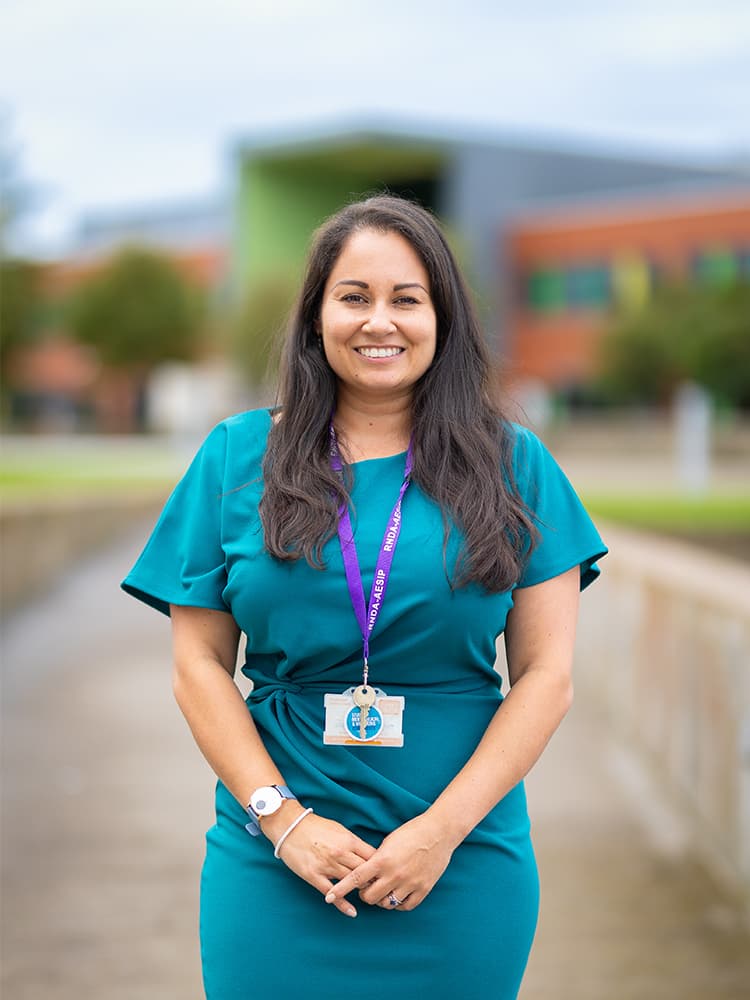
معرفی
Dr. Mia McLanders serves as an Adjunct Lecturer in the School of Psychology at the University of Queensland, where she bridges psychological science with clinical healthcare improvement through human factors engineering and simulation-based methodologies. Her work directly impacts neonatal resuscitation protocols, trauma care systems, and medical device design for high-acuity environments.
She completed her PhD at the University of Queensland in 2018 with the thesis "Developing the NeoReadyTM: a systems approach to supporting teams during neonatal resuscitation", establishing her focus on systems-level interventions in emergency care.
Dr. McLanders' research centers on human factors in healthcare, emphasizing medical simulation, neonatal resuscitation, and trauma care systems. Her methodology integrates cognitive task analysis, teamwork observation, and technology evaluation to address critical gaps in clinical workflows. Key contributions include designing cognitive aids for resuscitation teams and developing vibrotactile monitoring systems that reduce cognitive load during emergencies.
Analysis of her publication trajectory reveals consistent interdisciplinary collaboration across medicine and psychology, with recent work (2024) prioritizing scalable solutions for rural healthcare barriers and standardized neonatal training. Her studies uniquely combine laboratory validation with real-world clinical implementation, particularly through the Queensland Trauma Education (QTE) program.
No scientific awards or fellowships are documented in available materials.
While no graduate student supervision is indicated, her collaborative network spans anesthesiology, emergency medicine, and human factors research groups. Current projects appear focused on expanding telehealth-supported trauma care and refining the NeoReadyTM system for broader clinical adoption.
Her research is operationally linked to the Queensland Trauma Education initiative and neonatal resuscitation improvement programs, involving multidisciplinary teams of psychologists, clinicians, and biomedical engineers working within University of Queensland-affiliated healthcare simulation frameworks.