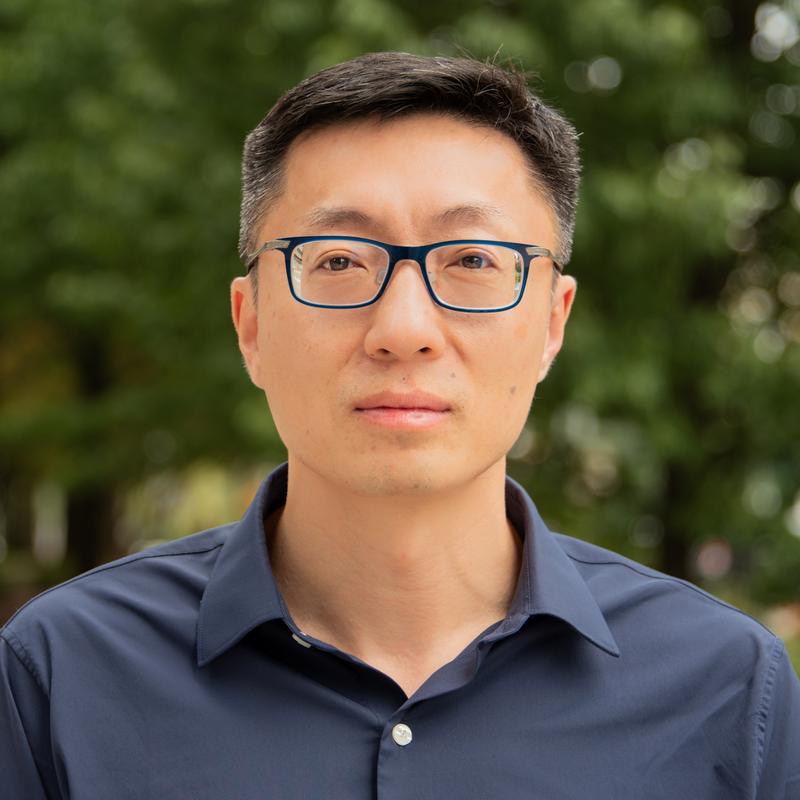
Tapio Schneider is the Theodore Y. Wu Professor of Environmental Science and Engineering at the California Institute of Technology. His research focuses on atmospheric dynamics across Earth and other planets, climate modeling innovations, and geophysical turbulence analysis. He contributes to the Climate Modeling Alliance (CliMA) and develops advanced computational tools for climate prediction. Albert-Ludwigs-Universität Freiburg (Vordiplom, 1993) Princeton University (M.Sc. 1997, Ph.D. 2001) University of Washington, Seattle (Visiting Graduate Student, 1994-1995) His research spans climate dynamics , atmospheric turbulence , and AI-enhanced climate modeling , addressing challenges in cloud dynamics, extreme weather patterns, and planetary climate systems. Current work emphasizes hybrid machine learning-physical models and computational acceleration for high-resolution simulations. Recent publications highlight trends in AI integration for climate science, with applications in hydrology , cloud microphysics , ocean circulation , snowpack modeling , and climate tipping points . His team develops open-source tools like ClimateMachine for GPU-accelerated simulations. Scientific Recognition: Fellow, American Geophysical Union (2022) Rosenstiel Award (2019) World Economic Forum Young Scientist (2012) David and Lucile Packard Fellow (2005-2010) Alfred P. Sloan Research Fellow (2004-2006) Tapio leads climate dynamics research at Caltech, directs the Linde Center for Global Environmental Science (2011-2012), and serves as Editor for the Journal of Advances in Modeling Earth Systems . His group collaborates with NASA Jet Propulsion Laboratory (2016-2024) and Google Research (2022-present).
Gregg M. Garfin is a Professor and Specialist in Climate, Natural Resources, and Policy at the University of Arizona’s School of Natural Resources and the Environment, and Deputy Director for Science Translation and Outreach at the Arizona Institute for Resilience. He holds a Ph.D. in Geosciences from the University of Arizona (2003), an M.S. in Geology and Geography from the University of Massachusetts (1997), and a B.S. in Geology and Geography from the same institution (1993). His work bridges science and societal decision-making, focusing on climate adaptation, drought management, and climate services. He directs the Water, Society, and Policy M.S. Program and has led interdisciplinary projects on climate resilience, including contributions to the Fourth National Climate Assessment. Roles: Professor, Deputy Director, Program Director Affiliations: Arizona Institute for Resilience, School of Natural Resources and the Environment Research Interests His research emphasizes climate adaptation strategies, climate policy, and the co-production of knowledge between scientists and decision-makers. Key areas include: Climate impacts on water resources and ecosystems Extreme heat and drought resilience in urban and border communities Climate change communication and education Awards & Recognition Garfin has received multiple accolades, including AAAS Fellowship (2020), University of Arizona Service Awards (2020, 2015), and the Global Initiative for Academic Networks (GIAN) Visiting Fellowship (2018). His work has been featured in peer-reviewed journals and media outlets, emphasizing actionable science for climate resilience. Grants & Contributions He has led federal and transnational projects, including binational climate resilience initiatives in the U.S.-Mexico border region and flood risk assessments in Seoul, South Korea. His work integrates participatory governance approaches to enhance community preparedness.
Ben Livneh is an Associate Professor at the University of Colorado Boulder , affiliated with both the Civil, Environmental, and Architectural Engineering Department and the Cooperative Institute for Research in Environmental Sciences (CIRES) . As Director of the Western Water Assessment , he bridges academic research with regional climate resilience initiatives. Ph.D. in Civil Engineering (Hydrology), University of Washington (2012) MESc in Civil Engineering, University of Western Ontario (2006) His research explores hydrologic responses to climate and land-cover changes , focusing on snowpack dynamics, wildfire impacts on water quality, sediment transport, and drought predictability. Key projects include simulations of montane snowpack for wolverine habitat preservation and post-fire landslide susceptibility analysis . Recent publications highlight continental-scale hydraulic geometry datasets , climate-energy nexus challenges , and global lake level reconstructions using satellite data. His work has been recognized by the AGU Hydrologic Sciences Early Career Award (2022) and NASA New Investigator Program (2018) . Scientific Awards AGU Hydrologic Sciences Early Career Award (2022) NASA New Investigator Award (2018) Symposium Scholar, DISCCRS VIII (2013) CIRES Visiting Fellowship (2012) Ben leads interdisciplinary collaborations with institutions like the University of Alaska Southeast and NOAA , addressing climate-water-energy-food nexus challenges through advanced modeling and remote sensing techniques.
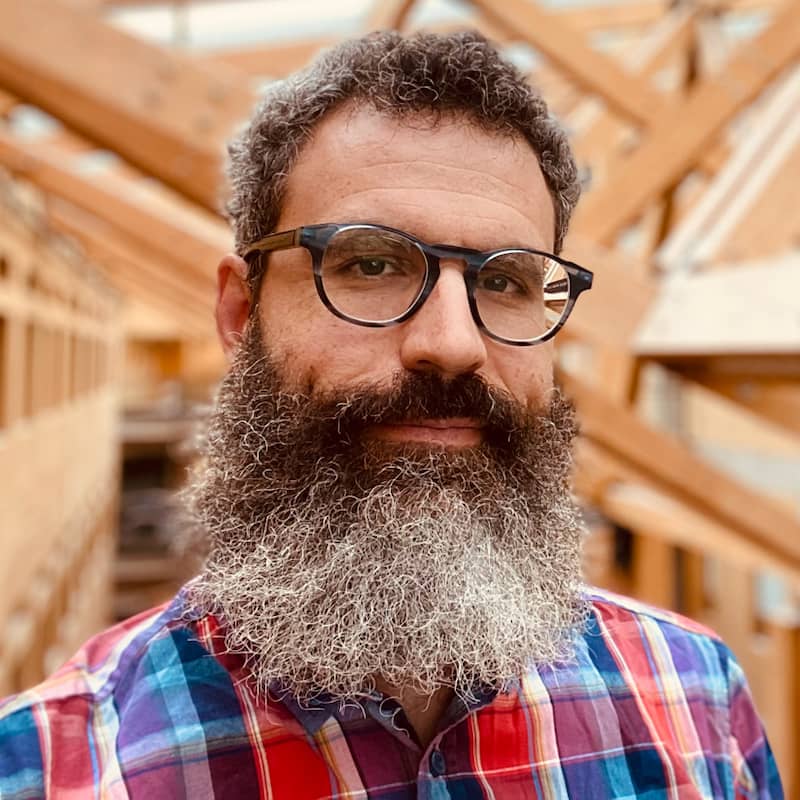
Harry Nelson is an Associate Professor at the University of British Columbia (UBC) within the Faculty of Forestry , specifically the Department of Forest Resources Management . His work focuses on natural resource policy, climate change adaptation, and sustainable forest management in Canada. Research Themes : Ecosystems and Climate Change, Sustainable Forest Management, Indigenous Governance Key Interests : Climate change impacts on forestry, ecosystem services, policy development Nelson’s research explores the structural transformation of the forest sector under changing markets and public expectations. He investigates ecosystem services as a business model for Indigenous forest management in BC and analyzes global climate adaptation strategies. Recent publications highlight cross-border forestry challenges, wildfire risks, and socio-economic dynamics in forest enterprises. His 15 most recent articles (2019–2025) span interdisciplinary topics such as climate change adaptation, Indigenous governance, bioeconomy, and global forest policy. These works emphasize the integration of ecological and economic frameworks to address sustainability. Scientific awards and recognitions: No awards explicitly mentioned in the provided texts. Nelson’s email address ( harry.nelson@ubc.ca ) and research areas are publicly available. No student advisement details or grant information is provided in the scraped data.
Amir AghaKouchak is a Chancellor’s Professor in the Department of Civil and Environmental Engineering at the Samueli School of Engineering, University of California, Irvine (UCI). He directs the Center for Hydrometeorology and Remote Sensing (CHRS) and focuses on interdisciplinary research at the intersection of hydrology, climatology, statistics, and remote sensing. B.Sc. and M.Sc. in Civil Engineering (Water Resources), K.N. Toosi University of Technology, Tehran, Iran (2001, 2005) Ph.D. in Civil and Environmental Engineering, University of Stuttgart, Germany (2010) His research aims to leverage satellite data and ground observations to advance modeling of hydrologic extremes (droughts, floods, landslides) and develop decision-support systems for water resources management. Key areas include climate change impacts , stochastic modeling , and the water-energy nexus . Recent publications highlight his work on multi-hazard analysis, groundwater decline, wildfire resilience, and climate projections. Tools like MhAST and MvCAT demonstrate his methodological contributions to copula-based and multi-hazard modeling.
Michael Wara is a Senior Research Scholar at the Stanford Woods Institute for the Environment and Director of the Climate and Energy Policy Program. He holds a JD from Stanford Law School, a PhD in Ocean Sciences from UC Santa Cruz, and a BA from Columbia University. His work bridges legal, scientific, and policy domains to address climate and energy challenges through bipartisan technical assistance and research collaboration with economists, engineers, and scientists. His research focuses on carbon pricing mechanisms, energy innovation, and regulatory solutions for climate policy. He advises policymakers on designing effective laws and regulations, with particular expertise in international environmental treaties like the ozone and climate regimes. Wara also teaches courses on energy law, wildfire policy, and carbon taxation at Stanford Law School. Key contributions include analyzing the economic impacts of EPA regulations, evaluating California’s carbon market mechanisms, and advancing strategies to decarbonize building electrification. His interdisciplinary approach emphasizes practical solutions to global environmental challenges, leveraging Stanford’s expertise in energy systems and policy. Wara’s policy practicum courses engage students in real-world projects such as evaluating carbon pollution standards and wildfire management policies. His work frequently appears in peer-reviewed journals and media outlets like The Atlantic and New York Times , addressing topics like the Supreme Court’s EPA rulings and wildfire insurance issues.
Shu Yang is an Associate Professor of Statistics at North Carolina State University (NC State), specializing in causal inference, missing data analysis, and biostatistics. She holds a Ph.D. in Applied Mathematics and Statistics from Iowa State University and has held roles including Postdoctoral Fellow at Harvard University and Assistant Professor at NC State. Her research focuses on developing statistical methods for observational and clinical studies, particularly in healthcare and environmental applications. Education: Ph.D. in Applied Mathematics and Statistics from Iowa State University (2014) B.Sc. in Mathematics and Applied Mathematics from Beijing Normal University (2009) Research Interests: Dr. Yang’s work addresses challenges in causal inference, including longitudinal data analysis, missing data imputation, and high-dimensional statistics. She applies these methods to environmental health, cardiovascular diseases, HIV infection, and cancer research. Her team also explores spatial statistics and data integration techniques. Awards: 2025: Think, Collaborate & Do Ideation Award 2024: COPSS Emerging Leader Award, Cavell Brownie Mentoring Award 2022: University Faculty Scholar 2018: Ralph E. Powe Junior Faculty Enhancement Award Grants & Advising: She leads funded projects on causal inference methods in environmental health, sepsis detection, and marine protected areas. She advises over 20 Ph.D. students and postdocs, focusing on causal methods, data integration, and healthcare analytics.
Dr. Dmytro Matsypura is an Associate Professor in the Discipline of Business Analytics at the University of Sydney Business School. He holds a BA (Hons) from Kyiv Polytechnic Institute (KPI), an MS (Hons) from KPI, and a PhD from the University of Massachusetts Amherst. His research focuses on optimization methodologies, network science, and their applications in finance, transportation, ecology, and graph theory. He is a recipient of multiple teaching awards, including the Wayne Lonergan Outstanding Teaching Award (Early Career) in 2010. Education: PhD in Management Science, University of Massachusetts Amherst (2006) MS (Hons) in Information Systems, Kyiv Polytechnic Institute (2000) BA (Hons) in Business Administration, Kyiv Polytechnic Institute (1998) Research Interests: Dr. Matsypura’s work spans operations research and management science, with a focus on mathematical optimization and network science. His methodological contributions include developing efficient optimization algorithms, while his applied research addresses real-world challenges in finance, engineering, and ecology. Notable applications include wildfire fuel management, portfolio margining, and credit card fraud detection via graph-based models. Awards and Recognition: Teaching Excellence Award (2008, 2013, 2018) Wayne Lonergan Outstanding Teaching Award (Early Career) (2010) Grants and Projects: Current projects include Bushfire Analytics: Optimization of Fuel Reduction (2023, ARC Discovery Project). His research frequently integrates interdisciplinary collaborations, such as applying graph theory to biomedical problems and cybersecurity. Labs/Teams: Active in the Sydney Environment Institute, contributing to projects at the intersection of analytics and sustainability. Collaborates with industry on fraud detection and supply chain optimization.
Devis Tuia serves as Associate Professor at the Swiss Federal Institute of Technology Lausanne (EPFL), holding appointments in the Institute of Environmental Engineering (IIE) within the School of Architecture, Civil and Environmental Engineering (ENAC). He leads the Environmental Computational Science and Earth Observation Laboratory (ECEO) since 2020 and contributes to EPFL's Doctoral Program in Civil and Environmental Engineering. His academic journey began in Lausanne with studies at UNIL and EPFL, culminating in a PhD in remote sensing from UNIL. Postdoctoral research followed at institutions in Valencia, Boulder, and EPFL, focusing on machine learning model adaptation. He progressed from Research Assistant Professor at University of Zurich to Associate and Full Professor at Wageningen University before joining EPFL. Tuia's research bridges Earth observation with artificial intelligence, specializing in interpretable deep learning for environmental applications. His lab develops algorithms for making remote sensing accessible, with particular emphasis on digital wildlife conservation through automated censuses using drone and satellite imagery. Current projects tackle the 'black box' problem in environmental modeling while advancing spatial intelligence for sustainable urban development. His 2023-2025 publication portfolio reveals three dominant trends: (1) species distribution modeling using incomplete observations, (2) multimodal fusion of satellite/drone data with textual descriptions, and (3) interpretable AI frameworks for environmental decision-making. This work consistently addresses real-world challenges like wildfire forecasting and biodiversity monitoring. As an educator, Tuia supervises 12 current PhD students and has graduated 4 former EPFL doctoral candidates. His teaching portfolio includes Frontiers of Deep Learning for Engineers , Sensing and Spatial Modeling for Earth Observation , and Image Processing for Earth Observation courses. The ECEO laboratory maintains active collaborations with ESA-NASA initiatives and conservation organizations globally.
Matthew D. Potts is the S.J. Hall Chair in Forest Economics and Professor at UC Berkeley's Department of Environmental Science, Policy, & Management. He also serves as Associate Director for Sustainable Development at the Blum Center for Developing Economies. With interdisciplinary training in mathematics, ecology, and economics, his research focuses on nature-based climate solutions and ecosystem service co-production. Research addresses carbon sequestration through forest management, biodiversity conservation, land use planning, and sustainable development in tropical ecosystems. Recent work examines cost-effectiveness of reforestation, climate-driven migration patterns, and plantation carbon modeling. Publications demonstrate strong focus on quantitative analysis of land-use impacts, with methodological innovations in remote sensing applications and spatial modeling for carbon accounting. Awards include recognition for young faculty research and leadership in international environmental assessments. Leads the Potts Research Group, mentoring graduate students working on tropical ecology, restoration, and climate adaptation projects.
Dr. Yang Liu is the Chair and Gangarosa Distinguished Professor in the Gangarosa Department of Environmental Health at Emory University's Rollins School of Public Health. His research focuses on satellite remote sensing applications for public health, climate change impacts, and air pollution exposure modeling. He leads federally funded projects integrating satellite data into health studies and serves as a PI for the NIH-funded Climate & Health Actionable Research and Translation (CHART) Center. Education: Ph.D. (Harvard University), M.S. (University of California), B.S. (Tsinghua University). Professional Affiliations include NASA mission science teams and the ORISE Faculty Fellowship at CDC. Research interests span satellite aerosol retrieval, climate-health linkages, and machine learning in environmental statistics. Notable work includes advancing wildfire smoke health impacts, PM2.5 modeling, and climate dashboard development for Georgia. Awards include Gangarosa Distinguished Professorship, ORISE CDC Fellowship, and leadership in NIH/NASA initiatives. His lab develops innovative tools for environmental health monitoring and policy translation.
Associate Professor David Jeffery is affiliated with the University of Adelaide's School of Agriculture, Food and Wine, within the Faculty of Sciences, Engineering and Technology. He holds an academic rank of Associate Professor/Reader and is based at Wine Innovation Central in the Waite campus. His research focuses on grape and wine chemistry, particularly aroma, flavor, and polyphenol analysis using advanced techniques like HPLC-MS/MS and GC-MS. He investigates the impact of vineyard and winemaking conditions on wine composition, including studies on tannin behavior, sulfur compounds, and oxidative processes. Jeffery co-authored the textbook *Understanding Wine Chemistry*, a global resource in wine science education. His work also explores machine learning applications for predicting sensory traits and authenticating wine origins. Active in mentoring, he supervises Masters and PhD students in topics spanning analytical method development, compound synthesis, and wine quality enhancement. Research highlights include studies on wildfire smoke mitigation in wine production, fluorescence spectroscopy for quality control, and mathematical modeling of anthocyanin interactions. He collaborates with industry partners like Wine Australia and leads projects funded by the ARC Training Centre for Innovative Wine Production. His contributions bridge fundamental chemical research with practical applications in the wine industry, addressing challenges like climate change impacts and sustainable winemaking practices.
Dr. Baijian "Justin" Yang serves as the Associate Dean for Research at Purdue Polytechnic Institute and is a Professor in the Department of Computer and Information Technology at Purdue University. He earned his Ph.D. in Computer Science from Michigan State University, with Master's and Bachelor's degrees in Automation (EECS) from Tsinghua University. Dr. Yang has established himself as a leader in multiple interdisciplinary research domains. Dr. Yang's educational background includes: PhD in Computer Science, Michigan State University (2002) MS in Automation (EECS), Tsinghua University (1998) BS in Automation (EECS), Tsinghua University (1995) His research interests span multiple cutting-edge domains with practical applications: Cybersecurity : Developing novel approaches for threat intelligence, security education, and network defense Big Data : Creating innovative algorithms for dimension reduction, regression with categorical variables, and tensor decomposition Applied Machine Learning : Implementing AI solutions in healthcare, manufacturing, and forestry applications Digital Forestry : Using UAV imagery and remote sensing for forest management and tree species classification Dr. Yang's publication record demonstrates significant impact across multiple disciplines, with recent work focusing on spatial transcriptomics analysis (SiGra), delirium detection using limited-lead EEG, and visual localization technologies. His research bridges theoretical advances with practical applications in healthcare, manufacturing quality control, and environmental monitoring. The interdisciplinary nature of his work is evident in collaborations spanning computer science, healthcare, forestry, and manufacturing domains. His scientific achievements have been recognized with numerous awards: 2023 HRSA Building Bridges to Better Health Competition Winner (Phase 1) and 2nd place ($100,000 prize) in Phase 3 2023 Outstanding Faculty Award in Engagement, Department of Computer and Information Technology, Purdue University 2021 Leadership in Manufacturing Award, Manufacturing Times Digital (MxD) 2021 Good to Great Award, Purdue Polytechnic 2020 Outstanding Faculty Award in Discovery, Department of Computer and Information Technology 2019 University Faculty Scholars, Purdue University As an educator and mentor, Dr. Yang has advised numerous graduate students through their PhD and Master's research. His leadership extends to significant service roles including serving as Faculty Champion for the Holistic Safety and Security research impact area at Purdue Polytechnic from 2018 to 2021, board membership with ATMAE (2014-2016), and participation in the IEEE Cybersecurity Initiative Steering Committee (2015-2017). He holds valuable industry certifications including CISSP, MCSE, and Six Sigma Black Belt, demonstrating his commitment to bridging academic research with industry practice. Dr. Yang leads multiple research projects including "Digital Forestry" for developing tools to quantify forest function, "CHEESE" (Cyber Human Ecosystem of Engaged Security Education), and "CICI" (Supporting Controlled Unclassified Information with a Campus Awareness and Risk Management Framework). His work on "Applied Machine Learning" focuses on solving real-world problems, while his "Dimension Reduction and Memory Amnestic Big Data Regression" project innovates computational algorithms for large-scale data analysis.
Dr. Kevin Kochersberger is an Associate Professor in the Department of Mechanical Engineering at Virginia Tech , with a career spanning academic research, technical innovation, and educational leadership. His work focuses on autonomous aerial systems , robotic control , and applied aerodynamics , particularly through the Uncrewed Systems Laboratory . Kochersberger's research has pioneered UAV-based radiation detection , 3D terrain mapping , and low-resource drone applications , including establishing the African Drone and Data Academy in Malawi . Education: Ph.D., Mechanical Engineering, Virginia Tech (1994) M.S., Mechanical Engineering, Virginia Tech (1984) B.S., Mechanical Engineering, Virginia Tech (1983) A.S., Engineering Science, Jamestown Community College (1981) Kochersberger's publications demonstrate expertise in UAV path planning , smart material actuation , and radiation source localization , with over $9M in research funding. His scientific awards include AIAA Associate Fellow (2009) and Aviation Week Aerospace Laureate (2003). Notable projects involve helicopter-deployable robotic systems and urban canyon navigation without GPS. Recent articles highlight BVLOS drone simulators , 2.5D terrain mapping , and autonomous negative obstacle traversal , reflecting his focus on real-time adaptive control and heterogeneous robotic systems . He teaches Drone Technology and Flight Operations and Advanced Design Projects , emphasizing student-driven innovation and industry collaboration .
Gregory Paradis is an Assistant Professor in the Department of Forest Resources Management at the University of British Columbia (UBC) Faculty of Forestry. His research focuses on sustainable forest management, integrating operations research, mathematical optimization, and systems modeling to address complex interactions between ecosystems, industries, and society. He works with the FRESH Lab and collaborates with the Integrated Remote Sensing Studio, emphasizing ecological and economic integration in forest planning. Sustainable Forest Management Operations Research Forest Economics Data Science Risk Assessment GIS-based Methods His research spans forest inventory optimization, climate change adaptation strategies, wildfire risk modeling, and decision support systems for invasive species. He develops computational frameworks to enhance wood supply planning, carbon management, and ecological resilience. Recent work includes machine learning applications for fire safety in timber structures and automated road planning tools for wildlife conservation. Paradis’s publications highlight trends in applying optimization methods to sustainable forestry, with a focus on biodiversity, climate adaptation, and value chain innovation. He advocates for interdisciplinary approaches that bridge silviculture, industrial engineering, and data science to tackle emerging challenges in forest ecosystems. As an educator, he seeks motivated students with quantitative and creative problem-solving skills. His lab collaborates on remote sensing integration, risk assessment models, and policy-relevant forest management strategies, ensuring plans account for uncertainties like insect infestations or windthrow events.